
You can pick up the virus in the first few months of life, and it takes nothing more than direct contact with the skin to pass it on: cold sores are highly contagious. So when one is on its way, it is best to steer clear of kissing — and to give eating with your fingers or sharing a bottle a miss. The reassuring part is that sores do not appear all the time. They tend to turn up alongside a fever, stress, exhaustion, your period, or even sunburn.
With time, most people learn to read their own pattern: mounting tiredness, stress, their period, sun or UV exposure, and sometimes a local knock — a bitten lip, a dental appointment. After two or three outbreaks, most people can work out what sets theirs off, and recognise the first tingling.

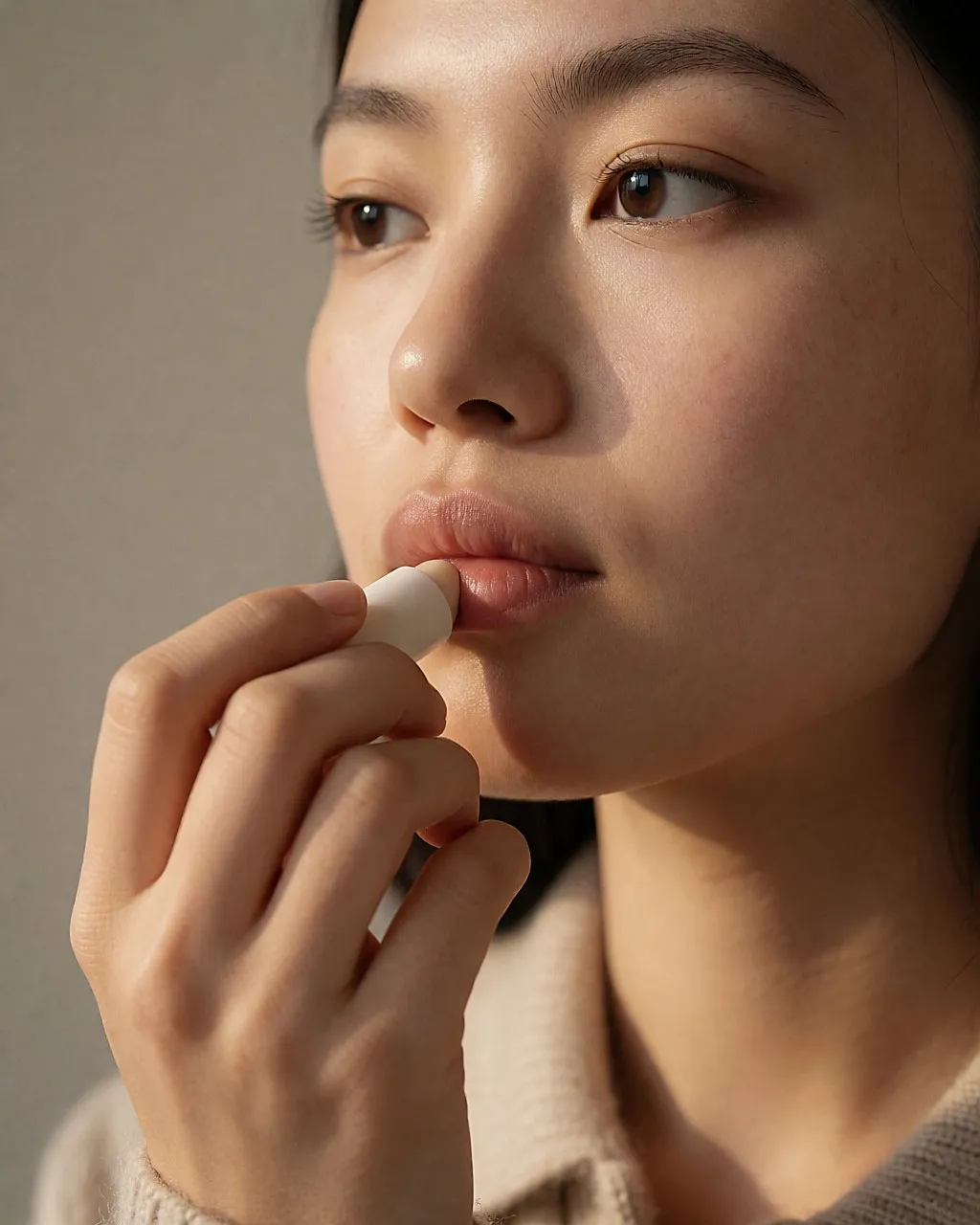
On the prevention side, one simple habit comes up again and again: protect your lips from the sun, because UV is a classic trigger. A balm with an SPF, a hat in summer, and you are covered.
Some people report that cold sores need arginine to develop — an amino acid found in chocolate, peas, peanuts, cashews and chicken. That link remains a hypothesis: there is no clinical evidence that avoiding these foods shortens an outbreak. And since antiviral medicines do not clear the virus, which then lies dormant in the body, it is easy to see why people try old family remedies alongside them.
The chamomile poultice: tradition treats it as a comfort measure, with no proven curative effect. Mix dried, chopped chamomile flowers with warm water until you have a smooth paste, leave it on for a few minutes, and do not reapply it to the lesion.
Ice: wrap a cold pack in a cloth and hold it against the area for short spells. It may ease pain or discomfort, but no curative effect has been demonstrated.
Lemon juice: used since ancient times, lemon is a much-loved kitchen ingredient. Tradition also credits it with an effect on cold sores, but that use is not validated, and citrus fruits can irritate the skin. In practice, lemon juice — even diluted — should not be applied to a lesion or a mucous membrane, because of the risk of irritation.
Garlic compresses: garlic has a long reputation for its many properties, and it is one of the most used "food that doubles as medicine" staples when it comes to infections. It is said to be good for cholesterol, and tradition also credits it with antiviral compounds that would slow the virus and limit blistering. That use is not validated: raw garlic should not be applied to a lesion or a mucous membrane, as it can irritate or burn.
Herpes is a viral infection that can also affect the genitals, which are far more delicate to treat: in that case, medical follow-up is essential.
Finally, remember that cold sores are extremely common: the lip tingles, reddens and swells, and it can take up to two weeks for the sore to fade. Herpes simplex virus is what causes those small, painful spots.
If outbreaks keep coming back, if the sore is spreading, or if it comes with a fever, speak to a pharmacist, your GP or NHS 111 — they can point you in the right direction, particularly if genital herpes is a possibility.
What it costs
Home remedies are the cheapest option: around £4 to £8 for a box of dried chamomile flowers from a health food shop or herbalist, enough for several outbreaks, plus a few pence for a lemon or a garlic clove. If you would rather use something protective day to day, an SPF lip balm generally costs between £3 and £15 depending on brand and size, from a pharmacy, chemist or supermarket. Prices vary mainly with the size, the formulation and where you buy it.
Sources
- World Health Organization (WHO), fact sheet "Herpes simplex virus".
- NHS, "Cold sores" conditions page.


Comments
Your opinion matters: rate the article, react and reply to comments.
Comments are moderated; AI-assisted comments are flagged. Text emoticons (8-), :-), <3…) are automatically shown as images.