
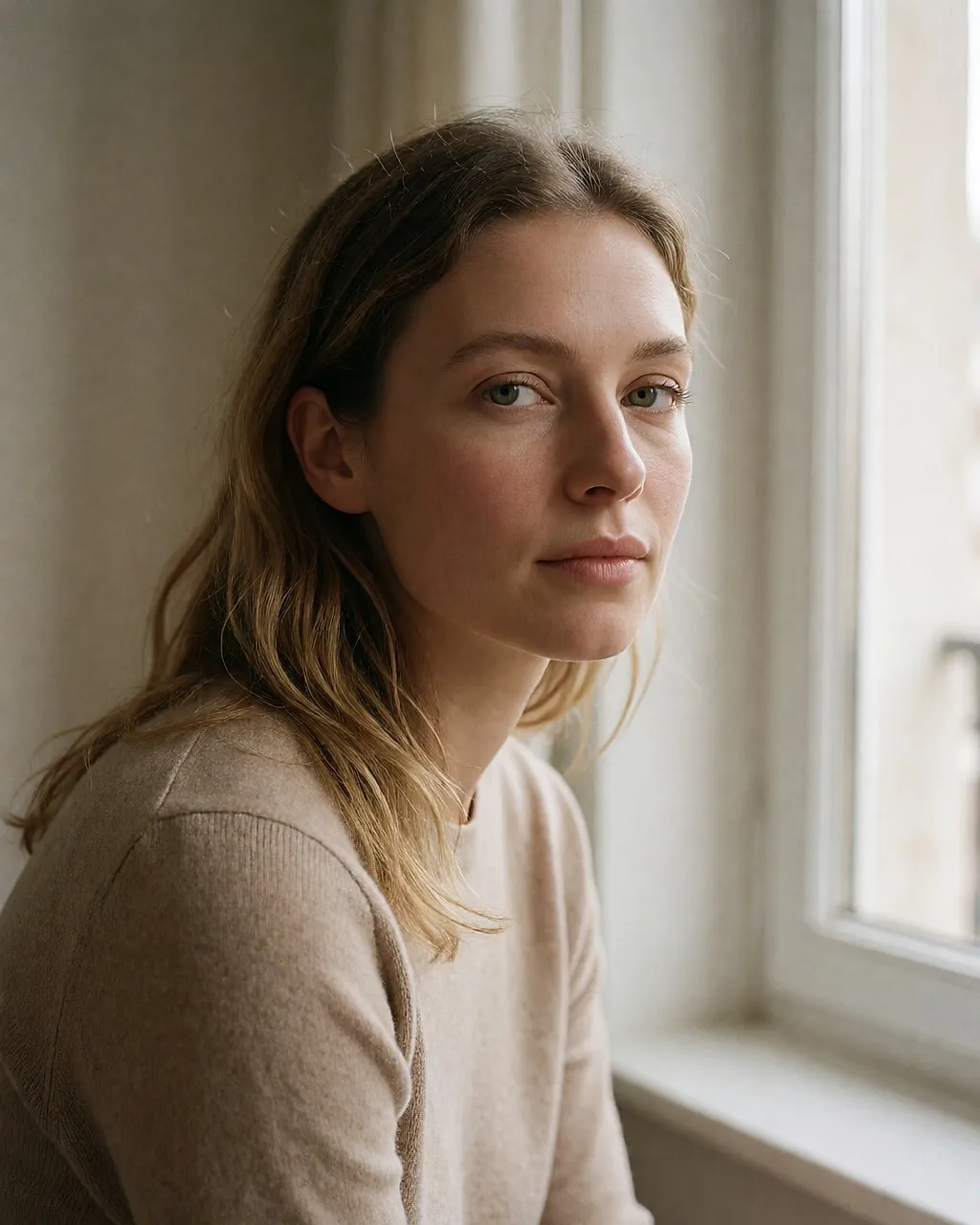
A rush of heat on the Tube, a glass of wine, a spicy meal — and your face is burning. At the time, you put it down to sensitive skin. Except the redness keeps coming back, then settles in for good, and your skin tingles more and more often. What if it's more than just a reactive complexion?
Rosacea mainly affects fair skin, and its first signs often appear between the ages of 25 and 40. Here's what's known, what remains unclear, and what can genuinely help.
An inflammatory condition that's routinely dismissed
Rosacea is a chronic inflammatory condition of the facial skin. It's hard to know exactly how common it is: studies suggest it affects somewhere between a few per cent and around 10% of the adult population. Women seek help more often, but the most severe forms tend to be seen in men.
As for causes, there's no single culprit to hunt for — none has been identified. Current evidence points to a genetic predisposition combined with vascular abnormalities, an excessive immune response, and a more frequent presence of a skin mite, Demodex folliculorum. It isn't contagious, and it isn't a hygiene issue. It's not your fault.
What you might notice
The picture varies from person to person, and the signs don't arrive in any fixed order.
It often begins with flushing: your face suddenly heats up, tingles and stings slightly, then redness settles across your cheeks, nose or forehead. At first, it fades within minutes; over time, it becomes permanent — this is persistent erythema.
Against that red backdrop, visible dilated vessels — telangiectasia, or couperose — may appear. In other cases, papules and pustules, small firm red bumps, show up on their own. That's when diagnosis gets tricky: papulopustular rosacea looks like acne, but without comedones or blackheads. Yet standard acne treatments often irritate rosacea.
More rarely, and especially in men, the skin of the nose can thicken — this is rhinophyma.
The eye symptoms that get overlooked
Many people with rosacea also have eye symptoms: a gritty, sandy feeling under the eyelids, dryness, watering, recurring styes or blepharitis. This ocular rosacea is often mistaken for a simple allergy. It still deserves medical attention — sometimes from an ophthalmologist.
What sets off a flare-up
Sun, heat, biting cold, wind, alcohol, spicy or very hot food, strong emotions, intense exercise, certain cosmetics: these triggers are fairly easy to spot. They aren't causes, though, and your rosacea isn't your fault.

In practice, keeping a diary of your flare-ups for two or three weeks will help you identify your triggers far more than guesswork will.
Treatment options today
Rosacea can't be made to disappear for good. It can be controlled — sometimes very well — with ongoing treatment and a few adjusted habits. Which option suits you depends on the type and stage, and the decision is made with a dermatologist.
Topical treatments — metronidazole, azelaic acid, ivermectin — are used for several months before their effect can be judged. For redness, brimonidine gel temporarily reduces vessel dilation, with an effect that fades within hours.
When inflammation dominates, your doctor may prescribe a low-dose oral antibiotic, doxycycline, used here for its anti-inflammatory effect. Severe forms are sometimes treated with isotretinoin, reserved for specialists.
For visible vessels, vascular laser and pulsed light give good results, but they don't act on the papules and pustules, and often require several sessions.
Don't treat papulopustular rosacea as ordinary acne, and never apply a topical steroid cream to your face: it can trigger severe flare-ups. A proper diagnosis saves months of trial and error.
Looking after your skin day to day
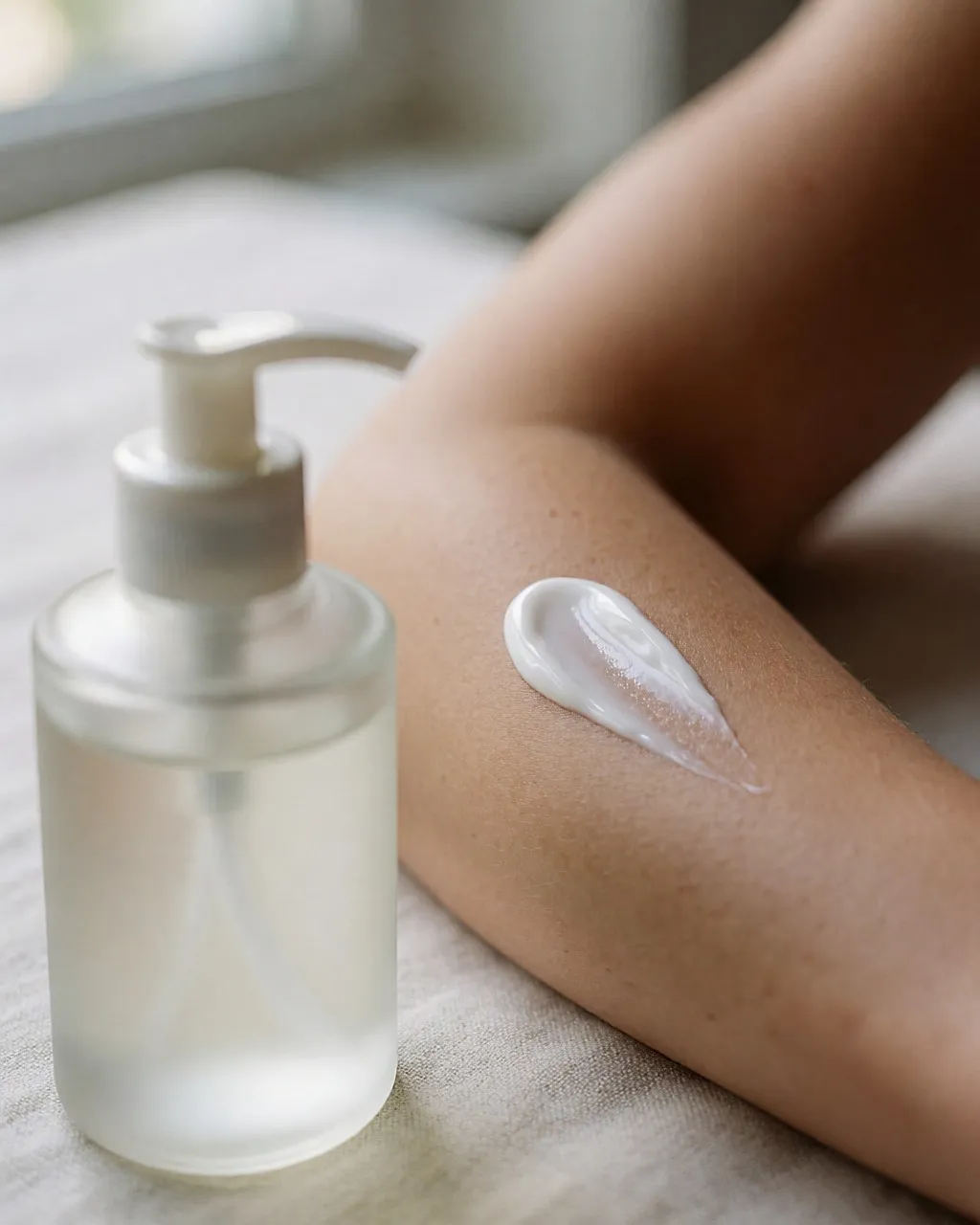
Cleanse with lukewarm water and a soap-free, fragrance-free product. No scrubs, no alcohol, no harsh toners. A simple moisturiser morning and evening, plus a high-factor sunscreen all year round: that's the single most useful preventive step. Makeup isn't off-limits, and green colour correctors visually tone down redness.
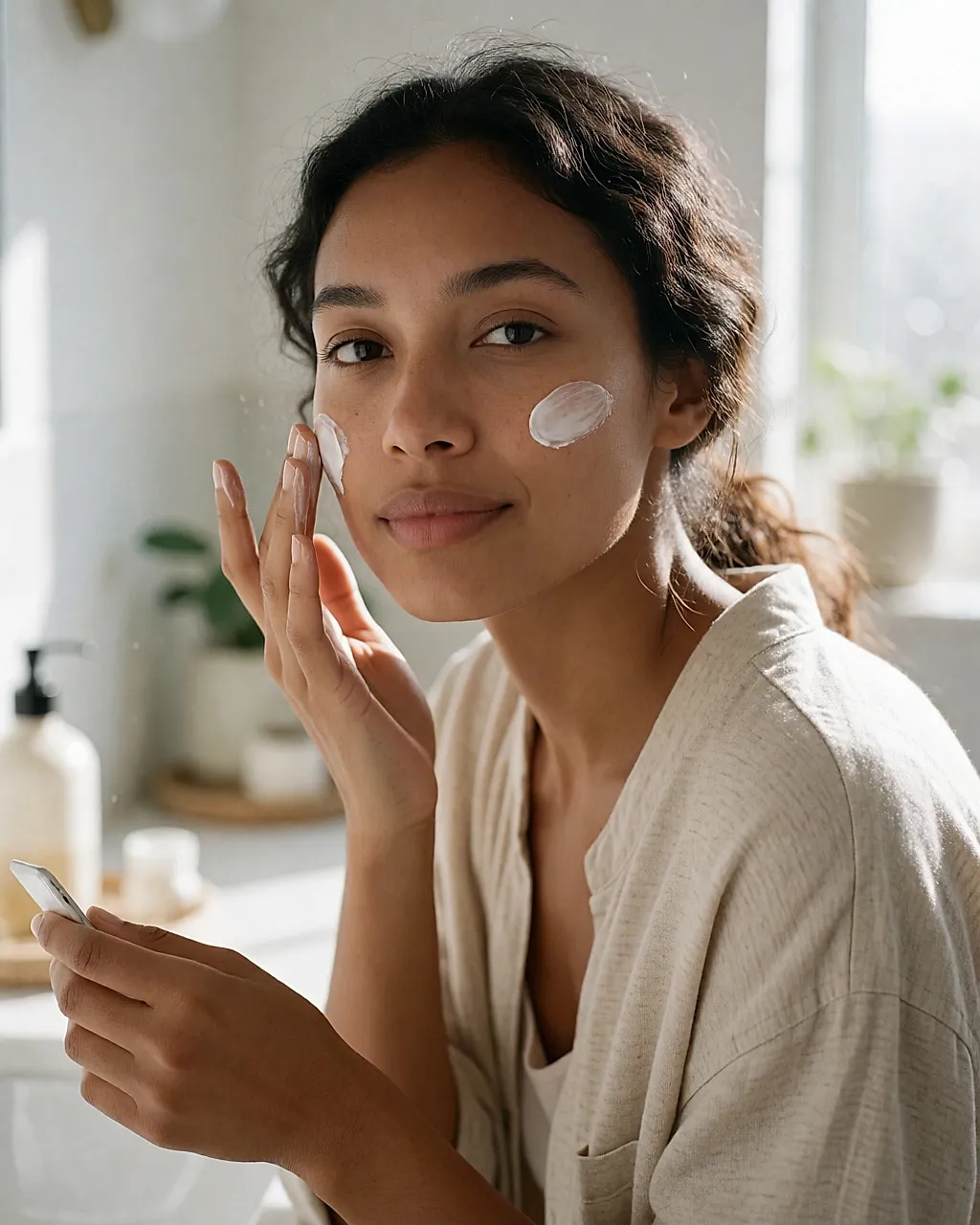
When it comes to formulas, keep them short: no fragrance, no essential oils, which frequently irritate reactive skin. A label such as COSMOS Organic or Ecocert guarantees a proportion of naturally derived ingredients, not that your skin will tolerate them — a heavily fragranced organic product can do more harm than a plain conventional one. Refills, solid formats and glass cut down on packaging, provided the formula suits you. And if your skin tolerates nothing, a pharmacy product tested on reactive skin is often the best compromise.
Budget
- Dermatology appointment: free on the NHS if referred by your GP, though waiting lists can be long. Going private typically costs £150–£300 for a first consultation, depending on the clinic and location.
- Gentle cleanser and soothing moisturiser: £8–£30, from a chemist, beauty retailer or supermarket, depending on the size.
- Anti-redness care with SPF: £15–£35.
- Colour corrector or foundation for sensitive skin: £8–£30, from a supermarket, chemist or beauty retailer.
- Prescription topical treatment: usually £10–£30 per tube privately, depending on the active ingredient and pack size; if prescribed on the NHS, the standard prescription charge applies instead (free in Scotland, Wales and Northern Ireland).
- Vascular laser or pulsed light: £100–£300 per session, usually over 2–4 sessions, and rarely available on the NHS — most people pay privately.
Prices vary with the practitioner, the region and the number of sessions. Before booking a laser course, always ask for a written quote.
Sources
- NHS — Rosacea (nhs.uk)
- British Association of Dermatologists — bad.org.uk
- Cochrane Library — systematic reviews on rosacea treatments
Comments
Your opinion matters: rate the article, react and reply to comments.
Comments are moderated; AI-assisted comments are flagged. Text emoticons (8-), :-), <3…) are automatically shown as images.