

Nuts and dried fruit are winning back the approval of dietitians and other health professionals, and they are back in the spotlight. No longer does the conversation stop at the calorie count: look a little closer and it turns out that some of them are not the enemies of the waistline we long assumed.
Several studies have looked into the question, and the picture that emerges is more nuanced than it first appears. The PREDIMED trial, which tested a Mediterranean-style diet enriched with nuts, found fewer cardiovascular events in people at higher risk — a result that applies to particular populations and is not a promise for any one individual. In other words, this is not a quick fix, but a food that, within a balanced pattern of eating, earns its place.
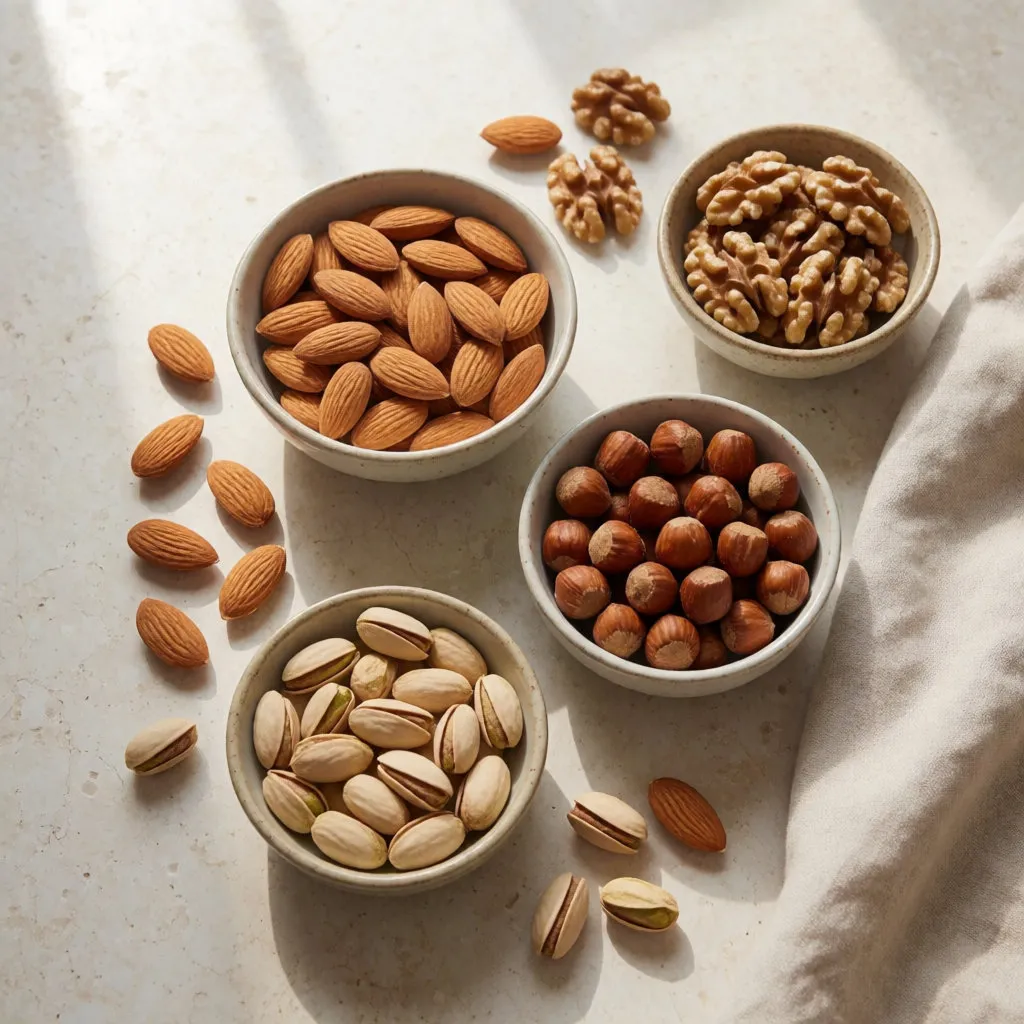
Why? Rich in unsaturated fats but also in plant protein, minerals and fibre, nuts bring a combination of nutrients. Add their satiating properties, and nuts become an excellent snack: they can contribute to a feeling of fullness in some people, without any guarantee of keeping cravings at bay, and they are a useful source of energy.
On the mineral front, nuts supply magnesium, potassium, calcium and phosphorus in useful amounts — a real strong point for anyone whose diet lacks variety and who risks falling short.
Note too, as mentioned above, that nuts are a useful source of protein, almonds in particular. They are a good option for vegetarians and, more broadly, for anyone who is active or needs a sustaining snack during a demanding day.
One caveat, though: once roasted or salted, nuts can lose some of their benefits. Choose them plain, with nothing added.
With dried fruit it is much the same story: fresh, it is full of vitamins and water; dried, it is no less interesting.
Dried figs, for example, are packed with fibre, calcium and magnesium; dried apricots also deliver a solid dose of potassium and calcium; dried bananas and dates bring potassium, magnesium and iron. In short, dried fruit does not replace a varied diet, and it is no substitute for professional advice where there is an identified need for supplementation. Supplements, for that matter? For most people on a varied diet, they are rarely necessary: nuts and dried fruit replace neither vegetables, nor fresh fruit, nor pulses. They are allies, not foundations.
Worth flagging that dried fruit is also rich in sugar: even with none added, it still contains naturally occurring sugars, but in concentrated form, which makes it a handy choice for an afternoon snack or before physical or mental effort. Be aware that some products have sugar added, or are coated in it. One point of caution, though: their sugar content is a reason to eat them as part of a meal, to limit the effect on tooth enamel.
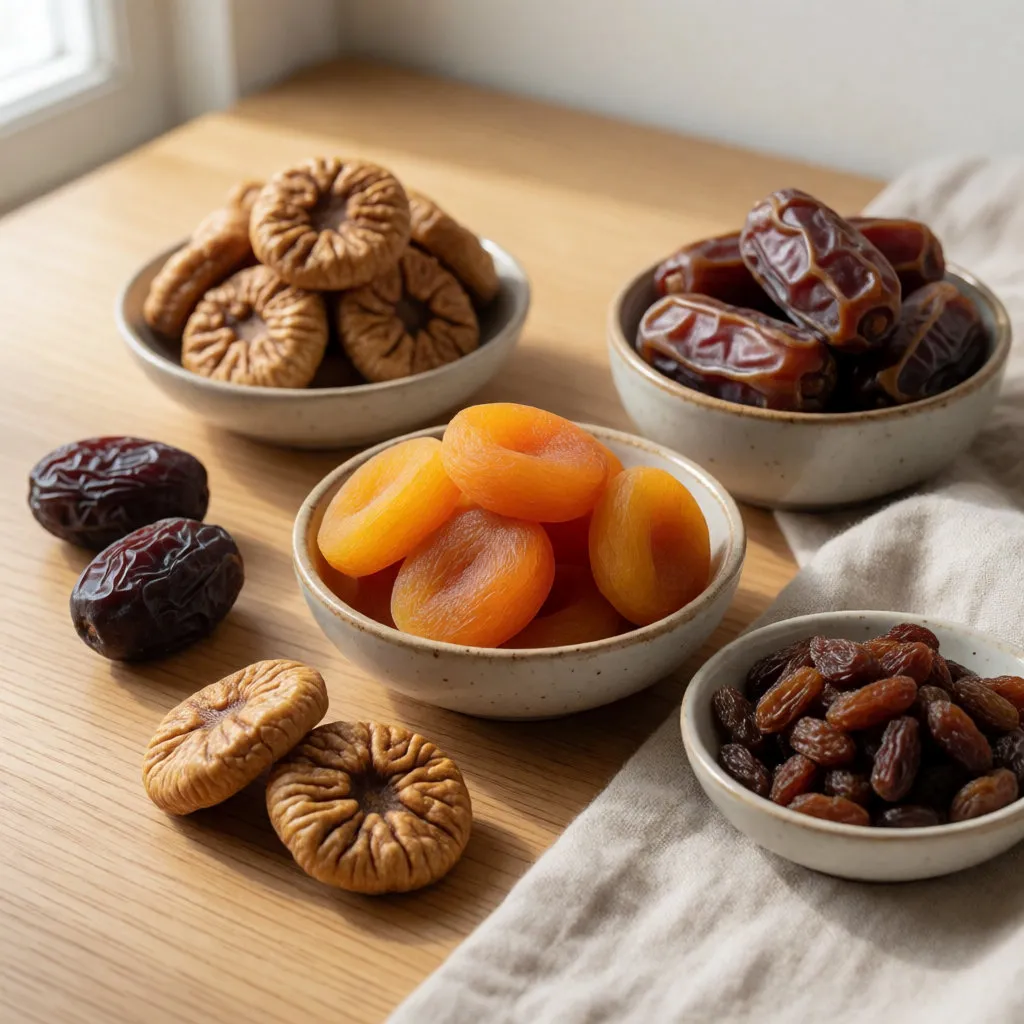
Note that dried fruit may be treated with sulphites to stop it browning. Browning is a natural process that does no harm to the food itself, but it can look less appealing than brightly coloured fruit. If you are sensitive to sulphites, look on the label for 'unsulphured' or 'no added sulphites'; these substances can trigger reactions, particularly in people with asthma. An unsulphured version, often darker and less soft, may be a good option.
As you will have gathered, there is plenty to gain from keeping walnuts, hazelnuts, almonds and their like in the house, and if keeping your figure matters to you, know that they are by no means to be avoided: simply eaten in moderation. Think of them as a smart swap — a few unsalted pistachios with a drink instead of crisps, chopped dried apricots over porridge after a workout: the aim is not to pile on extra portions, but to substitute a more nutrient-dense food for ultra-processed snacks.

They have had their critics, these precious natural treasures. Accused of being too calorific and too fatty, they were advised against for anyone watching their weight. That was a mistake: behind the fat they contain, nuts and dried fruit supply plenty of essentials, from minerals to the 'good' fats, and the secret lies simply in moderation and in choosing good products. Plainly, this is not about getting through a bag of roasted, salted, oiled pistachios in front of the television of an evening, but about a daily, varied, well-judged intake of these valuable foods. So here's to walnuts of every kind, hazelnuts, almonds, pistachios and dried fruit — and to health and energy. Moderation, minimal processing, variety: less dramatic than a promise, but it is what holds up over time.
In practice, a small handful a day is a reasonable guide, varying the sources and preferring them plain — unsalted, unroasted, uncoated. Dried fruit slips easily into yoghurt, porridge or a salad; nuts work well as an afternoon break. If you have a known allergy, a particular medical condition or are taking medication, speak to your GP or pharmacist.
Budget
Prices vary widely with origin, grade, packaging and certification (organic, PDO/PGI). As a broad indicative guide, expect roughly €10–25 per kilo for plain nuts and €8–20 per kilo for unsulphured dried fruit; organic, PDO/PGI, premium grades and small packs tend to sit at the upper end. Loose nuts and dried fruit are often better value than individual snack packs, and you will find them in supermarkets, wholefood shops, health food shops, greengrocers and markets. Compare the price per kilo rather than the pack price, especially for plain almonds, hazelnuts, walnuts and unsulphured dried fruit.
Sources
- NHS — The Eatwell Guide, accessed 2026.
- New England Journal of Medicine — Primary Prevention of Cardiovascular Disease with a Mediterranean Diet Supplemented with Extra-Virgin Olive Oil or Nuts, 2018.
- World Health Organization — Healthy diet, 2024.
Food supplements do not replace a varied, balanced diet and a healthy lifestyle.


Comments
Your opinion matters: rate the article, react and reply to comments.
Comments are moderated; AI-assisted comments are flagged. Text emoticons (8-), :-), <3…) are automatically shown as images.