
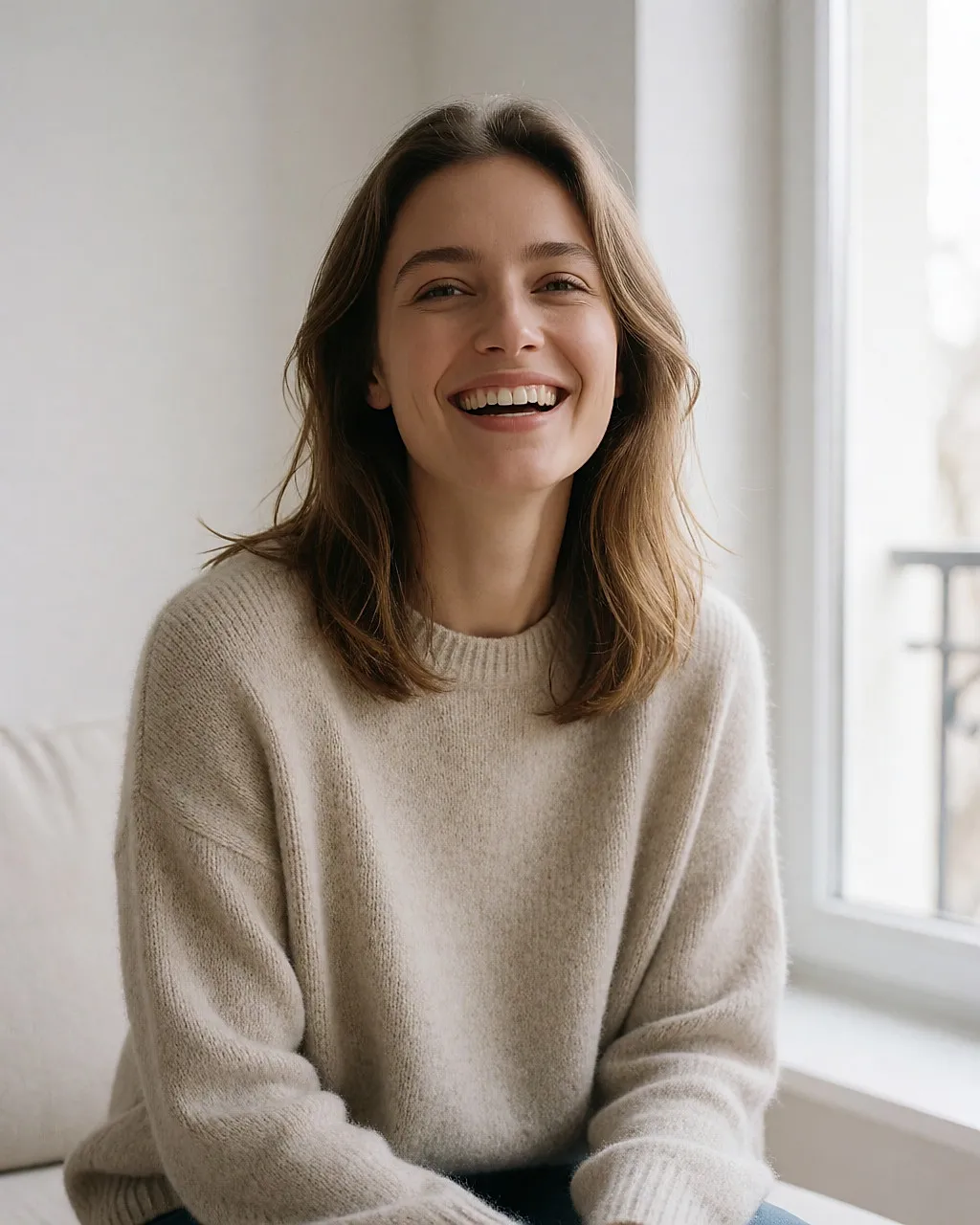
Laughter lifts your mood — you already know that. But its effects don’t stop there: it also works on the body and helps bring stress levels down. That’s the idea behind gelotherapy, from the Greek gelos, meaning “laughter” — a relaxation method that requires neither equipment nor a prescription. A few minutes are enough to shift your state.
What we know, and what we don’t yet know
First, the documented part. Current evidence suggests that laughter triggers the release of endorphins, the molecules that ease pain and create a sense of wellbeing. A study led by Robin Dunbar and his team, published in Proceedings of the Royal Society B in 2012, points in that direction: shared laughter raises the pain-tolerance threshold, a sign that the body’s natural opioids are being mobilised. Work published in the Journal of Neuroscience in 2017 supports this line of enquiry.
Then there’s the mechanical side. Laughing means breathing differently and using the abdominal muscles. In practice, you release your neck, shoulders and back, while gently engaging your core. Built into your routine, the practice overlaps with prevention: it can help lower stress which, when it becomes long-term, is a risk factor for health.
Then there are the shortcuts. You may come across claims such as “one minute of laughter is worth 45 minutes of relaxation” or “a few minutes are equal to an hour of exercise”. They circulate widely, but they aren’t based on solid measurements. Keep the spirit of the thing, not the numbers.

Where does laughter yoga come from?
It all began in Bombay. In 1995, Indian doctor Madan Kataria launched laughter yoga sessions there, also known as hasya yoga: a mix of breathing exercises and simulated laughter. The idea then spread around the world, eventually leading to World Laughter Day, celebrated on the first Sunday of May.
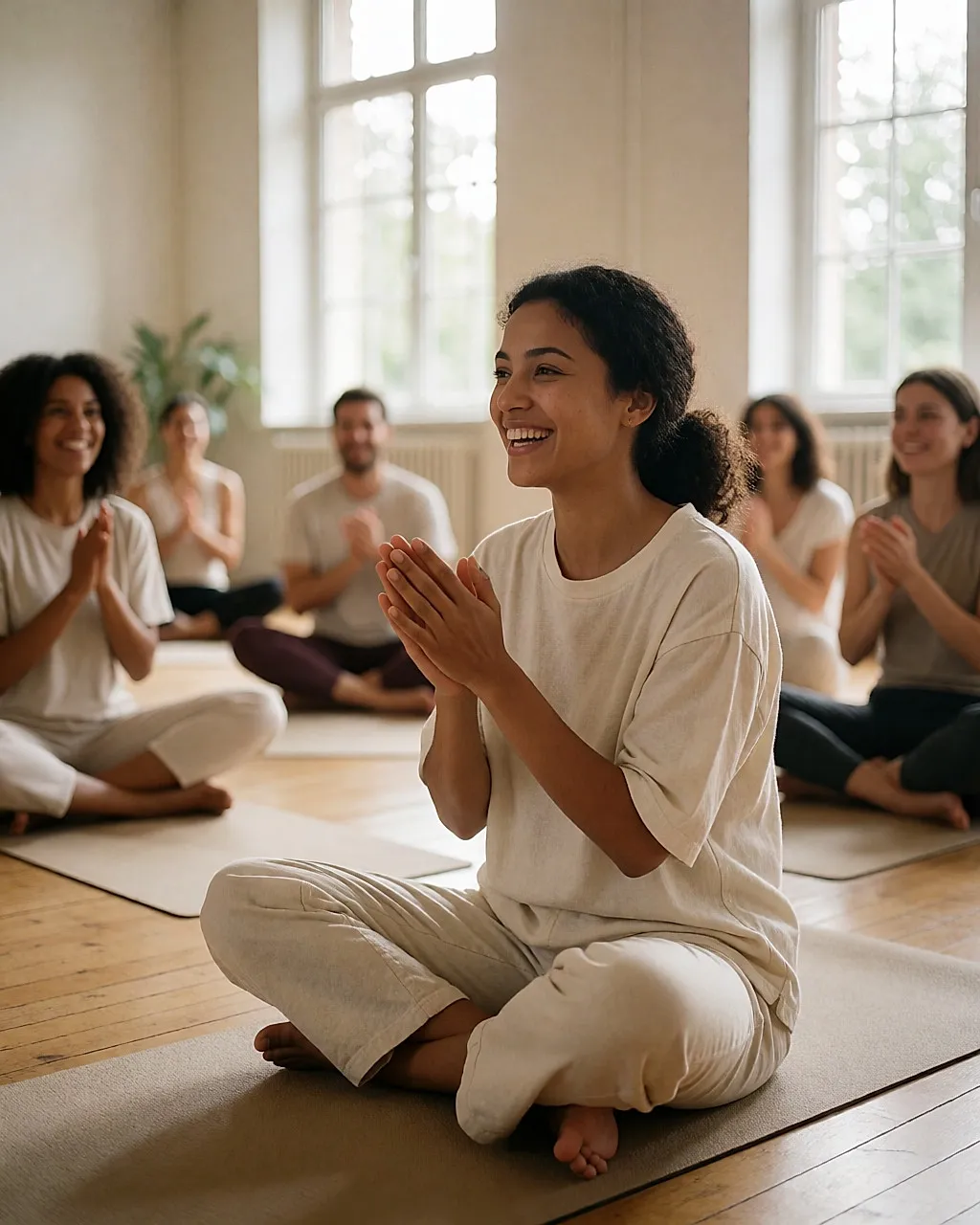
In the UK, clubs and workshops have multiplied, often run by volunteers or trained facilitators. You start with voluntary laughter, a little artificial — and after a few minutes it often becomes genuine.
Laughter is not a treatment: it doesn’t replace a diagnosis or medical care. If you are in pain, or feel persistently exhausted or anxious, speak to your GP or another healthcare professional. Laughter can sit alongside wellbeing, but it should never replace it.
How to give it a go
No audience required. Start with a few deep breaths, then try a voluntary laugh, even if it feels a bit fake: the first few times it will seem artificial, and that’s normal. A few minutes every day are enough to feel an initial effect.
- Set aside a short slot, 5 to 10 minutes, at the same time each day.
- Choose a group if you can: laughter is contagious and spreads faster than you might think.
- Finish with a few gentle stretches to help the relaxation settle.
A word of caution, though: after recent abdominal surgery, laughing can be uncomfortable. It isn’t a general contraindication, just a common-sense precaution — it’s better to ask your doctor before pushing yourself.

What it costs
Prices vary considerably depending on the setting you choose.
- Community or charity-run workshop: often free, or a few pounds per session.
- Studio or online class: usually around £10–£25 per session, with monthly passes often bringing the price per class down.
- Training to become a facilitator: several hundred pounds, depending on the provider.
To find a session near you, try local community groups, yoga studios or online class platforms. Before you pay, check the facilitator’s qualifications.
Sources
- Dunbar RIM et al., “Social laughter is correlated with an elevated pain threshold”, Proceedings of the Royal Society B, 2012.
- Manninen S et al., “Social Laughter Triggers Endogenous Opioid Release in Humans”, Journal of Neuroscience, 2017.
- Laughter Yoga International, Dr Madan Kataria’s method: laughteryoga.org
- World Laughter Day: worldlaughterday.org
Comments
Your opinion matters: rate the article, react and reply to comments.
Comments are moderated; AI-assisted comments are flagged. Text emoticons (8-), :-), <3…) are automatically shown as images.