

You know those days when the air feels heavy and every stride costs you double. In Beijing, athletes had to contend with oppressive heat and high humidity: air thick with water, in which sweat struggles to evaporate and the body can no longer cool itself. Out of that problem came the Cryovest, a cooling vest worn before and after exertion — never during.
What we know about cooling
The logic is simple. The hotter you are when an event starts, the sooner you hit your ceiling. And high humidity is one of the main risk factors, because sweat drips off instead of evaporating: perspiration no longer does its job of thermoregulation. Endurance sports, and those with back-to-back events — rowing, canoeing and kayaking, sailing — appear to be most affected. Cooling the skin before the start, then again between runs, therefore fits into a preventive approach. In practice, no vest replaces hydration, and if you feel unwell, you should turn to a healthcare professional.
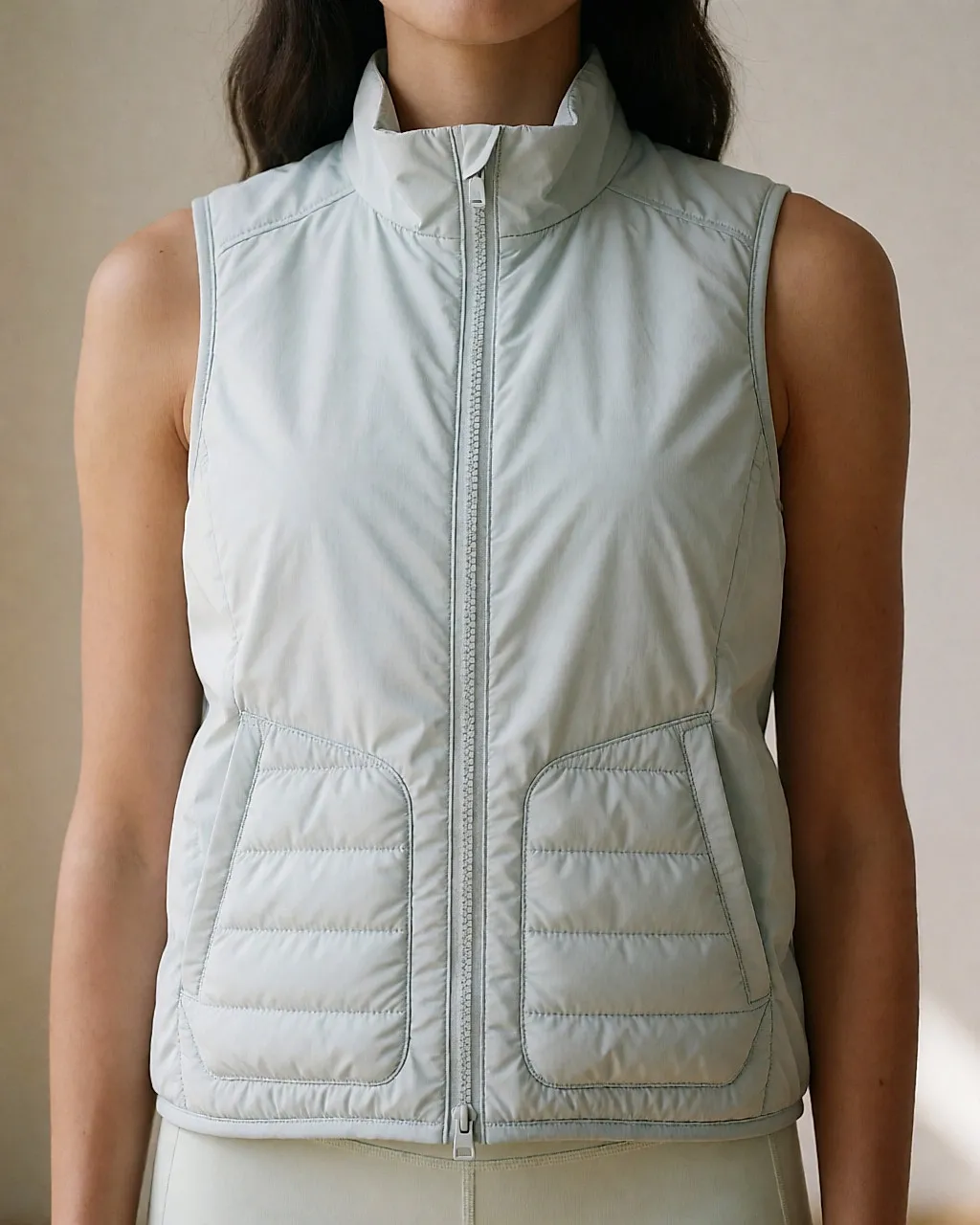
A French invention, put to the test in a climate chamber
Behind the vest lies a commission from the French National Olympic and Sports Committee (CNOSF). Two companies worked on it: SM Europe, at the time the distributor of the First Ice cooling process, and Paul Boyé Technologies, a Toulouse specialist in protective equipment for defence and civil protection. The brief? A lightweight layer able to let sweat through while conducting cold to the skin.
Then it had to be proved. In Toulon, the Institute of Naval Medicine of the Armed Forces Health Service recreated those conditions in a climate chamber, then tracked several markers in exercising athletes: skin temperature, heart rate, lactate production, dehydration. The vest has since left the Olympic changing room — it turns up on building sites, among firefighters, and in the kit bags of amateur runners.

How to choose one today
Three families share the market, and the choice depends above all on the air around you. Evaporative cooling works on a clever principle: you dampen the fabric and evaporation does the rest — light, inexpensive, but useless when the air is already saturated with water. Gel and phase-change material (PCM) work the other way round: you recharge the packs in the freezer and the vest releases the cold slowly — heavier, pricier, but more consistent in humid weather.
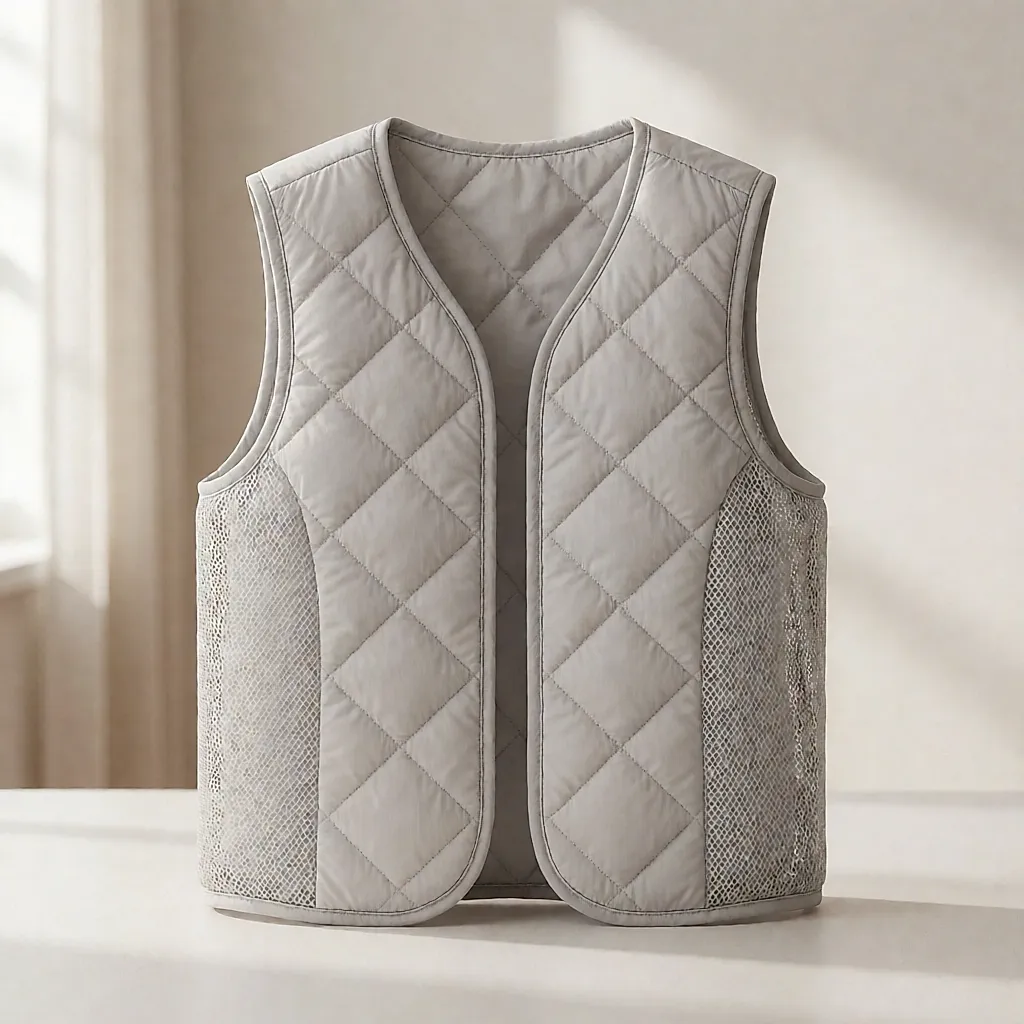
On the textile side, two verifiable benchmarks are worth checking. OEKO-TEX Standard 100 certifies that the fabric has been tested against substances harmful to the skin. GOTS governs an organic cotton supply chain with environmental and social requirements across the whole chain — two guarantees that carry weight when the vest stays against your skin for hours. If you can, opt for reusable cooling packs rather than single-use ones, and a fabric carry bag.


Budget
For a simple evaporative model, expect around £45, from sports retailers or online. The bill rises steeply with a phase-change vest: you're looking at roughly £130 to £350, depending on how much of the body it covers and how many cooling packs come with it. The style — vest, tunic, neck wrap — the advertised cooling duration and the brand also shift the price. Worth knowing: medical equipment and workplace safety suppliers stock them too.
What kind of air will you be dealing with? If you run in hot, dry summer conditions, evaporative cooling is often enough. In a humid climate, or if you train twice within a short window, a phase-change vest will be more consistent. Either way, plan for a second set of cooling packs: that's what decides your comfort. What we don't yet know: the exact effect on competitive performance varies with the sport and the study protocol.
Sources
- French National Olympic and Sports Committee (CNOSF)
- French Armed Forces Biomedical Research Institute (IRBA), which took in the Institute of Naval Medicine of the Armed Forces Health Service in Toulon
- Paul Boyé Technologies, the company's official website
- OEKO-TEX Standard 100 and GOTS, textile certification standards
- Santé publique France, heatwave and physical activity guidance
- UKHSA, heat-health advice for the UK



Comments
Your opinion matters: rate the article, react and reply to comments.
Comments are moderated; AI-assisted comments are flagged. Text emoticons (8-), :-), <3…) are automatically shown as images.