

The radiator is still cold, the November rain is doing the rest, and you're seriously considering eating dinner under the duvet. This is the moment a fabric heat pack stops feeling like something from your grandmother's house. A minute in the microwave, a place on your lap, and the sofa becomes habitable again.
Cherry stones, spelt or linseed: what's inside the cover
The principle is as old as an inconvenient draught: a filling that stores heat, a cover that releases it slowly. Cherry stones are the most sought-after filling: dense, they hold warmth for a long time and mould to the shape of a shoulder. Their weight gives a reassuring sense of support that very light packs lack.
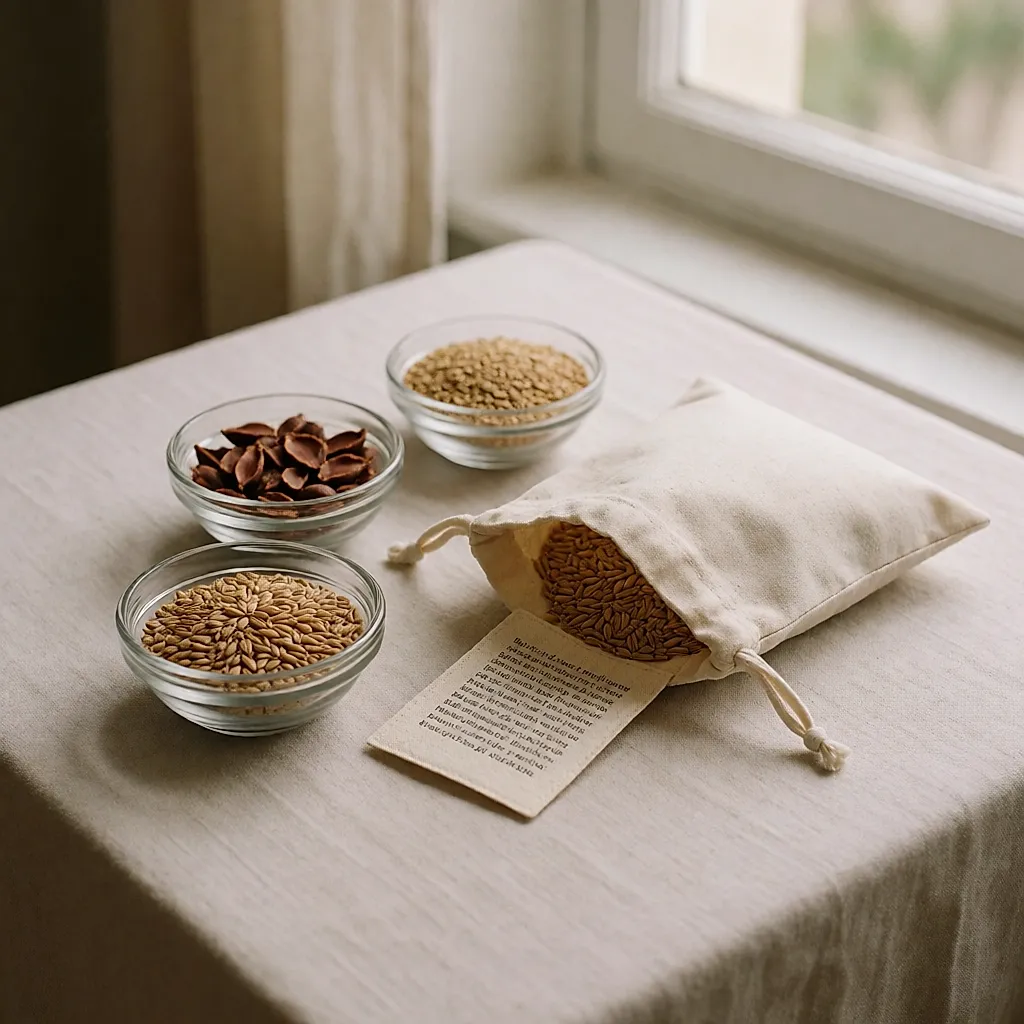
Linseed warms up faster and cools down faster too: ideal for a brief burst of heat, less so if you want to fall asleep on it. Spelt — the cereal husks — is lighter and more pliable, with a warm barn-like smell that won't appeal to everyone. No filling is best in absolute terms: it depends on the weight you want and how you feel about smells. The filling type is listed on the label.
Long pack, belt or shoulder wrap
A long, narrow pack slips into bed to warm your feet, lies across your stomach or rolls along your back. It's the most versatile shape and often the cheapest. A lumbar belt fastens with hook-and-loop tape or an elasticated band: you wear it standing up, which makes all the difference when your lower back wants heat but you don't want to lie down.
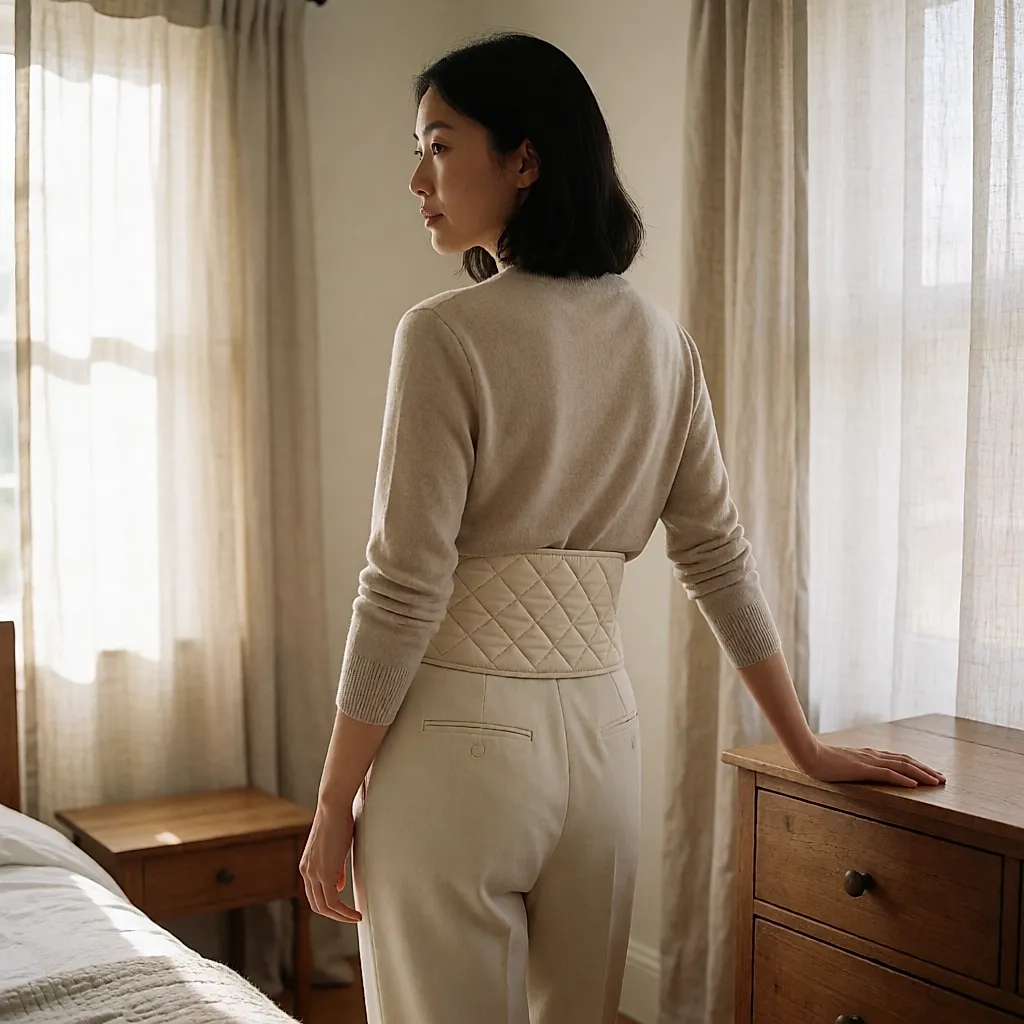
The shoulder wrap, whether cape-style or collar-style, covers the neck and upper back — the favourite of anyone who works sitting down and feels their trapezius turn to stone. Small hand-sized packs fit in a pocket, but their heat runs out faster. One detail to remember: the bigger the cover, the longer it takes to warm up.
Warming it without burning: getting it right
In the microwave, the instructions often suggest starting with 30 seconds, then adding time in 30-second bursts, turning the pack over between each go. Depending on the wattage of your microwave and the size of the pack, it may need two minutes, sometimes four. A water bath isn't necessary for most commercially available models — the label is the final word.
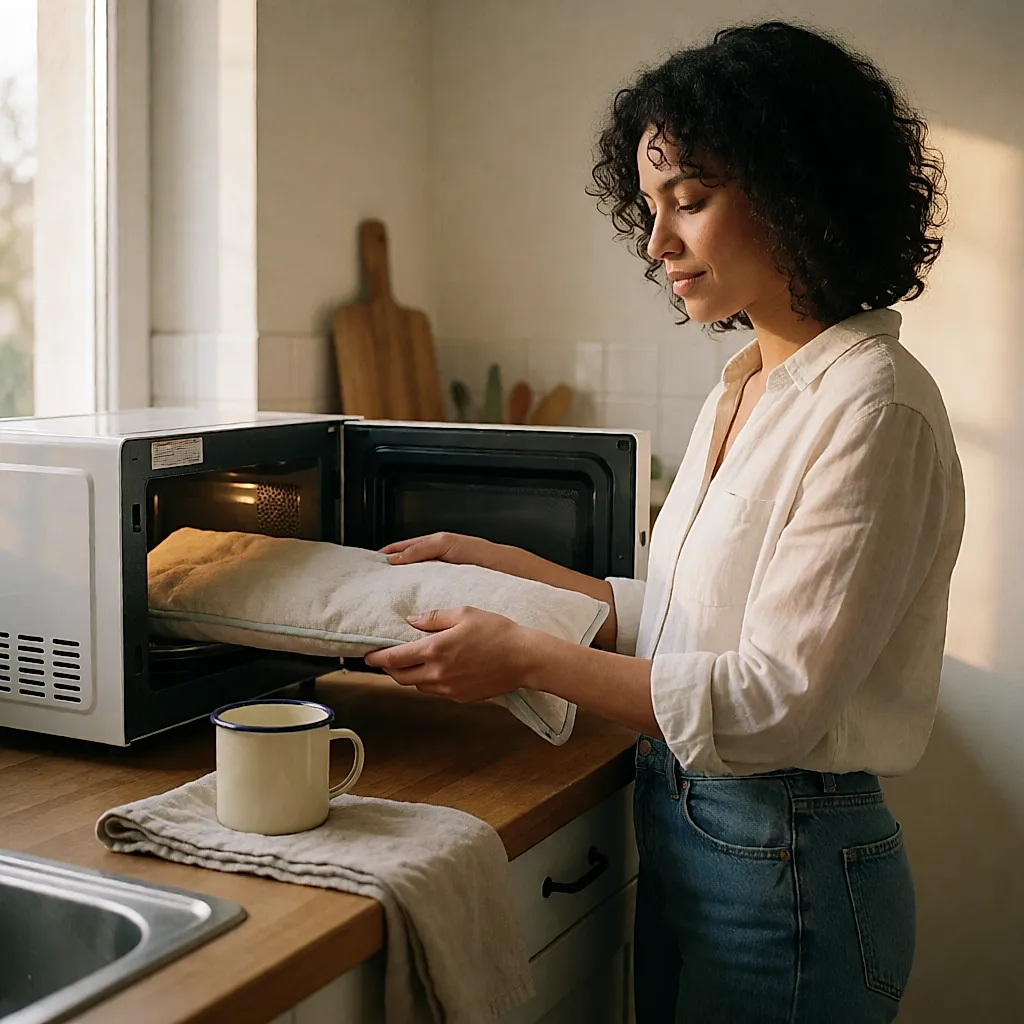
Before you put it on your skin, test it with your palm: if you can't keep your hand on it, it's too hot. And never leave a heat pack heating unattended. A heat pack that smells burnt, has straining seams or a filling that crackles has reached the end of its life. In the UK, the Office for Product Safety and Standards (OPSS) publishes recalls when consumer products are found to be defective.
Localised heat isn't suitable for certain skin types: sensitive skin or skin with reduced sensation, neuropathy (common in people with diabetes), young children, older people or those who need care. If you have unexplained pain, redness or a fever, a heat pack isn't the right tool: speak to a healthcare professional. If you are pregnant, ask for advice before using it on your stomach.
Care: keeping it clean and reheatable
A removable cover makes life much easier: wash the outer cover in the machine at 30°C on a delicate cycle, without fabric conditioner, and never get the filling wet. Cherry stones, seeds and cereal husks don't like water — they go mouldy and lose their ability to heat evenly. If the cover isn't removable, clean it by hand and let it air-dry, never on a hot radiator.
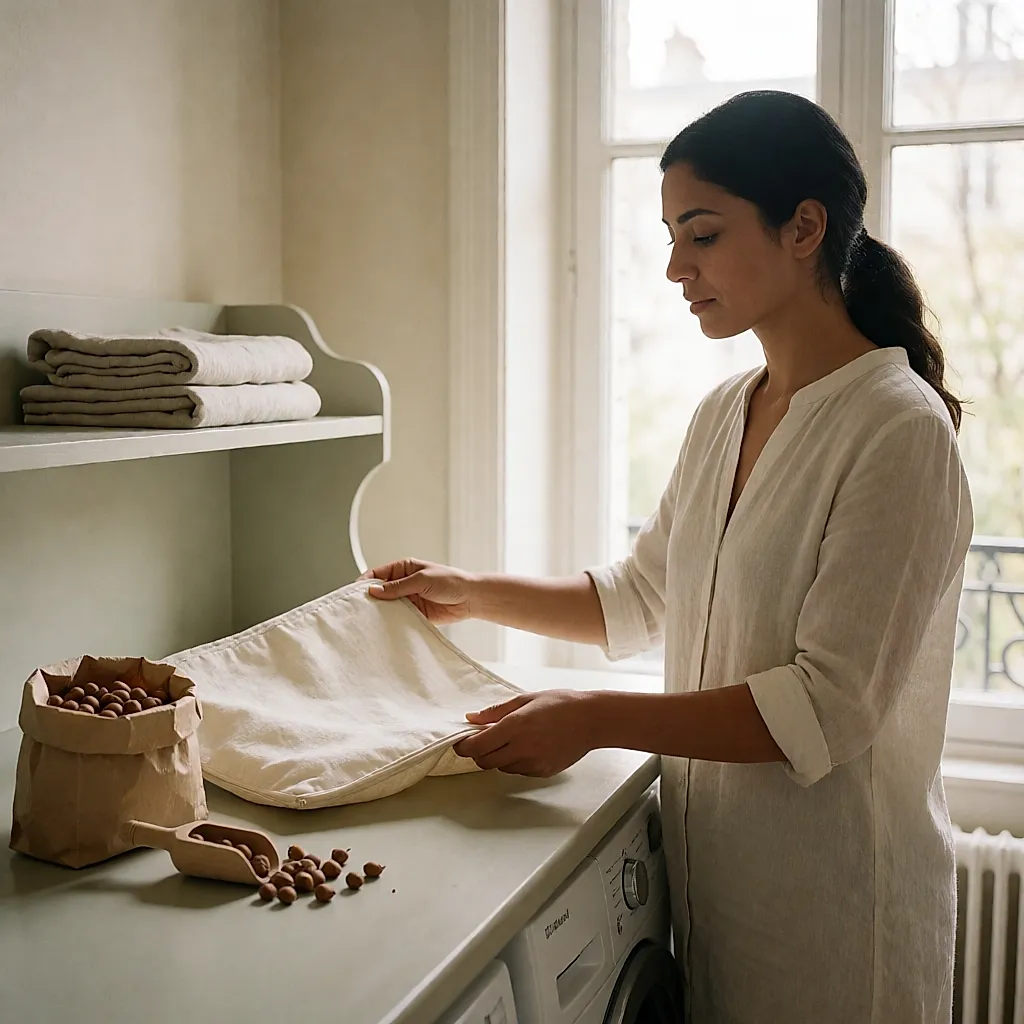
Between uses, store it somewhere dry. Some models offer filling refills: a good way to keep your favourite cover by replacing the contents. Also check the textile composition — organic cotton, linen, hemp — and make sure there are no metal elements in the fastening or embroidery: these rule out microwave use.
Who it really suits
To be clear: a heat pack doesn't cure anything and is no substitute for a diagnosis or treatment. What it offers is more modest: warmth that lingers, an end-of-day ritual. Localised heat is sometimes used to ease a tight muscle area; the evidence relates to temporary, local effects, not to treating an underlying condition.
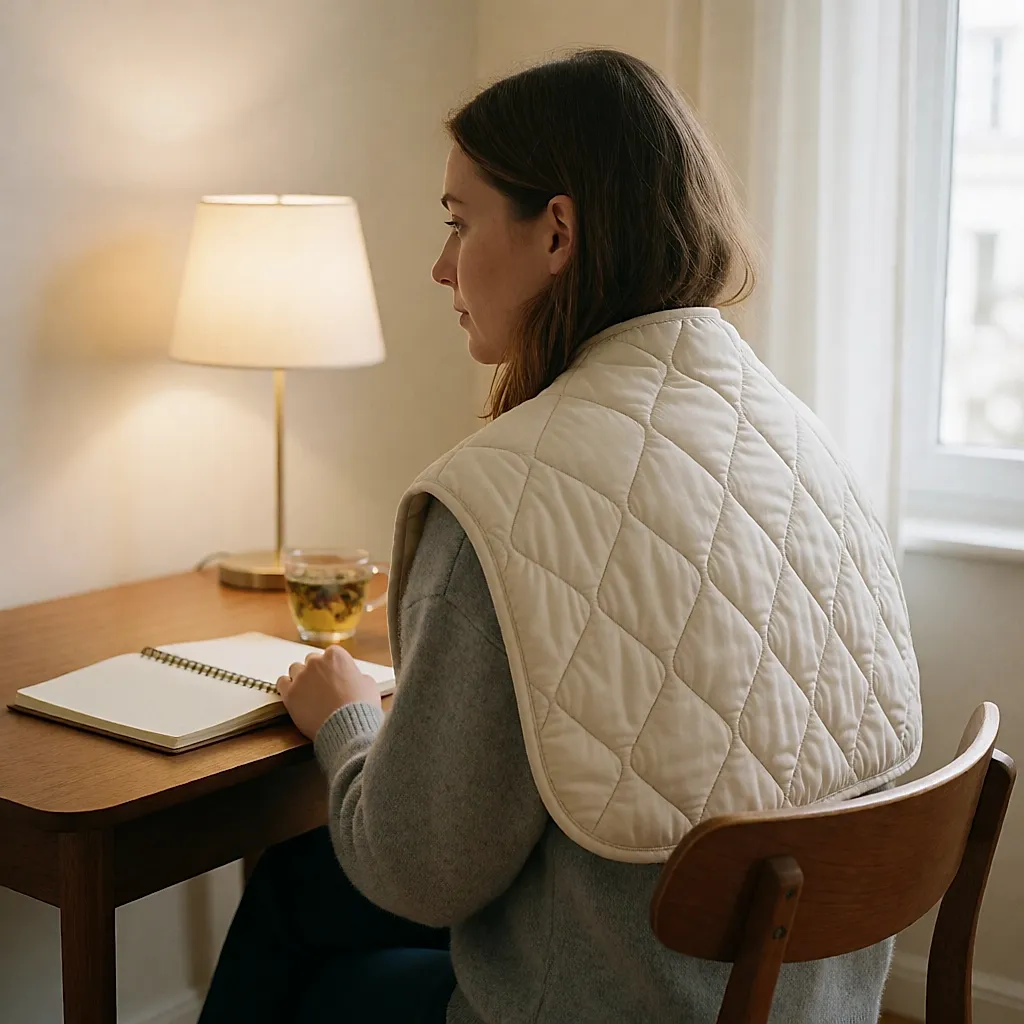
It's most useful for people who feel cold at home even under a throw, who work sitting down and feel their shoulders knot, or who like a warming ritual before sleep. For others, a wool throw and a pair of socks are enough. The real test: does localised heat give you a comfort that general heating doesn't? If so, it earns its place on the shelf.
Budget
Expect to pay roughly £10 to £20 for a long pack or a small format from a health food shop or pharmacy, sometimes less at the end of the season. Belt and shoulder-wrap models are more likely to sit between £25 and £50. Bespoke versions or local textile makers can go up to £60 or £70.
Where to look: health food shops such as Holland & Barrett and pharmacies for standard formats; haberdasheries and textile workshops if you want to sew your own cover and buy the filling loose; makers at markets or online for belt and shoulder-wrap styles. Making your own remains the cheapest option — and the most repairable.
There's still a common-sense point: a heat pack is a comfort object, not a treatment. Chosen well and stored properly, it keeps you company on evenings when the heating is slow to come on. And if pain persists, it isn't the heat pack you need to question — it's a healthcare professional.
Sources
- Office for Product Safety and Standards (OPSS) — Product safety and recalls, accessed October 2026.
- Holland & Barrett — UK health food retailer, accessed October 2026.

Comments
Your opinion matters: rate the article, react and reply to comments.
Comments are moderated; AI-assisted comments are flagged. Text emoticons (8-), :-), <3…) are automatically shown as images.