
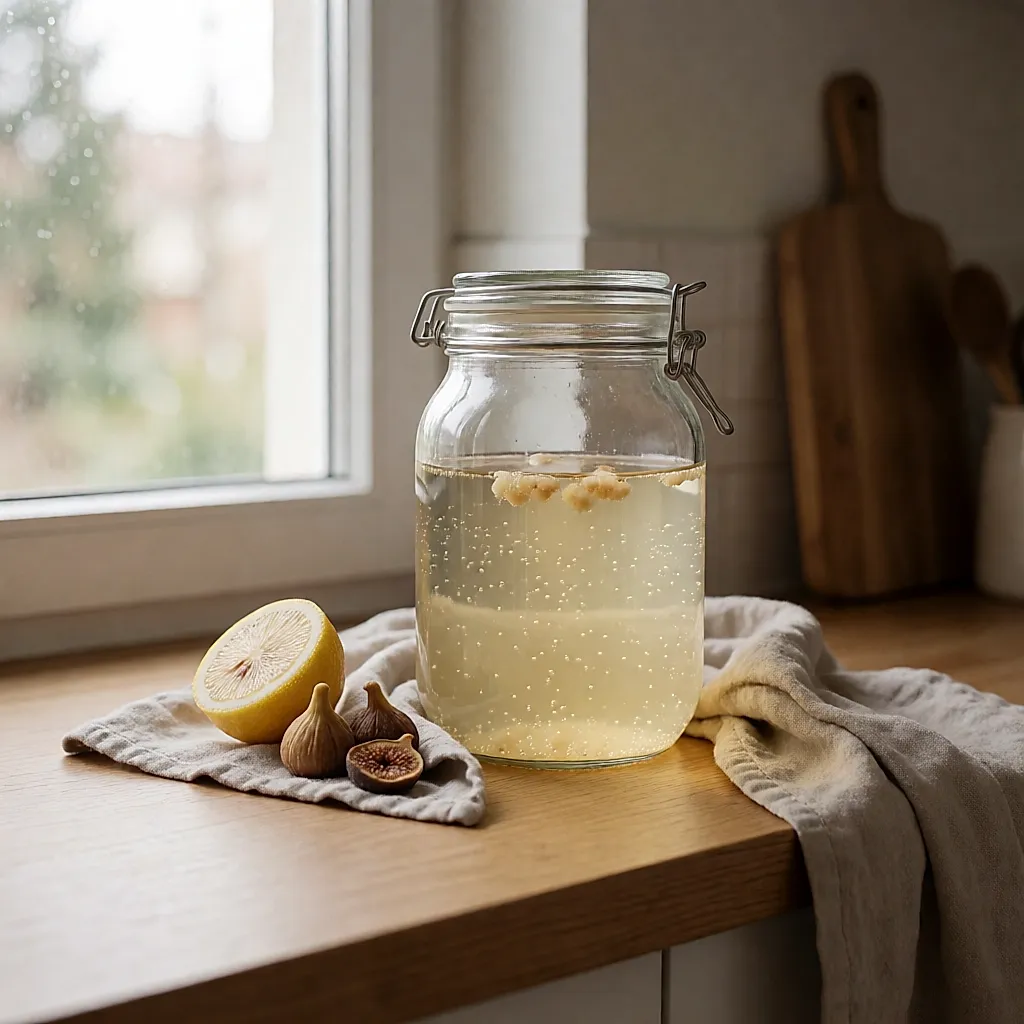
One sachet, and you're away
Sunday evening, 9pm. You open the fridge looking for anything but another can. On the worktop, a glass jar has been bubbling away on its own since yesterday and smells of lemon. Maybe we've found our evening fizzy drink: the kind you make yourself, which never arrives by lorry.
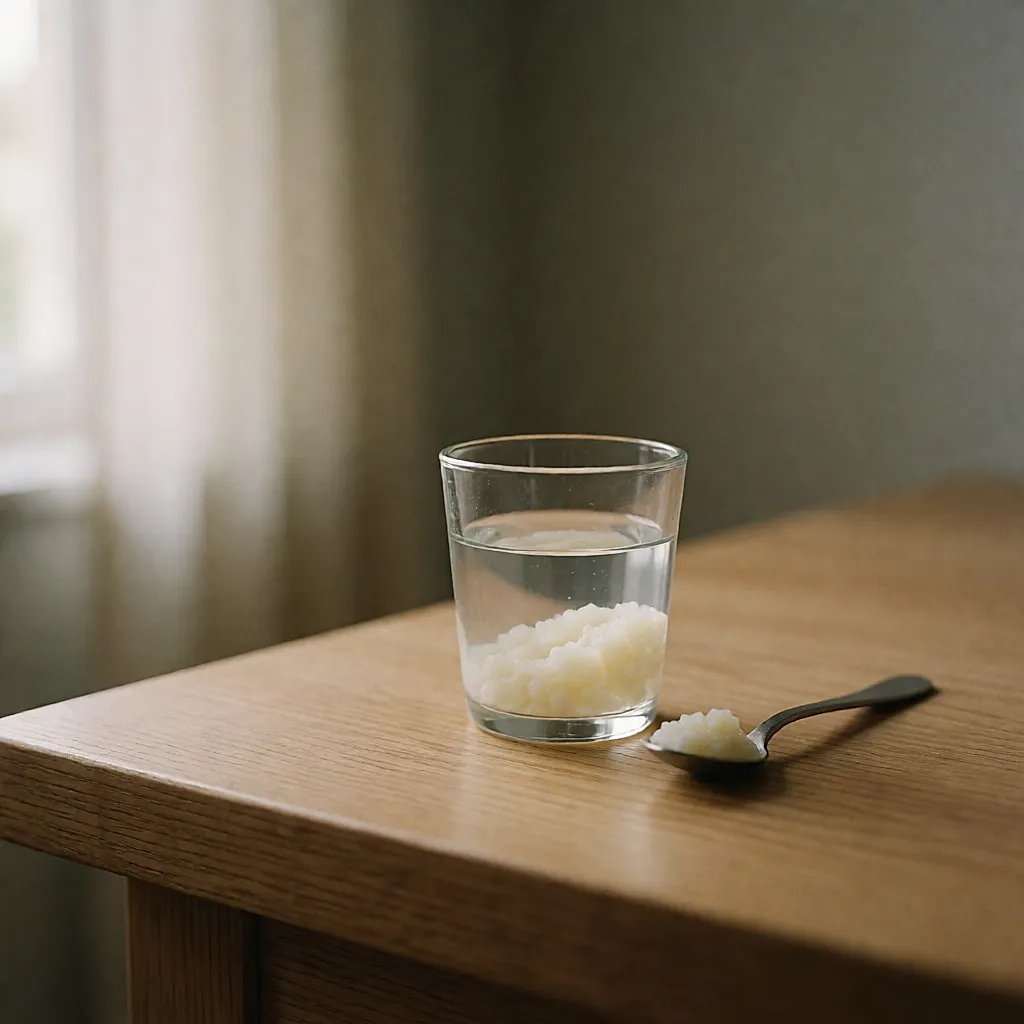
It all starts with kefir grains, a tiny world of yeasts and bacteria delivered in a sachet. Fresh grains get going quickly; dried ones need a few days to wake up in sugared water, but keep for months. Expect to pay £5–£15 for a starter portion from a health-food shop, a specialist fermentation supplier or online.
The cheapest route is also the friendliest: the grains multiply with every batch, so they get passed on. A post in a local group, a neighbour with a generous hand, and you'll come away with a small pot for nothing — the best value in this entire article!
Three pieces of kit, two basic ingredients
A glass jar with a rubber seal, muslin or a fine tea towel, and later a swing-top bottle. Glass, always: plastic holds on to smells and hides what's going on inside.
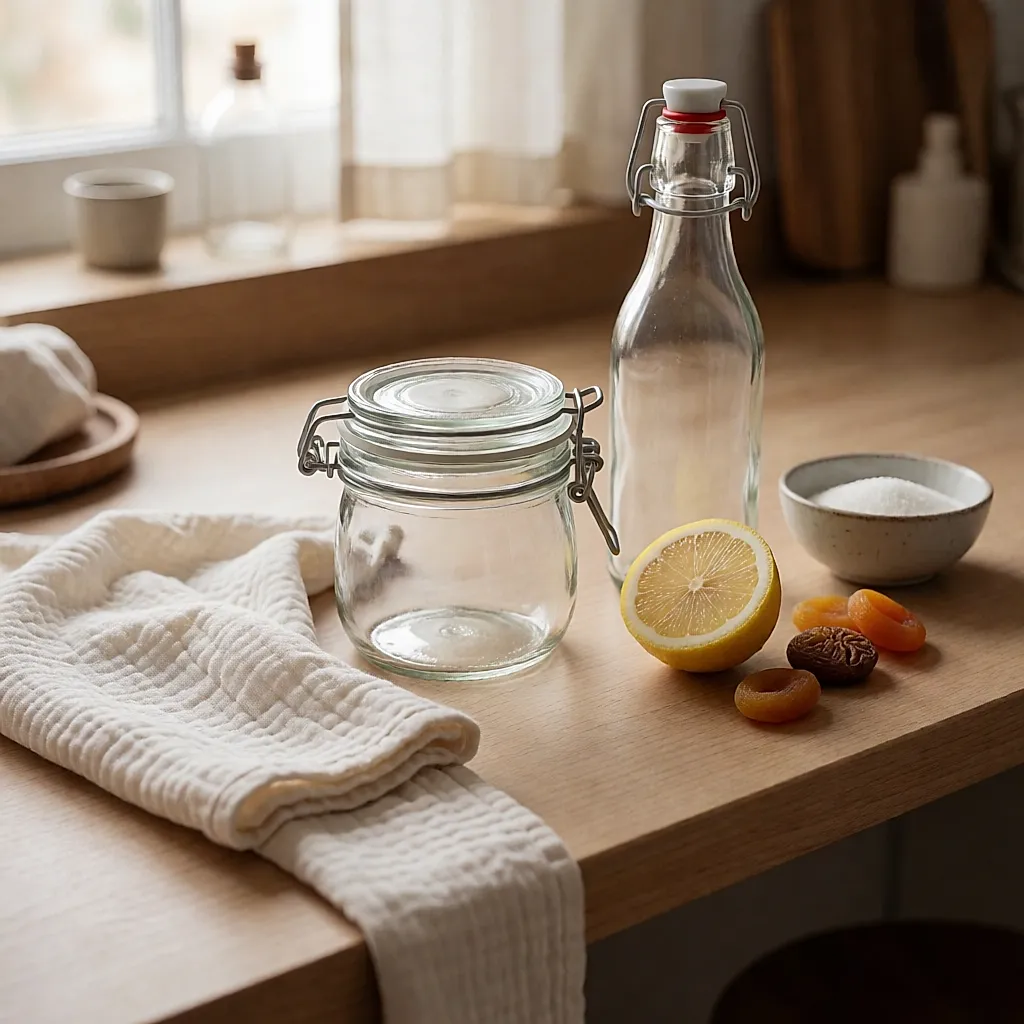
For ingredients: water — if your tap water is treated with chlorine, leaving it to stand overnight can help; if it contains chloramine, use filtered water or bottled spring water — sugar, which feeds the grains rather than your glass, and a flavouring. Half an unwaxed lemon for the bright, sharp edge of a lemonade, two dried apricots or a fig for a softer roundness. Rinse equipment in hot water and wash your hands: fermentation is a culture, and you're giving it a welcoming environment. The food-hygiene principles set out by the Food Standards Agency apply to a jar of kefir too.
A frankly unpleasant smell, furry mould on the surface, slimy liquid: throw everything away, including the grains. An acidic, fizzy drink that smells of yeast and lemon is a good sign. If in doubt, start again — a few pounds' worth of grains is better than an upset stomach. And if you are immunocompromised, pregnant or simply unsure, speak to a healthcare professional before drinking it regularly.
24 to 48 hours, then the bottle
The method is disarmingly simple: dissolve sugar in a little warm water, top up with cold water, add the grains and lemon, cover with muslin. Then wait 24 to 48 hours. In practice you'll often taste it the next day; any earlier and it's bland, any later and it turns vinegary, and the urge for a fizzy drink fades.
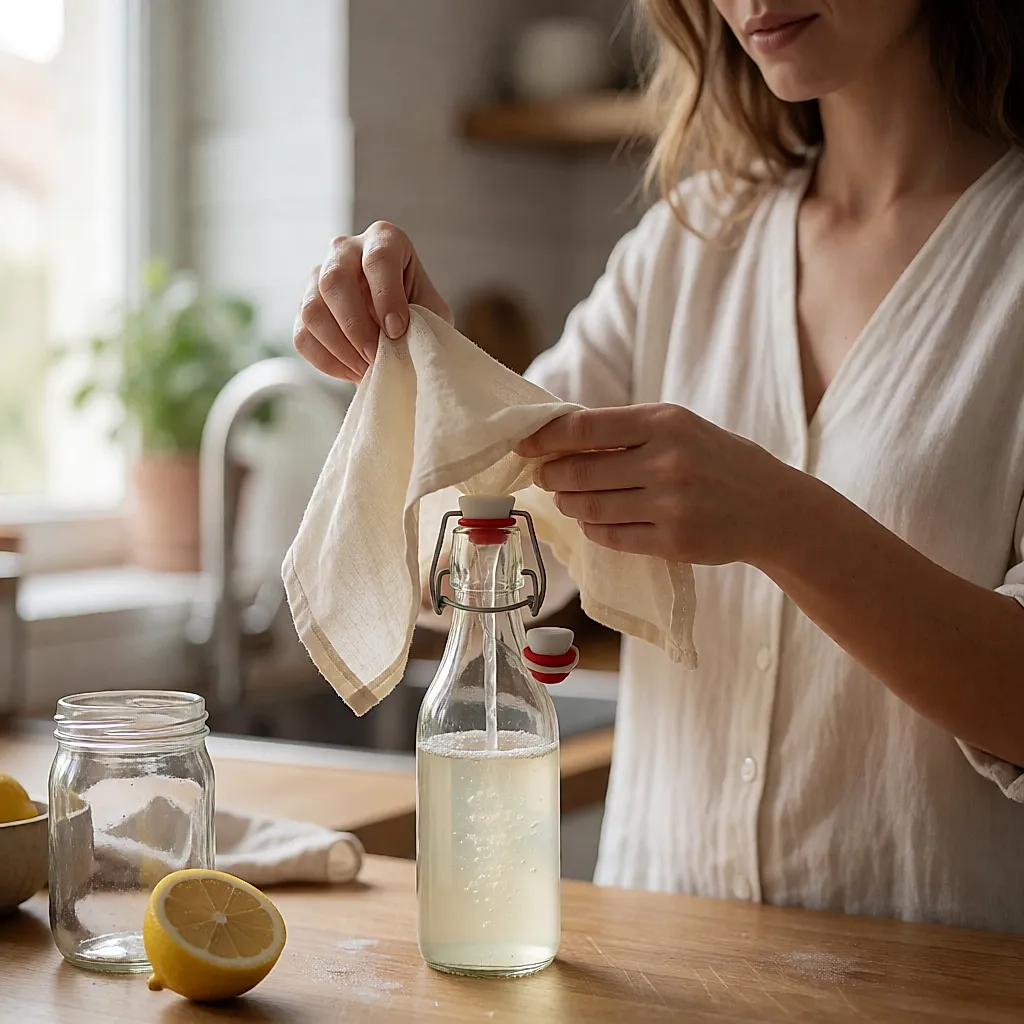
A kitchen at 24°C speeds everything up; a cool corner slows it down: your palate decides, not the calendar. When the taste suits you, strain it — the grains go back for another batch, the drink goes into a bottle with a piece of fruit or a splash of juice, builds its fizz for 12 to 24 hours at room temperature, then goes into the fridge. Open the cap over the sink for the first few days.
Common mistakes
Over-fermenting, first. You go away for the weekend, come back on Sunday evening, the jar has carried on without you and the result is distinctly vinegary. The rule: don't let two days pass without tasting it.
An over-full jar, next. A fermenting drink produces gas; if the liquid reaches the rim, it overflows and leaves a sticky ring on the worktop. Leave a good third of the jar as air space and never seal it airtight during the first fermentation.
Then there's the rhythm: one batch every two or three days, like a plant. The grains can handle a week in the fridge, less so long periods of neglect.
Budget
No big outlay. Grains: £5–£15, sometimes free. A jar with a rubber seal: £5–£15, or a repurposed jam jar. The swing-top bottle, the only real expense: £4–£12 from a hardware shop, health-food shop or online. Sugar and lemon: pennies per litre.
After that, nothing else to buy — a lemon a week, and a jar that is only too happy to work.
What we know, what we don't yet know
The enthusiasm for fermented foods has grown alongside interest in the gut microbiome. On water kefir specifically, the available evidence remains limited: see it as a homemade, fizzy, inexpensive alternative to an evening soft drink, not as a treatment.
What we can say without overstating it: you control the sugar, you flavour it with lemon or dried fruit rather than syrup, and your evening glass costs next to nothing. So, can or jar? The jar takes two minutes and a lemon. It's worth trying at least once — if only to watch the jar quietly working away on the worktop.
Sources
- Food Standards Agency — Food hygiene and safety
- NHS — Probiotics and gut health

Comments
Your opinion matters: rate the article, react and reply to comments.
Comments are moderated; AI-assisted comments are flagged. Text emoticons (8-), :-), <3…) are automatically shown as images.