

Make your tan last longer
Every September, it's the same heartbreak: skin still golden from the holidays, that glowing complexion you'd love to keep at least until the first jumpers come out, and then the colour starts to go. Sometimes in patches, which is even more annoying. So how do you make that light last a little longer, without weakening skin that's already had a lot to cope with all summer? Don't worry, there are steps you can take — but none of them are magic.
A tan is first and foremost a defence response
Before we try to prolong anything, let's get things in order. The pretty caramel shade you like is melanin, a pigment your skin makes to filter some UV. Behind that flattering colour, then, is the epidermis responding to an assault: those rays damage cell DNA, a phenomenon that has been documented for a long time. In other words, there's no such thing as a "healthy tan".
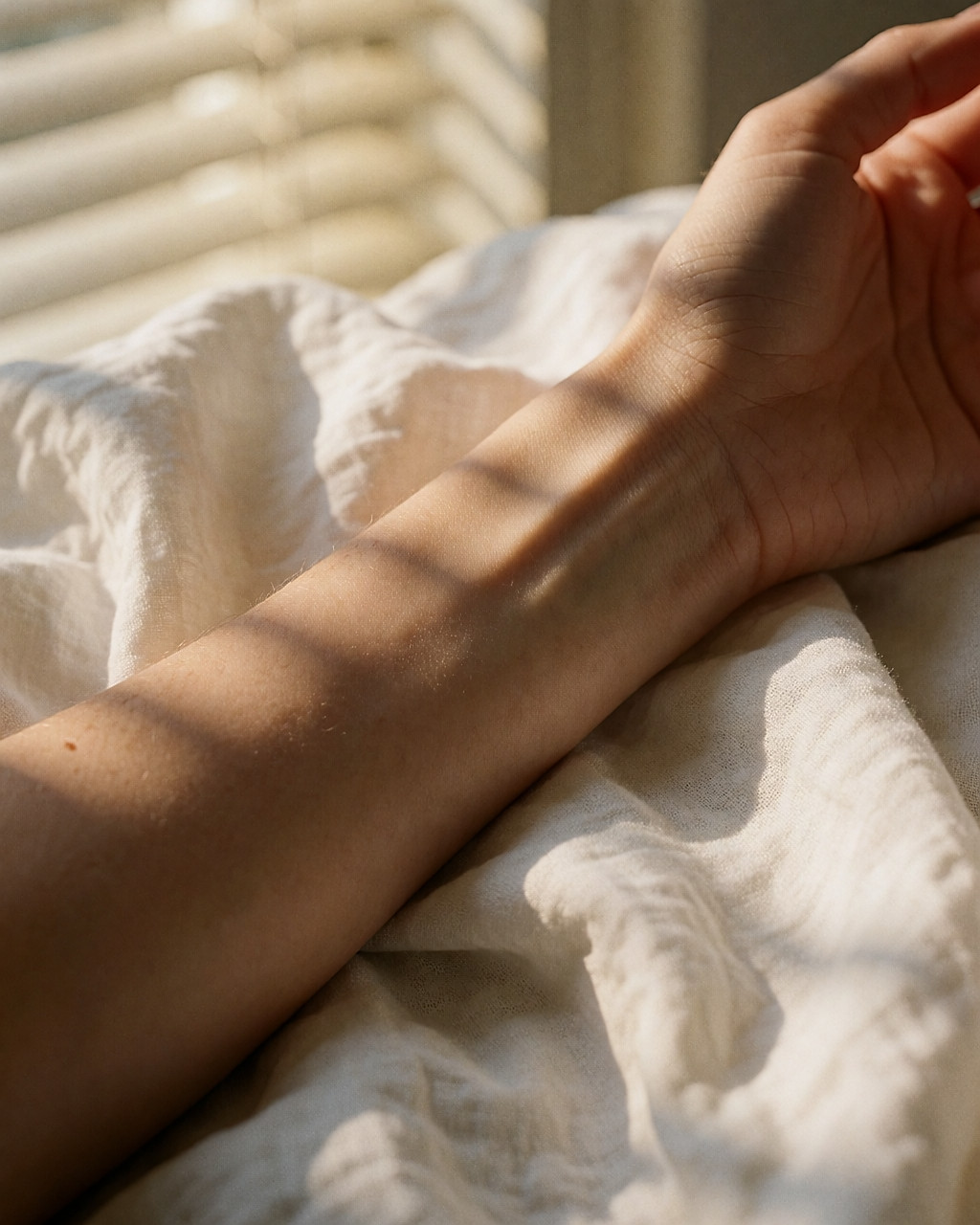
That shift changes everything. The point isn't to make a beauty asset last as if you were maintaining nail varnish, but to avoid doing further damage to skin that has already given a lot over the holidays. Wondering why the colour sometimes fades in uneven patches? Your epidermis renews its cells roughly every three to four weeks, and the melanin built up in the surface layers goes with them. You can't stop that clock — but you can help the tan fade evenly, and keep your complexion clear along the way.
Exfoliate, yes — but sparingly
Once a week, no more. Any more and you weaken the skin barrier without gaining any glow, and you may even find your tan fades faster. The detail that makes all the difference is the grain: the finer it is, the more dead cells you remove without irritation. Sugar or salt for mechanical exfoliation, fruit acids — AHAs, lactic acid — for a chemical version. Test first on a small patch on your arm to see how your skin reacts.
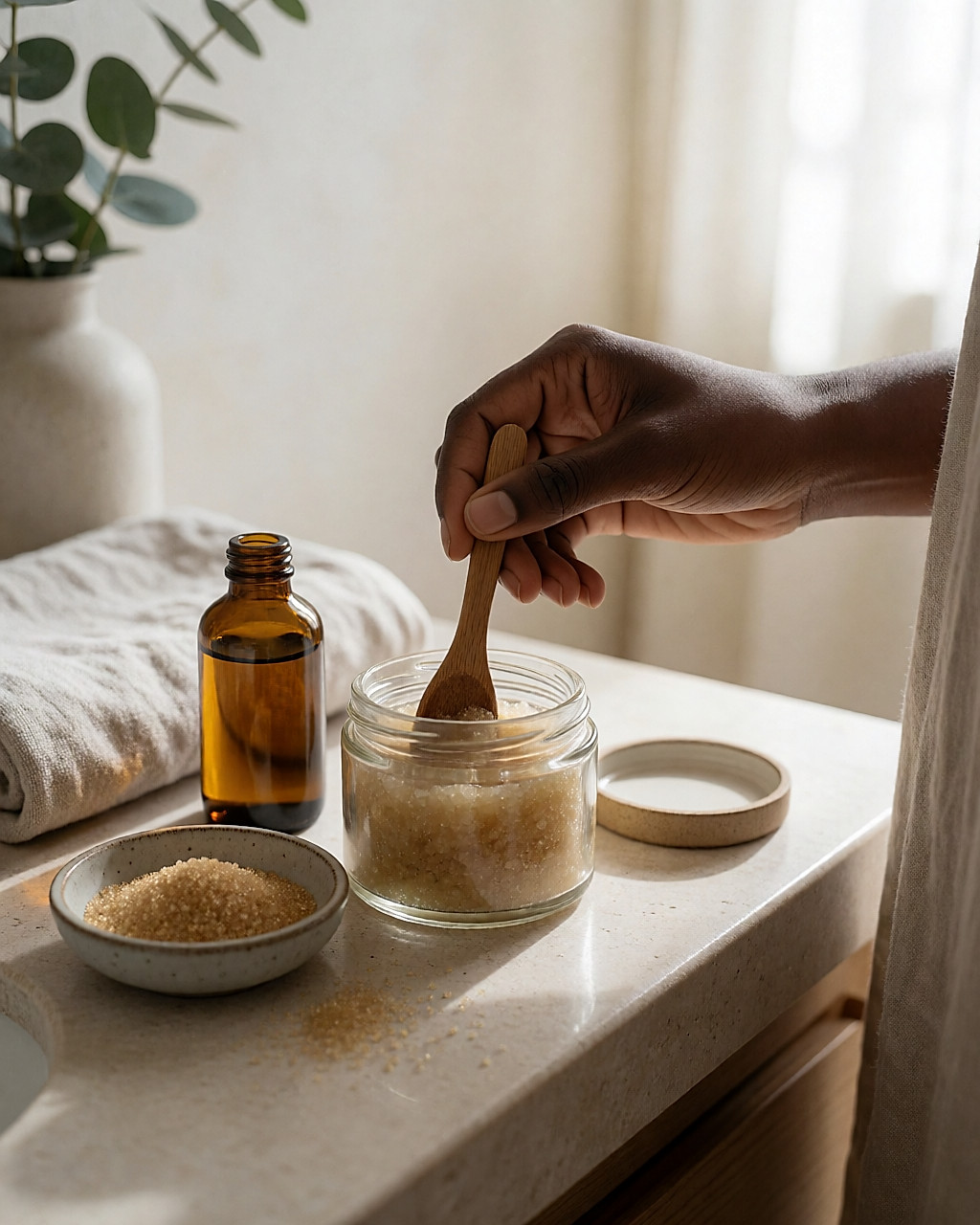
One detail we often forget: if your tan is peeling in shreds, skip the session. You'd only speed up the colour's disappearance, which is counterproductive. And on the ingredients front, a homemade scrub with sugar and vegetable oil does the job perfectly for pennies, with minimal packaging. No need for a wildly expensive jar.
Moisturising, without illusions
Can a cream really make a tan last? Let's not kid ourselves: no cream sets melanin. It's not for want of seeing "tan-extending" skincare promises, is it. What moisturising does do, however, is limit dehydration, which dulls the complexion and makes flakes more obvious.
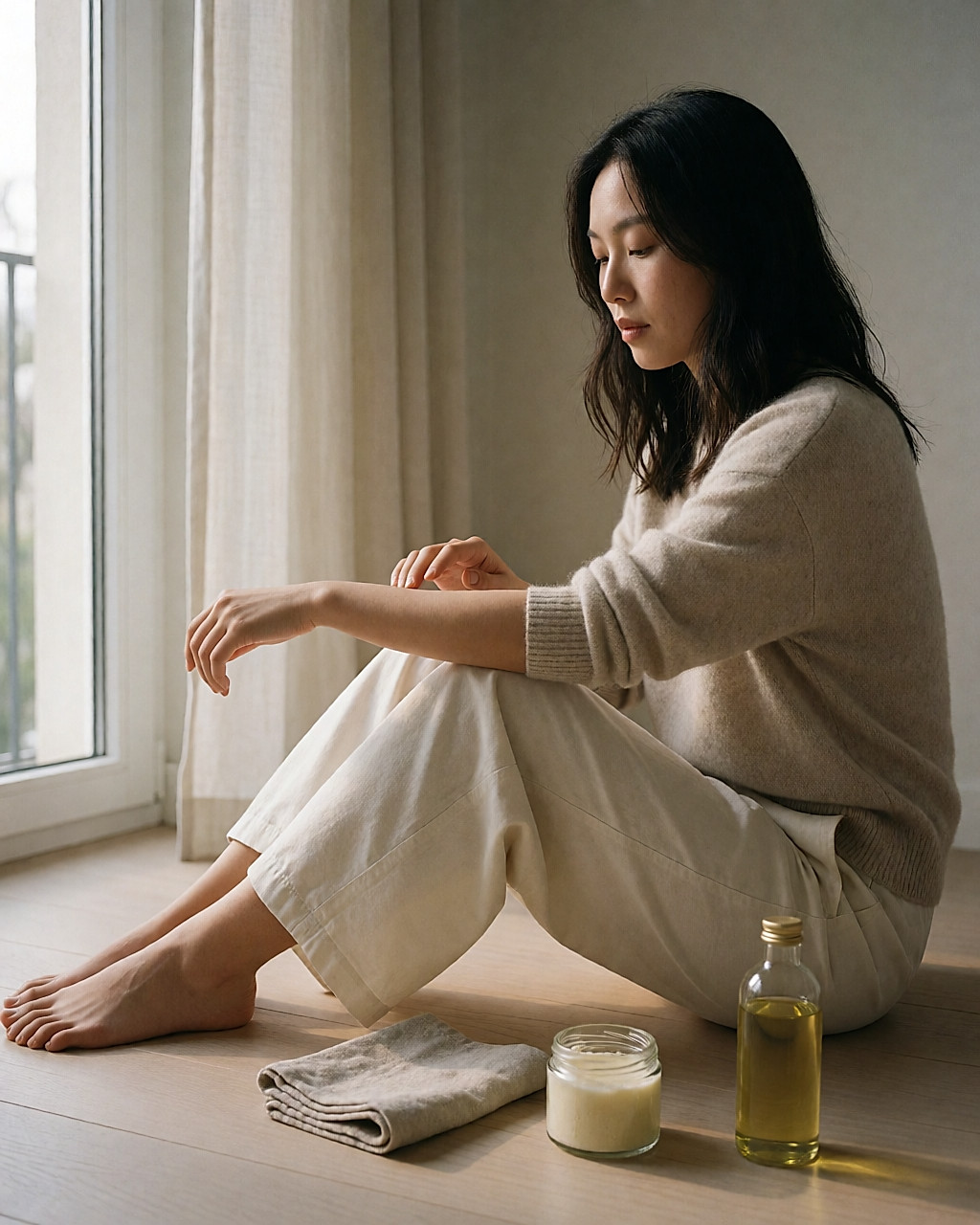
The ritual that works: a rich texture — balm, plant butter, oil — applied to skin that's still damp after a shower, morning and evening when you have time. Honestly, this small, modest step kept up over time shows more than plenty of expensive treatments! And it avoids adding another layer of tightness to skin that doesn't need it.
Self-tan to top up the colour
Dihydroxyacetone, the active in most self-tans, colours the outer layer of skin. The result: three to five days of colour, until that layer sheds. It isn't magic, but it's honest.
Two rules, then. Exfoliate beforehand, otherwise the colour will be patchy, and apply with a mitt, otherwise palms and nails turn yellow — the classic Sunday-night mistake. Go lightly on dry areas — knees, elbows, ankles — and use a gradual tinted product for the face, easier to control than a body formula. A note, too: certified organic self-tan options remain few and far between, and in that case a conventional formula does the job. It's an acceptable compromise, provided you choose a refill when one exists.
On your plate
Carrots, sweet potatoes, pumpkin, spinach, apricots, melon: rich in beta-carotene, these foods can give a slight golden tint, subtle but real. They don't replace sun protection, though, we agree.
As for supplements, the Food Standards Agency urges caution: at high doses and over the long term, beta-carotene isn't harmless, particularly for smokers. Good news: your plate is more than enough for a subtle healthy-glow effect!
Less foundation, more light
On already tanned skin, an opaque base kills everything! A finely milled bronzing powder, applied to the areas the sun naturally hits — forehead, bridge of the nose, cheekbones, chin — is enough to wake up the face. Soft brush, light hand: your make-up will last better than with a thick layer, and your complexion will look brighter.
In September, UV levels can still be surprisingly high in the UK, especially in the south on clear days. Lunch outside or a sunny walk keeps the colour going, as long as you keep at least SPF 30 on your face. That's what helps avoid pigmentation and skin ageing.
Budget
The ranges below are rough UK street prices, for body and face. They vary with size, city, range and where you buy.
- Body scrub: expect around £4–£12 in supermarkets, £12–£25 in pharmacies or beauty retailers. A certified organic version often sits at the top of that range; price follows size, packaging (plastic or glass jar) and certification.
- Moisturising lotion, balm or oil: £5–£12 in supermarkets, £12–£25 in pharmacies. Refillable formats sometimes cost more at first, less over time.
- Self-tan: £10–£22 in supermarkets and beauty retailers, up to £35 for a premium facial format. A mousse runs out faster than a lotion.
- Bronzing powder: £12–£25 in supermarkets, £25–£45 in premium beauty retailers.
- Beta-carotene supplements: £7–£20 per course. Not essential.
Where to find them: supermarkets and beauty retailers for body care, pharmacies for reactive skin and supplements, health food shops and official online stores for certified formulas.
On criteria, a label such as COSMOS Organic sets precise requirements on ingredient origin, organic content and permitted processing methods. It guarantees neither tolerance nor effectiveness on your skin — only a patch test will tell you that. Choose refills, glass, solid or loose formats when available, and trust the label rather than the packaging design. A homemade sugar and vegetable oil scrub remains the cheapest, lowest-packaging option.
Sources
- NHS — sun safety and UV protection
- Food Standards Agency — advice on beta-carotene supplements
- Cancer Research UK — UV rays and skin cancer risk
- European Scientific Committee on Consumer Safety (SCCS) — opinion on dihydroxyacetone in cosmetics
- COSMOS — COSMOS Organic standard
- Recycle Now — packaging recycling guidance
Food supplements do not replace a varied, balanced diet and a healthy lifestyle.


Comments
Your opinion matters: rate the article, react and reply to comments.
Comments are moderated; AI-assisted comments are flagged. Text emoticons (8-), :-), <3…) are automatically shown as images.