
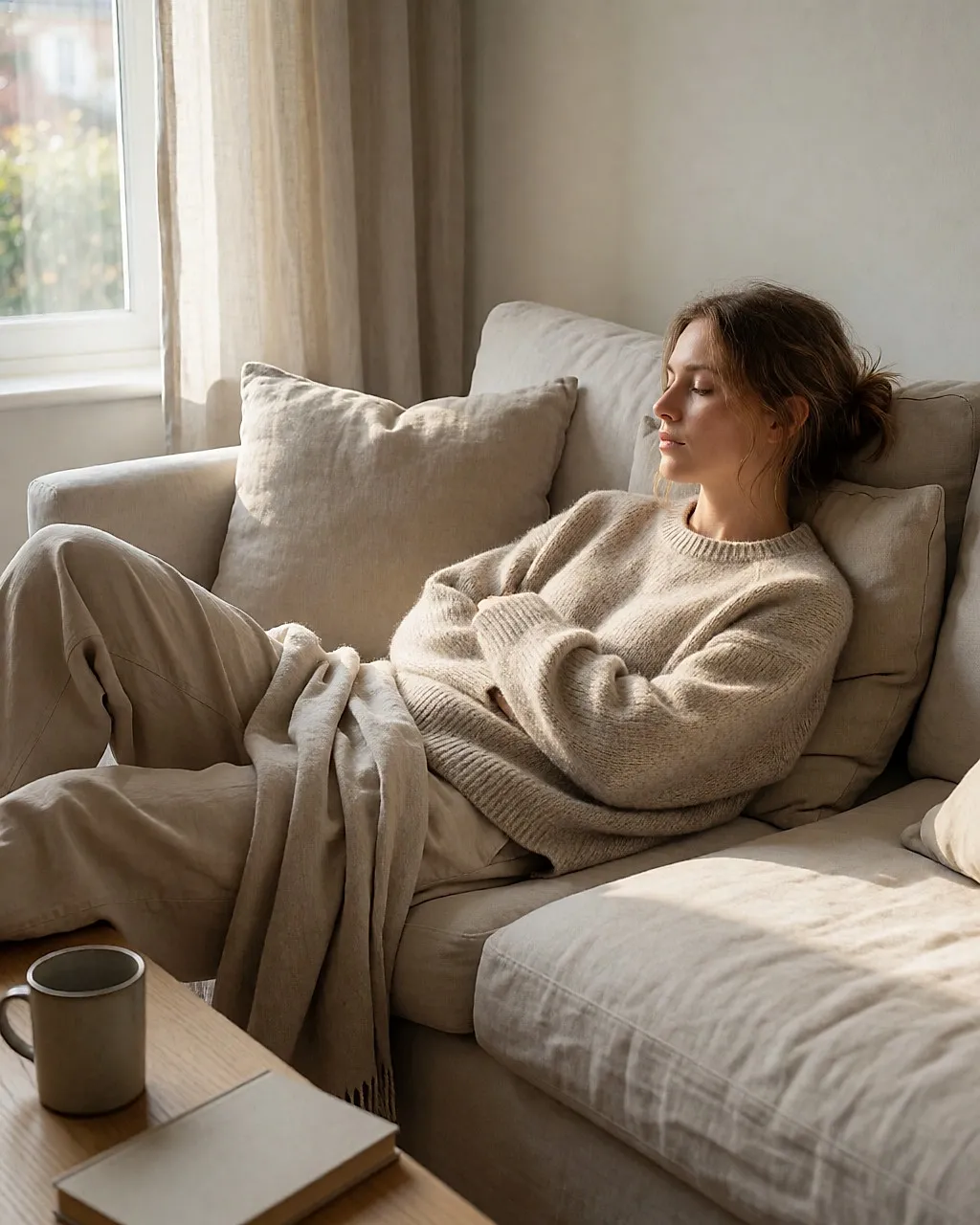
You find yourself nodding off around 2pm, rereading the same email three times and wondering whether you are really built for afternoon work? Nothing unusual there: your internal clock creates a dip in alertness in the early afternoon, and a nap remains one of the simplest preventive habits around. Free, accessible and fairly well studied.
What we know, and what we don't yet know
What is solid: a short midday break supports alertness, memory and mood. Current data suggest that regular napping may also be linked to a lower cardiovascular risk — a serious lead, not a certainty. Conversely, a very long nap can be a signal: poor-quality night-time sleep, or even undiagnosed sleep apnoea. Sleep deprivation and sedentary behaviour, meanwhile, remain well-documented risk factors, and no nap can replace a proper night's sleep. In practice, if you sleep badly at night and crash during the day, speak to a GP or healthcare professional: that kind of follow-up is worth far more than a casual opinion at the counter.
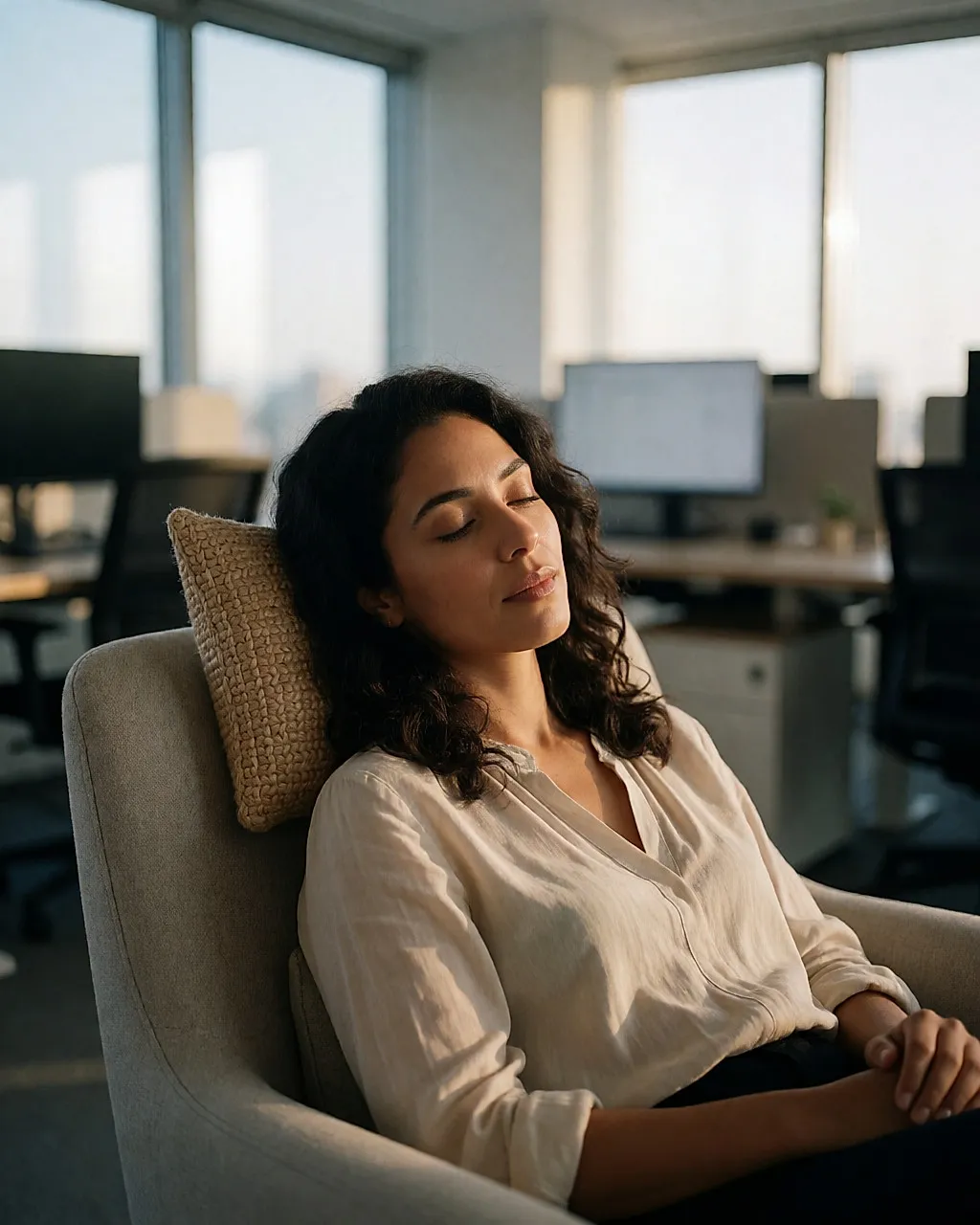
The power nap: 20 minutes, no more
Forget a three-hour daytime sleep: few people can fit it in, and even fewer come out of it feeling fresh. The formula that works is the power nap: 15 to 20 minutes. Enough to recharge, without dropping into a deep sleep cycle that leaves you in a fog when you wake. Any longer, and you risk a groggy awakening and the urge to keep going.
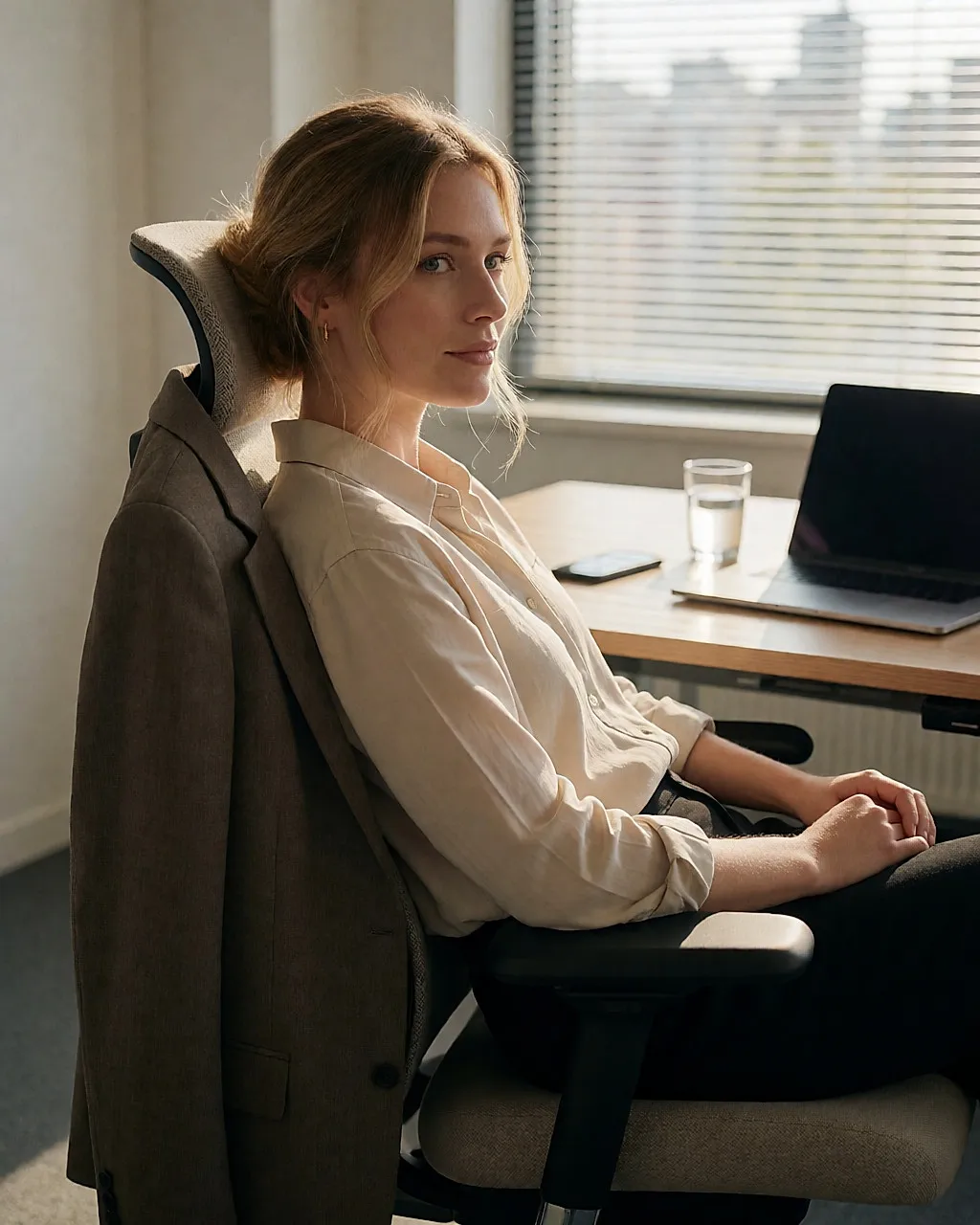
The best window? Just after lunch, when tiredness naturally rises. At home if you can, otherwise in a quiet chair at work — and if it reclines, even better.
Your body likes routine. By choosing roughly the same time each day, you will find it easier to fall asleep over the weeks: regularity is learned, not decreed.
Three formats depending on your time
- 5 minutes, repeated. Before a meeting that makes you anxious: sit down, relax your shoulders and neck, breathe in slowly, exhale for longer. Close your eyes, think about something other than work. Even without sleeping, this buffer leaves you sharper.
- 20 minutes, once only. The ideal format: a proper little sleep, a clear awakening.
- On holiday. Treat yourself, but keep an eye on how easily you fall asleep in the evening: a late, long nap can delay it.

When you wake, don't leap up. Stretch, unfold your back and neck, get up slowly, drink a glass of water, take a few steps. Two minutes of transition beat a frantic restart.
Do you need any kit?
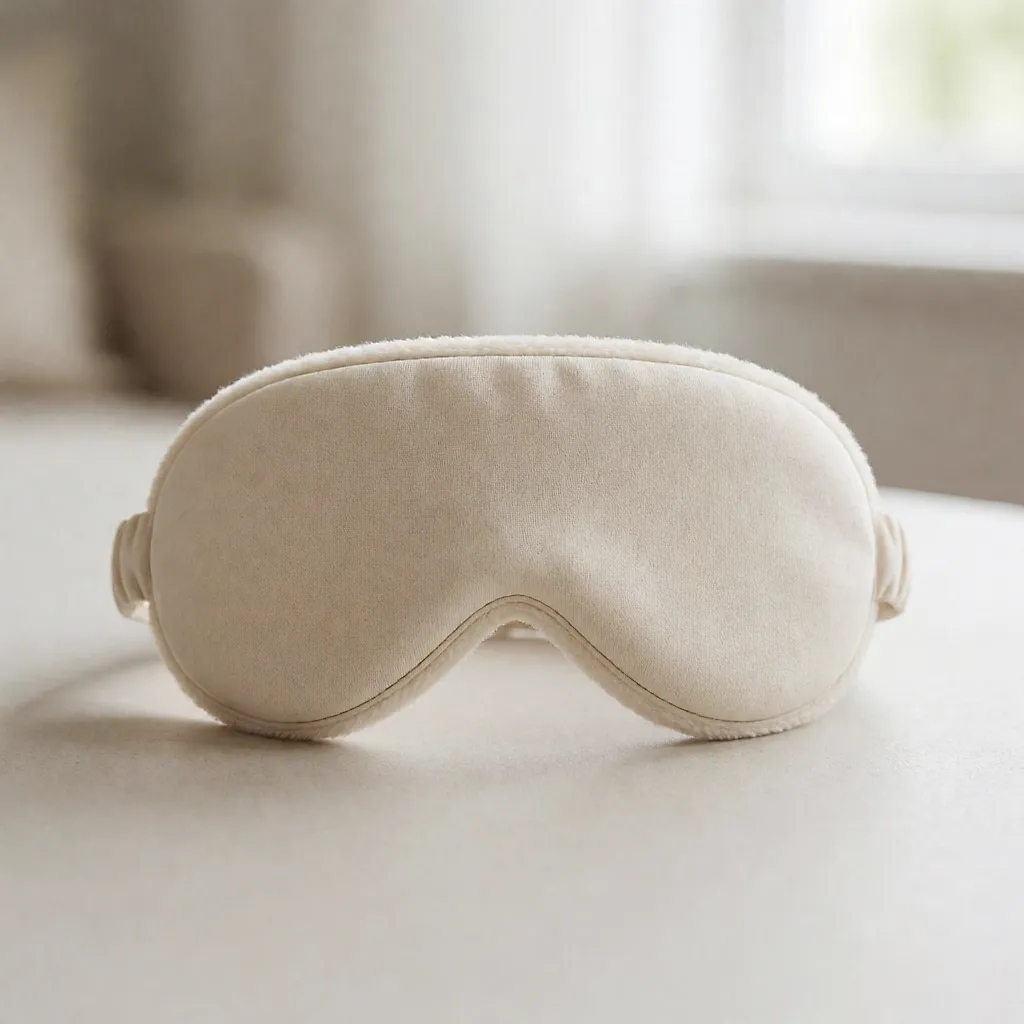
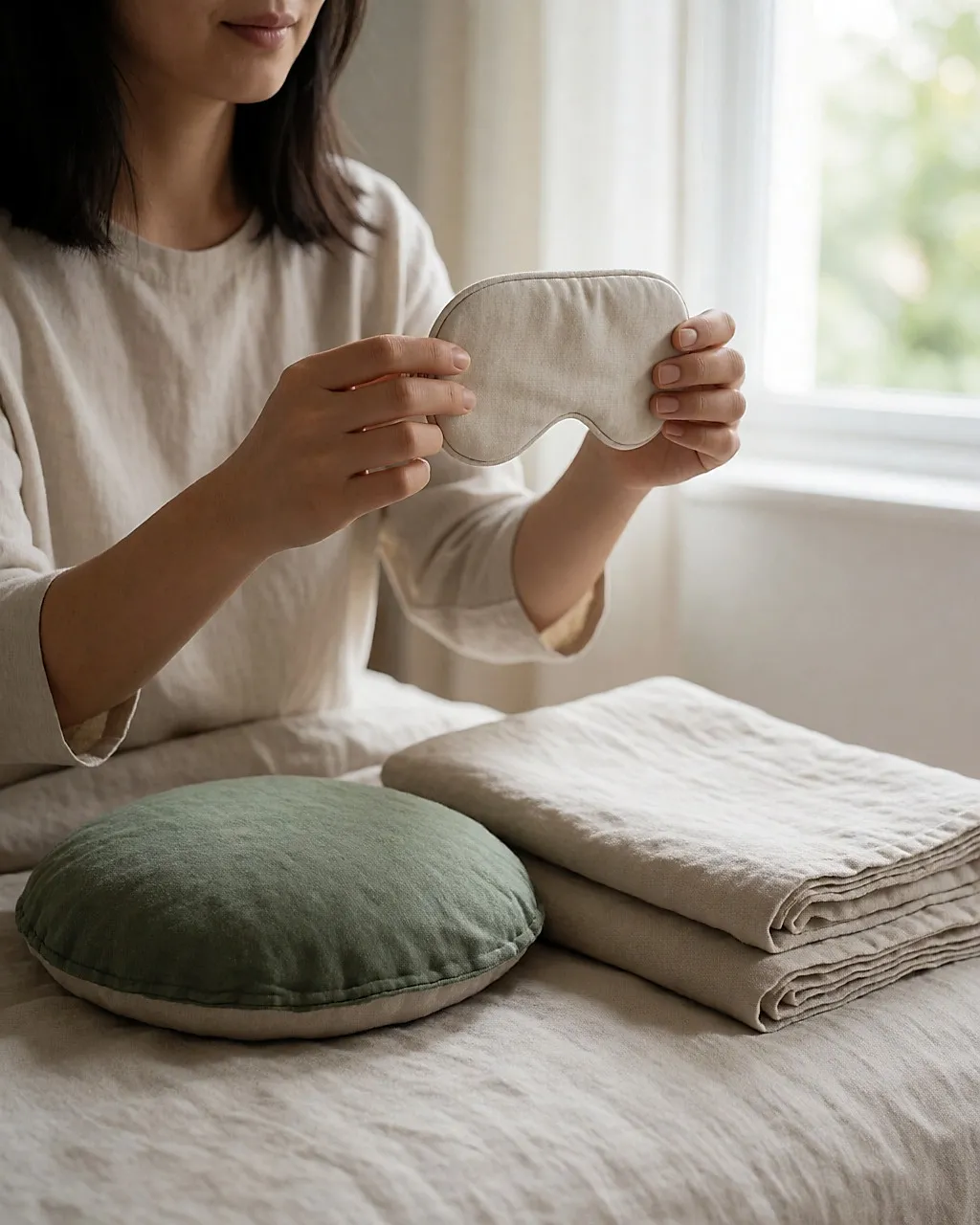
Short answer: no, and that is a good thing. If you want a bit of support, a sleep mask and a small cushion are enough. Check the composition: natural or recycled fibres, washable cover. On labels, GOTS-certified organic cotton guarantees an organic supply chain and social criteria; OEKO-TEX certifies the absence of unwanted substances above certain thresholds, but says nothing about organic origin. Also think about end of life: cardboard packaging, refills, repairability. Without those markers, a 'natural' claim on the label does not prove much.
Budget
- Sleep mask: expect around £10–25 depending on the material; more for certified mulberry silk.
- Small cushion: around £15–45, depending on the filling and whether it has a removable cover.
- Earplugs or noise-cancelling headphones: around £10–35.
You will find entry-level options in supermarkets and online, and more traceable materials at bedding shops and specialist brands. The price gap comes down to certification and where it was made, not magic.
Sources
- NHS — Sleep and tiredness
- French National Institute of Sleep and Vigilance (INSV)
- French health insurance (Ameli) — Sleep dossier
- Inserm — Sleep dossier
- Naska A. et al., 'Siesta in healthy adults and coronary mortality in the general population', Archives of Internal Medicine, 2007
- Milner CE, Cote KA, 'Benefits of napping in healthy adults', Journal of Sleep Research, 2009
Comments
Your opinion matters: rate the article, react and reply to comments.
Comments are moderated; AI-assisted comments are flagged. Text emoticons (8-), :-), <3…) are automatically shown as images.