
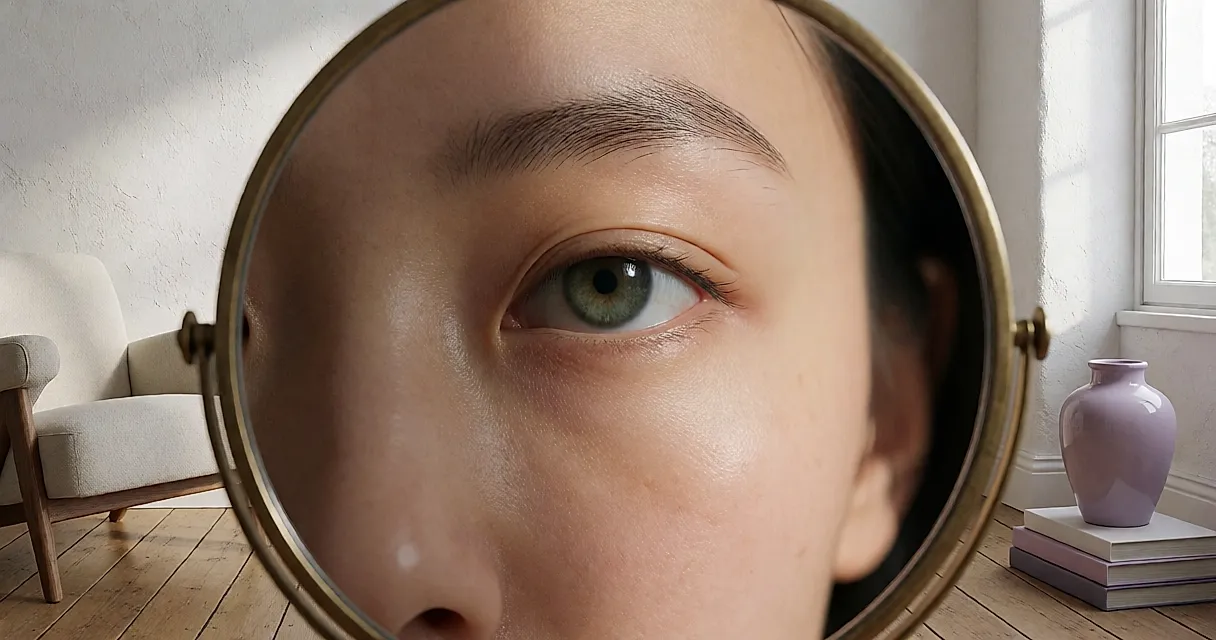
On a green eye, the eyelid is not the story. Everything happens about three millimetres lower, in that hollow most of us make up on autopilot, between the roots of the lower lashes and the top of the cheekbone. Add light there, and the iris switches itself on.
The light comes from below
With Ana de Armas, what you remember from one appearance to the next is never a heavy lid. It is a clear gaze that looks lit from within, with no way of telling at a glance what has actually been applied. The principle fits in one line: the light is added under the eye, not above it. I couldn't tell you the exact product she wears, and honestly it doesn't matter here — the technique transfers as it stands.

On a green iris it works even harder. Green is a light, luminous colour that loses its spark the moment the under-eye area starts to show: a bluish shadow, a hollowed-out dark circle, and the iris looks switched off when it has done nothing wrong. You can layer on the most beautiful eyeshadows: if the under-eye stays grey, the gaze stays grey. Unfair? A bit. Fixable? Entirely.
Skin first, colour second
First step, and the one most often skipped: moisturise. Fine, slightly dry under-eye skin drinks the concealer, clings to fine lines and turns chalky as the hours pass. Pat in a light eye cream, give it a minute to sink in — long enough to do your brows — and only then go in with base.
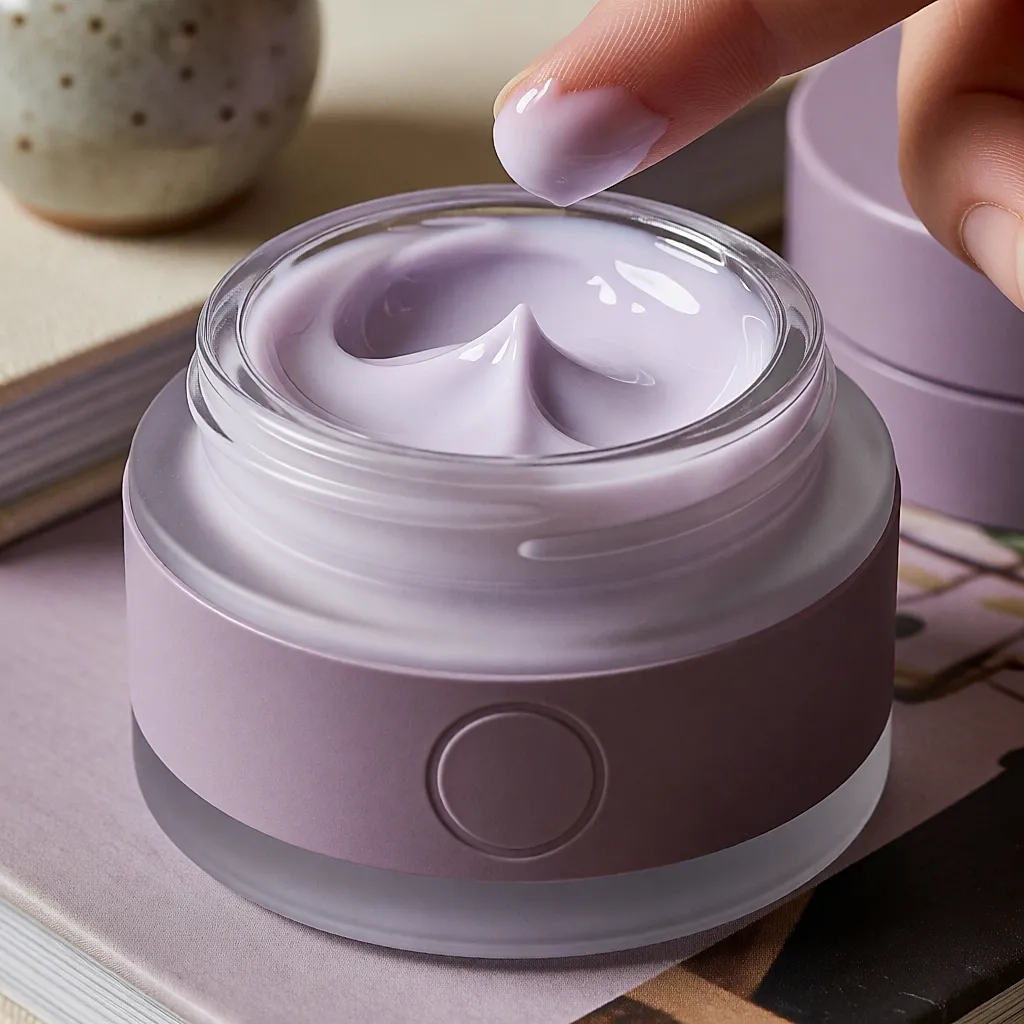
Next, texture. A fluid concealer that stretches suits skin that creases quickly; a creamier formula holds better on dry skin. And if you powder, powder sparingly, only where it shines: one veil too many and the light you have just added goes out. Under the eye, makeup lasts because of prep rather than quantity.
Correct, don't whiten
The classic mistake: reaching for a shade lighter than your skin, or even two, in the belief that you are "brightening". In reality you are not correcting, you are whitening — and the result turns grey, especially on medium and deeper skin tones. The practical benchmark: a concealer that melts into the skin, not one that sits on top of it.
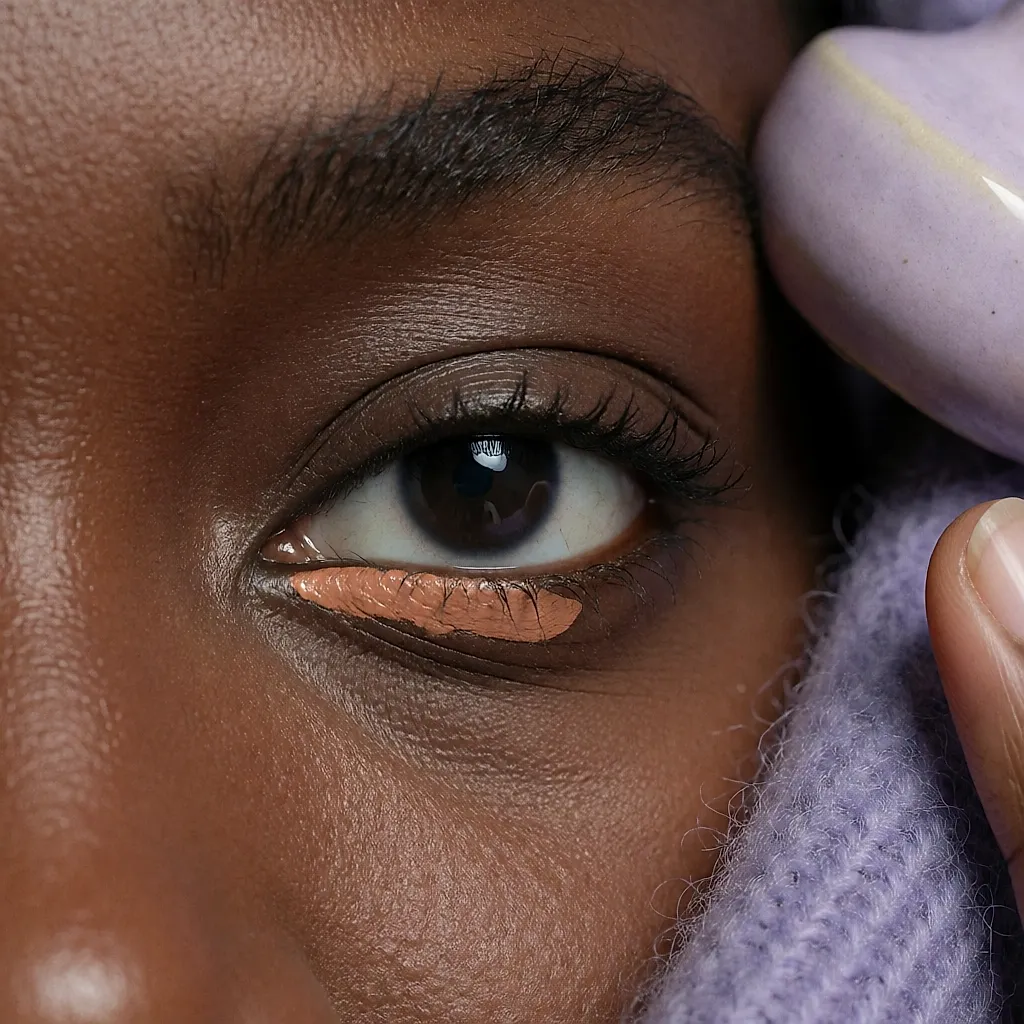
The right colour? A warm peach-beige, to neutralise the blue of the dark circle without leaving a pale patch. No white, no pearl: they highlight the area instead of erasing it. If the darkness is really pronounced, a touch of peach colour corrector followed by a concealer in your own shade does more than a single very light product.
The mistake that shuts the eye
Black liner on the inner rim — the one everyone assumes is neutral — closes the eye and dulls the colour. If you want definition, stay at the lash roots on the upper lid, possibly at the outer corner; not in the waterline. A little beige or peach shadow there instead, and the eye opens up.
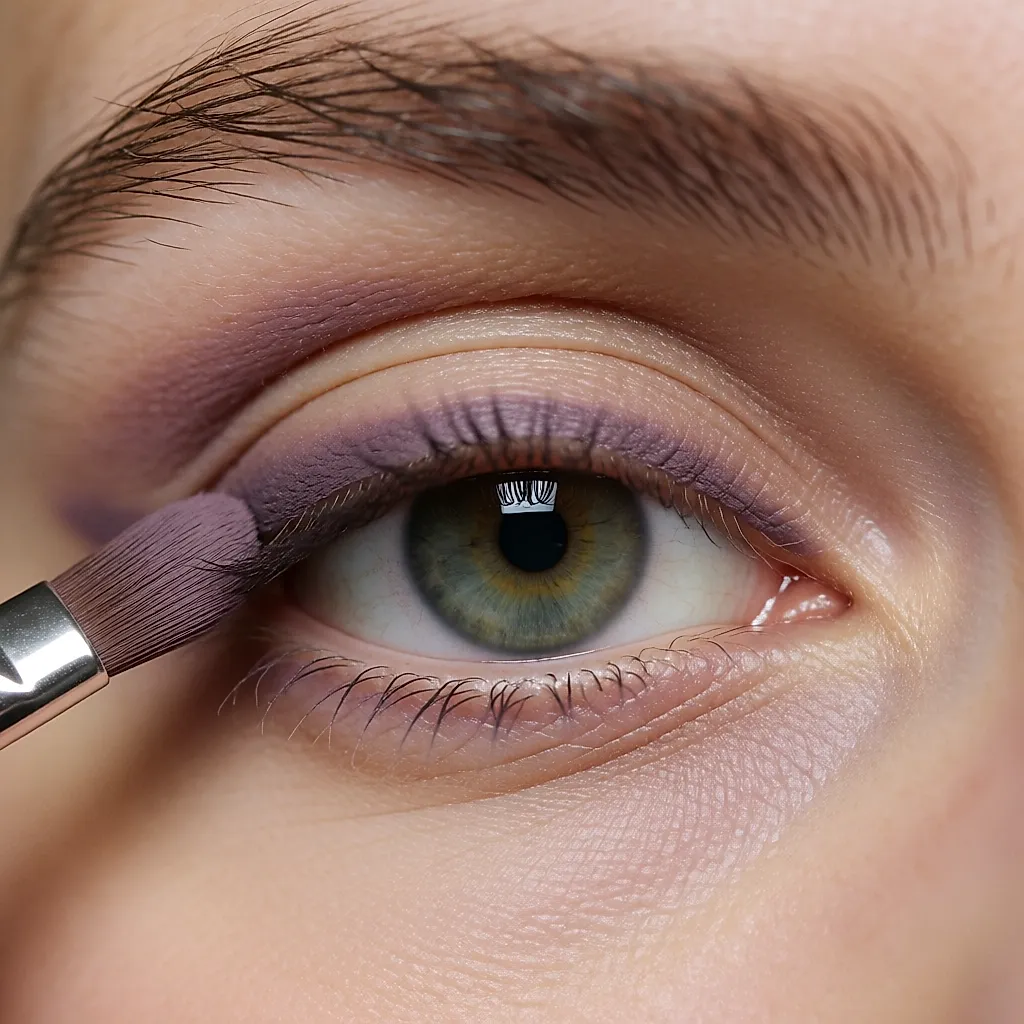
On colour, copper and plum are your best allies: copper on the mobile lid, blended outwards; plum as a fine touch close to the lashes at the outer corner. They bring the green forward without competing with it. Be wary, though, of greens too close to the colour of your iris: you stop seeing anything but one block of colour, and the gaze loses its depth.
Concealer and colour corrector: the criteria that matter
Three criteria, not thirty. The shade, tested on the face in daylight — not on the back of your hand. The texture, which should stretch without settling. The hold, which depends above all on prep: if it slides into fine lines as the day wears on, change the formula before you change the brand.
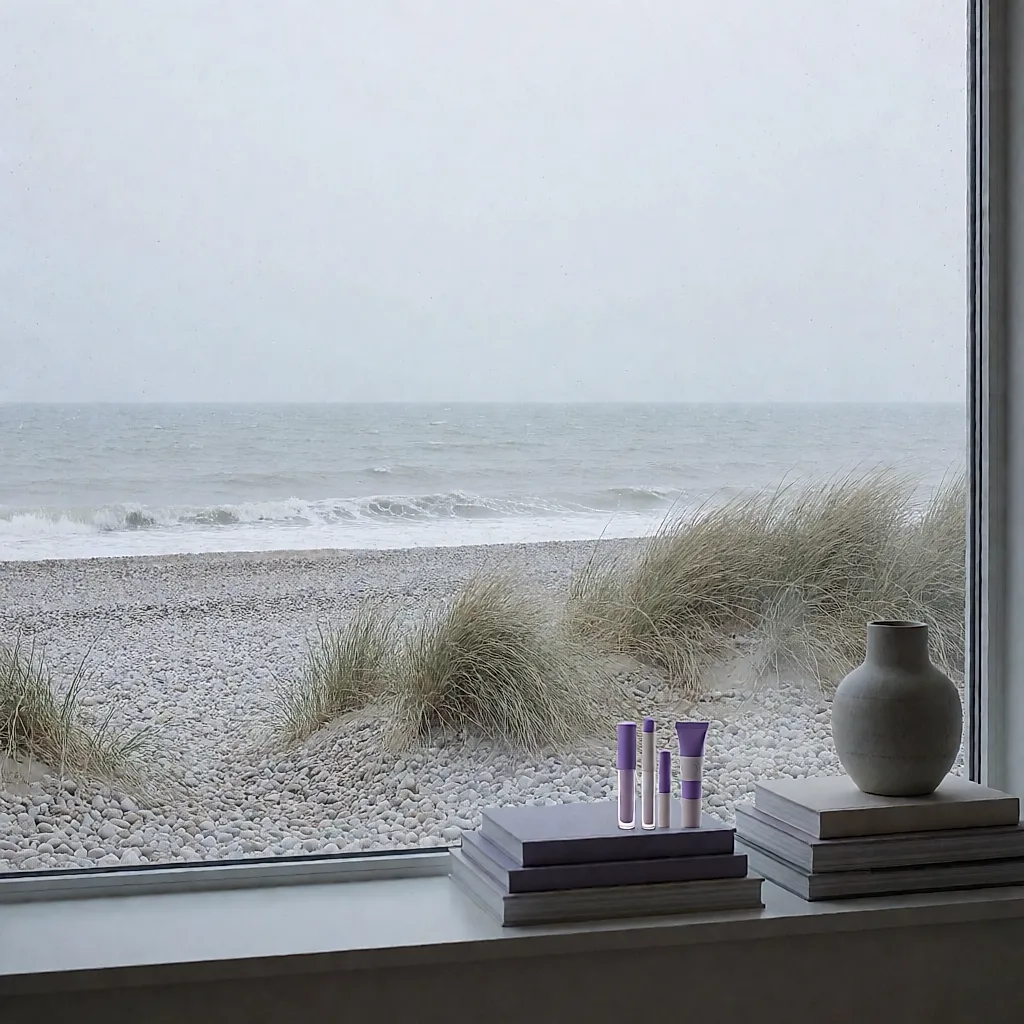
On packaging, let's be honest: refills are still uncommon in this category, and a concealer in a glass tube or a solid format is usually the most sensible compromise. A certification such as Cosmos Organic governs the proportion of organic ingredients and the processing methods, but guarantees neither the shade on your skin nor how it wears. And if only a conventional formula gives you the right shade, that's no disaster: choose it well and use it to the last drop.
Budget
Expect to pay around £8–£15 at a chemist or high-street beauty retailer for a basic concealer, £15–£30 at a department-store beauty hall or pharmacy, and up to £40 for a colour corrector with an applicator. Price tends to track the refinement of the texture and the breadth of the shade range rather than how well it lasts.
Many pharmacies and beauty halls let you test the shade on your skin — ideal for an area where a mistake shows immediately. Online, look out for mini sizes: over such a small surface, they are more than enough.
The order of operations: light eye cream, one minute to settle, peach corrector tapped onto the darkness, a concealer in your own shade patted in with a fingertip — never spread — then eyeshadow. One pass, even if you go back for more: three layers will not rescue the wrong shade.
In the end, it all plays out on a tiny patch of skin, the one we rush last when we are already late. Give it thirty extra seconds: it is often in the lift mirror that the light under the eye makes itself known. The one step that survives when you have five minutes? Light under the eye, and nothing else.



Comments
Your opinion matters: rate the article, react and reply to comments.
Comments are moderated; AI-assisted comments are flagged. Text emoticons (8-), :-), <3…) are automatically shown as images.