

You eat a reasonably balanced diet, you sleep well enough, and yet you are dragging around a tiredness that no one can explain. Deficiency or just a rough patch? Before you fill your basket with supplements, it is worth understanding what these tiny building blocks actually do in your body. There is no magic formula here: just some useful markers to help you make sense of things, and to know when to ask for advice.
Real needs, no magic potion
Your body needs 13 vitamins and a handful of minerals. None of them creates energy on its own, but each plays a part in reactions that keep you functioning. And a deficiency does not always show up as an obvious illness: persistent tiredness, dull skin or brittle nails are among the possible signals, often put down to stress when the cause may be something else entirely.

Conversely, taking more than you need does not make you perform better. The fat-soluble vitamins (A, D, E, K) accumulate in the body, and too much can cause problems — this is the case with retinol in pregnancy. The basic rule does not change: a varied diet meets the needs of most of us.

Vitamin C, ally of busy mornings
It helps form collagen, protects cells against oxidative stress, and improves the absorption of iron from plant sources. The promise of an energy boost is appealing; current evidence suggests mainly that it contributes to normal energy-yielding metabolism and helps reduce tiredness.
You will find it in citrus fruit, but also in kiwi, blackcurrants, raw pepper and parsley. Long cooking and soaking in water destroy some of it: eating raw fruit is often more useful than overcooked vegetables.
The idea that it keeps you awake at night still circulates. Nothing solid confirms it for foods; supplements, which are more concentrated, are sometimes blamed, but the issue remains debated.

B vitamins, the nervous system's messengers
B1, B2, B3, B5, B6, B8, B9, B12: they work as a team. They are involved in energy metabolism, red blood cell production and the working of the nervous system. Folate (B9) matters particularly early in pregnancy, and B12 is found almost exclusively in animal products — a real deficiency risk if you are vegan, so monitoring needs to be put in place.
Where to find them? Pulses, wholegrains, eggs, dairy, brewer's yeast, and to a lesser extent green vegetables. B12 comes from meat, fish, eggs and dairy, or from fortified foods or a supplement.

Vitamin A and vitamin E have two very different roles
Vitamin A plays a role in vision, skin and immunity. It is found as retinol in liver, eggs and butter, and as carotenoids in carrots, sweet potato and spinach. The body converts carotenoids as needed, which limits the risk of overdose.
Vitamin E is an antioxidant, found in vegetable oils, nuts and seeds. For a long time, antioxidant supplements were thought to protect against cancer. Trials since then have not confirmed this, and some high doses have even shown unwanted effects. Put your money on food, yes; on capsules, not automatically.

Vitamin D, the one you make in the sun
It is the only vitamin your body produces itself, under the effect of UVB. It helps calcium bind to bones and plays a part in muscle and immune function. In the UK, winter sun exposure is not enough to synthesise it: the store built up in summer then declines.
Food sources (oily fish, eggs, UV-exposed mushrooms, fortified dairy products) provide little. Some groups are at higher risk: babies, older adults, people with darker skin, people who get little sun exposure. In these cases, supplementation may be suggested after advice from a healthcare professional — never self-prescribed.

Iron, calcium and selenium — the mineral side
Iron is not a vitamin, but it carries oxygen via haemoglobin. It exists in haem form (meat, fish, shellfish), which is absorbed better, and non-haem form (lentils, chickpeas, tofu, spinach), which vitamin C helps you absorb. A deficiency often shows up as tiredness that lingers or breathlessness; diagnosis involves a blood test and medical follow-up.
Calcium builds and maintains the skeleton: dairy products, calcium-rich mineral waters, almonds, tofu and broccoli provide it. Selenium, a less talked-about trace element, contributes to antioxidant defences and thyroid function; it is found in Brazil nuts, fish and eggs.
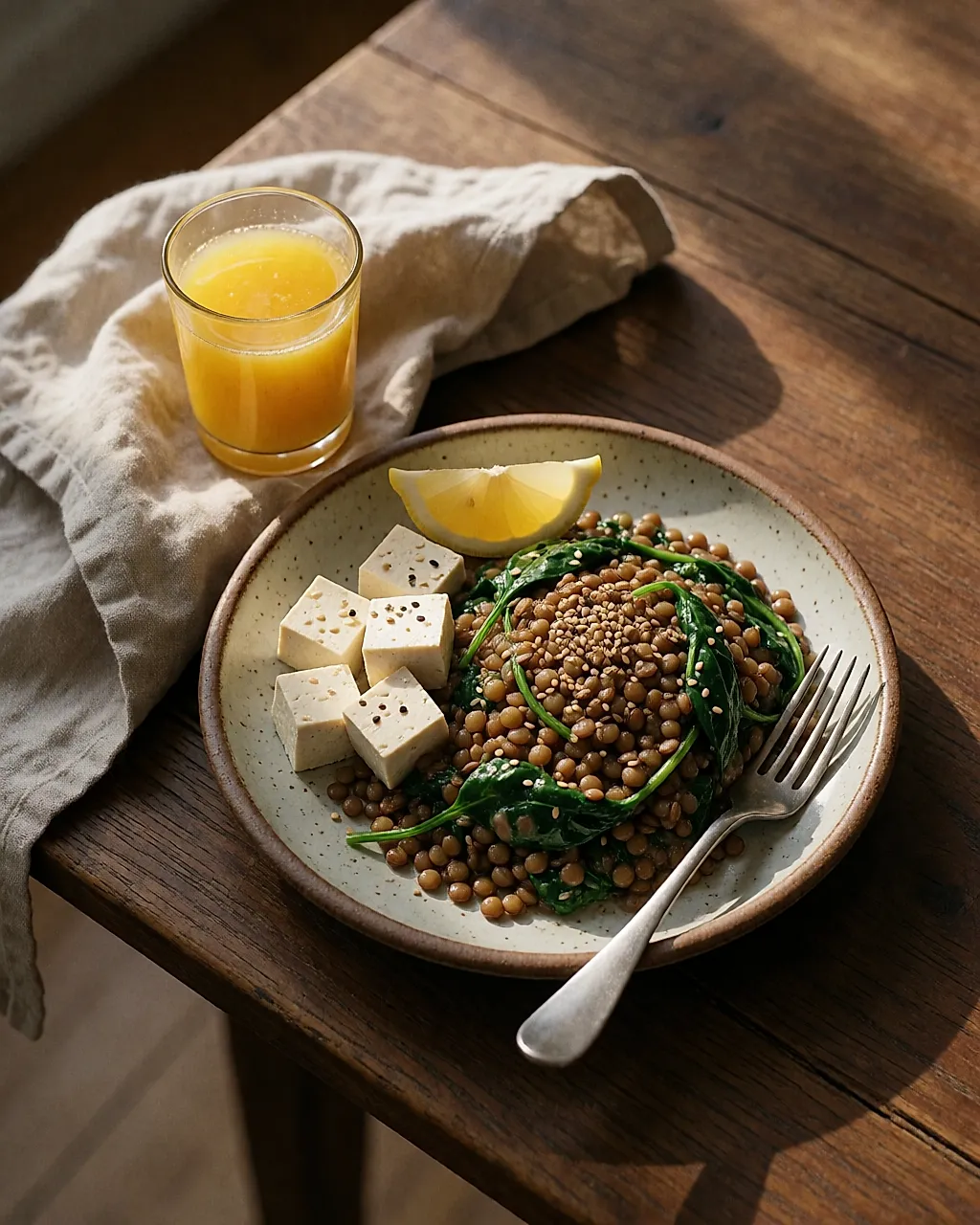
Persistent tiredness, hair loss, brittle nails: these signs can have several causes. No supplement should be taken 'just in case' long term without advice. In practice, remember this: food first, then a conversation with your GP or pharmacist, and only after that a capsule.
Budget
With supplements, prices vary widely depending on form and dose. As a rough guide, expect around £5–£15 for a bottle of vitamin D drops that lasts several months, £5–£15 for vitamin C, and £10–£30 for a multivitamin. Add to this differences in form (ascorbate rather than ascorbic acid, D3 rather than D2), organic certification such as Soil Association on plant-based formulas, packaging (glass, refills, bulk) and where you buy them.
You can find these products in pharmacies, health and beauty retailers, supermarkets, health food shops or online. Pharmacy advice is still useful for checking interactions with any medication you are taking. Most are not available on the NHS; a few can be prescribed in specific cases.
On the environmental side, the most effective step is often to reduce the number of bottles: a targeted deficiency is treated with the relevant product, not with a collection of capsules. When choosing, look at the ingredients, how the packaging can be disposed of and, if the information exists, local manufacturing. Be careful, though: an organic label guarantees the agricultural origin of plant ingredients, not the product's effectiveness or safety. For vitamin D or B12, the best choice for your needs is sometimes a well-dosed conventional formula — a trade-off worth accepting, rather than paying more for an under-dosed 'natural' version.
Sources
- ANSES, Nutritional reference values for vitamins and minerals, opinion and report, 2021.
- ANSES, information file Vitamin D: why and how to supplement?
- NHS, Vitamins and minerals.
- NHS, Iron deficiency anaemia.
- EFSA, Authorised health claims.
Food supplements do not replace a varied, balanced diet and a healthy lifestyle.



Comments
Your opinion matters: rate the article, react and reply to comments.
Comments are moderated; AI-assisted comments are flagged. Text emoticons (8-), :-), <3…) are automatically shown as images.