

You know disposable nappies inside out: handy, absorbent, but straight into the bin with every change. So when a brand offers the opposite — washable pants made from fleece, organic cotton and bamboo sponge, machine-washable and reuseable for months on end — it's bound to raise an eyebrow. That's Kotodoo's bet. Let's look at what really changes, without rose-tinted glasses.
Reusable nappies — but not the ones of yesterday
First instinct: picture thick terry squares and old-fashioned nappy pins. Forget it. Today's reusable nappies are shaped like little pants, with poppers that adjust the size and sometimes a pocket to slip in an absorbent insert. You change them at the same pace as disposables. The difference? Instead of throwing them away, the soiled ones go into a sealed bucket — no soaking required.
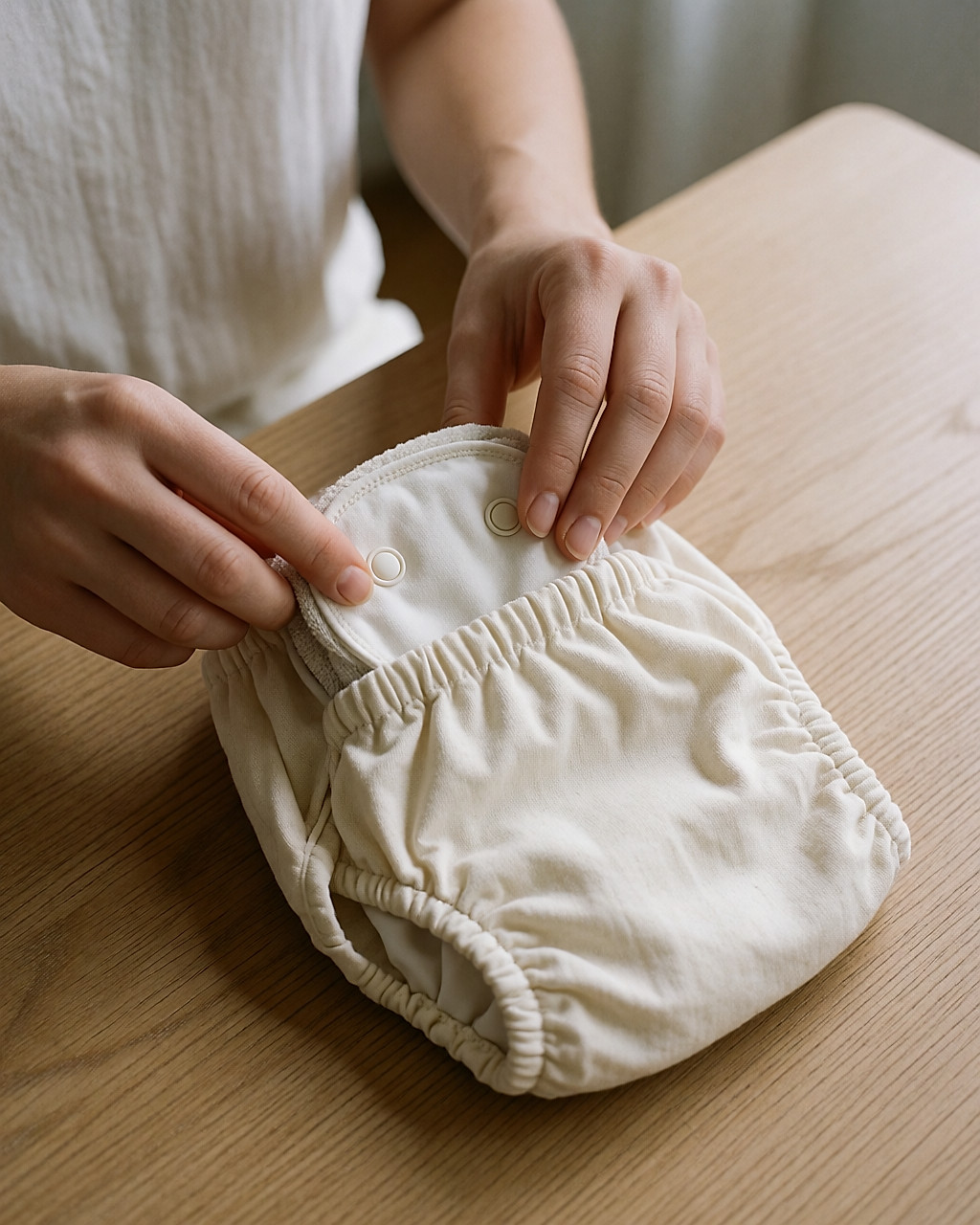
In practice, expect six to eight changes a day in the early weeks, then five to six. So you'll want around twenty nappies to see you through between washes. And for nights? You'll often need to boost the insert, because a baby sleeping several hours in a row really puts the system through its paces.
On the materials front, bamboo sponge absorbs a great deal, organic cotton lets the skin breathe, and fleece keeps the bottom dry on the inside. One honest caveat, though: textile bamboo often goes through a chemical transformation process. So "natural" doesn't mean "no industry".
What the data says
Before potty training, a baby goes through several thousand nappy changes. So the choice of system weighs as much on the budget as it does on the bin.
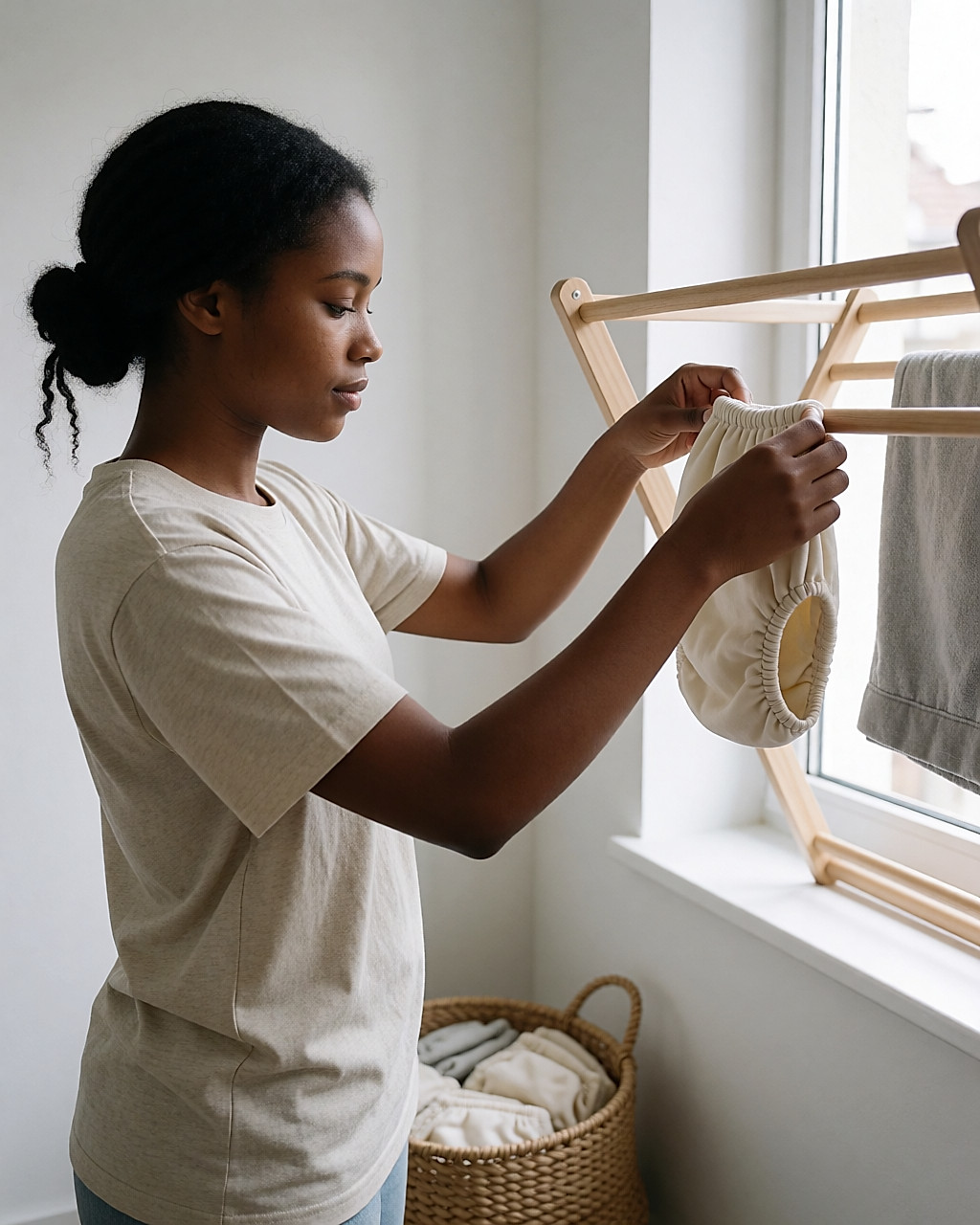
The environmental case for reusables depends heavily on how you use them: full loads, controlled temperatures, air-drying rather than a tumble dryer. That's where a good chunk of the benefit is won or lost.
On health, the French agency ANSES published a review in January 2019 on disposable nappies for children. The agency identified chemical substances in some of the products it tested and called for tighter regulation of the market. Reusables aren't off the hook on residues either: fragrances, fabric softeners and stain removers can all irritate delicate skin.
For skin, the prevention basics stay simple. Change often, clean with lukewarm water, dry the folds properly, and skip fabric softener — it clogs the fibres and reduces absorbency. If redness persists, weeps or spreads, speak to a healthcare professional: nappy rash sometimes needs a proper look.
Never leave a soaking bucket or a basin of water within a child's reach: a few centimetres of water is enough for an accident. Choose a lidded bucket, store it up high, and empty it after every wash.
Budget
Disposables cost little per nappy, but plenty in total. In the UK, expect to pay around 10p to 30p per nappy — that's somewhere between £850 and £1,500 over two and a half years, depending on brands and promotions.
Reusables are an upfront investment. A single reusable nappy often sits between £10 and £22, so a kit of around twenty comes to £200 to £500, inserts aside. Water and detergent add a few tens of pounds a year. The cost climbs with the range, the size, where you buy and how often you wash.
Where to kit yourself out? On the brand's website, in eco shops, or second-hand through resold kits and reuse centres. Some UK councils run reusable nappy incentive schemes — it's worth checking before you order.
Label landmarks: GOTS certifies the organic fibre chain and sets social and environmental criteria; OEKO-TEX Standard 100 tests the finished product for harmful substances, without guaranteeing organic status.
Sources
- ANSES — Review of disposable nappies for children, January 2019.
- GOTS — Global Organic Textile Standard.
- OEKO-TEX — Standard 100.



Comments
Your opinion matters: rate the article, react and reply to comments.
Comments are moderated; AI-assisted comments are flagged. Text emoticons (8-), :-), <3…) are automatically shown as images.