
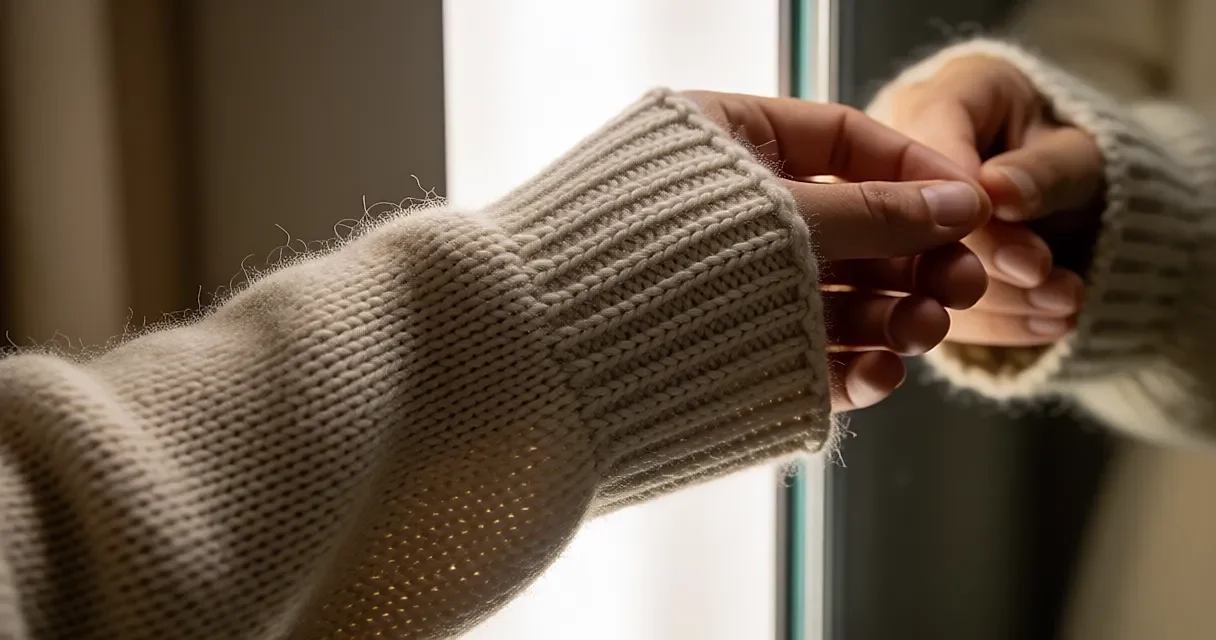
On the label, the wording is easy to miss, wedged between the size and the washing instructions: "recycled wool". Behind that small print sits a material that has already had one life. The question is whether the coat it ends up in will last three winters or three washes, and that comes down to details hardly anyone looks at.
What's really in the blend
Recycling wool means shredding it into short fibres before spinning it again. A short fibre holds together less well than a long one, so to make a yarn with any strength it is often blended with virgin wool, sometimes with a small proportion of synthetic fibre. That's why mid-range coat compositions read like a shopping list, and why the first line of the label deserves more attention than the colour of the buttons.
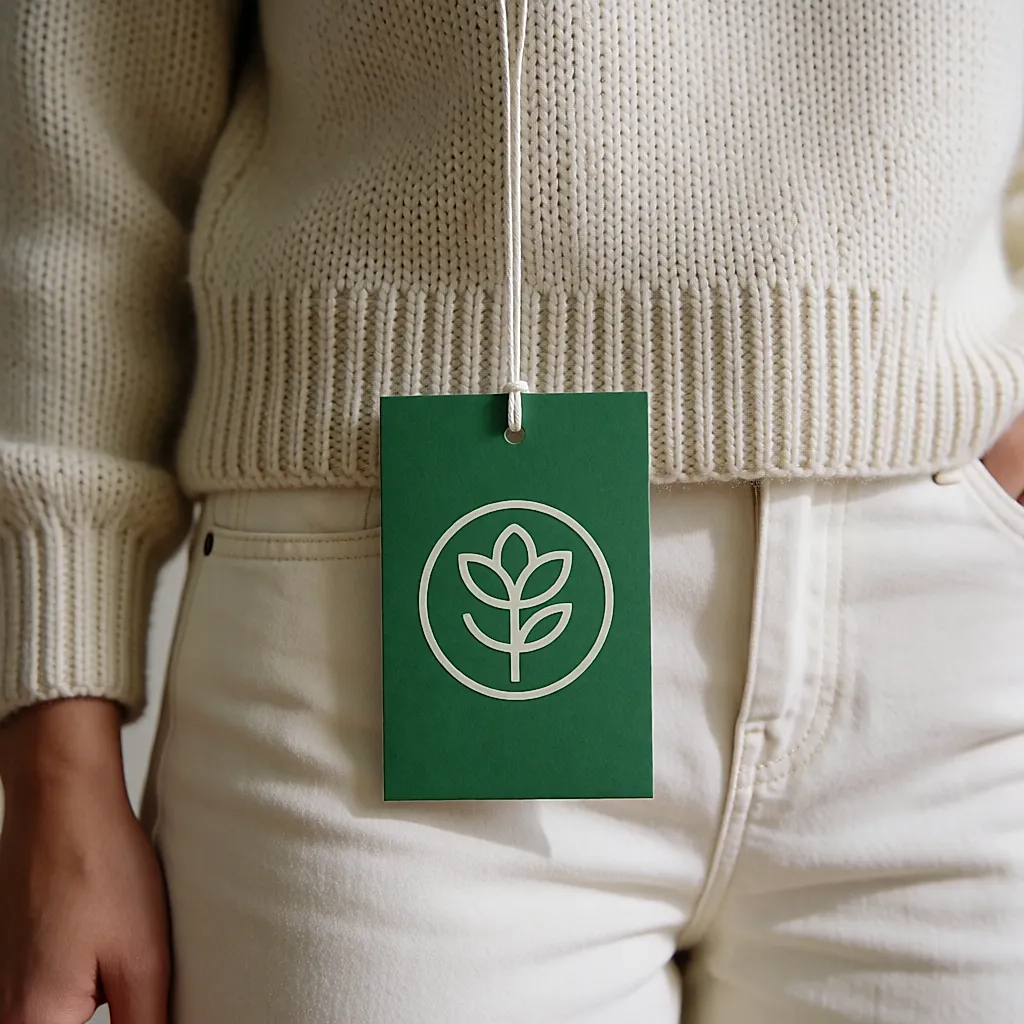
In practice, on the pieces you find at £150 to £300, the composition varies a lot from one style to the next; check the label. You'll see recycled wool, new wool, sometimes a reinforcing fibre. None of that is a con: it's textile engineering. But read to the end, and check the share of synthetic fibres: a high proportion can reduce breathability depending on how the knit is structured. A label such as GRS (Global Recycled Standard) certifies recycled content; it says nothing about the density of the knit. Two different pieces of information, two boxes to tick.
A tight knit is more reliable than a thick one
Pilling starts with friction: fibres work loose, migrate to the surface and roll into little bobbles. Shredded wool, made of shorter fibres, is more prone to it, unless the knit is dense. That's where the hand feel matters more than the stated thickness: a thin coat that is tightly knitted will often hold up better than a loose, chunky knit that looks as if it will keep you warm.
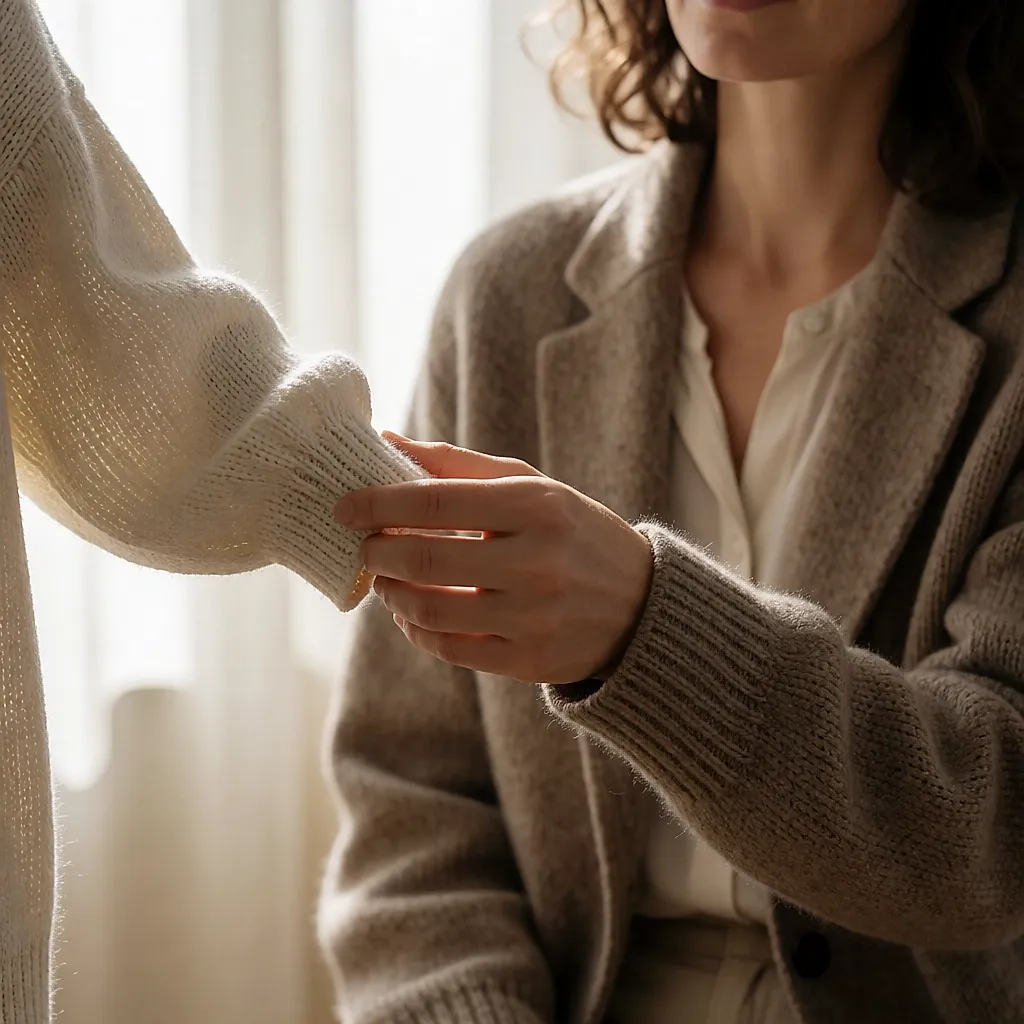
How do you check in the fitting room? Hold the fabric up to the light: if light passes straight through the sleeve, the knit is on the loose side. Then rub the sleeve about twenty times with the flat of your finger, on a discreet area, and look at the surface. It isn't proof, just a pointer: a fibre that reacts quickly to rubbing suggests it will need more careful looking after. Nothing dramatic, but better to know before you pay.
Lining and drape: the comfort is on the inside
A viscose or cupro lining isn't only there to help the coat slide over a jumper: it can reduce friction between your body and the wool, and with it some of the pilling, and it makes all the difference when you pull the coat on over a roll-neck. On cheaper styles the lining is sometimes limited to the sleeves, which gives you a stiffer drape, less comfortable to wear, and one that pulls more at the shoulders.

Because drape is the second test. A well-chosen recycled wool keeps its shape, but a knit that's too soft drifts into cardigan territory; too stiff and it feels like armour. Look for a clean shoulder line, a weight that pulls the fabric gently downwards, and a sleeve that doesn't ride up when you raise your arm. A full, well-set lining is a bonus: less chance of a seam giving way or the lining tearing after a couple of winters.
Care: short fibres need looking after
Looking after recycled wool is mostly about being kind to the short fibres, which are more sensitive to friction. For everything else, see our existing guides: "Wool needs airing more than washing" (28 October), "A brush and steam are often enough for a wool coat" (3 November), "How to wash a wool knit without felting it" (15 October) and "How to bring a wool coat back into shape without dry cleaning" (12 October).

Budget
Expect £150 to £300 for a mid-range coat with a decent lining and a dense knit; £300 to £500 once the wool content goes up, the lining is full and the make is properly finished. Second-hand, a recycled wool style turns up at £50 to £150 depending on condition, and it's sometimes the best deal of the lot: someone else has paid the new price, and all you have to do is check the sleeves.
Three checks in the fitting room, in this order: the full composition (recycled wool, new wool, synthetic fibres), the rub test on the sleeve, and the lining along its whole length. If the label doesn't break down the fibres, walk away: that silence is rarely a good sign.
In the end there's nothing magic or underhand about recycled wool: it's a material that rewards a look under the bonnet. A dense, well-lined coat that's looked after day to day can see you through several winters. And if money is tight, second-hand remains one of the smartest corners of the wardrobe, the one with a track record behind it.

Comments
Your opinion matters: rate the article, react and reply to comments.
Comments are moderated; AI-assisted comments are flagged. Text emoticons (8-), :-), <3…) are automatically shown as images.