
The trench your mother wore in 1998 and the one you almost bought last week could be siblings: the same belt, the same drape, the same mid-calf finish. It is a slightly annoying truth for our wardrobes: silhouettes tend to come back in waves. What changes is not the cut but how you wear it.
Frankly, that suits us. A fashion that recycles its proportions is one where you get to decide, rather than chase.
A silhouette is really a set of proportions
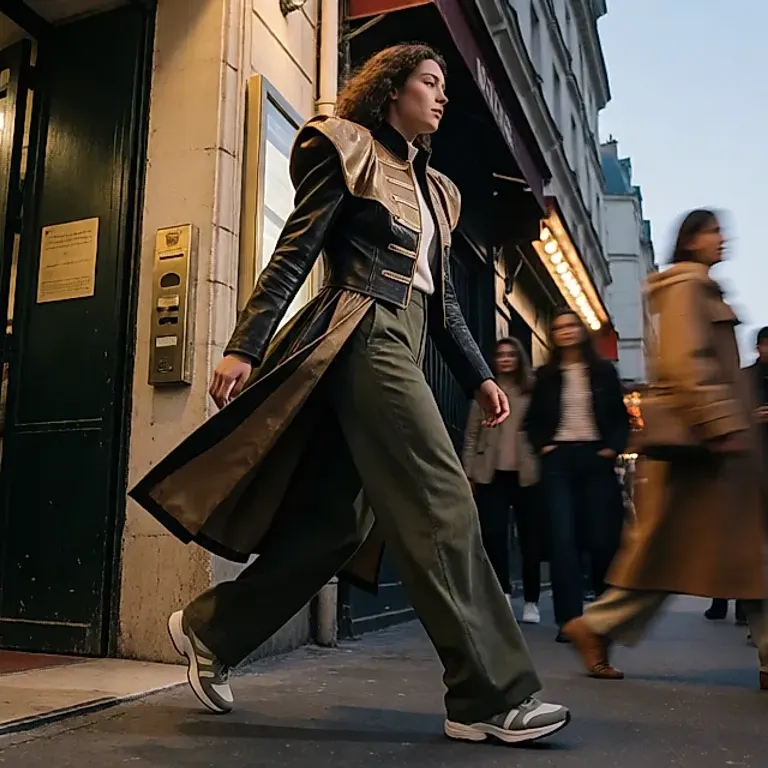
Shoulders, waist, length: a silhouette is not a garment, it is a ratio between three measurements. The point to keep in mind is that it is not identical designs coming back unchanged, but proportions returning in waves. Shoulders widen, the waist rises, the hem drops, then everything reverses. Seen that way, the question is no longer 'What's new?' but 'Does this proportion suit me?'

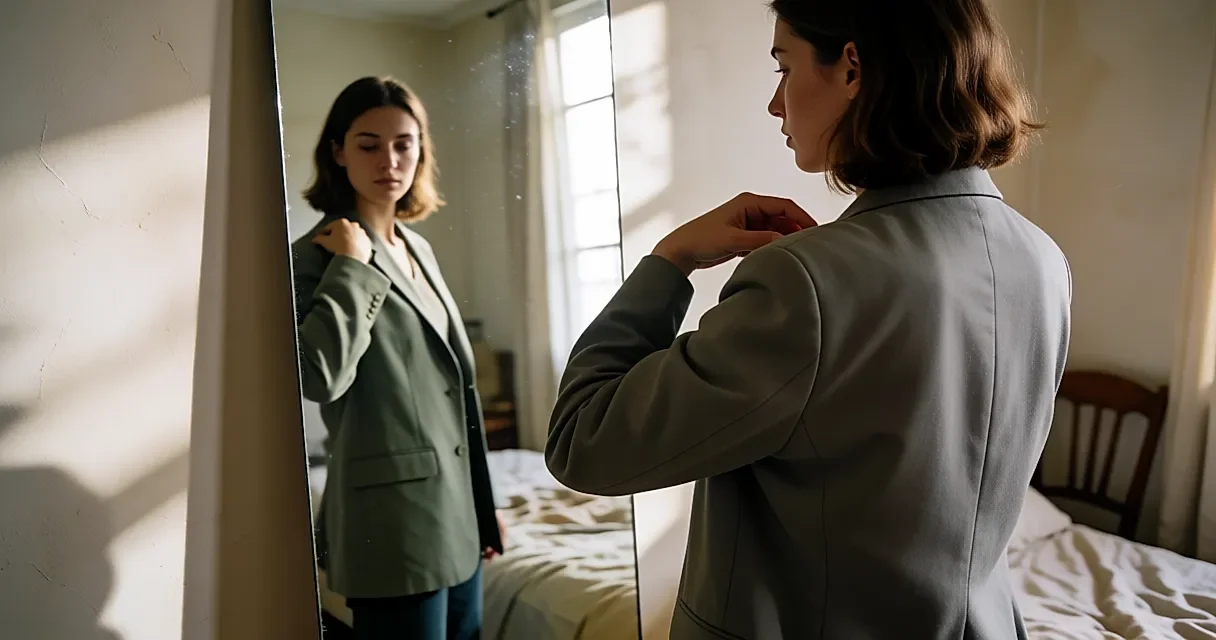
Take the blazer: the broad-shouldered Nineties version is back, with much the same proportions. What has changed is what you put underneath. Then, it was worn close to the body; now you layer a thick T-shirt underneath, add wide-leg trousers and make layering part of the look. Same jacket, different mood, and that is where the difference between 'dated' and 'right' is won.
A wardrobe audit in three questions and one mirror
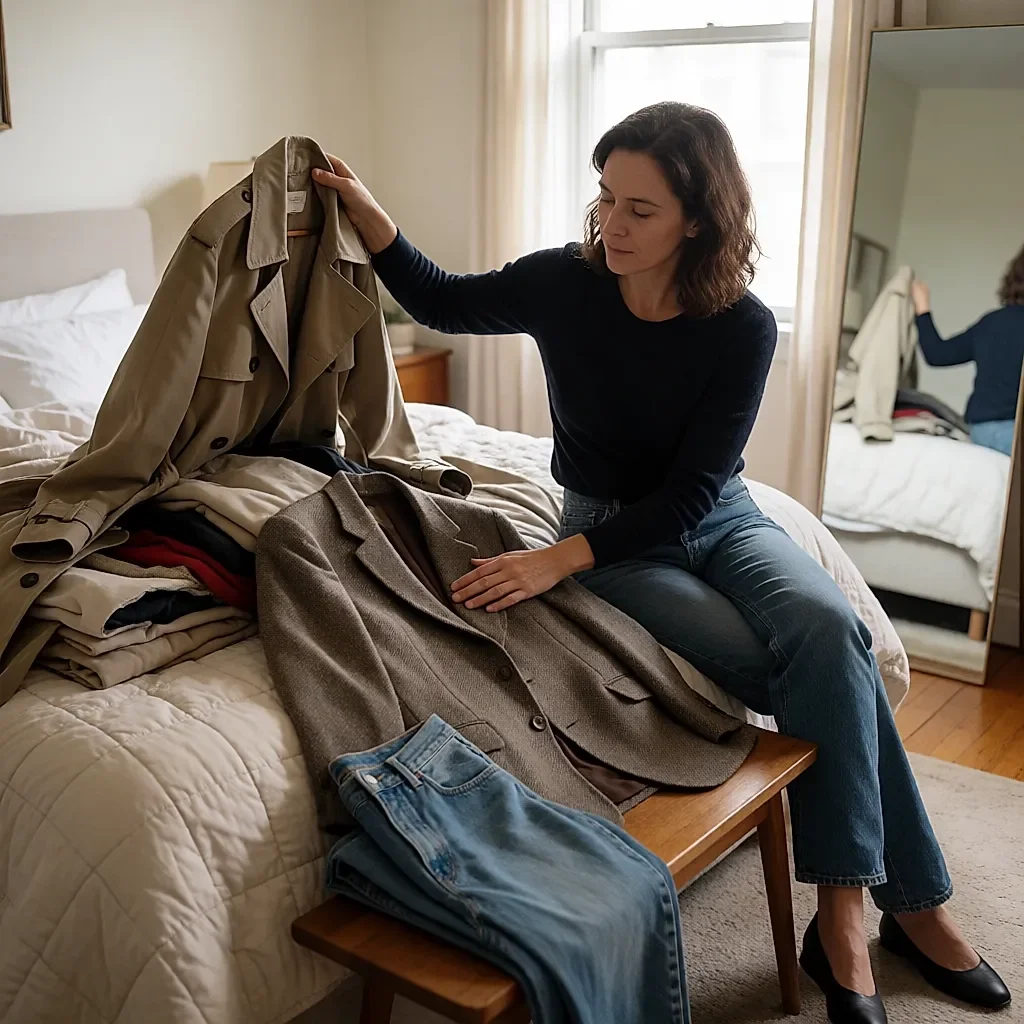
Pull out what you no longer wear and ask three questions, in this order. First: does it hang properly? A piece that pulls at the armholes or has a wavy hem will not become right just because you waited. Next: does the fabric live up to its promise? Wool that pills and cotton that has yellowed have had their day, however many seasons you count. Finally, how often have you worn it over the past two years? If the answer is never, the cut probably is not for you, however much you like the era.
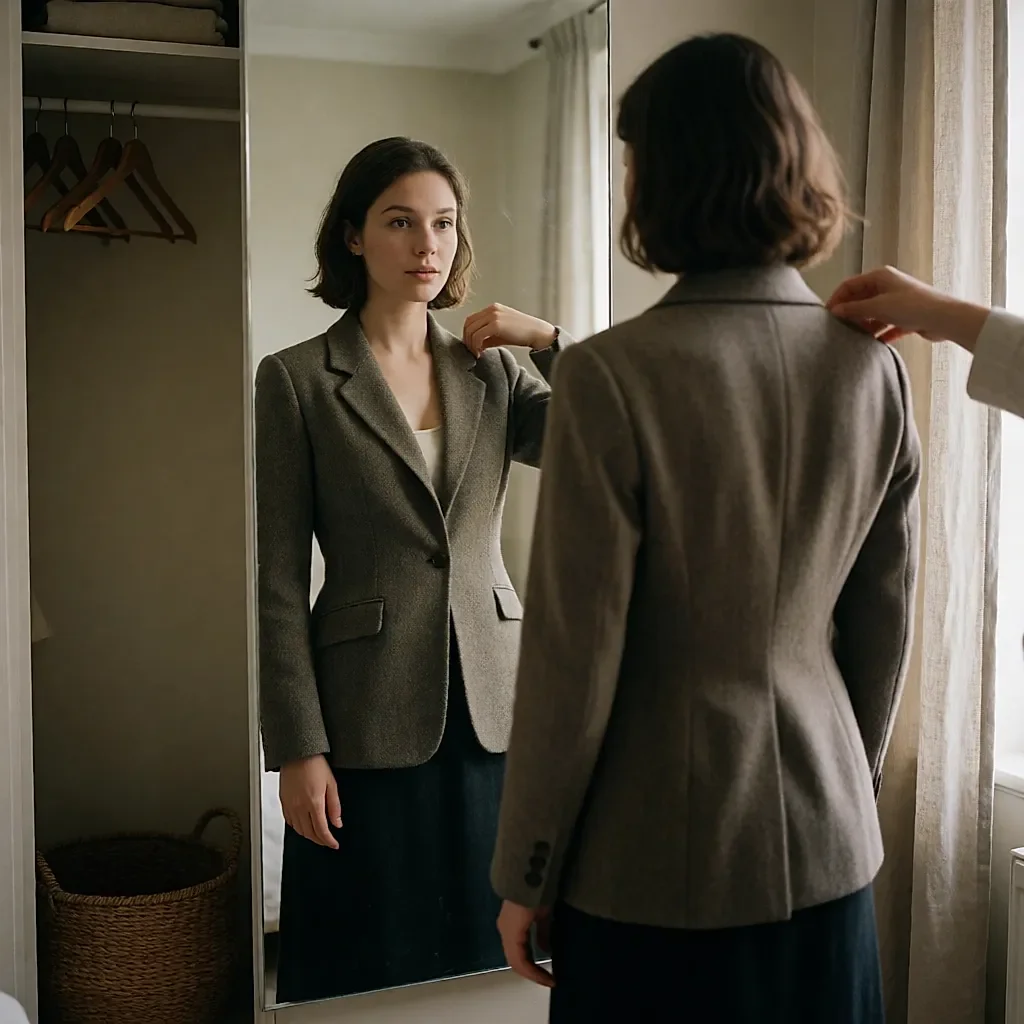
Then comes the try-on, which is what really decides: stand up, walk three steps, sit down and look at yourself from a three-quarter angle in daylight. You will see at once whether the piece moves with you or feels like a costume. And if you are still hesitating, alterations are a quiet ally: a hem shortened, a waist taken in, and a dress that has been sleeping in your wardrobe for four years can have a social life again.
What can wait for secondhand
For structured pieces and quality fabrics, secondhand is hard to beat: a thick cotton trench, a wool blazer, raw denim jeans. These pieces age well, and their cut is forgiving as they move from one wardrobe to another. What you should not hunt for secondhand is anything that has to fit to the millimetre: a close-fitting piece, a fine knit that has already stretched, shoes with tired soles. Not on principle, but because no alterations service can rescue a shoulder that has lost its shape.
Before you commit, read the care label and check the proportion of synthetic fibres. A piece with a high proportion of natural fibres alters better, presses better and will survive more seasons. It is not a guarantee, just a good sign.
Budget
For alterations, expect to pay roughly £10–£25 for a simple hem and £25–£45 to take in a waist at a local alterations service; rates rise with lining, the number of seams and the city. It is often the most cost-effective investment in your wardrobe: cheaper than buying new, and spent on a piece you already love.
For buying, a decent secondhand trench often costs around £30–£90 from charity shops, car-boot sales and resale platforms, against £150–£400 new for equivalent fabric. A secondhand wool blazer: around £20–£70. Prices vary with condition, label and location.
The three-step test. When you try something on, walk three steps towards the mirror. If the hem rides up, the shoulders pull backwards, or you find yourself holding your breath, it is not you: it is the size or the cut. Put it back, or visit an alterations service before you say no.
Fashion goes round in circles, true, so you might as well use that to stop chasing it.

Comments
Your opinion matters: rate the article, react and reply to comments.
Comments are moderated; AI-assisted comments are flagged. Text emoticons (8-), :-), <3…) are automatically shown as images.