
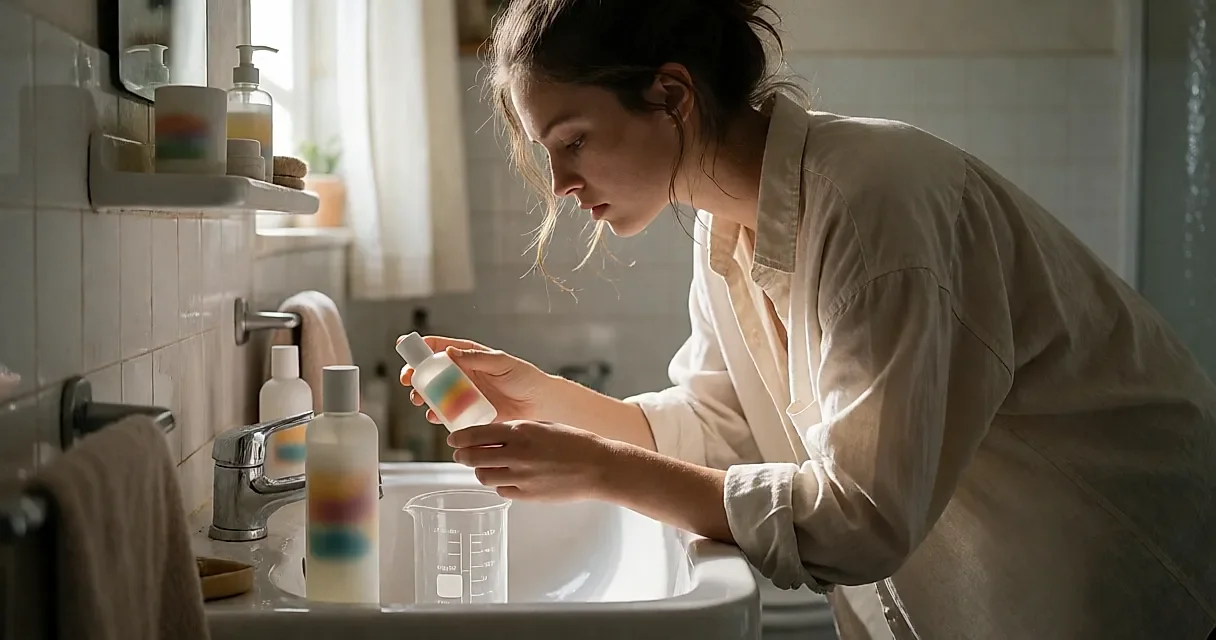
Two 30 ml bottles, the same pump, the same hydration promise printed in large letters — and a £30 gap between them. In skincare, the difference no longer shows in the name on the bottle: you work it out per millilitre and you check it on the back.
The middle of the shelf has changed hands
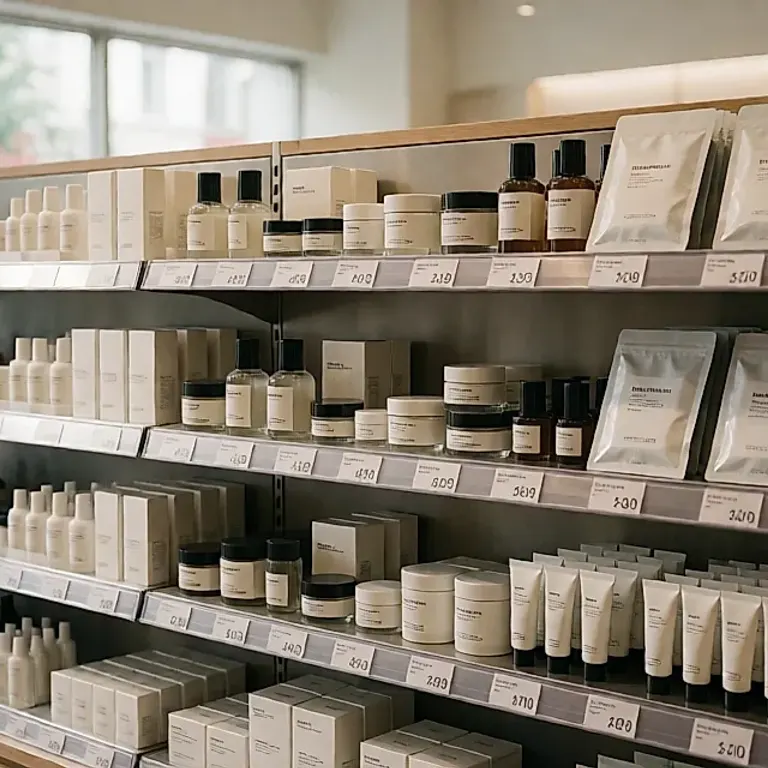
For years, own brand was the safety net at the bottom of the shelf: the product you reached for when you didn't fancy spending £30, and rebought without thinking. That's not quite the picture any more. With Boots' own ranges, Superdrug's and Cien at Lidl, the line between "own brand" and "proper brand" has quietly shifted.
The result: between £10 and £30 you'll now find several options that look remarkably similar, and the surest way to tell them apart is to turn the bottle over. It isn't a chore; it's the most interesting moment of any skincare purchase. Thirty seconds and you know things no marketing copy will ever tell you.
What the ingredient list actually says
A useful rule of thumb: on the label, ingredients are normally listed in descending order of concentration, the most abundant first; towards the end of the list the ordering loosens. So the first five lines tell you most of the formula; the tail end is where you find the small-dose actives, the preservatives and the fragrance.
That ranking is diagnostic. Water at the top (it almost always is), glycerin straight after: you have a classic, often perfectly decent moisturiser that hydrates through humectants. An active you were looking for sitting in the last three lines? That doesn't make it a con: some actives are used at very low percentages. It's just that you're now comparing two formulas on their own terms, without the gold-lettered name in the way.
And this is where own brands change the game: their lists can be short and readable, sometimes more so than those of long-established names. I'm not going to claim they're all equal — I haven't compared the formulas one by one, and an identical list doesn't guarantee the same texture on the skin. But the comparison is finally possible.
The sum nobody does in the aisle
Second reflex: volume. The ticket price means nothing on its own. A serum at £19 for 30 ml works out at about 63p a millilitre; another at £22 for 50 ml comes in at 44p per millilitre. The second costs more at the till and less every time you use it.
The division is easy enough in your head, or on your phone — nobody's judging, promise. And watch the bottles that quietly shrink: face-care volumes do sometimes melt away at a fixed price, which amounts to a price rise in disguise. Same cream, same label, smaller jar, same money: who notices? The price per millilitre, meanwhile, has already climbed.
The three-number shelf memo: the volume in millilitres, the price divided by that volume, and where the active sits in the list. If all three work for you, the name on the bottle becomes a detail.
Budget
On price, own-brand products are usually the cheapest: expect £4 to £12 for a basic cream or serum in a supermarket or a health-and-beauty retailer. Classic mid-range sits more like £15 to £35 in department stores, pharmacies and online, and premium-brand serums can go past £45. In a salon or clinic, the price for the same volume can double — you're paying for the consultation and the hands that apply it, which has its value but has nothing to do with the formula.
Where to buy, then? Supermarkets and health-and-beauty retailers for own brands; department stores and brands' own websites for the rest. And if two bottles are tempting you, ask for a sample; it costs nothing to ask, though not every counter will have one.
Underneath it all, the skincare shelf is starting to look like the nutrition label on a packet of biscuits: a few well-chosen numbers say more than the gold lettering. You're no longer buying a brand, you're buying a volume, a formula and a way of applying it. And if the least glamorous bottle wins the comparison, nobody is going to hold it against you.
Comments
Your opinion matters: rate the article, react and reply to comments.
Comments are moderated; AI-assisted comments are flagged. Text emoticons (8-), :-), <3…) are automatically shown as images.