
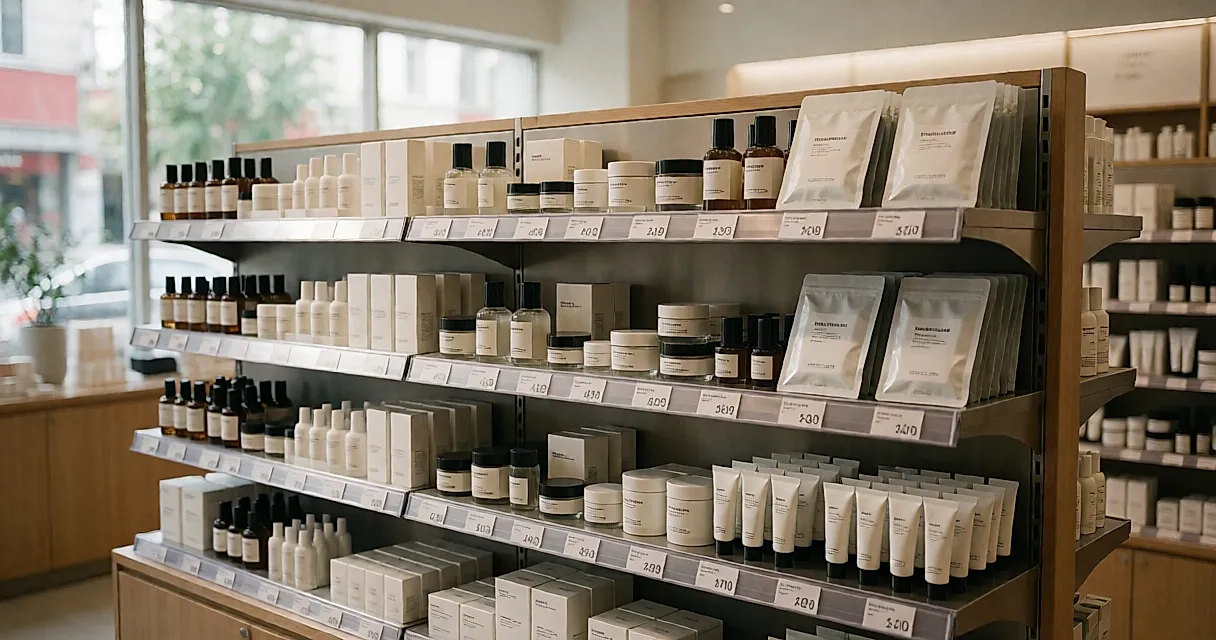
You went in for hangers. You came out with three sheet masks, a travel-size serum and a pot whose name you still can't decipher. The receipt fits on a business card, and that's where the whole thing gets interesting: skincare has just changed aisle, and changed the logic.
An aisle, not a beauty counter
In Korea, low-price chains — Daiso, for instance — seem to make room for skincare too, next to everyday items. You often see displays with no sales assistant, no mirror, no advice. You pick things up, feel them, turn the bottle over. Prices are usually displayed clearly, and that setting does much of the selling.
So this isn't a cheap brand arriving: it's a place. Skincare often becomes an impulse buy, just like a pair of socks. And for anyone who has never had a sales assistant explain a serum to them, that changes the equation: the barrier to entry is no longer the price of the pot; it's the price of the risk.
The format decides, the name follows
When the price point is low, you often can't compete on concentration, so you compete on quantity: 30 ml, a sachet, a single dose, a tube you can slip into your bag. The packaging often dictates the routine, not the other way round: one dose per evening, one mask per Sunday, a balm that will end up at the bottom of your handbag.
So does the name on the pot still count? Less than the number on the label, certainly. You're buying a texture, a colour, a ten-minute ritual. In the UK, we often buy the opposite: a name, a six-week promise, and the pot to match. The two routines don't cost the same, and they don't demand the same patience either.
What the label doesn't tell you
Let's be honest: in this aisle, there is usually no one to tell you what to layer over what, or whether your reactive skin will tolerate the formula. Ingredient lists are often in Korean, active-ingredient percentages are rarely spelled out, and there's usually no sample to change your mind with. For a retinol or an acid, this isn't the place to improvise — better to talk to a healthcare professional, or stick to what your skin already knows.
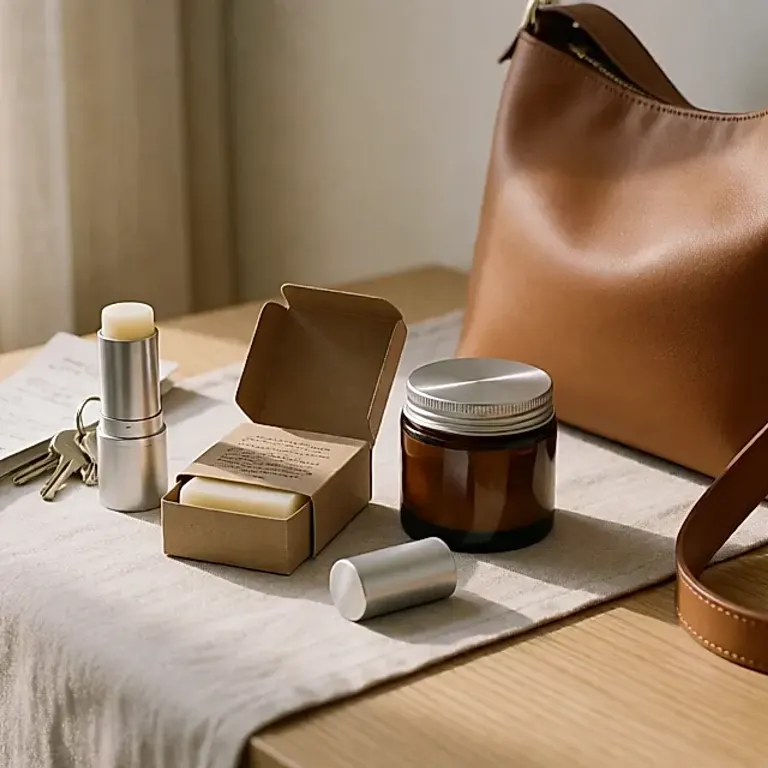
For cotton pads, powder puffs, the lip balm you're going to lose anyway, the hand cream that lives in your bag, though, the maths is quick. And let's be clear: this is often where the straightforward bargains are.
And the UK?
The UK beauty aisle is moving too, but differently. Here, budget skincare has increasingly settled into supermarkets, discounters and end-of-aisle displays; the pharmacy keeps the advice, and prestige keeps the name. In Korea, the pharmacy and the low-price store often operate as two separate worlds. Here, the same counter has often been expected to do both.
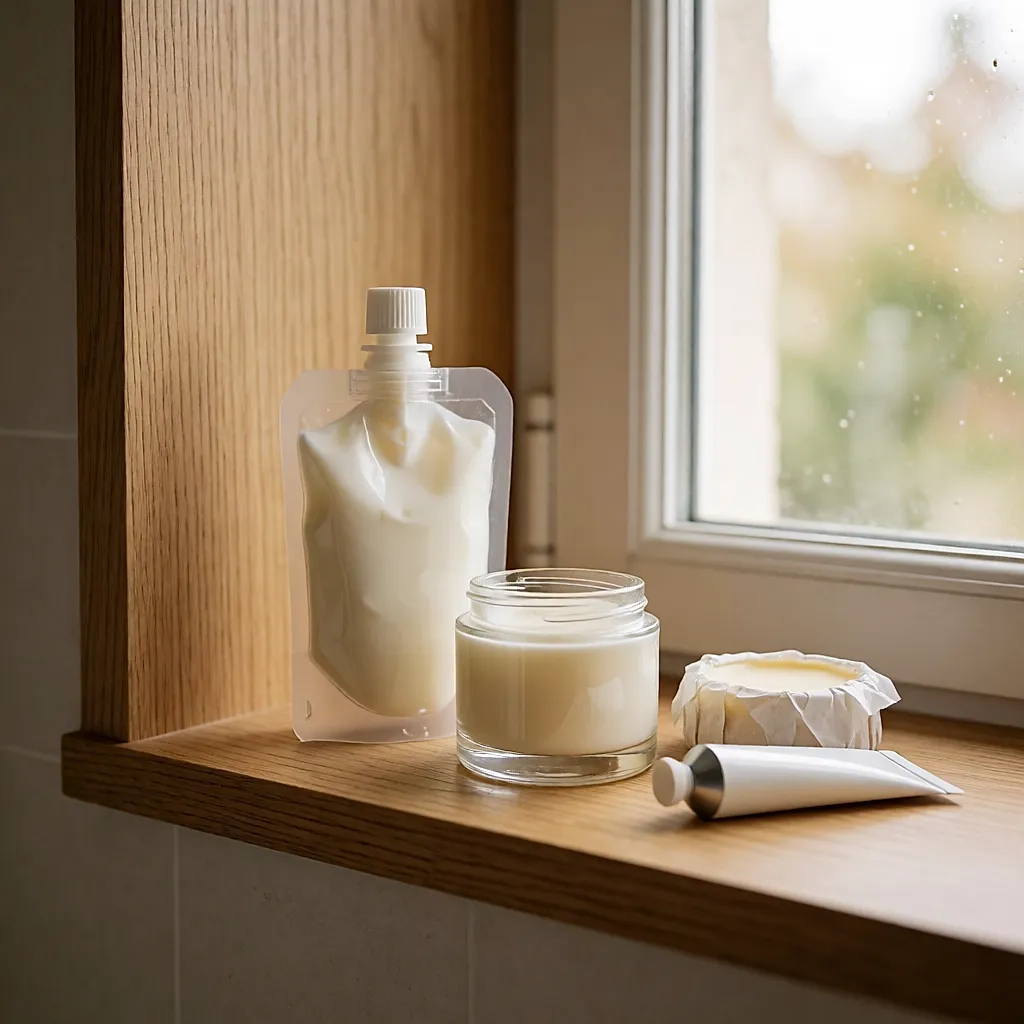
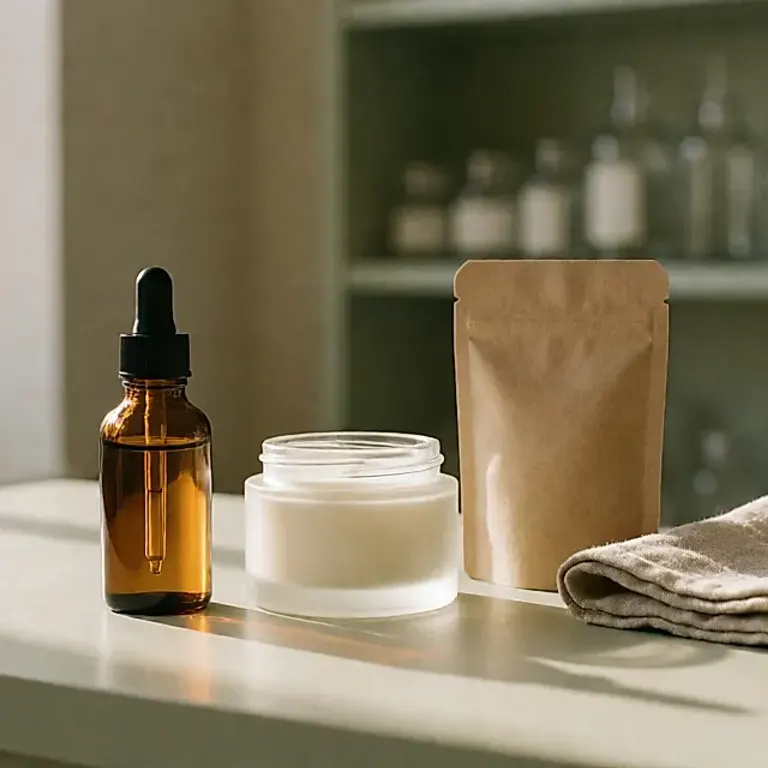
What's the takeaway? Buy cheaply the things that don't depend on formulation — the accessory, the consumable, the small pleasure — and save your budget for what needs proper formulation. One caveat, though: mini formats can mean more packaging per gram of product. Where you can choose, favour glass, refills or solid formats when they exist.
Budget
In Korea, prices in these aisles vary by format and product, and there is no single range. In the UK, the same kind of item tends to cost around £2–£5 in a supermarket or discount store, an own-brand serum more like £5–£12, and a dermo-cosmetic serum from a pharmacy closer to £20–£40.
Where to find them? Supermarkets, discounters, health-and-beauty retailers, pharmacies and online for Korean formats — though postage can quickly add to the bill if you're only ordering three masks.
The turn-the-bottle check. Before you commit: look at the order of the ingredients (as a rule, especially among the main ingredients, the order follows decreasing concentration; very small amounts may be listed differently), be wary of formulas where fragrance appears very early, test on the inside of your wrist if your skin reacts quickly, and prefer glass or refillable packaging where possible.
Low-price skincare doesn't replace a considered bathroom shelf; it offers a way in. The question is what you put on the shelf: the ten-minute ritual, or the name on the pot. And sometimes, let's admit it, it's the only ritual left when you have five minutes — and three pounds in your pocket.
Comments
Your opinion matters: rate the article, react and reply to comments.
Comments are moderated; AI-assisted comments are flagged. Text emoticons (8-), :-), <3…) are automatically shown as images.