
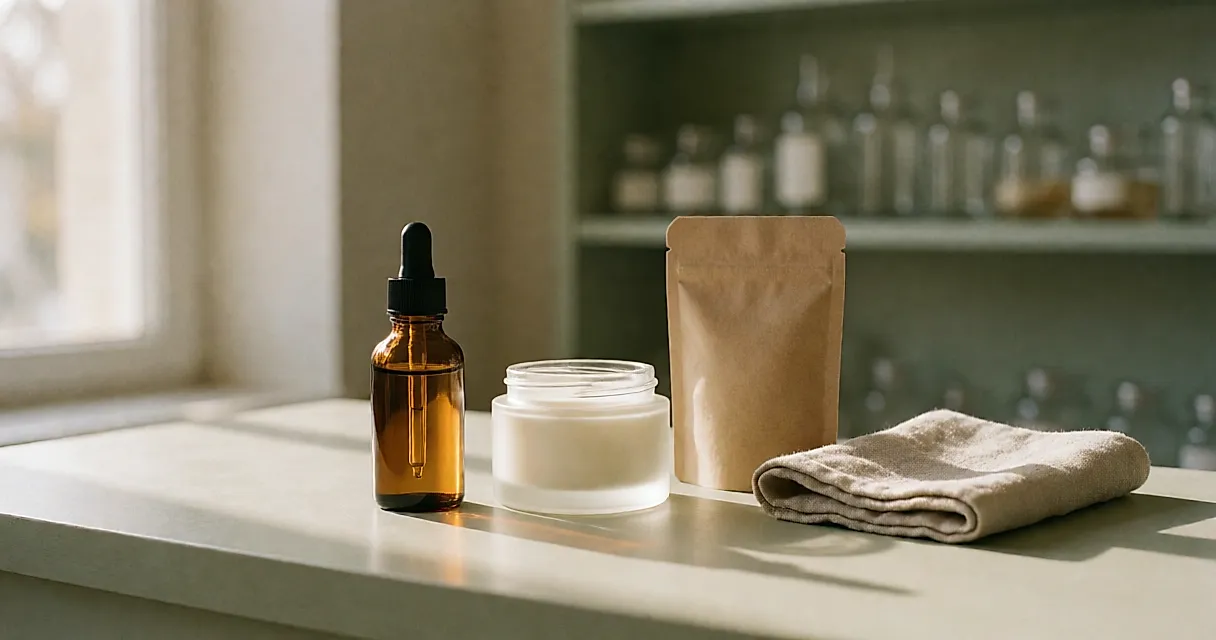
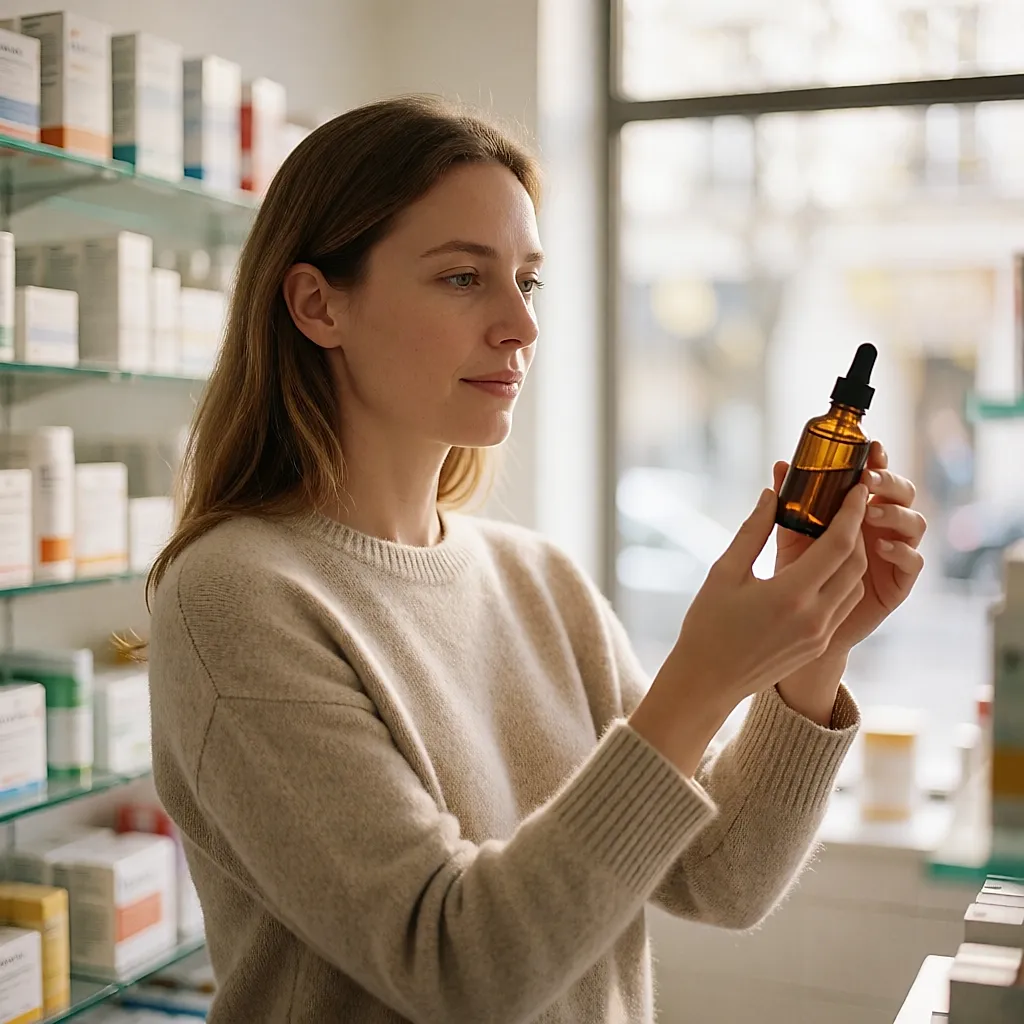
Saturday morning at the local pharmacy, and the queue is snaking between the sunscreen basket and the tissue display. The woman in front of you asks for a serum for tightness, and the pharmacist doesn’t reach for the box everyone knows. She picks up an amber glass bottle, turns the label over and reads two lines of the ingredients list aloud. The shelf has switched allegiances — and it isn’t just about packaging.
The shelf has shrunk, but the questions haven’t
A few years ago, the moisturiser wall in a pharmacy looked like a motorway: rows of products for almost every skin complaint, all lined up, leaving you to work it out with your glasses and your intuition. In many pharmacies today, the shelf has tightened. Fewer products, better chosen — and, tucked next to the established dermocosmetic brands, natural ranges that until recently you’d more often have found in a health-food shop or online.
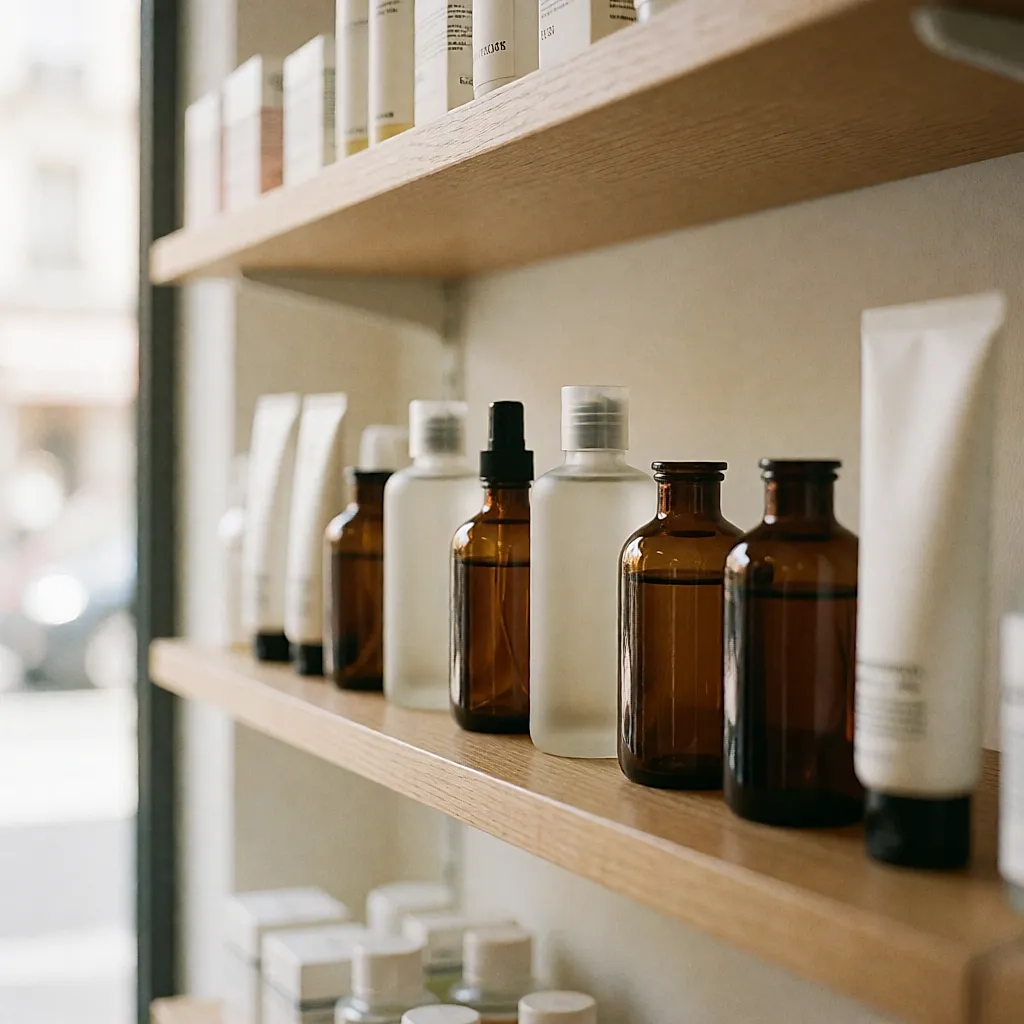
This shift changes two things, and both matter. On the plus side, you can save time: the choice has already been edited, and the temptation to buy a fourth serum you didn’t need can drop sharply. On the downside, you can lose variety. Small brands without commercial muscle often don’t make it onto the shelf, and nor do some more unusual textures. The pharmacy is a filter, not a full inventory. Useful, but partial.
Someone behind the counter who can answer
That’s the real privilege of the set-up: a healthcare professional you can ask a precise question. Not ‘Is this good?’, which only invites a nod. Rather: ‘My skin is reactive and I’m using a treatment — is this perfumed balm sensible?’ ‘What’s the actual difference between these two creams, apart from the price gap?’ ‘Does this serum contain essential oils?’ Ask about ingredients, not promises. Ask about texture, too — depending on the product and your skin type, a gel-cream may suit the morning and a richer balm the evening, but follow the instructions and ask for advice.
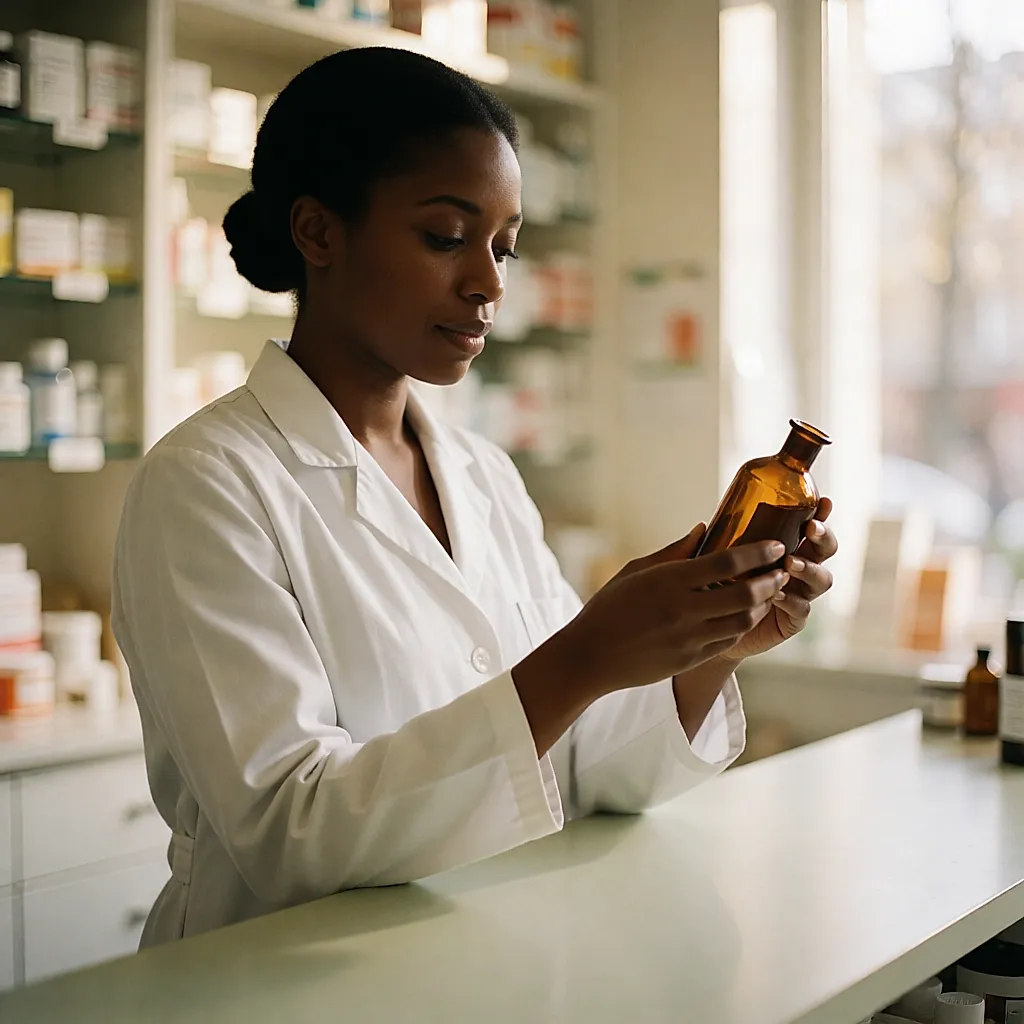
Advice does have a limit, though, and it’s a matter of time. At 6.30pm, with three people behind you and a phone ringing, you might get ninety seconds. It isn’t a cosmetics science lesson; it’s an opinion. Prepare your two questions before you go in, make a note of what has been itching or feeling tight for the past fortnight: you’ll come away with an answer you can use instead of one more bottle.
And honestly, I couldn’t tell you whether your pharmacy’s natural aisle is better than the health-and-beauty retailer next door. It depends almost entirely on who is behind the counter — the same range counts for more when it comes from someone who understands reactive skin than when it’s pushed at you between prescriptions.
Natural doesn’t mean harmless
A certification such as COSMOS (the standard used by the Cosmébio label) sets a framework of rules on ingredients: a minimum proportion of natural ingredients, a list of excluded ingredients, audits. It doesn’t guarantee effectiveness, and it doesn’t guarantee that your skin will tolerate the product. An essential oil can be natural and still sting. A plant extract can be botanical and still trigger a reaction. A ‘100% naturally derived’ fragrance is still a fragrance, with allergens. Fragrance allergens may appear in the INCI, often at the end of the list rather than at the top — check the label if you’re sensitive.
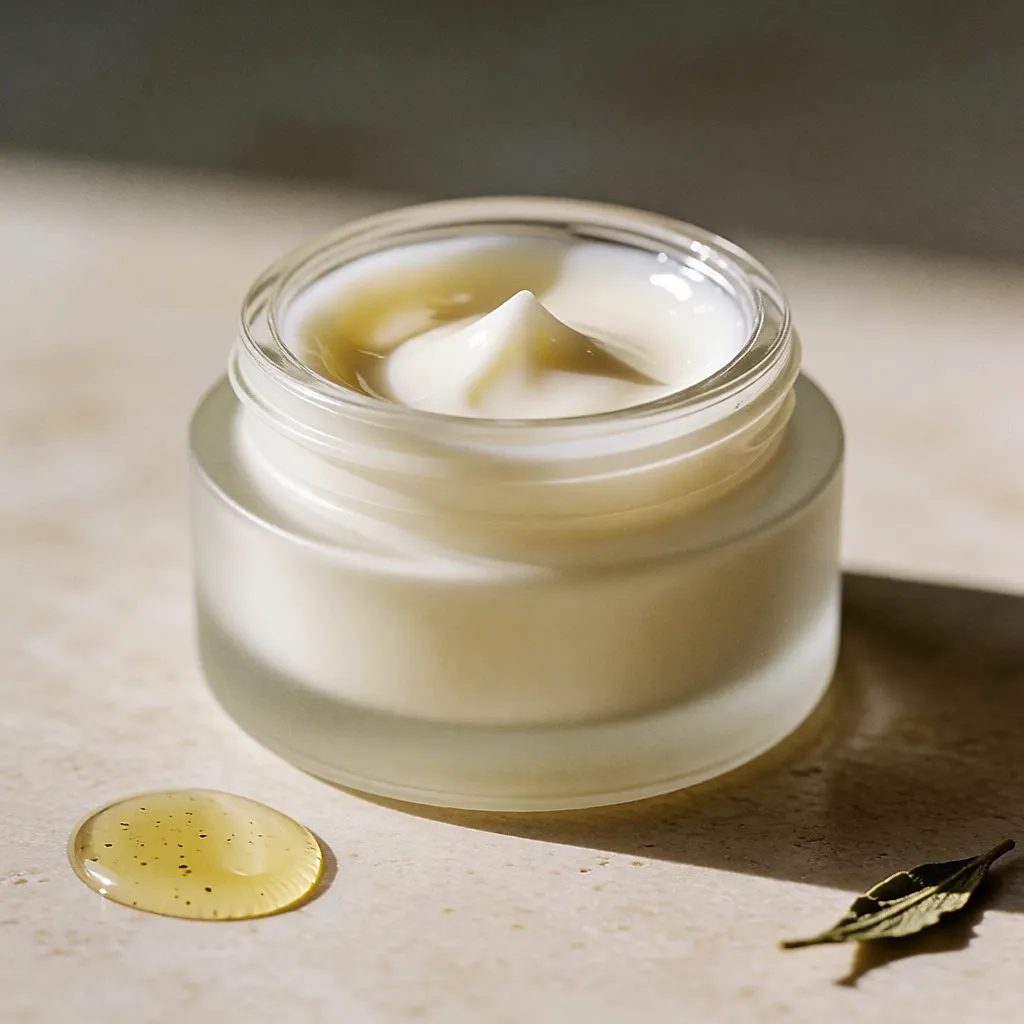
This isn’t a reason to write off natural skincare — far from it: textures have come a long way, gels melt in better, cleansing oils rinse clean without a greasy film. But if your skin is genuinely reactive, say so: a dermocosmetic cream that is fragrance-free and has a short ingredient list will sometimes be the best choice, including in a pharmacy, right next to the green bottles. The right call isn’t ideological; it’s about your skin.
Three questions that make a difference at the counter: what’s in it besides the headline active? Does it contain fragrance or essential oils? Do you have a small size or a sample? And one habit: read the INCI before you buy, not in the car afterwards.
What it costs
In the UK, expect to pay around £12–£25 for a moisturiser in a pharmacy or health-and-beauty retailer, and £20–£45 for a serum. The range varies with the town, the brand and the packaging: a 50ml jar and a 40ml tube aren’t directly comparable, so bring everything back to price per millilitre if you’re hesitating. When a brand offers a refill, it cuts both the cost and the packaging — check that one genuinely exists for the product you’re looking at.
On the retail side, the pharmacy isn’t automatically the most expensive option: prices are often close to those at a department-store beauty counter, and sometimes lower online on the brand’s own site. Supermarkets can undercut both on basic products. Small sizes cost more per gram, but they save you from paying for a 50ml jar that ends up half-full in the bathroom cabinet — we all have that graveyard.
The real change is you
Natural skincare arriving in pharmacies doesn’t oblige you to do anything: it simply gives you one more place to ask a question out loud. Turn up with a problem stated plainly, not a shopping list. Leave with a product, a texture and a method — a few drops, according to the instructions and the texture, on clean skin. If the answer doesn’t convince you, you are allowed to walk out empty-handed: it’s free, and it’s often the best purchase of the day.
Comments
Your opinion matters: rate the article, react and reply to comments.
Comments are moderated; AI-assisted comments are flagged. Text emoticons (8-), :-), <3…) are automatically shown as images.