
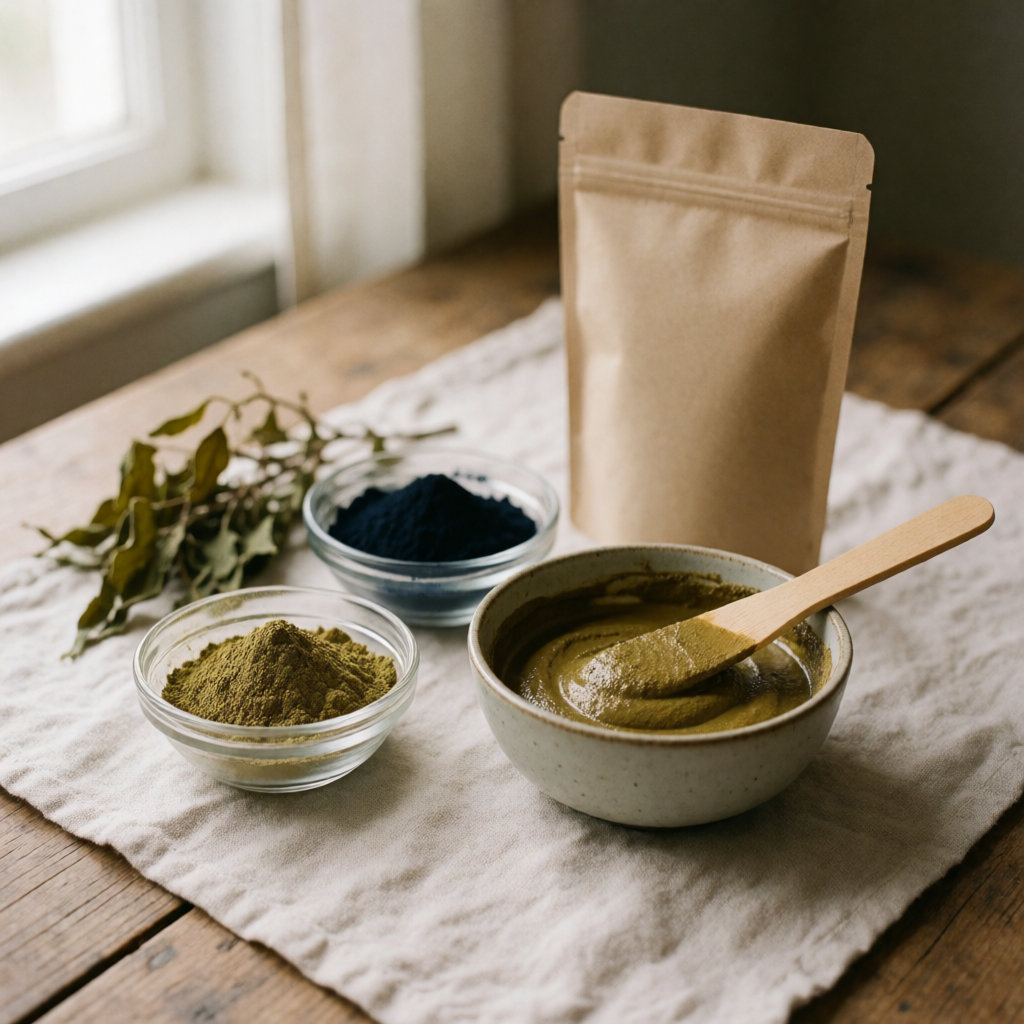
Natural hair colour: what should you make of it?
You're standing in front of the shelf, a sachet of plant powder in one hand, a classic tube in the other. On one side, the idea of putting pigments from plants, chamomile, henna or tea onto your scalp. On the other, the promise of a perfectly controlled platinum blonde. And that little voice whispering: 'what if natural isn't as gentle as it sounds?' Let's be honest, the question is worth pausing over.
If studies on the subject don't all agree, chemical hair dyes are still suspected of causing plenty of harm. Carcinogenic, mutagenic or even teratogenic — potentially causing malformations in the embryo — these are risks that frighten people, even if they are not officially proven. So naturally, at a time when organic and natural are booming, we're looking at plant-based hair colour with fresh interest.
The 'green' trap on the label
Be careful, though, because some colourants presented as natural contain chemical precursors such as paraphenylenediamine (PPD) and an oxidising agent. The only reliable judge is the INCI list on the back of the packet. If you read PPD there? It's a conventional hair colour dressed up as green. No need to assume bad intent, just read carefully — it saves a lot of disappointment.

And don't assume that 'plant-based' automatically means 'very gentle'. Some pure plant colourants, especially henna, bind to keratin and can leave a film; their tolerance varies according to the plant, the preparation and the person. These formulas contain no ammonia or added oxidising agent, but they don't suit every scalp either. The step that changes everything, before you even mix your powder: a patch test on a small area of skin, 48 hours beforehand.
What they can do, and what they can't
The downside, of course, is that they don't allow as much experimentation as their chemical counterparts. With natural hair colour, there's no radical colour change, little or no lightening possible: they mainly add nuance and shine, and can darken hair slightly. As for coverage, even though natural dyes have come a long way, they aren't as covering as chemical hair dyes.
They will still dye white hair, but it will remain lighter than the rest. That said, the reflections and nuances these natural pigments bring are very beautiful and have the advantage of staying in tune with each person's natural complexion. Note also that these natural dyes can, in some people, give a shinier appearance or a feeling of density, but they don't treat the hair and don't suit everyone.

What's more, if they fade with repeated shampooing, they do so harmoniously and limit the root regrowth effect. How long they last depends on the plant and the process: some plant-based colours fade within a few weeks, while henna can last much longer. Bear in mind that applying a natural colour takes longer than a chemical one. You need to respect that processing time if you want a clearly visible result.
Mixing your methods
It's generally advised to leave a certain amount of time between applying a natural colour and a chemical one, and vice versa. In every case, read the instructions carefully; they'll tell you what precautions to take. And if you later want to go back to salon colour, tell your stylist that you've used a natural dye and which type — containing chamomile, henna, tea, boxwood...
Some substances used in chemical hair dyes, such as PPD, can cause severe allergic reactions; ammonia and peroxide can irritate or weaken hair. Their use is regulated, and risks vary from product to product and person to person. Of course, they have their advantages: chemical dyes let us indulge all sorts of whims, like a dramatic colour change, going from flaxen blonde to jet black, or the reverse. They are certainly effective.
But they also contain, among other things, ammonia, peroxide or paraphenylenediamine: it's better to read the instructions, follow the precautions and do a patch test before you start — which is sometimes enough to make you choose a plant-based colour, without expecting the same result. The verdict: yes, plant-based colour has every right to be in your bathroom, as long as you accept its limits.
Before applying any hair colour, a small patch test on an area of skin 48 hours beforehand remains the step that prevents nasty surprises — especially when you don't yet know the exact ingredients of the product.
Budget
Price-wise, it all depends on the formula and where you buy it. A henna or plant-based hair colour powder to mix yourself usually costs between £4 and £13 per packet, not counting the aftercare that sometimes follows. For a ready-to-use kit, expect more like £9 to £22. In a salon, a plant-based colour is most often between £35 and £80, more for long hair or blending work, and it's best to ask for a quote before you settle into the chair. The price also varies according to brand, organic certification and the type of plants used.
Sources
- Regulation (EC) No 1223/2009 of the European Parliament and of the Council on cosmetic products, which governs hair colourants.
- ANSES, French Agency for Food, Environmental and Occupational Health & Safety, publications on hair dyes.
- SCCS (Scientific Committee on Consumer Safety), opinions on hair colourants.



Comments
Your opinion matters: rate the article, react and reply to comments.
Comments are moderated; AI-assisted comments are flagged. Text emoticons (8-), :-), <3…) are automatically shown as images.