

The bottle is identical, down to the millimetre. So is the name. The only differences: a 'limited edition' sticker and a fuchsia ribbon around the cap. Three weeks later the shelf is empty and you're wondering what you missed. Possible answer: nothing.
The same name can hide a different formula
Skincare gets reformulated without changing its name — and that's not deception in itself. Brands adapt to a regulatory change (an ingredient pulled, an allergen that now has to be flagged), sometimes to a supplier change, sometimes to the need to hold their price point. The tube keeps its name and its look: that's exactly what makes it sell.
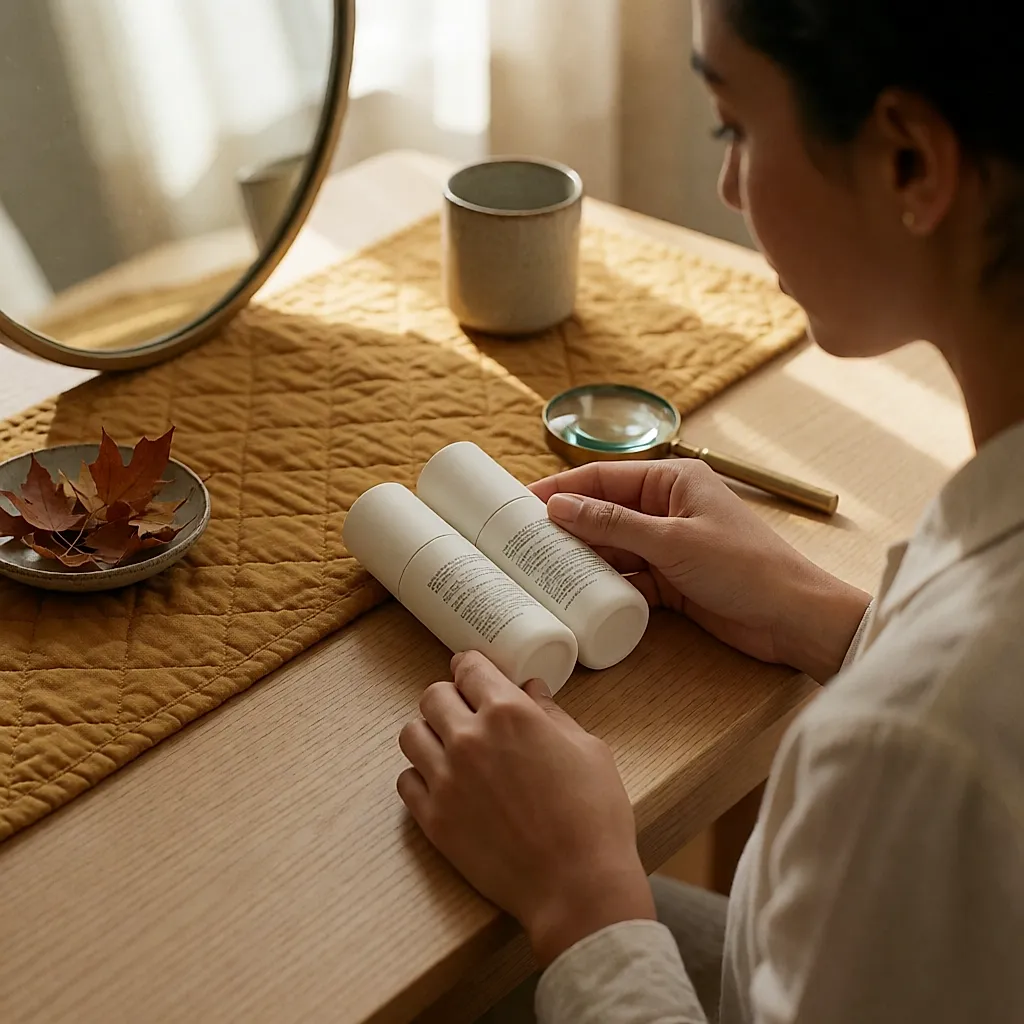
Which is why the INCI list on the back matters. In the EU and the UK, ingredients are listed in descending order of quantity down to 1%, then in whatever order the brand chooses. If water drops from first place to third and the active you were after has vanished from the first five lines, that's not a printing quirk. Compare the start of the list, not the end — and let's be honest, it's hard to be categorical without both labels in front of you. Which is exactly why a side-by-side comparison beats the word 'new'.
Size, format, reference: where 'new' hides
The classic move is size. The jar goes from 50ml to 40ml, the price stays put — and the arithmetic doesn't lie. One habit worth forming: divide the price by the millilitres and remember the number. Price per millilitre is the only figure that lets you compare two bottles that no longer really match.

Then there's format: a tube that became a jar, a pump that became airless. That's not a cosmetic detail — it changes the dose and how the product keeps. And the word 'refill'? It only means something if the case is built to last and the refill genuinely costs less. A refill priced like the full jar — what's the point, beyond a warm glow of conscience?
Last clue, more discreet: the barcode. A run made for a particular retailer or a particular market often carries its own reference, sometimes a distinct batch number. A photo of the label before you pay will save you a lot of back-and-forth at the till.
The thirty-second habit: compare the INCI list on the 'new' version with the old bottle's, if you still have it. Same name, same bottle, same opening lines: you almost certainly have the same product in a new outfit. A list that differs from the first few lines: there really is a reformulation, and it's up to you to judge whether it suits you.
Why your friend in Belgium won't find it
A limited edition is often a localised edition. One market, one retail chain, one season: the brand makes a short run, sometimes with a specific dose or packaging, and distributes it only there. Nothing mysterious — it's logistics. A restricted stock doesn't spread across thirty countries.
Regulation plays a part too. The lists of permitted actives aren't identical everywhere: some UV filters approved in Europe aren't approved in the US, which is enough to change a formula from one continent to the next. So a bottle bought in duty-free isn't 'fake' because its INCI list differs: it's simply intended for another market. Do still check that it's properly distributed and that the label is in a language you can read.
Budget
Rough figures: a 30ml face serum lands at around £10–25 in supermarkets and own-brand ranges, £25–70 in beauty halls and pharmacies, and considerably more in luxury lines. Price tells you nothing about how new a formula is: it's the comparison with the previous version that talks.
Where to look? Beauty halls and pharmacies to handle the bottles, supermarkets for the historic formats, the brand's own site for the current composition. Online clearance can be worth it, provided you check the batch and the manufacture date. And if the price-per-millilitre maths makes your head spin, remember that a product you finish is worth more than two forgotten at the back of a drawer.
At heart, a limited edition is neither a trap nor a party: it's a bottle that has changed its dress, sometimes its formula, often its price per millilitre. The move that stays with you, when you've got thirty seconds and your phone in hand, is to photograph the label before you say yes. The ribbon, though, can't be verified.


Comments
Your opinion matters: rate the article, react and reply to comments.
Comments are moderated; AI-assisted comments are flagged. Text emoticons (8-), :-), <3…) are automatically shown as images.