

On the side of a barrier cream tube, the INCI list runs to six lines of 6-point type. Somewhere between a thickener and a fragrance hides the word that decides everything: ceramide NP. Two tubes side by side, one at £8, the other at £40 — and it is often that tiny line, not the price or the packaging, that tells you most about what you are about to spread on your cheeks once the central heating goes on.
The good news is that it takes ten minutes to learn, with a magnifying glass and a healthy dose of suspicion towards marketing.
The code, not the ranking
Ceramide NP, ceramide AP, ceramide EOP. Those three turn up most often on the bottle. The letters say nothing about quality — NP is not better than AP — they describe the shape of the molecule, a bit like a shoe size describes a foot without telling you whether the shoe is comfortable. You will also see the older names, ceramide 3, 6-II or 1, on formulas that have been around a while: same family, different label.
Now for the bit that makes the rest readable: skin is a brick wall, with corneocytes held together by a lipid mortar. Ceramides are the biggest part of that mortar, alongside cholesterol and fatty acids. A barrier cream does not "repair" the wall; it supplies some of what you need to make more mortar. There is no lab here, and nobody is claiming to have measured anything: everything below comes off the label, not off a test bench.
Where the ceramide actually sits
The INCI rule is simple: ingredients are listed in descending order of concentration, down to 1%. Below that threshold, the order is free again. Hence the classic: water, glycerin, fatty alcohol, plant butter, then the ceramide — often eighth, tenth, twelfth.
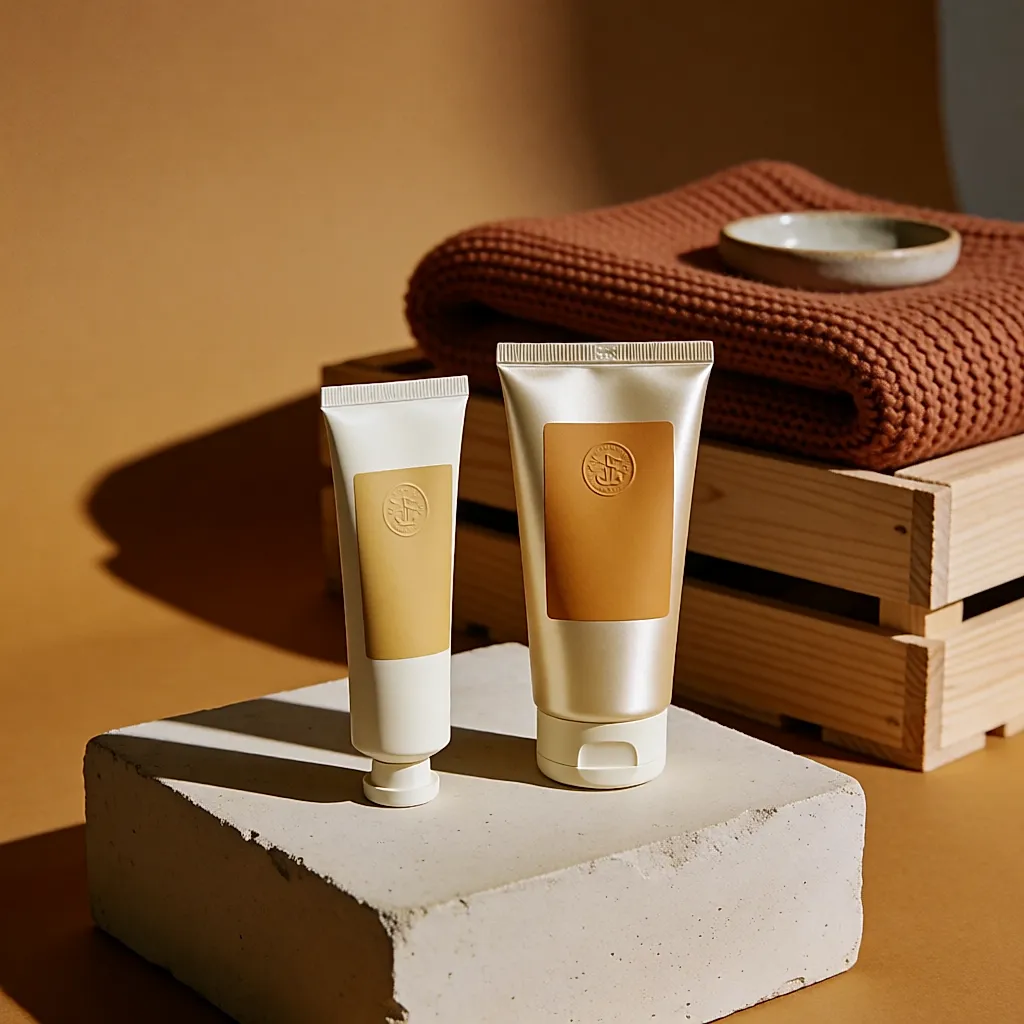
Is a ceramide that far down a problem? No. It is used at low doses, and a late position does not prove it is useless. What it does tell you is the main thing: the formula is first and foremost a water-and-glycerin emulsion with a little oil around it. If your skin feels tight and stretched, that is a different conversation from a balm. And if the word "ceramide" is splashed across the front of the tube yet never appears in the list, you know what to do.
The trio, and the trap of the clever word
Look for Cholesterol in the list. Ceramide plus cholesterol suggests a more complete barrier formula, but proves neither the lipid trio nor any actual efficacy.
Then come the fatty acids: stearic acid, palmitic acid, oleic acid, linoleic acid. And here, steady on. Stearic acid very often works as an emulsifier and a thickener: finding it does not guarantee that the formula rebuilds the trio. It is a clue, never proof. Reading a label is about cross-checking details, not handing down a verdict.
Wheat, fermentation or something animal
For a formula with no animal ingredients, look for phytoceramides — often from wheat, wheatgerm or bran — ceramides produced by fermentation, or copies made in a lab. Two products can list the same ceramide NP with very different origins, and the list does not always tell that story.
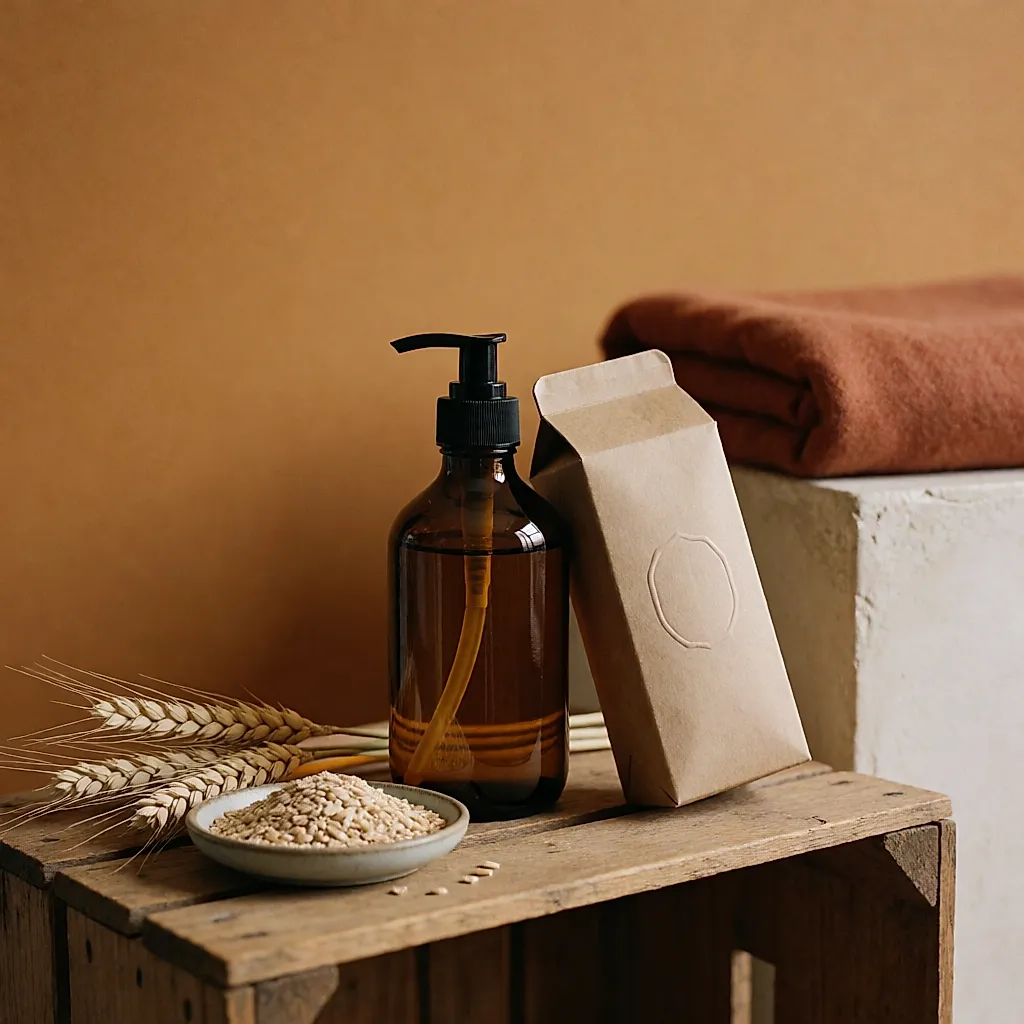
The habit worth having: scan the rest of the list. Lanolin, beeswax, honey or milk proteins are enough to make a product non-vegan, even with wheat ceramides. And be sceptical about the word "natural" when the ceramide is the only ingredient in the formula with any claim to it.
Tube or pot? The question of the gesture
The pot has enormous charm and one flaw: you have to dip your fingers in. For a thick, rich, waterless balm kept for hands and heels, that is perfect. For a daily face product, the tube wins — less contact, less air, easier to slip into a bag. An airless pump protects the formula better still, but you pay more for it.

Think about the real gesture, not the pot on the shelf: if you have to undo a screw lid with a baby on your hip, you will not do it twice a day. A tube you can squeeze one-handed, though, yes.
Three seconds in the aisle. Turn the tube over: water and glycerin at the top is normal, do not run. Then look for the ceramide (NP, AP or EOP), then for cholesterol. Ceramide plus cholesterol suggests a more complete barrier formula, but proves neither the lipid trio nor efficacy; if neither appears, put the tube back and move on.
Budget
Expect to pay around £7 to £13 in a supermarket or high-street chemist for a basic barrier cream, £10 to £22 in a pharmacy or health and beauty retailer for a formula with named ceramides, and £22 to £45 for premium dermatological ranges. With a similar composition, the difference comes down to packaging, fragrance and branding — three things that do not do much for a cheek.
Whichever channel you shop in, compare the price per gram. Online, check the size of the format and the period after opening, which is often shorter than you would guess on a pot you have already started.
And the next time you twist a pot the wrong way looking for the price, turn the whole thing over: those last six lines say more than the front. If your skin is cracking, itching or bleeding, though, it is no longer a question of labels — see a pharmacist or your GP, who can look further than an ingredient list.

Comments
Your opinion matters: rate the article, react and reply to comments.
Comments are moderated; AI-assisted comments are flagged. Text emoticons (8-), :-), <3…) are automatically shown as images.