
Why we always forget the same patch of skin
Ten minutes on the face, two on the hair, and nothing — absolutely nothing — below the chin. Let's be honest, we've all done exactly the same for years, until someone asked us why we never put anything on our chest and neckline. Good question, isn't it? That patch of skin that appears with the seasons, gets exposed to the sun without a second thought and never gets a lick of moisturiser, deserves a few minutes of its own. Here are six lessons to take from that, without overcomplicating things.
Moisturise, yes — every day, even under a polo neck
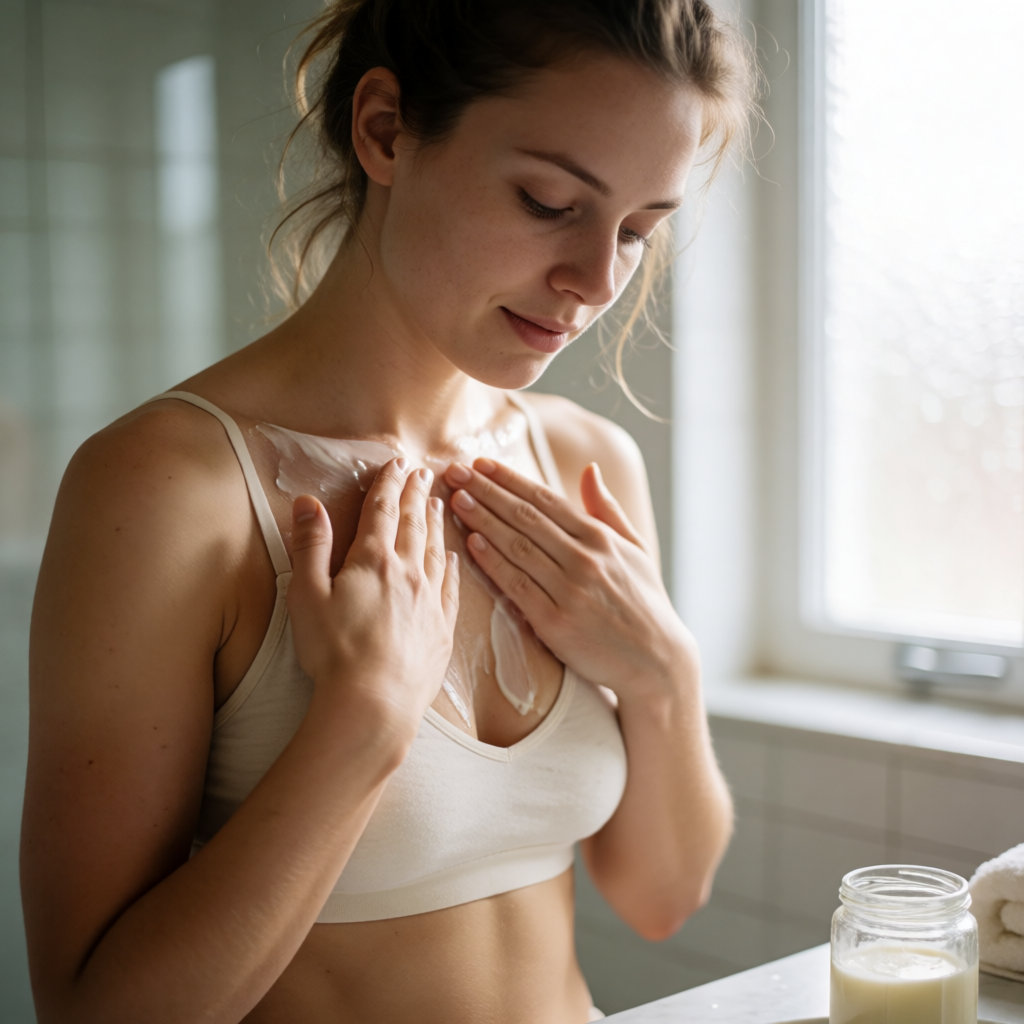
The skin on your bust and neckline is thin: it marks easily, reddens quickly and pulls tight without warning. The routine itself is simple. After your shower, on still-damp skin, glide your body cream in circular motions, working upwards from the base of your chest to your neck. Once a day if you remember in the morning, twice if you enjoy a little evening ritual — but every day, winter included.
No need to overthink the formula: glycerine, a little urea, niacinamide or a plant oil all do the job beautifully. And while we're on the subject, a refillable jar or a glass bottle is already less plastic. In the morning, the moment you bare your chest, reach for SPF 30 or 50: it's the area that tans without you noticing, and the one that holds onto marks the longest.
Cold blasts and massage: two very different pleasures
Do you finish your shower with a blast of cold water? It wakes you up and gives a feeling of tightened skin — one that fades within twenty minutes. No study shows that cold actually firms up a bust for the long term. So if you love that surge of energy, keep it! And if you hate it, nothing obliges you to suffer in your bathroom just to follow the crowd.
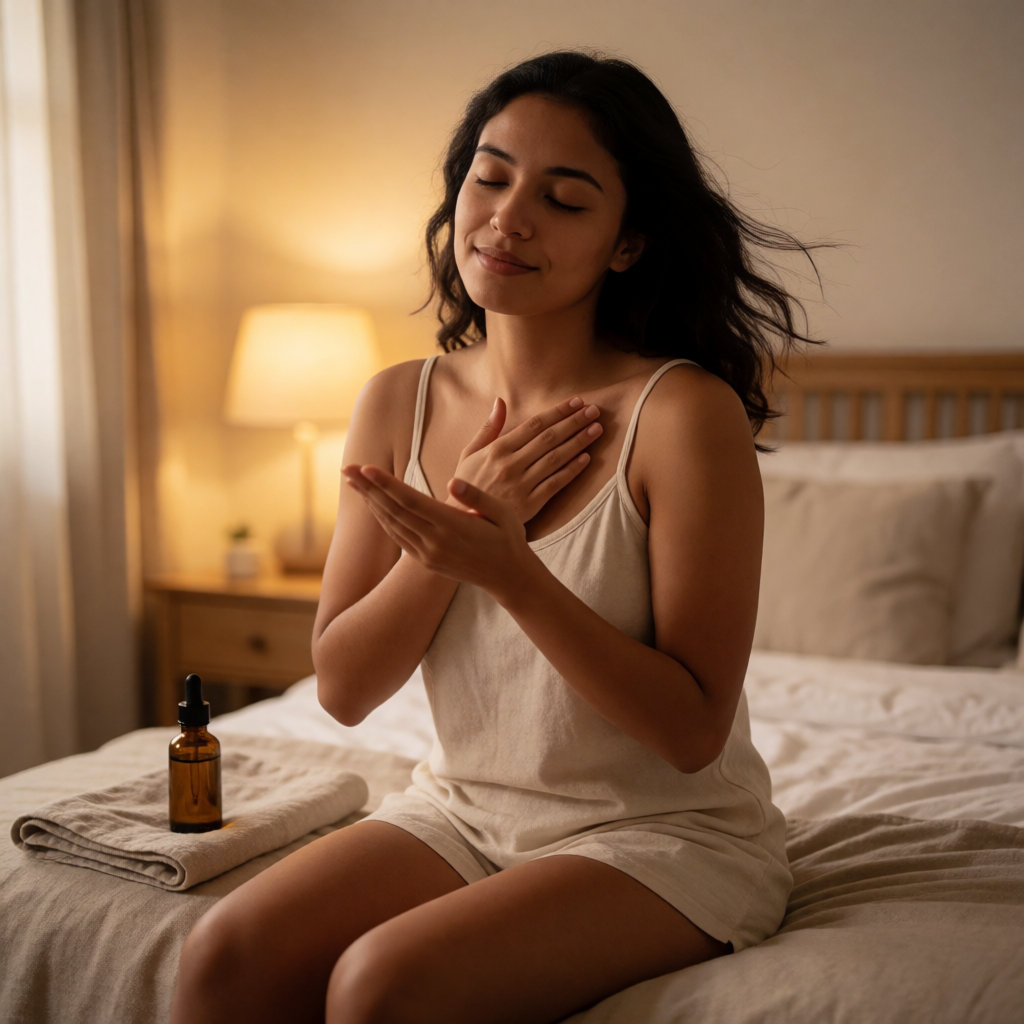
Massage, on the other hand, is a different ballgame. It relaxes you, it helps you get to know your skin, it makes the whole routine enjoyable — and therefore daily. Twice a week, with a light oil, work gently upwards from the base of your chest to your collarbone with small presses, without squashing the breast. The aim isn't to knead, just to get acquainted.
A gentle exfoliation, once a week
Your neckline collects things: sunscreen residue, perfume, sweat. A weekly exfoliation helps slough off dead cells and smooth the skin's surface. Except — the skin here is thin, so forget the gritty formulas that scratch. Fine sugar, an enzyme gel or a soft mitt, always with a light touch.
A home blend of sugar and plant oil does the job perfectly, with nothing to throw away. It's the kind of recipe that needs no particular skill and leaves skin soft without roughing it up. You get the idea: when it comes to exfoliating your chest, gentleness isn't optional.
Strengthen your muscles, yes — but not for the reason you've been sold
You'll read everywhere that working your pectorals lifts your bust. In reality, the muscle sits beneath the breast tissue: building it won't raise the breast itself. What it does do — and this is where it gets interesting — is improve your posture, and that makes a huge difference to your silhouette. Back, shoulders, core: stand tall, open the ribcage, and the bust appears better supported without anything having moved.
Swimming, yoga, Pilates or two strength sessions a week, it doesn't matter — consistency counts for more than the programme. And the WHO guidelines are clear: 150 to 300 minutes of moderate activity a week. That goes for your bust as much as the rest of you, so you might as well kill two birds with one stone.

The right-sized bra (and the myth that comes with it)
For comfort, the size really is decisive. Measure your underband and your bust, arms down, and re-check whenever your weight shifts: after a pregnancy, some kilos lost, a change of contraception. Neither too tight nor too loose. An underwire that presses leaves red marks, a band that's too slack lets your bust bounce with every step — and neither is comfortable.
Now for the myth: nothing proves that a bra prevents sagging. Drooping depends above all on genetics, time passing, pregnancies, weight fluctuations and smoking. For sport, though, a high-support sports bra genuinely reduces movement — the biomechanics of the breast has documented the phenomenon for around twenty years. Which is to say, comfort is worth paying attention to.

Keeping an eye on things, without biting your nails
In the UK, the NHS breast screening programme invites women aged 50 to 71 for a mammogram every three years. Before 50, there's no routine programme: with a family history or a symptom, it's your GP or a specialist who decides what happens next.
Monthly self-examination is no longer recommended as a screening method, as it doesn't reduce mortality. It remains useful for getting to know your breasts and spotting anything that changes: a lump, a retracting nipple, discharge, dimpled skin, a lymph node under the armpit. In that case, book an appointment without delay — and that's true at any time of year. As for the factors we can act on, they're well documented: alcohol, smoking, inactivity, excess weight after menopause. Nothing dramatic, but it counts.
The three things I'm quitting. "Firming" creams that promise a lifted bust in a fortnight — no cosmetic changes the structure of a breast. Gritty scrubs on the neckline. And the bra kept for three years "because it still holds up".
Budget
Good news: when it comes to budget, almost everything comes down to what you already have in the bathroom! Still, here are the rough figures for the UK.
A basic body cream: around £4 to £15 from the supermarket or a pharmacy, a little more in a department store. A plant oil (sweet almond, jojoba) runs £6 to £15 in a health food shop, often in a glass bottle. A decent sunscreen: £8 to £25 depending on size and SPF, from a pharmacy, supermarket or online. A gentle scrub: £6 to £15 in a beauty hall or health food shop — or next to nothing if you make it at home, sugar and oil.
Bras are far more variable: £12 to £30 on the high street or online, £35 to £80 in a lingerie boutique, more beyond a D cup or in less common sizes. A high-support sports bra sits between £20 and £50 depending on brand and size. And a group yoga or Pilates class costs around £10 to £20 per session, less with a class pass.
All in all: six habits, almost no extra spending, and a real difference to comfort and skin. If you're only going to keep one, start with daily moisturising — it's the best time-to-effect ratio on the list. The rest will follow once the habit is in place.
Sources
- NHS — breast screening, accessed 2026.
- Cancer Research UK — breast cancer screening, accessed 2026.
- NICE — breast cancer guidance, accessed 2026.
- World Health Organization — physical activity and cancer prevention, accessed 2026.
- Research Group in Breast Health, University of Portsmouth — breast biomechanics and sports support.



Comments
Your opinion matters: rate the article, react and reply to comments.
Comments are moderated; AI-assisted comments are flagged. Text emoticons (8-), :-), <3…) are automatically shown as images.