

The benefits of a hammam
The last time I came out of a hammam, I spent the evening touching my forearms, slightly incredulous. Honestly, my skin felt supple, my complexion rested, and my head had finally switched off. There was nothing magical about it: steam, a mitt, and twenty minutes without a phone. If you've never set foot in one, or you're still hesitating at the door, here's what really awaits you.
What actually happens under the steam
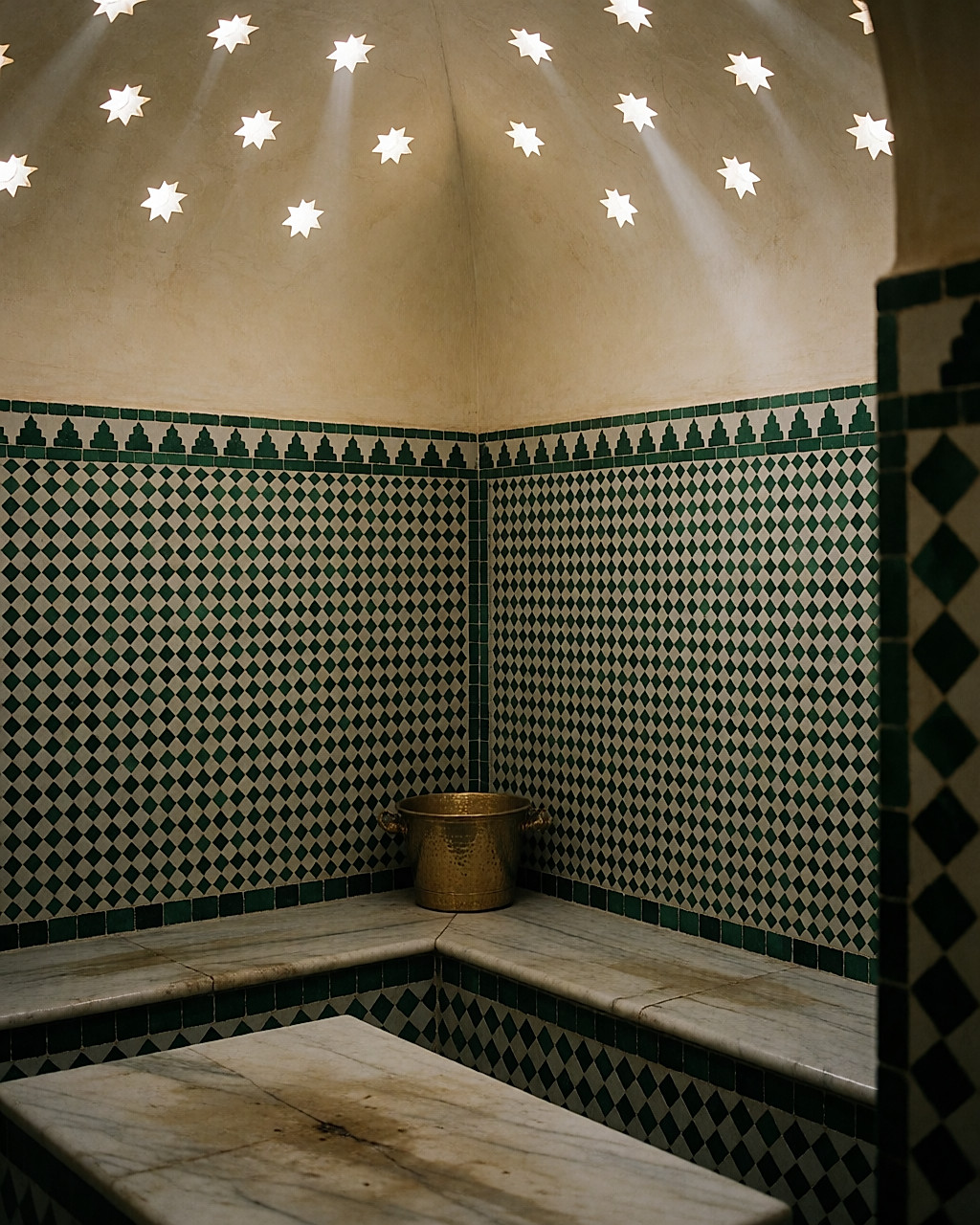
You lie on a stone bench in a tiled room saturated with humidity. The steam is hot and the air very humid, with levels that vary from one hammam to another — damp heat can feel gentler on dry skin, but tolerance varies from person to person. And contrary to what you read here and there, you don't come here to sweat 'hard'. You come to relax and clean your skin gently.
The classic sequence is simple. A shower to wet yourself, one or two spells in the hot room, a cool-water break where there's a tap, then the scrub. Come out now and then if you feel yourself drifting off: heat relaxes, but it also sends you to sleep.

The beauty step that changes everything
The traditional hammam duo is black soap and a kessa mitt (or an exfoliating glove if you don't have one). Beldi black soap comes as a dense brown paste made from olive oil and potash. Its rich texture glides over wet skin without much lather: that's normal, and it's exactly what makes it comfortable to work with.

The technique matters far more than force. Apply it, leave it for three or four minutes, then rub in long movements, without pressing too hard. It's the steam that softens dead cells; the mitt simply gathers them. On the complexion, the result shows: smoother, more luminous skin, and any oil applied afterwards sinks in better.
A frank word, because there's a lot written on the subject: skin doesn't eliminate 'toxins'. That job belongs to your kidneys and liver. A hammam gives you exfoliation and genuine relaxation — that's already a lot.
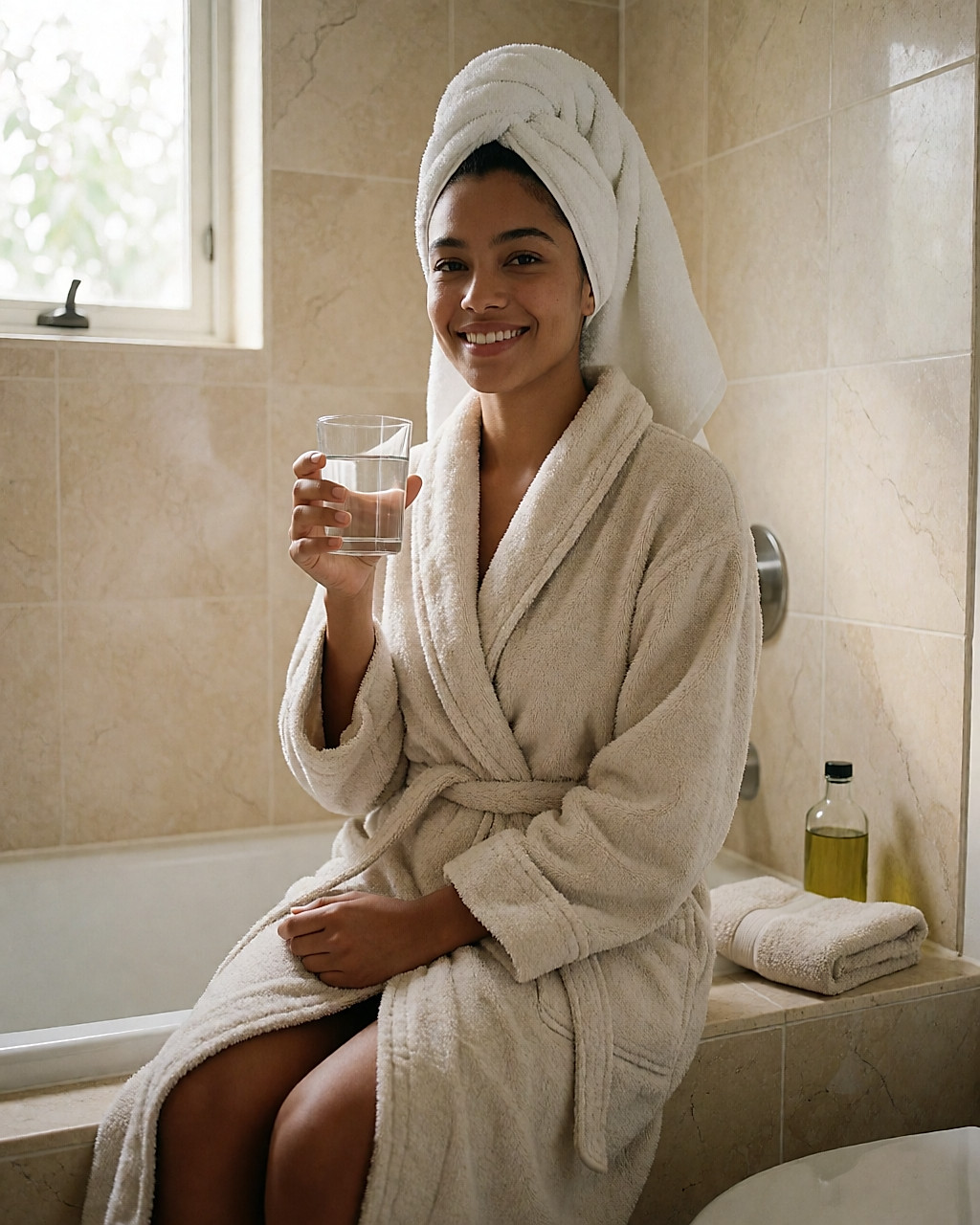
After your session, rinse with cool water, pat dry and apply a plant oil to still-damp skin. Drink a large glass of water: heat makes you sweat, so hydration starts before and continues afterwards. If you are pregnant, undergoing treatment or prone to fainting, ask a doctor before staying in for long.
A ritual to tune to your skin
Many people go once a month. That's a common rhythm, to adjust according to your skin. If yours is reactive, space out scrubs and keep to a short spell — better to return less often than to push a tight, uncomfortable skin. As a precaution, avoid following a hammam with an aggressive facial the same day: the skin barrier doesn't need two assaults in a row.
Budget
On prices, budget around £10–£25 for a hammam or steam room at a local leisure centre, £35–£75 at an urban spa, and £70–£150 for a guided scrub ritual at a specialist hammam or beauty spa. The differences come down to location, duration, supervision, certification and format — a neighbourhood hammam and a two-hour ritual are not in the same league.
On products, beldi black soap costs around £5–£12 at a specialist grocer, pharmacy or online, a kessa or exfoliating mitt between £5 and £15, and an organic plant oil from £10 to £25. To choose, prioritise a black soap whose ingredients are limited to olive oil, potash and water. A COSMOS Organic or Soil Association certification means a controlled standard — not a marketing promise. Oil in a glass bottle recycles better; a cotton mitt can be washed and lasts for years. If you can only find a conventional perfumed soap, be honest with yourself: it's a compromise, not an equivalent.
Sources
- World Health Organization — heat and health, 2023.
- NHS — heat exhaustion and heatstroke.
- Soil Association — organic beauty and wellbeing certification.
- Ecocert — COSMOS Organic standard.



Comments
Your opinion matters: rate the article, react and reply to comments.
Comments are moderated; AI-assisted comments are flagged. Text emoticons (8-), :-), <3…) are automatically shown as images.