

It always starts the same way: a terrace, a shaft of sunlight, and the sudden urge to shed the jumper. Except your skin has just come through six months of long sleeves, central heating and far-too-hot showers. The good news: you don't need heavy artillery to bring it back to life. A few simple habits, repeated with a little consistency, are enough to wake up a dull complexion.
Exfoliate, yes — but don't scrub yourself raw
Exfoliation has one job: to clear away the dead cells that dull the skin and stop it breathing. On the face, once a week is more than enough. Choose a fine texture, or an enzymatic exfoliator if your skin is sensitive — formulas based on papaya or pineapple enzymes are often gentler than a grainy scrub. On ingredients, bad news for plastic microbeads: rinse-off cosmetics containing them have been banned in the UK since 2018.
For the body, exfoliate twice a week in the shower, working from feet up to shoulders, paying a little more attention to heels, elbows and knees. An exfoliating mitt or a natural-fibre brush does the job beautifully — and it can be washed, unlike a product you throw away after one use. Let's be honest: it's also the easiest habit to keep up. Two minutes, and your skin feels completely different.

Moisturise: the step that changes everything
This is the least glamorous part and the most effective. Straight out of the shower, while your skin is still warm, apply your moisturiser within three minutes, before the water evaporates and leaves skin feeling tight. Lotion, balm or oil: it doesn't matter, it's consistency that does the work. Massage legs, stomach, chest, arms, and don't forget your bottom. The massage gets the circulation going and, honestly, with a bit of regularity the skin stays supple.
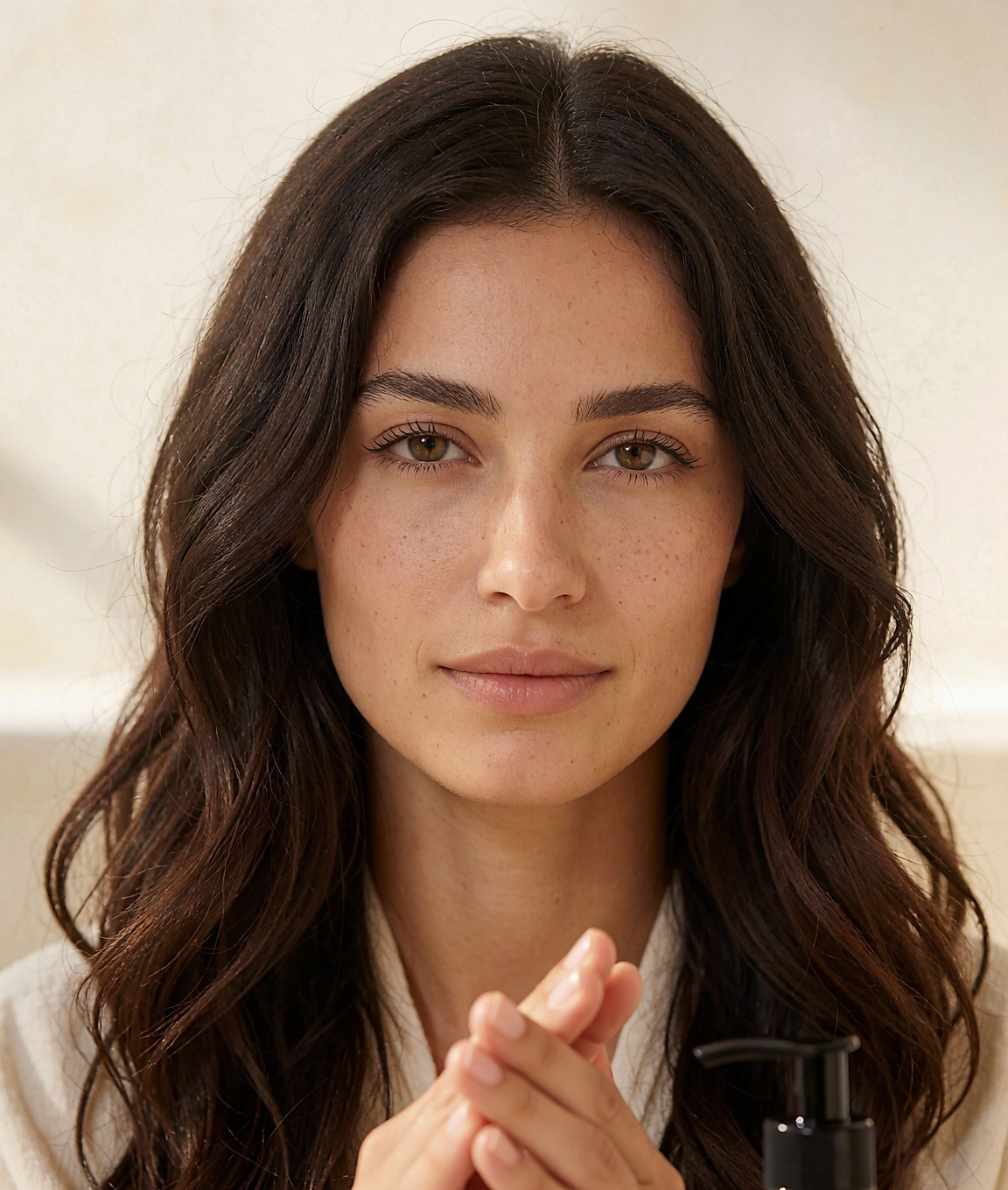
As for texture, a rich balm suits very dry skin, or legs that feel tight after shaving. A lighter lotion, in a pump bottle or a refill, fits more easily into a shared bathroom — and refills, in practice, often work out cheaper per litre while throwing away less plastic. Plant-oil formulas — sweet almond, jojoba, shea — do the job without added fragrance if your skin is reactive.
The hammam, the real ritual
An hour of steam, a kessa mitt, black soap: this is the deep clean, the one that leaves skin soft for good. Two precautions, though. Stay for ten to fifteen minutes at a time, and drink water before and after. If you're pregnant, or have heart or blood pressure problems, ask your doctor before booking — heat isn't harmless for everyone, and it's not something you improvise.
The pre-summer routine, in three lines
- Exfoliate your face once a week, never right before sun exposure.
- Exfoliate your body twice a week, then moisturise within three minutes.
- Hammam once a month, with water before, during and after.
Your plate plays a part too
The carotenoids in melon, apricots, tomatoes and red peppers settle in the skin and can, with a regular diet, give a slightly warmer tone. The important word is "slightly". It doesn't replace a tan and it doesn't protect you from the sun: it gives you a healthy glow, provided you eat them often — not the night before a party.
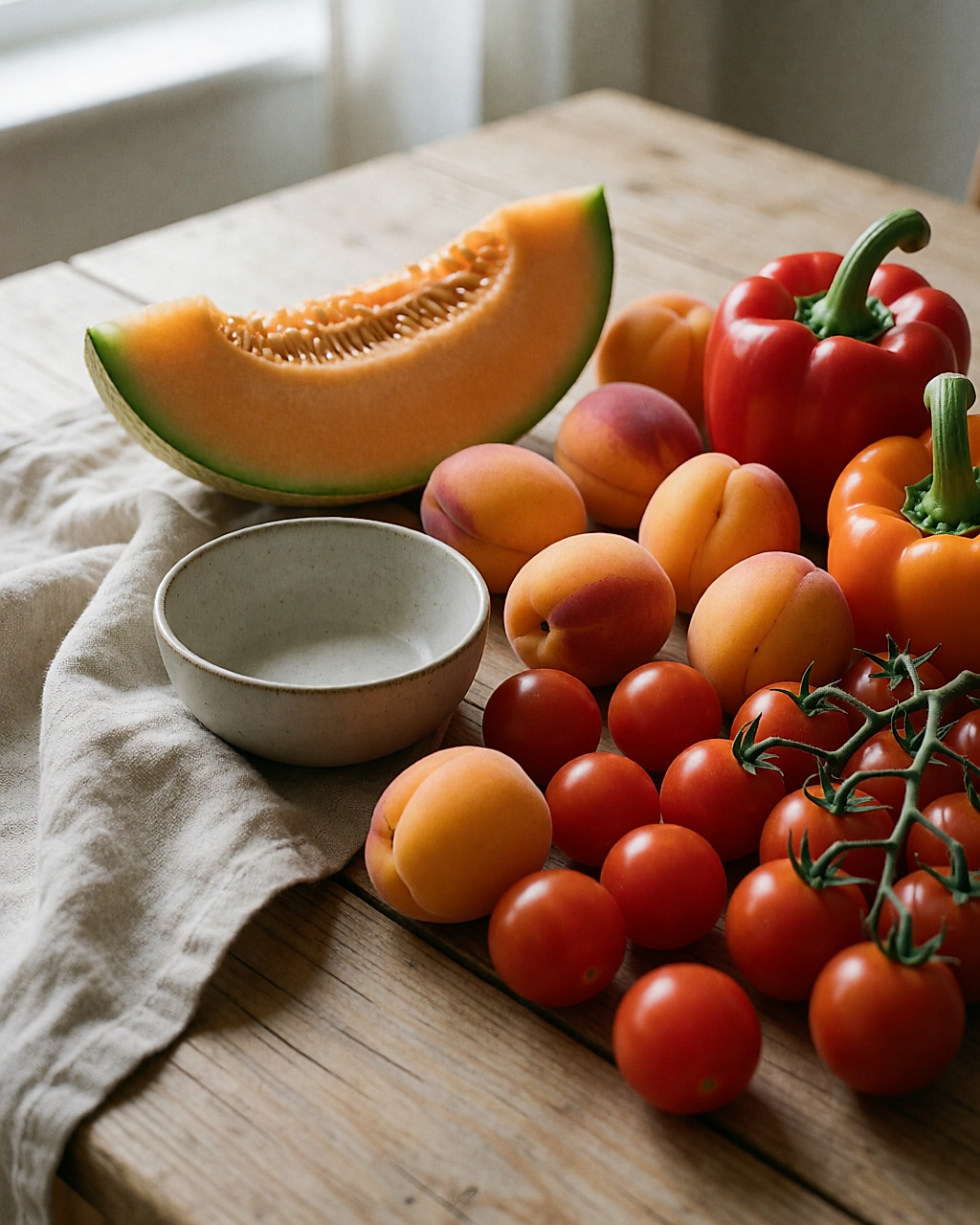
In other words, we're talking about a background effect, not a magic wand. A colourful plate, raw veg returning with the warmer days, and that's already a good reflex — more honest, in any case, than some of the promises made for capsules.
"Sun prep" supplements: time to put them in their place
No supplement can officially claim that it "prepares the skin for tanning". Health claims are tightly regulated in Europe, and that promise isn't among them. The formulas mix vitamins, minerals and plant extracts, in dosages that vary widely from one brand to another — which is to say we don't always know exactly what we're swallowing.
If you're on medication, pregnant or breastfeeding, talk to your GP or pharmacist. The UK Food Standards Agency also advises against high-dose beta-carotene supplements for smokers. And a varied diet remains the foundation.
Self-tan: the bluff that holds
DHA, a sugar, reacts with the proteins of the stratum corneum and colours the skin's surface. The result shows within a few hours and fades within a few days, following the pace of cell renewal. Gradual formulas, less concentrated, build up over several days: fewer streaks, less orange.
Apply evenly to exfoliated, dry, moisturised skin, without overloading ankles, knees and elbows: these dry areas absorb more product and encourage patches and build-up. Use less product there instead, or moisturise them first, then wash your hands and wait a few minutes before getting dressed. When choosing, look at the ingredients and the packaging: a pump bottle or refillable glass, and a certification such as COSMOS Organic, which sets the share of organic ingredients and limits the list of permitted ingredients.
Sun cream: that's the real prep
Getting ready never exempts you from protecting yourself. UV is a recognised risk factor for skin cancer, and sun protection remains the basic preventive measure. In practice: SPF 50 or 50+, around 30 ml for an adult body, reapplied every two hours and after every swim. And no sunbeds, not even to "start you off".
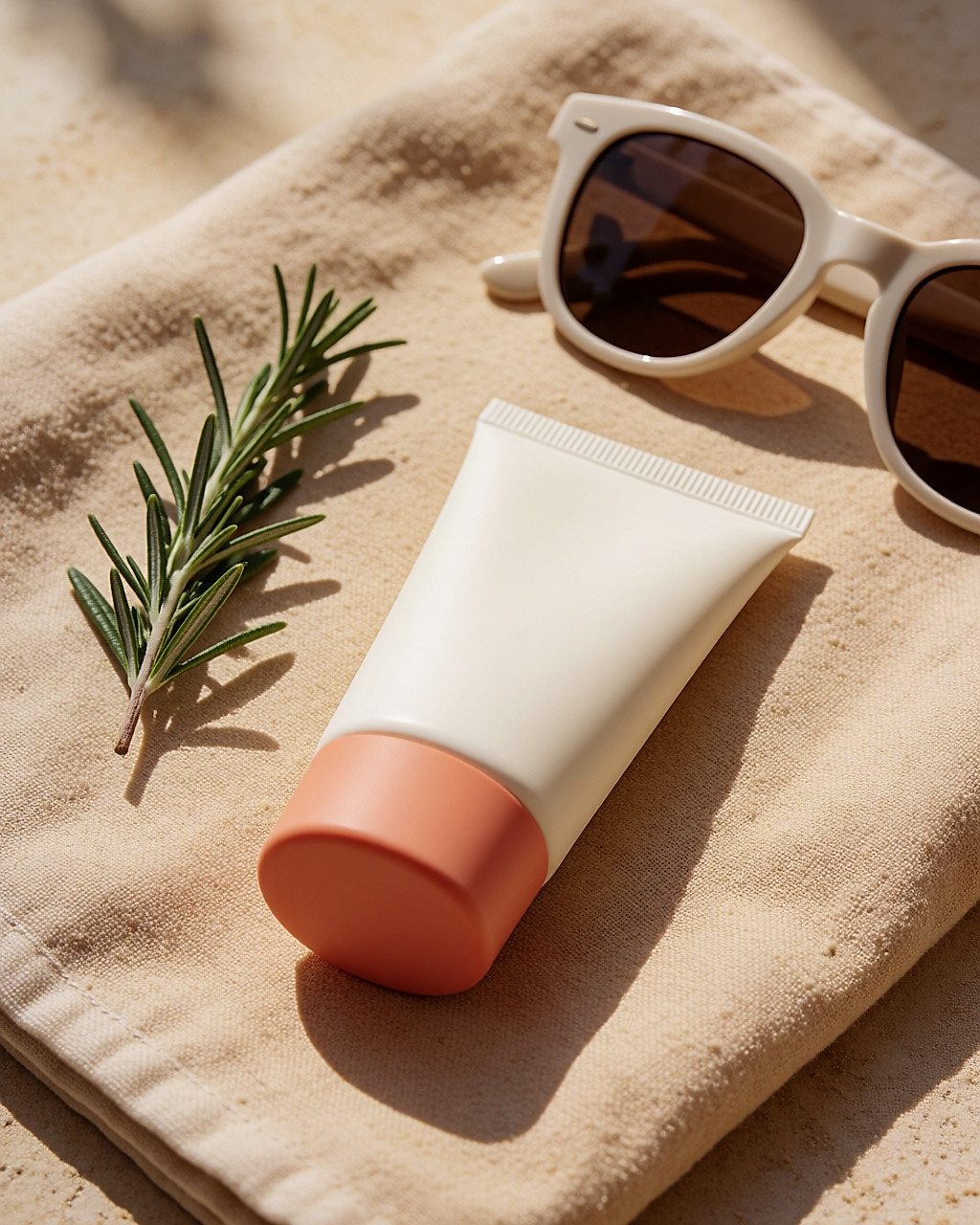
It's the step we sometimes overlook when we think about "preparing" — when it's precisely the one that matters most. Everything else enhances; this one protects.
Budget
Indicative UK price ranges.
- Body scrub: £4 to £12 on the high street, £10 to £22 in a pharmacy for a certified formula.
- Body moisturiser: £5 to £25 depending on size and packaging (glass, refill).
- Hammam: £15 to £40 entry depending on the city; black soap scrub in a spa, £25 to £60.
- Self-tan: £8 to £25; refills generally cost less per litre.
- Food supplements: £8 to £30 for a one-month course.
- Sun cream: £10 to £25 for 200 ml.
Prices vary with city, season, certification and packaging.
Sources
- NHS, sun safety and UV risks
- Cancer Research UK, skin cancer and prevention
- Food Standards Agency, food supplements
- World Health Organization, ultraviolet radiation
- The Environmental Protection (Microbeads) (England) Regulations 2017, legislation.gov.uk
Food supplements do not replace a varied, balanced diet and a healthy lifestyle.



Comments
Your opinion matters: rate the article, react and reply to comments.
Comments are moderated; AI-assisted comments are flagged. Text emoticons (8-), :-), <3…) are automatically shown as images.