

You've dug out that skirt that's been catching your eye for months, and there's a small hesitation in front of the mirror. No drama: your legs don't need a total rebuild. They're just a little tight, the skin has lost its glow, and by evening they feel heavy. Good news: this is less about a pot of cream and more about a few habits to get back on track. Let's look at what really works, what's just marketing talk, and what it all costs — without fooling ourselves.
No cream melts fat away
Let's put it plainly, even if it pours cold water on a few hopes: a cream, however pleasant to use, doesn't dissolve cellulite. This isn't a matter of opinion. Since 2013, a European regulation — retained in UK law — has governed cosmetic claims and requires brands to be able to prove what they promise. As a result, promises of fat-busting or vanished centimetres are monitored closely, and they need to be solid.
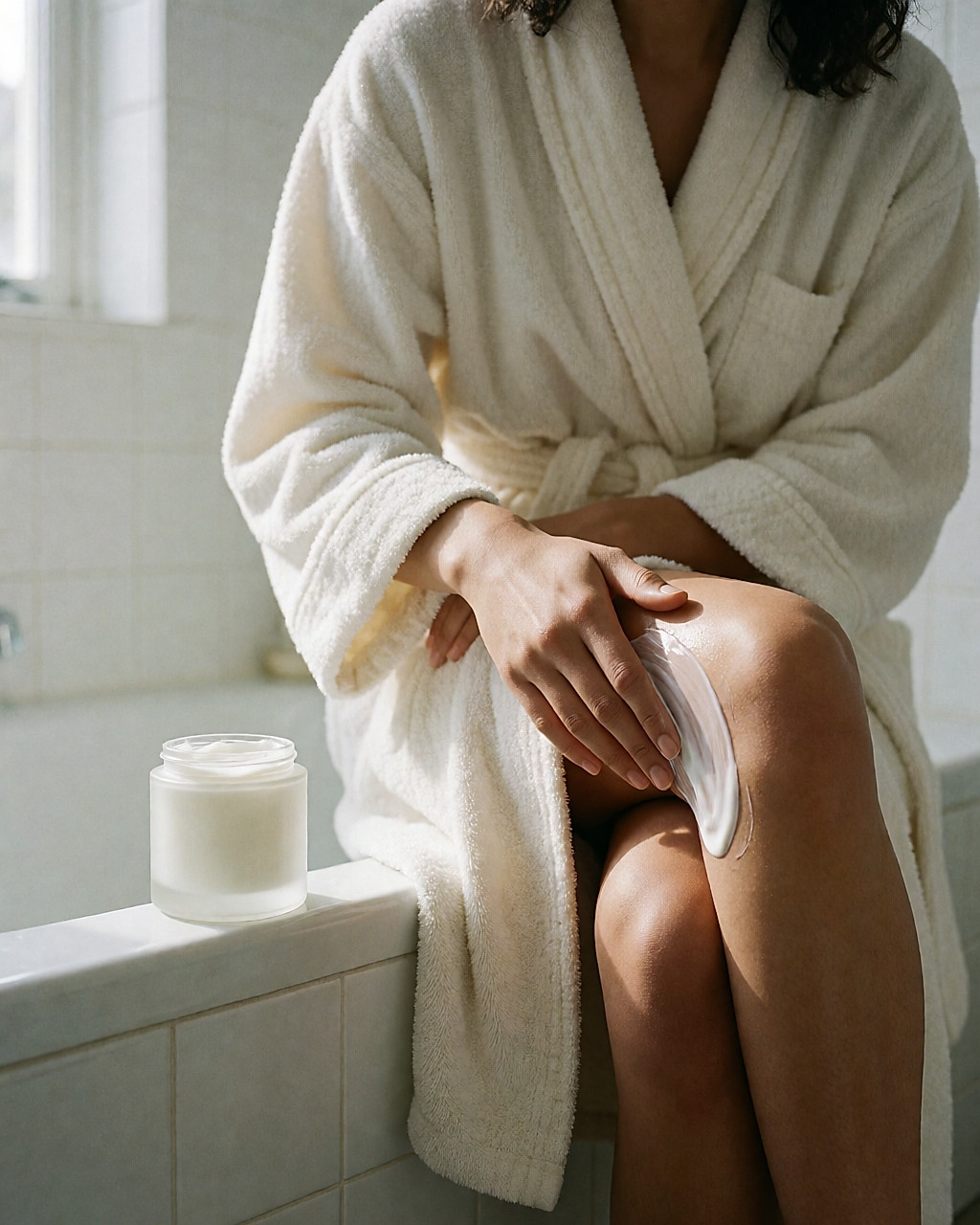
What a cream can actually do? Hydrate, smooth the surface of the skin, make massage more comfortable. That's already a lot, mind — but it's not a slimming programme. So keep your favourite product for pleasure and softness, and look elsewhere for firmness.
Your plate does half the work
No need for a punishing diet, promise. Three levers are enough, and they come down to three words: fibre, water, protein. Raw veg — cucumber, tomato, radish, carrot — bring water and fibre, but if your gut isn't used to them, alternate with cooked vegetables so the meal doesn't turn into an ordeal. For protein, at lunch and dinner, think white meat, fish, eggs, pulses: they maintain muscle mass, and muscle means visible tone.

Salt, meanwhile, holds on to water — that familiar 'swollen legs' feeling in the evening. There's no need to banish it from your cooking, but keep an eye on ready meals, cured meats and processed cheeses: that's where it hides in quantity without you noticing. And for drinks, aim for 1.5 litres of water a day, between meals, more when it's hot — your body will thank you.
Move, but move wisely
Consistency matters more than intensity. Official guidance suggests at least 30 minutes of moderate activity on most days, plus two strengthening sessions a week. Walking, cycling, swimming: these three work the calf pump, the mechanism that helps blood travel back up to the heart — and swimming is especially soothing for that heavy-legs feeling — a real treat at the end of the day.
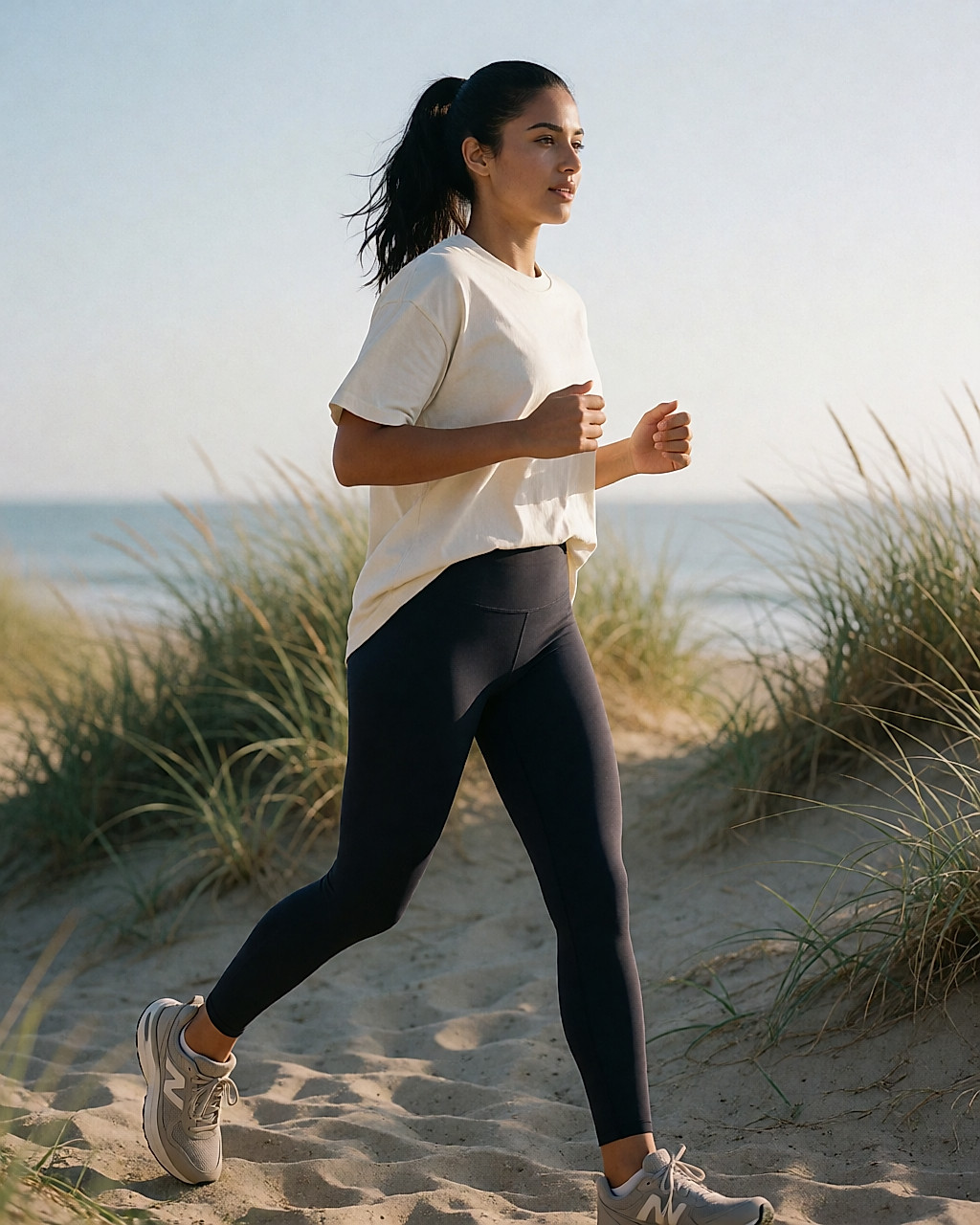
If you run, choose a soft surface — sand, trail, track — and avoid the hottest hours. On hot asphalt your legs take a double hit: impact and heat. Might as well spare them that.
The move that changes everything: five minutes in the evening
The shower first: finish with a cool blast, from ankles up to thighs. Then put your legs up against a wall or on a cushion, roll your ankles, breathe. Finally, massage from the bottom up, from ankle to knee — without pressing like a brute, the aim is to relax, not to wake up pain.

For oil, an organic plant oil does the job very well: short ingredient list, glass bottle, often without synthetic fragrance. The Cosmos Organic standard requires a minimum percentage of organically grown ingredients and a list of banned ingredients — that's what the label actually guarantees. The right reflex is still to read the INCI list rather than the name on the bottle. I'm not naming any brands here, because I haven't tested any this season — and formulas change fast.
At the office, get up once an hour, even for three steps. Avoid crossing your legs: the position doesn't help venous return. A small footstool to raise your feet, and you're sorted.
The evening ritual takes five minutes: a cool blast, legs in the air, rolling ankles, a gentle upward massage. No need for expensive kit — just a bit of consistency.
Shoes and clothing: the compromise
Too-tight jeans, a cinched belt, boots in the middle of a heatwave: that's what marks the skin and hampers circulation. For heels, the most commonly cited compromise is around 2 to 4 cm — enough to change your look, little enough not to tense the calf. Beyond that, the Achilles tendon works under tension and fatigue sets in fast. A word of caution, though: completely flat isn't ideal either if you're walking for hours on concrete.

Sun, without the drama
Sun isn't off-limits; it's excess that causes problems. Long sunbathing sessions, especially between 12pm and 4pm, damage the skin and make legs swell. At the beach, cool your legs in the water regularly, retreat to the shade during the hottest hours, and apply SPF 50 to exposed areas — reapplying every two hours, even under a parasol.

Budget
Typical UK prices, to adjust depending on where you shop and the season:
- Organic plant oil, 100 ml: around £6 to £18. The price climbs with the oil you choose (argan costs more than sweet almond), the certification and the glass bottle. In health food shops, beauty halls or online.
- 'Light legs' gel or mist: £7 to £22, from pharmacies or larger supermarkets.
- SPF 50 sun protection: £8 to £25 depending on the filter and the size.
- Class 1 compression tights or socks: £12 to £35 a pair from a pharmacy, available on prescription in some cases.
- Walking trainers: £50 to £120.
- A lymphatic drainage session at a salon: £50 to £100, with no national rate — compare before you book.
What moves the bill: the size, the certification, where you buy it and whether or not you have a prescription.
Heavy legs every evening, swollen ankles, repeated night cramps: this isn't a cosmetics problem, and no cream will sort it out. And if a single leg swells suddenly, with pain or heat, seek medical help without delay. Compression stockings are prescribed — no point buying them at random.
In the end, your legs don't ask for much: a bit of water, a bit of movement, five minutes in the evening and shoes that don't torture them. Nothing spectacular, but a real difference after a few weeks — and that little skirt starting to catch your eye again. Over to you!
Sources
- NHS — physical activity guidelines, nhs.uk.
- NHS — varicose veins and circulation, nhs.uk.
- UK Chief Medical Officers — physical activity guidelines, gov.uk.
- Advertising Standards Authority — rules on cosmetic advertising claims, asa.org.uk.
- Cosmos Organic — Cosmos Organic Standard, cosmos-standard.org.




Comments
Your opinion matters: rate the article, react and reply to comments.
Comments are moderated; AI-assisted comments are flagged. Text emoticons (8-), :-), <3…) are automatically shown as images.