

So here is a practical round-up of useful information for pregnancy.
Before we go into detail, one simple principle: a steady routine and a good dose of common sense will often help the nine months pass more calmly. For anything to do with your health, your midwife, GP or maternity team should be your first port of call.


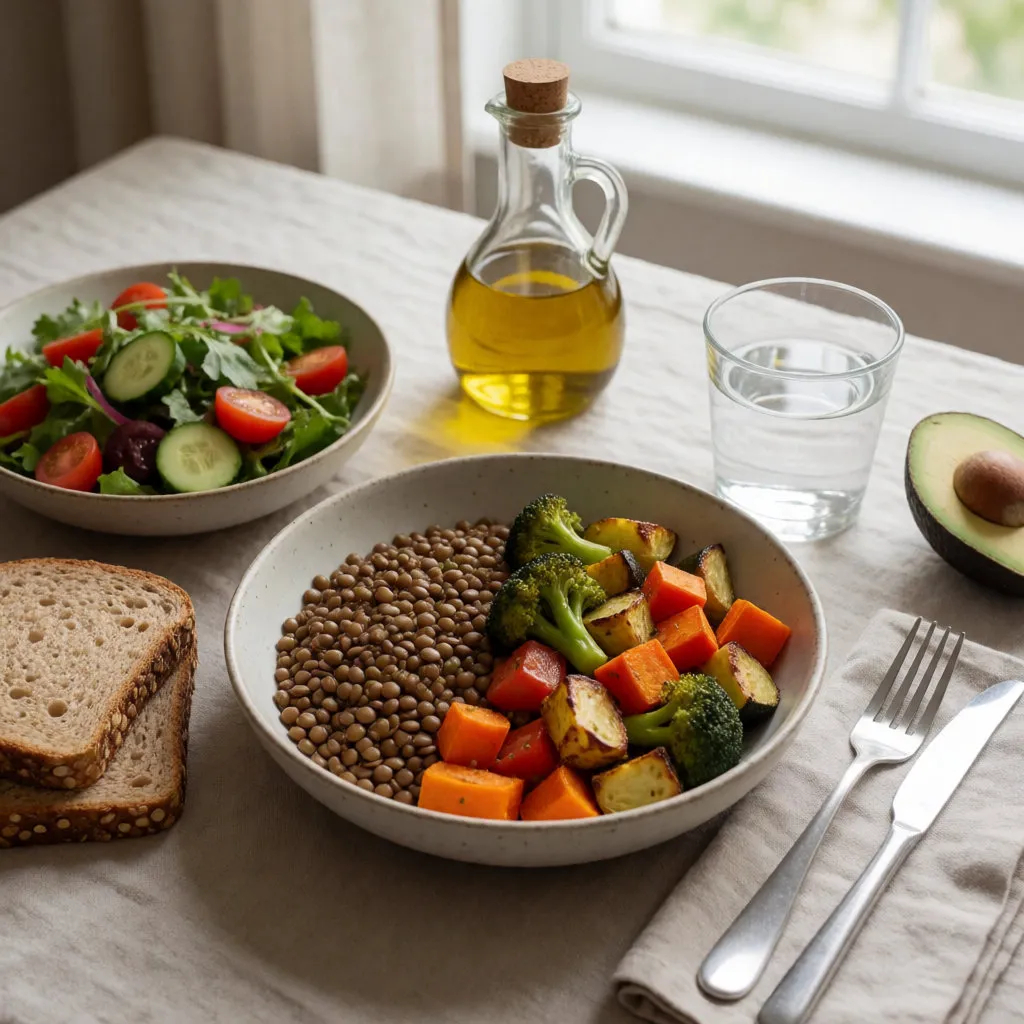
Pregnancy brings particular nutritional needs. It is not always about eating more — at least not in early pregnancy — but about eating a more balanced diet so your baby gets the essential building blocks they need. Try not to skip meals, and favour wholesome food over too much fried food, fast food and pastries. Watch salt too: it is often hidden in ready meals and processed foods from the supermarket. Aim for fruit and vegetables each day, both raw and cooked, starchy foods — wholegrain where possible — and healthy fats such as vegetable oils or small oily fish. These are general guidelines; for advice tailored to you, speak to your midwife or GP.
Your needs can change if your job is physically demanding, if you are expecting more than one baby, or if you are a young parent under 20 and still growing. In these situations, your requirements may be higher, so ask your doctor to help you adjust them.
On weight gain, remember that there is no single figure that suits everyone. Weight gain varies widely from one woman to another, and your GP or midwife can discuss what is healthy for you, especially if you are expecting twins or more. Any guidance you are given is a guide, not a rigid rule.

A steady pattern of weight gain is often linked with less strain on the back, sleep and skin. By contrast, weight that goes on very quickly can stretch tissues abruptly and make stretch marks more likely. For monitoring that suits you, rely on your maternity team.

When it comes to the not-so-famous stretch marks that many pregnant women worry about, a few habits are worth repeating: moisturise, moisturise, moisturise. You can use a dedicated moisturising cream or oil and focus on the areas most at risk — your bump, hips, thighs and breasts. There is no need to pile on lots of products: in practice, one daily application is often enough for skin comfort. Moisturising soothes the skin and can ease itching, but it is not a reliable way to prevent stretch marks. Rapid weight gain can make them more likely, but other factors play a part too. Weight tracking remains a guide to discuss with your maternity team.
During pregnancy, a few simple hygiene habits can help you stay alert to certain infections. Wash vegetables and herbs thoroughly, wear gloves for gardening, and clean worktops after handling raw meat. Your midwife can explain what is relevant for you.

Choose your maternity unit and book in early — ideally as soon as you know you are pregnant — so you have the best chance of getting the care and place you want.
The number of scans you are offered depends on where you live and your pregnancy. In the UK, your local maternity unit will explain the scans recommended in your area, as the number offered can vary. They are used to check that the baby is developing well and to look for possible problems. The first scan confirms how many weeks pregnant you are and gives an estimated due date; the sex of the baby can sometimes be seen later, depending on the baby's position and local policy.
Tell your GP or midwife as soon as possible so your maternity care can be arranged. You may be able to apply for a maternity exemption certificate once your pregnancy has been confirmed by a doctor or midwife. Ask your midwife, GP or check official NHS guidance to find out what help with prescriptions and dental treatment you may be entitled to, and how long it lasts.
NHS care, including maternity appointments, scans and tests, is free at the point of use. You may still pay for some things, such as certain travel vaccines or private scans, so check before booking. A dental check-up is also advised during pregnancy, as hormonal changes can make gums more sensitive.

During pregnancy your breasts may grow and feel heavier, so it is a good time to look after them. Choose a well-fitting bra that supports your breasts without compressing them, and moisturise the skin. Moisturising soothes the skin, but it is not a reliable way to prevent stretch marks, which can affect the breasts too.
Have you heard of melasma, sometimes called the mask of pregnancy? It is quite common in pregnancy: hormones can cause small patches of darker pigment on the face. It often fades after the birth, but it can persist for some women. Sun protection is recommended. Try to avoid direct sun exposure, or protect yourself well if you are outside. A high-factor sunscreen is often described as the most effective step, even when the sky is cloudy. Your GP, midwife or a pharmacist can advise on a suitable product, and your GP can refer you to a dermatologist if needed.

Moving in pregnancy is also a good idea, provided you adapt the intensity and aim for regularity. Walking, swimming and antenatal yoga are gentle ways to maintain your breathing, back and mood, and to help manage weight gain. Contact sports, activities with a risk of falling and scuba diving are generally discouraged. For activity suited to your situation, speak to your midwife or GP.

Later on, you may be thinking about nursery or childcare. If you want a nursery place, it is worth registering your interest early — often around the sixth month — and confirming after the birth. You will usually need to provide proof of address, your baby's red book (personal child health record) after birth, and evidence of income, because fees and funded hours depend on your circumstances. In England, some working parents may be eligible for funded childcare hours; check gov.uk for current rules.
If you are planning to breastfeed, breast milk is the ideal food for a baby. Bear in mind that what you drink, smoke or take can also reach your baby. If you need a specific medicine, tell your doctor or pharmacist that you are breastfeeding.
As your pregnancy progresses, your baby may move more: kicking, turning and making you feel even more connected. Many parents find it comforting to talk or read to their bump; your midwife can tell you what to expect at each stage.
Those who attend antenatal classes often say how useful they are. They can help you learn to breathe well and become more aware of your pelvic floor, which may help at birth. They may be offered at different points in pregnancy, and availability varies.
As the end of the eighth month approaches, it is time to prepare your hospital bag and your baby's essentials. Practice varies between maternity units, so ask yours what it provides and how long you are likely to stay.
If you would like an epidural, discuss it in advance with your midwife or doctor. On the NHS it is available in many maternity units, though not all. It numbs the lower half of your body and lets you stay awake to meet your baby.
Labour usually lasts several hours, sometimes much longer, and it is often said that a second baby arrives faster than the first. You will know it is time to go to the maternity unit when your contractions become more regular and closer together, and when your waters break. If your waters have not broken but your contractions are getting closer, it is still better to go in.
There is no reason to feel guilty if things do not go exactly as planned. If something worries you — pain, a fever, unusual discharge or fewer movements from your baby — do not wait. A call to your maternity unit is better than a night of anxiety.

If you are pregnant on your own, there are many organisations and charities that support pregnant women and single mothers. Do not hesitate to contact them if you need advice, practical help or simply someone to listen.
In the UK, organisations such as Gingerbread, Tommy's and Citizens Advice can offer information and support. Your local council, health visitor, family centre or children's centre can also point you towards help. If money is tight, ask about local services and benefits.
If you are single and have no income, or a low income, you may be eligible for support such as Universal Credit, the Sure Start Maternity Grant (or Best Start Grant in Scotland) and other help for parents. Some payments are time-limited and may be extended in certain circumstances; ask Citizens Advice or a social worker to check what you can claim.
Child Benefit may be paid for each child; the age limits and conditions, including whether they stay in approved education or training, follow the rules in force. The High Income Child Benefit Charge may affect higher earners, so check the current rules.
Whether you are a few weeks pregnant, several months in or close to your due date, you are living your life while your baby grows with you and shares your daily life. So prepare the room, the paperwork and the bag little by little, and accept that not everything will be perfect. What matters most is arriving at the maternity unit surrounded by people who listen to you. Trust yourself: you know your body better than anyone.

Signs that mean you should call your maternity unit without delay: unusual pain, a fever, abnormal discharge, bleeding, or noticeably fewer movements from your baby. If in doubt, call — the team is there for you, and a simple phone call often saves a long evening of worry.
Budget
NHS maternity care is free at the point of use, but some extras are not. Private antenatal classes often cost around £150–£300 for a course, depending on the provider and location; NHS classes are usually free where they are available. An antenatal yoga or swimming class is often around £10–£25 per session. A pregnancy pillow or breastfeeding cushion usually costs around £30–£80. A well-fitting maternity bra is typically £20–£50, and a moisturising cream or oil around £10–£30 a tube. For clothes, it depends where you start: a few well-chosen pieces may cost around £100, while buying across the whole nine months can easily pass £400. If you choose private maternity care, fees may be added; always ask for a written quote before booking and check what your health insurance covers. Prices vary, so treat these figures as a rough guide.



Comments
Your opinion matters: rate the article, react and reply to comments.
Comments are moderated; AI-assisted comments are flagged. Text emoticons (8-), :-), <3…) are automatically shown as images.