

Beautiful and pregnant: simple ways to feel good
You're expecting a baby. And between scans, one question keeps coming back, sometimes out loud, often quietly: how can I stay comfortable in my body, my skin and my mind over these nine months? The answers you find everywhere contradict each other — some promise a glowing pregnancy, others list endless things you must give up. So let's go back to basics, calmly, with a clear aim: what's good for you is good for the growing baby too.

No magic recipe, then. But simple, repeated habits and medical care that knows you — your history, your health, your risk factors. That's often where the essentials lie.
Weight: a guide, not a grade
Let's talk about it frankly, because it's often the first worry. There is no single number that applies to every pregnancy. Weight-gain guidance depends mainly on your body mass index before conception, your age, whether you're expecting more than one baby and your general health.
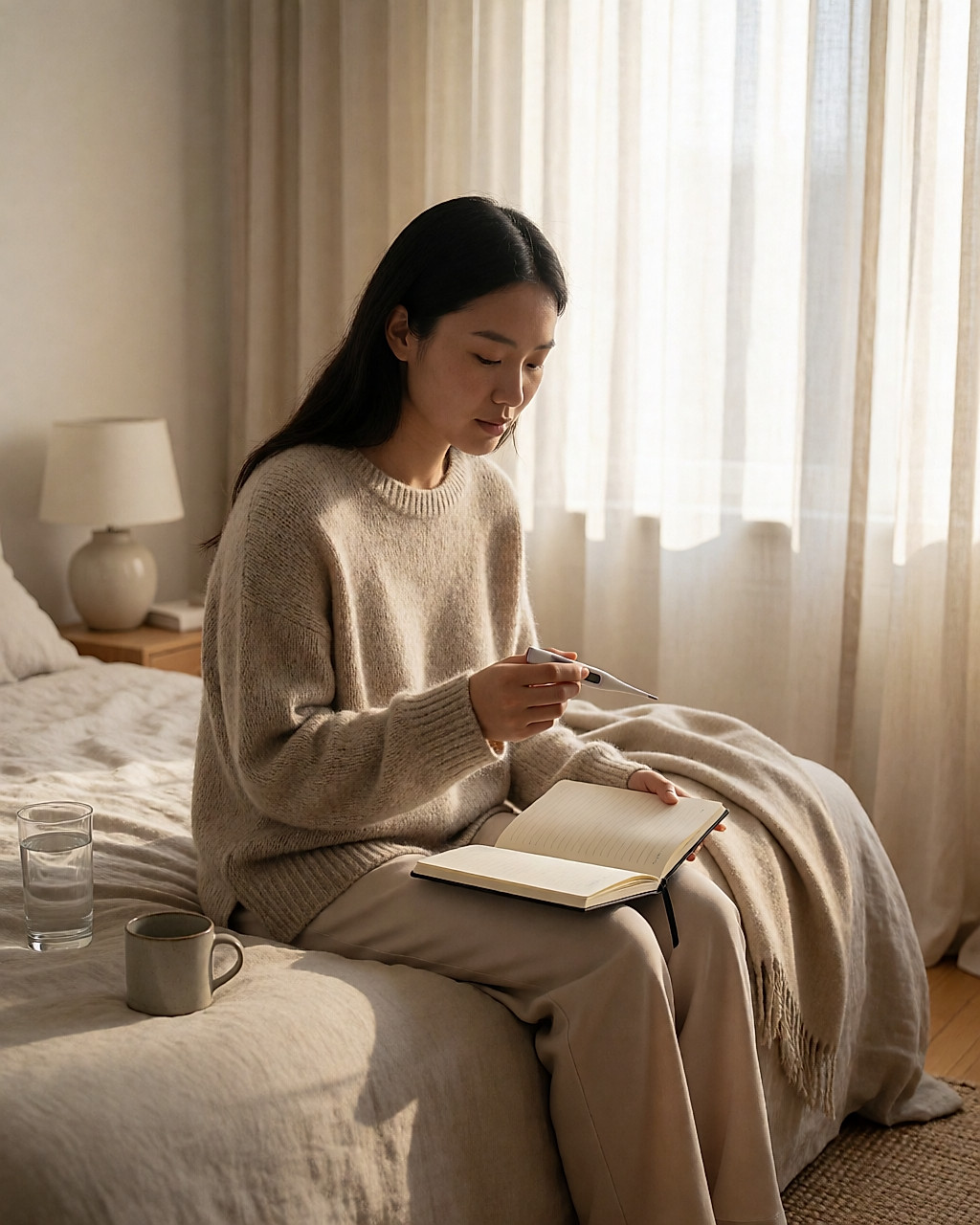
In practice, most care is based on a range built from your starting BMI, and the professional looking after you adjusts it at appointments. What matters is not your friend's chart or a forum post, but your own, recorded regularly and read over time.
Two myths worth clearing up. First, 'eating for two': energy needs rise only modestly, and mainly later in pregnancy. Second, 'this is the time to let go': an unbalanced diet over nine months affects your tiredness, your skin, your hair, not just the scales.
What we know: gradual, steady weight gain is generally more comfortable. What we don't yet know precisely: the exact link between small deviations and discomfort, which varies a lot from person to person. Hence the value of regular conversations with your GP or midwife rather than a strict rule found online.

Eating: neither a diet nor a free-for-all
Pregnancy is not a time for restriction. Dieting during these nine months is not recommended without medical advice. But that doesn't mean eating everything you usually avoid.
The basics stay simple: balanced, varied meals at fairly regular times, favouring vegetables, good-quality protein, wholegrain carbohydrates and healthy fats. This helps reduce the risk of deficiencies, which can affect your energy and recovery.
Some nutrients deserve particular attention. Folic acid (vitamin B9) is recommended before conception and in early pregnancy, because it plays a role in preventing certain neural tube defects. Iron, iodine, calcium and vitamin D may also be worth keeping an eye on. Again, no self-medicating: supplements should be decided with the professional caring for you, based on your test results.
On food safety, a few habits reduce the risk of infections such as toxoplasmosis and listeriosis. Avoid raw or undercooked meat, unpasteurised dairy products, raw fish and raw shellfish. Wash fruit, vegetables and herbs thoroughly. Alcohol should be avoided, and caffeine kept moderate — it's best to talk to your clinician if you usually consume a lot.
Feeling peckish in the afternoon? A few almonds, an apple, or a slice of wholegrain toast with two squares of dark chocolate works very well.
Nausea that lingers, cravings that are hard to manage, weight gain that worries you, uncertainty about an ingredient or supplement: speak to your midwife, GP or pharmacist. This is care, not judgement. No symptom sorts itself out on a forum.
Moving: the most accessible prevention
Good news: unless you've been advised otherwise, physical activity is encouraged during pregnancy. It helps you sleep better, limits back pain, regulates mood and keeps energy levels up. It's probably one of the simplest and most effective preventive habits of these nine months.
The idea isn't to break records but to keep moving. Brisk walking, swimming, prenatal yoga, indoor cycling, gentle exercise classes, a few lengths: these gentle, regular activities suit most people. Aim for about thirty minutes, several times a week, adjusting the intensity to how you feel. A good guide: you should be able to hold a conversation while moving.
Some sports need caution, especially those with a risk of falling, impact or too much exertion. Ask for advice about contact sports, horse riding, skiing, climbing, altitude and diving. If you already did a demanding sport, don't automatically stop: ask for advice tailored to your situation, because the answer depends on your health and your level of practice.
In all cases, stay hydrated, never start on an empty stomach and pay attention to warning signs — dizziness, contractions, bleeding, unusual breathlessness. These symptoms warrant prompt advice.

Skin, hair and nails: what really changes
Pregnancy changes the body, and the skin often says so first. Some women notice stretch marks on their bump, breasts or hips; others develop melasma, those brown patches on the face. Many women find their hair looks thicker during pregnancy, then notice sometimes pronounced shedding after birth. Gums are often more sensitive too.
A few habits help. Moisturising your bump and breasts daily, massaging gently, keeps skin comfortable. High sun protection on the face helps protect the skin, especially if patches appear. Gentle tooth brushing and a dental check-up remain useful, particularly as dental treatment isn't contraindicated in pregnancy — it's encouraged.
Be careful, though, about what you put on your skin. Some anti-ageing or anti-acne actives aren't recommended during pregnancy, and some essential oils need caution. If you're unsure about an ingredient list, ask a pharmacist rather than trusting an appealing label.
Chosen products, not piled up
If you're refreshing your routine, focus on fewer, well-chosen products. For body care, an unrefined plant oil — sweet almond, for example — ticks a lot of boxes: short ingredient list, often organic, recyclable glass bottle. Some certifications cover the share of organic ingredients and processing; they don't replace reading the INCI list, which remains the real source of information. For sun protection, a refillable format limits waste, provided the formula suits you and the SPF is high enough.
In practice, remember this: a simple, lightly scented product with an ingredient list you understand is better than a pile of promises. And if the best choice for your need is a conventional product recommended or prescribed by a professional, that compromise is legitimate — what matters is that you know why.
Budget
The figures below are typical UK high-street ranges and vary by brand, size and retailer. NHS maternity care is free at the point of use for most people, though some extra services may cost.
- Stretch-mark body cream or oil: about £8 to £30 depending on size; a pure plant oil often costs less, around £5 to £15.
- Facial sun protection SPF 50: about £10 to £30, in pharmacies, beauty retailers or supermarkets.
- Gentle facial care without retinoids: £12 to £35.
- Prenatal yoga or gentle exercise class: £10 to £20 per session, with monthly passes often better value; some hospitals and children's centres offer free sessions.
- Maternity clothing: £18 to £55 per item, more for a coat; second-hand and rental can bring the cost down.
- Maternity swimsuit: £22 to £65.
Where to find what: pharmacies for controlled formulas and advice, beauty retailers or online for everyday care, specialist shops or second-hand for clothing. Compare price per litre or per gram — that's often where the difference shows.
Sources
- NHS — pregnancy care and antenatal appointments, 2024.
- National Institute for Health and Care Excellence (NICE) — antenatal care recommendations, 2021.
- Royal College of Obstetricians and Gynaecologists (RCOG) — pregnancy information and guidance, 2024.
- Food Standards Agency — food safety advice for pregnant women, 2024.
- Tommy's — pregnancy health information, including folic acid and food safety, 2024.
- World Health Organization (WHO) — physical activity recommendations, 2024.
Food supplements do not replace a varied, balanced diet and a healthy lifestyle.

Comments
Your opinion matters: rate the article, react and reply to comments.
Comments are moderated; AI-assisted comments are flagged. Text emoticons (8-), :-), <3…) are automatically shown as images.