

Brittle nails that split. It's probably one of the most common complaints about our nails: they're soft, they look fragile, they snap and split at the slightest knock — in short, impossible to grow them long, and in fact even when you keep them short they always seem to find a way to split.
What's behind it? A whole range of things. Dietary deficiencies play a part in nail health, but mistreatment — aggressive manicures, false nails, endless polish, harsh detergents — can also be to blame for weakening the nail. And then there's the obvious: biting, pulling at dead skin, tearing off a hangnail. Every micro-lesion opens the door to irritation and infection, and stress doesn't damage the nail directly: it mainly encourages those habits.

You get the picture: to get strong, healthy nails back, wear gloves for housework and the washing-up, stop bringing your nails to your mouth to bite them as soon as stress takes over, file rather than cut or pull, and eat as varied and balanced a diet as possible to avoid deficiencies.
And if, despite your new good habits, your nails still look worse for wear, consider a course of supplements aimed at hair and nails, a nourishing balm to massage into the contour of the nail, or a hardening polish that will limit breakage. And if in doubt, the simplest thing is to talk to a health professional.
Could it be a fungal infection?
Do your nails — on hands or feet — change appearance, turn yellow, crumble, develop ridges? Then a fungal infection may well have taken hold: stubborn fungi for which a dermatological opinion is needed.

No need to panic, though: fungal nail infections are fairly common and mostly affect toenails, though hands aren't always spared. They are estimated to affect nearly 10% of the population.
Fungal infections usually start with a yellowish or white spot under the tip of the nail; then, slowly, the nail thickens. It can yellow, develop ridges or crumble, become more fragile and break at the slightest knock and, ultimately, if left untreated, fall off.
It's better to book an appointment with your dermatologist as soon as you notice a change in appearance: the earlier the fungal infection is treated, the easier it is to treat. Depending on the case, treatment may take the form of a topical lacquer, oral treatment or even surgery; it all depends on the type of fungus and the extent of the infection.
Worth knowing: the fungi behind these infections thrive in damp, warm places — the bathroom, for instance, where they take hold in towels, bath mats and other breeding grounds. So change them very regularly. If you go to the pool, sauna or steam room, invest in plastic mules, flip-flops or other shoes that don't mind water: fungal nail infections can be passed on by direct contact or through contaminated objects and floors.
My nails are changing colour
Without necessarily thickening the way a fungus-infected nail does, the nail can take on a mild colour, most often yellow. Nothing serious, but this discolouration can have several causes. The main one: cigarettes. It's well known that heavy smokers watch their nails yellow, and the only solution is to give up smoking.
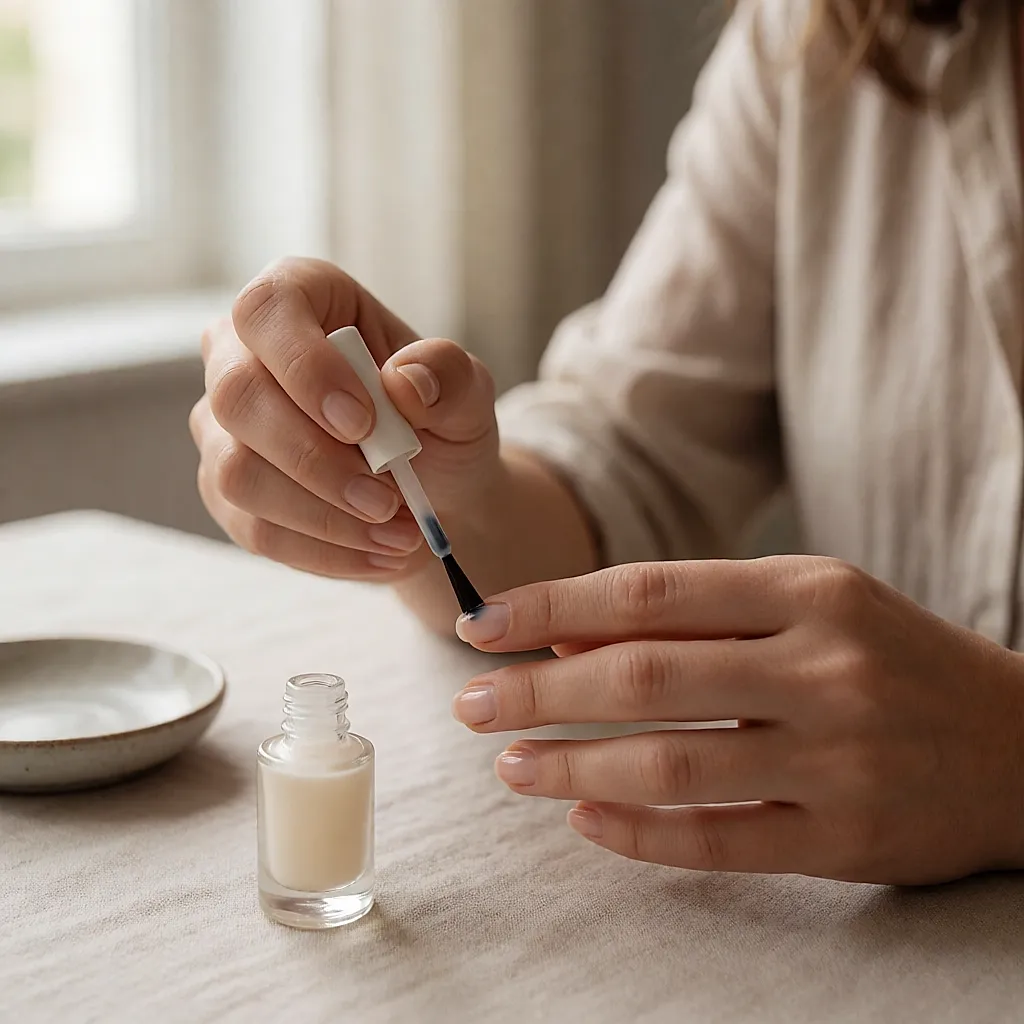
But applying coloured polish without a base coat first can also cause slight yellowing. Ideally, invest in a base that will protect the nail and stop the colour from seeping into its natural grooves.
My nails are ridged
Nails are naturally ridged, some more than others, but ridges running lengthways down the nail are usually normal. They can appear over the years or have always been there — nothing alarming. Marked, deeper ridges, on the other hand, can be a sign of an overly dry nail; here, opt for a balanced diet and apply a nourishing balm to the nail matrix and cuticles.
But a cyst or a wart at the matrix — the base of the nail — can also cause abnormal ridges.
To smooth the surface, a light pass with a buffer without pressing too hard, and a smoothing base such as Mavala, and you're done.
An ingrown nail
This is one you generally don't miss, and for good reason: it's painful. A piece of nail, usually a corner, grows and pushes into the skin, causing inflammation. Don't try to sort it out yourself: book an appointment with a podiatrist or dermatologist, who can advise on appropriate treatment to stop it happening again.
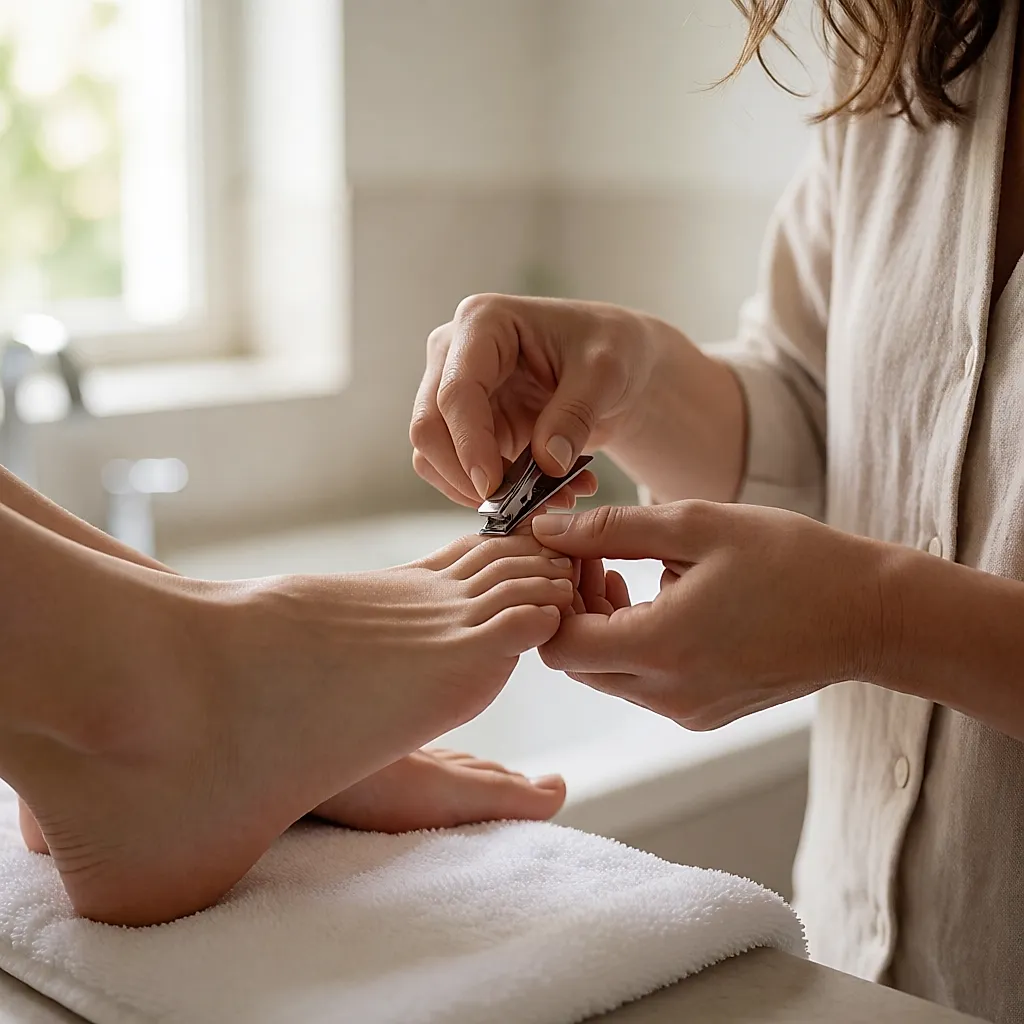
More generally, avoid cutting your nails into a rounded shape; cut them straight instead. Apply an antiseptic at the first signs of pain or redness, and avoid tight, closed shoes.
And for the record: the white spots that sometimes appear on the nail, which were once attributed to a lack of calcium, would in reality be caused by a knock or blow to the matrix, which shows up as one or more small white spots as the nail grows out.
We think nothing of polishing and manicuring them, and rarely of treating them, yet our nails too can suffer from problems of their own. Ridges that appear, thickening, spots, splitting and constant breakage — all signs that tell us they aren't in the best shape. In the face of these niggles, the golden rule is not to let things drag on. In practice, a fungal infection caught in time is far easier to treat, but can be seriously stubborn once well established. So keep an eye on your nails, hands and feet alike, and don't camouflage unattractive little spots and ridges under a layer of polish: get advice so you can present a clean slate when sandals make their way back into the sun.
The habit that limits the damage. Dry your feet well after a shower, especially between the toes, and keep clippers, files and towels to yourself: nail fungi can be passed from one foot to the other as well as from one person to another. A small habit that seems like nothing, and makes a big difference.
Budget
The basics stay affordable: around £10 for a good nourishing balm or protective base, and more like £15–30 for a branded hardening polish. A course of supplements for hair and nails usually sits between £10 and £30 a month, depending on brand and format. As for consultations, an NHS dermatologist is reached through the usual referral pathway via your GP; with a private podiatrist, expect more like £30–50 a session, rarely covered except in specific circumstances. Prices vary a lot by region and practitioner, so check before you book.
Sources
- NHS — page on fungal nail infections.
- British Association of Dermatologists — guidance on the management of onychomycosis.
Food supplements do not replace a varied, balanced diet and a healthy lifestyle.



Comments
Your opinion matters: rate the article, react and reply to comments.
Comments are moderated; AI-assisted comments are flagged. Text emoticons (8-), :-), <3…) are automatically shown as images.