
Before you add another eye product to your routine, it is worth separating what we know from what remains uncertain. We often layer on eye creams without really knowing which ones matter. What is established is simple: the essentials come down to a few basic habits that are easy to keep up with in real life. The evening routine is where it begins, and it takes two minutes.
In the evening: a gentle eye make-up removal
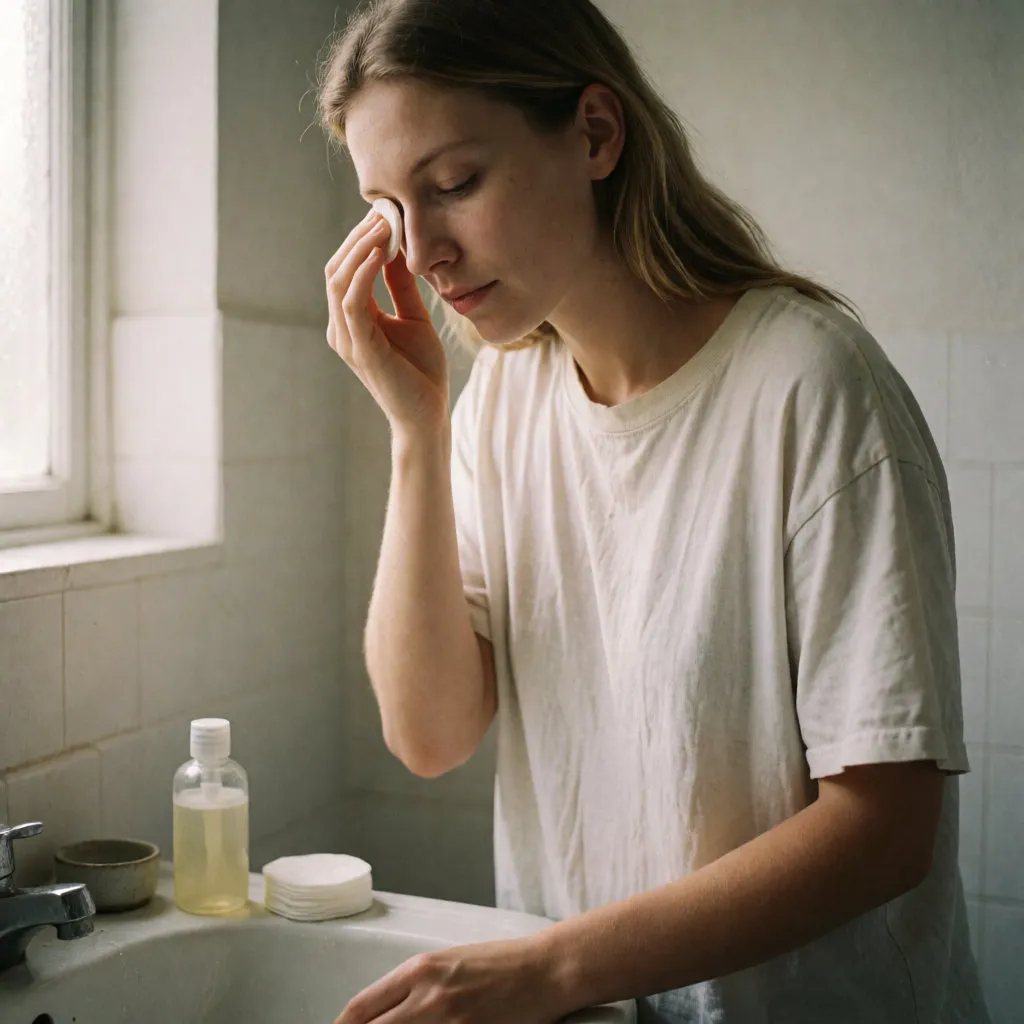
If you kept only one habit, it would be this: take your eye make-up off before bed. The skin around the eye is the thinnest on the face, and rubbing marks it quickly. A dedicated eye make-up remover, fragrance-free and alcohol-free, is enough in most cases. If you wear waterproof mascara, a bi-phase formula is far more effective - and means you have to rub much less.
The technique matters as much as the product. Hold a soaked cotton pad over closed lashes for a few seconds, then sweep downwards slowly, without pressing. A second pass with a clean pad stops residue being moved towards the inner corner of the eye.
This cleanse has a less well-known purpose, too. The eyelashes and the eyelid margin contain small glands that contribute to the tear film. When make-up, sebum or fine crusts build up there, they can become blocked, which can encourage dry eye and inflammation of the eyelid margin - blepharitis, which is diagnosed by a healthcare professional. Current evidence suggests that gentle, regular hygiene limits these problems. If discomfort persists, speak to a pharmacist, optometrist or GP.
And let's be honest: with waterproof formulas, the most effective bi-phase removers are often conventional ones - a stopgap, not an ideal. If you remove stubborn mascara twice a week, keep that as an occasional habit and choose gentler formulas the rest of the time.
The eye area: protect it early
It is often the first area of the face to show fine lines, because it moves so much. Expression lines develop over time, and that is not a health problem.
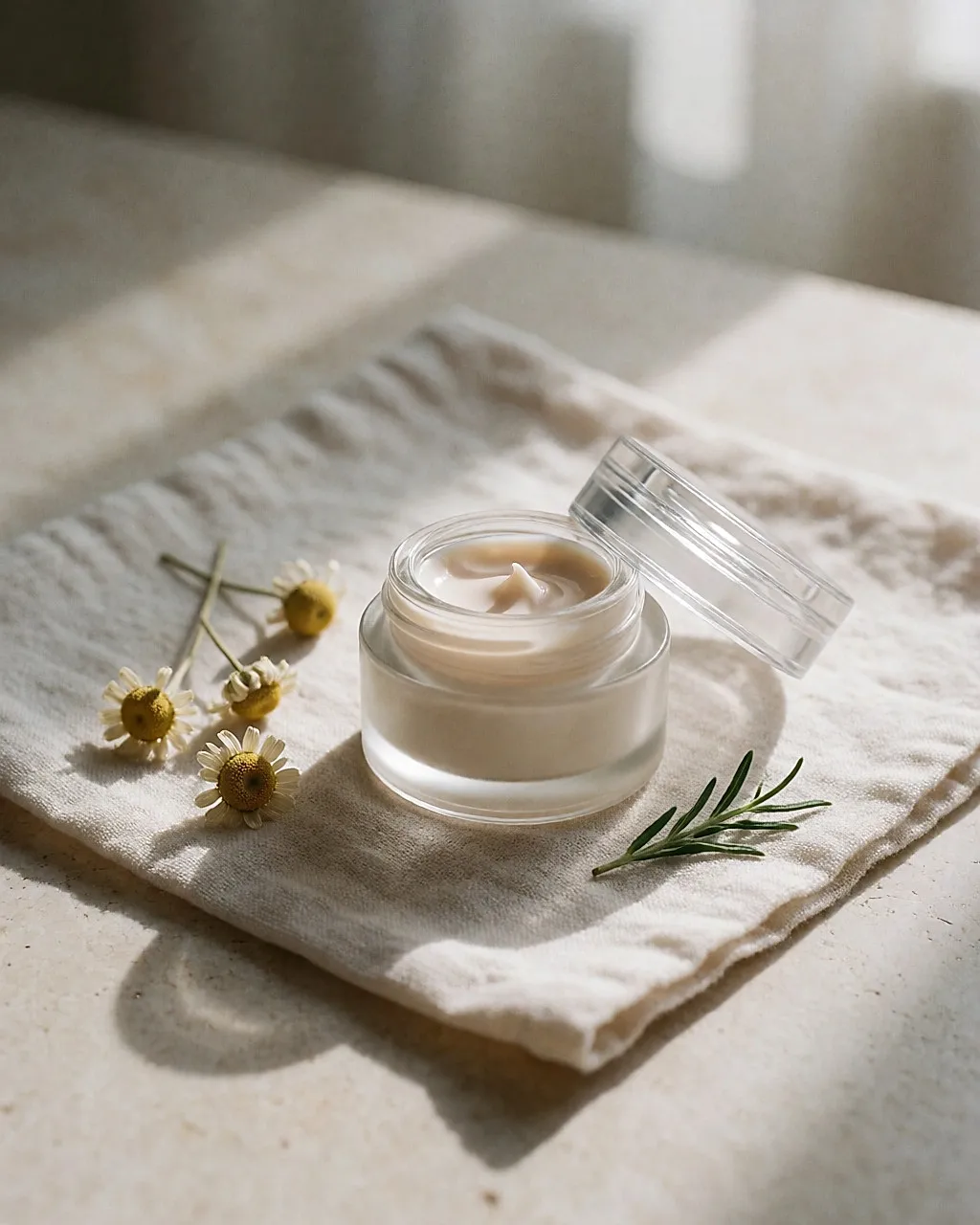
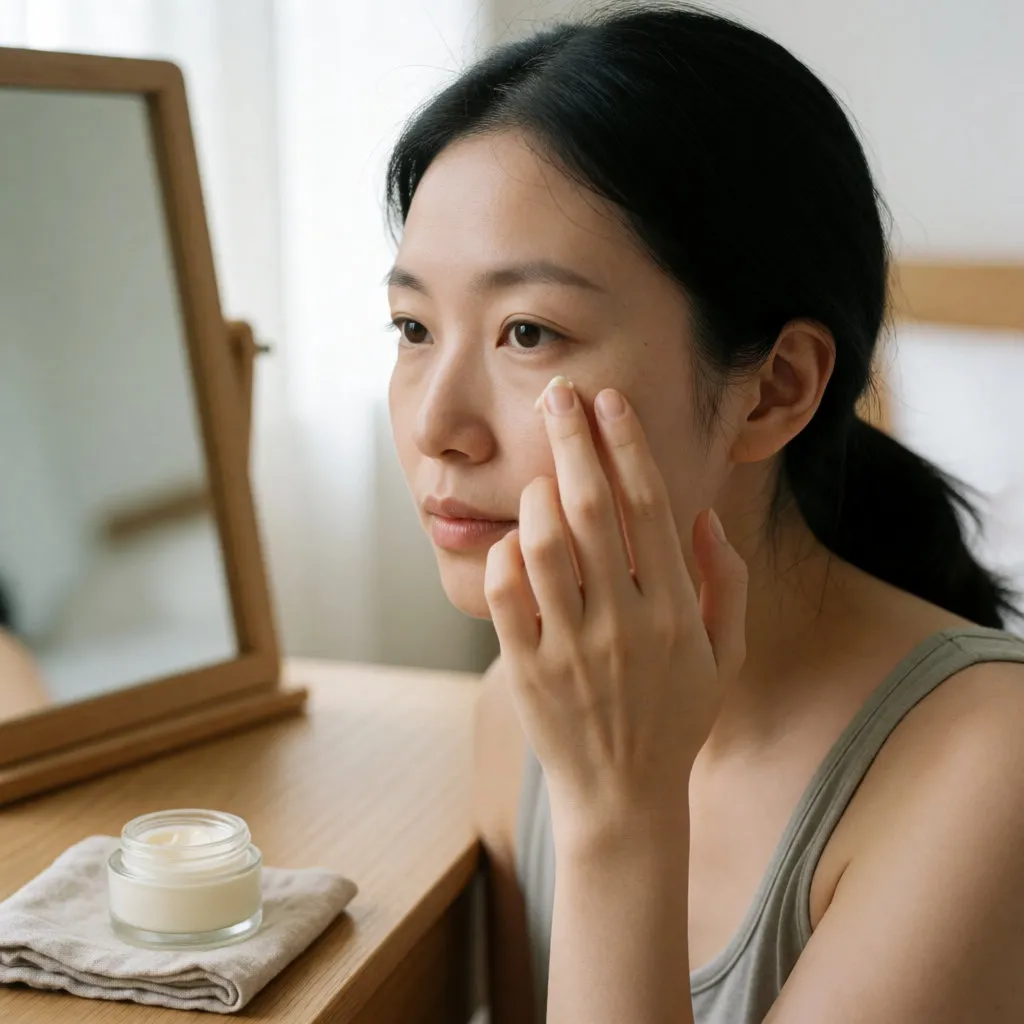
You do not need to pile on products, though. A light moisturiser, applied morning and evening in a small amount, improves the skin's suppleness and comfort. It will not make wrinkles disappear: moisturising is already a lot.
A few pointers. A fragrance-free formula is better suited to this fragile area. Some ingredients, such as retinol, are often poorly tolerated there: it is better to test them elsewhere on the face before using them near the eyes. And too much product does nothing useful - the excess migrates into the eye and makes it water.
If you want a more natural option, plant oils (jojoba, squalane) and shea butter do the job of a simple eye care product very well, in a refillable glass jar or a pump bottle. Be careful, though: 'natural' does not mean 'harmless'. Essential oils, common in organic products, easily irritate this area. A short ingredient list remains the best guide.
Sun protection: the most worthwhile step
Sun exposure builds up over the years. It contributes to cataracts and some skin cancers of the eyelids. This is probably the most useful preventive step on this list.
Mineral protection based on zinc oxide or titanium dioxide usually stings the eyes less than a chemical filter. Add sunglasses whose lenses block 100% of UV: UV 400 or the EN ISO 12312-1 standard should appear on the label or the arm, and that is more reliable than the price tag. On bright days, a wide-brimmed hat completes the picture.

Some mineral sun sticks designed for the eye area slip into a bag and can be reapplied without using your fingers. Their cardboard or refillable packaging also cuts down on plastic; that is an environmental choice, not a medical one.
Puffy eyes and dark circles: what actually helps?
In the morning, that puffy feeling comes mainly from water retention and lying flat. Lack of sleep, alcohol, salt, smoking and allergies often add up.
A cold flannel, or spoons left in the fridge for a few minutes, is enough to make the eye area look sharper while you get ready. Cooled, used tea bags work on the same principle: there is little evidence for any specific effect from the tea itself, but cold definitely does something.
For dark circles, the cause changes everything. Brownish colour comes from pigmentation, blue-toned circles from visible blood vessels, and hollows from volume loss. Cosmetic products do not change these structures; a colour-correcting concealer, on the other hand, can camouflage them effectively. And when chronic nasal allergy is keeping dark circles going, appropriate treatment can genuinely change daily life: speak to a pharmacist or GP.

When to see an optometrist or ophthalmologist
An eyelash or a grain of sand in the eye is common and usually nothing serious. But if the discomfort persists, if the eye stays red, painful or sensitive to light, or if there is discharge or reduced vision, it is better to seek advice from a pharmacist, optometrist or GP. A sudden shower of floaters also deserves particular attention; if vision changes suddenly, seek urgent NHS advice.
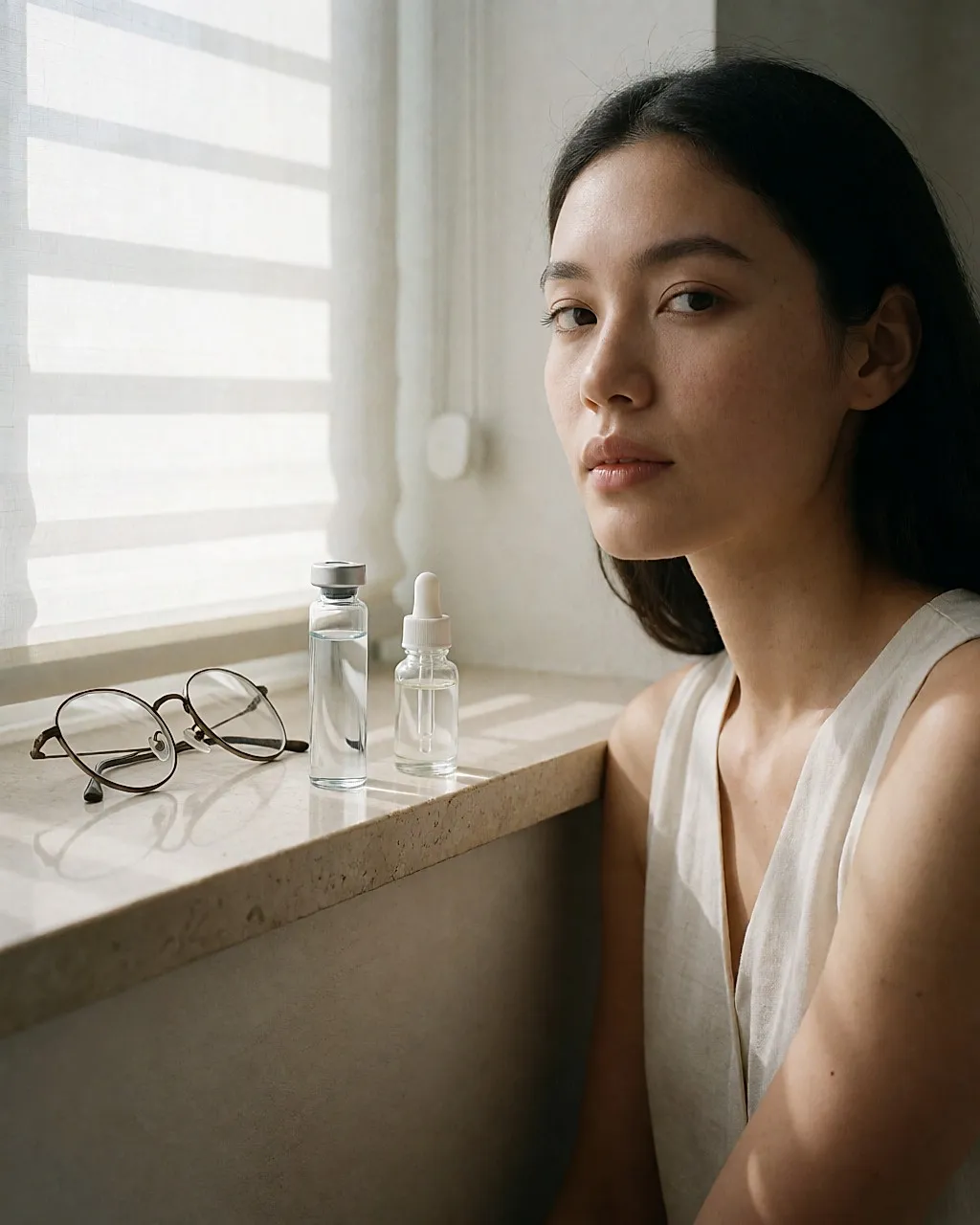
A screen-break habit many eye-care professionals suggest. After about 20 minutes in front of a screen, look away for around 20 seconds at something roughly six metres away. It is a practical tip, not an official rule. Prolonged use of decongestant eye drops comes with caveats: for eye discomfort, professional advice is better than self-medication. And regular eye tests, even when you have no symptoms, are part of screening.

Budget
If you are buying eye care, keep the amounts in perspective. An eye make-up remover generally costs around £5 to £15 in a supermarket, pharmacy or beauty retailer; organic or refillable versions often sit at the top of that range. An eye cream costs around £10 to £40 in a pharmacy or beauty retailer, and luxury brands can be much more. For sunglasses, models that filter UV properly can be found for around £20 to £60 in supermarkets or online; at an optician, the price depends on the frame, lenses and aftercare, and can rise well above that. Prices vary by city, retailer and formulation, but the regularity of the gesture matters more than the price of the product.
Sources
- World Health Organization, 'Blindness and visual impairment', fact sheet.
- EN ISO 12312-1, sunglasses - check the markings on the lenses.
- American Academy of Ophthalmology, 'Blepharitis', fact sheet.



Comments
Your opinion matters: rate the article, react and reply to comments.
Comments are moderated; AI-assisted comments are flagged. Text emoticons (8-), :-), <3…) are automatically shown as images.