

We still spend a third of our lives in bed — and, let's be honest, we often settle in far too casually. We inherit a mattress, grab the first model on promotion, and tell ourselves that a bed is a bed. Then mornings turn grumpy, tension sets in, and even after eight hours' sleep we get up feeling as though we slept badly, without knowing why. So how do you make sense of latex, springs, pocket springs and foams? Let's take a calm look.
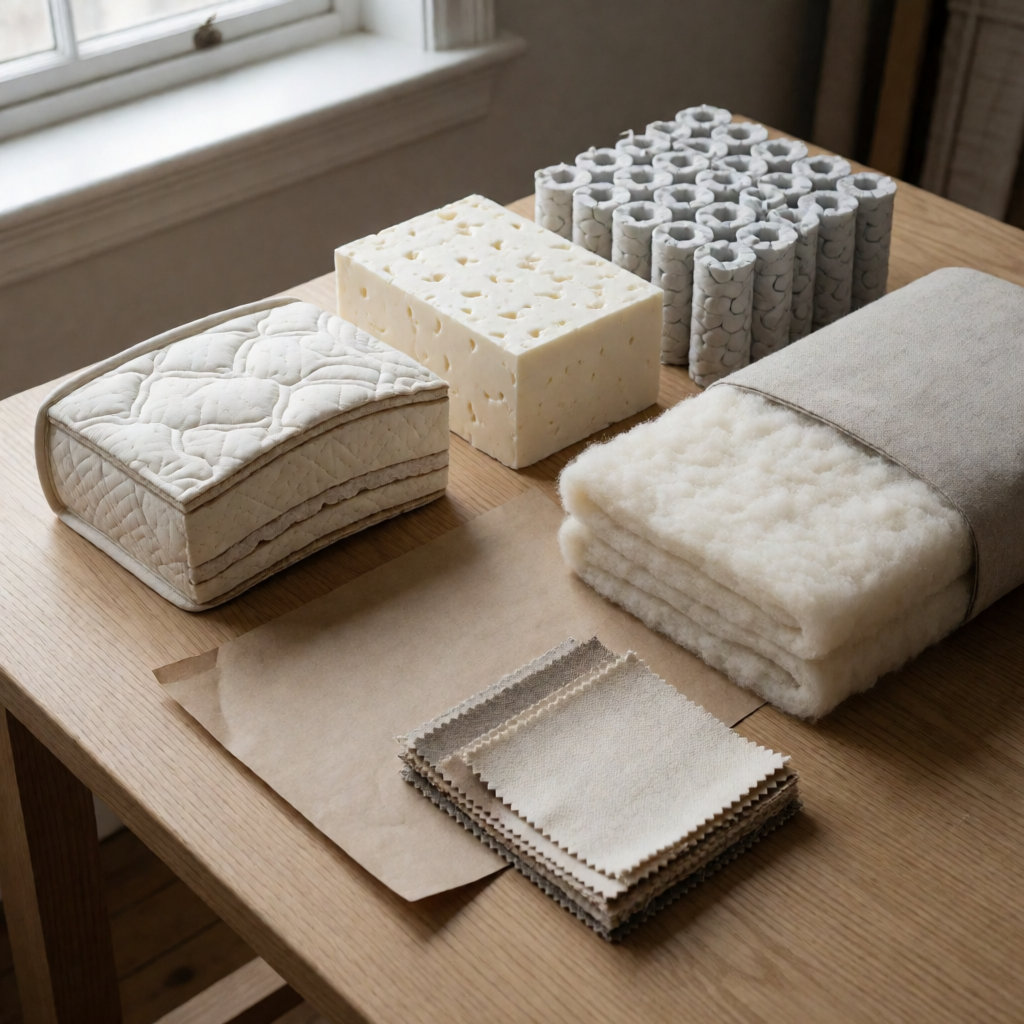
What we really need from a good bed
A good bed should help the body relax, easing muscles and spine. It should be comfortable and pleasant while supporting your back properly. Put like that, it sounds simple. In practice, this is where everything is decided.
The bed base and mattress are equally important — we often tend to look only at the mattress, and that is a mistake. Ideally, a bed should combine soft cushioning at the surface, where shoulders and hips can settle, with firm support deeper down, so the spine stays aligned. Too firm, and the back arches upwards; too soft, and it sags. Either way, you can wake with tension that lingers all day.

Dimensions first, room second
First, dimensions should be chosen according to your body, not the size of your bedroom! We know, it's tempting to fit the biggest possible bed into the room. But the usual rule is to add around 20 cm to the height of the taller sleeper. A tall sleeper needs room for their legs and for movement — otherwise every turn becomes a negotiation with the wall.

Mattress for two: comfort for each sleeper
For couples, when one partner moves more than the other, it is better to choose a mattress with pocket springs. They allow comfort to be individual because the mattress is made up of different, more or less independent zones: you don't feel every movement of the other person. When there is a significant weight difference between partners, a latex mattress is often the better choice. Sprung mattresses, which tend to be more breathable, may be preferred by people who sweat a lot, but trying the mattress and checking the cover composition also matter.
If you have an allergy, the choice depends on the type of allergy and should be discussed with a healthcare professional: latex should be avoided if you have a known latex allergy; for dust mites, washable covers and suitable care may be worth considering. Better to know that before you start.
Materials and labels: read between the lines
A latex mattress on a slatted bed base may suit some people looking for firm support, but the choice depends on body type and the comfort you feel. On materials, choose organic cotton, traceable wool and labels that certify specific criteria — OEKO-TEX Standard 100 for controlling and limiting substances of concern, GOTS for organic cotton. The word 'eco' alone, however, commits to nothing: it's a word, not a guarantee.

Before buying, lie on the mattress for a few minutes in your usual sleeping position, rather than just sitting on the edge: it's the only real test.
Budget
On a budget, expect to pay around £170 to £520 for a decent sprung mattress in 140 × 190 cm, £350 to £850 for a pocket-sprung mattress, and £520 to £1,300 for a latex mattress. The price varies with size, thickness, number of zones and materials — a 180 × 200 cm bed, for example, pushes the cost up. You'll find these models in specialist shops, larger retailers and from UK mattress makers, often with a home trial period: a good reason to ask before you sign.
The quality of your sleep is largely linked to the quality of your bed! Take the time to lie down, compare and feel what really supports your back. And if pain or difficult mornings persist despite a well-chosen bed, speak to a healthcare professional: that's better than changing everything at random and hoping the mattress was the problem.
Sources
- The Sleep Charity, on sleep and sleep disorders.
- WRAP, on environmental labelling and product design.
- Which?, mattress and bed base reviews and tests.



Comments
Your opinion matters: rate the article, react and reply to comments.
Comments are moderated; AI-assisted comments are flagged. Text emoticons (8-), :-), <3…) are automatically shown as images.