
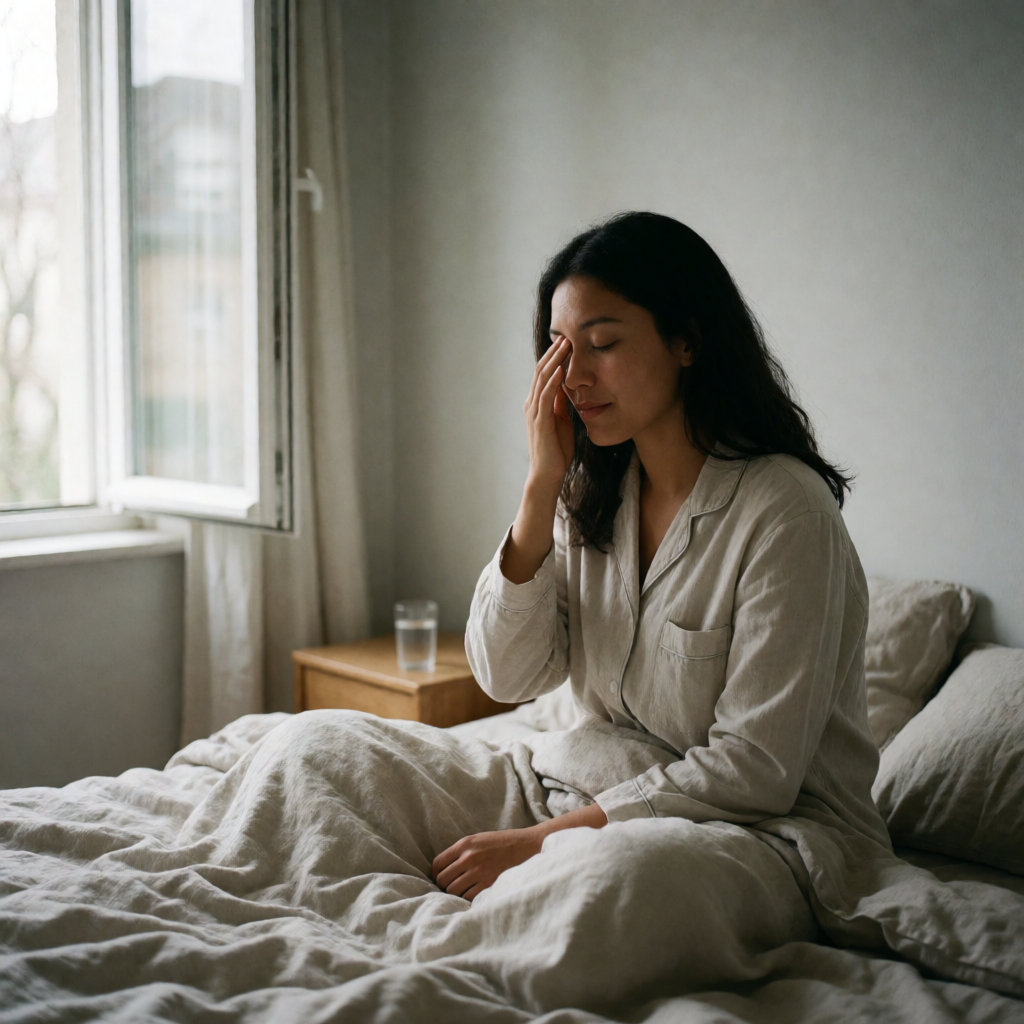
The days are getting shorter, and your energy is following suit. You notice it when you wake: it's still dark when the alarm goes off, motivation lags, and by 3pm your head is full of cotton wool. This isn't laziness or a lack of willpower — let's get that out of the way right now.
Your body clock runs on light, not on the calendar. When the days shorten, two things happen at once: you get less light in the morning, and more light in the evening — usually artificial. Falling asleep drifts later, getting up becomes a grind, and your morning drive crumbles. Current evidence suggests a good part of the autumn slump comes down to this mismatch. So how do you bring a bit of order back into it?
Good news: it's negotiable. Three small moves, in this order, beat one grand New Year's resolution.
Get daylight first thing
This is the one with the biggest effect, and the simplest to put in place. Morning light sends your brain the signal "it's daytime": it resets your internal wake-up call and brings forward the hour at which sleep returns in the evening.

In reality, it isn't your sitting-room lamp doing the work: it's far too weak. Even under a grey, rainy sky, outdoor light is still far more intense than indoor lighting — and it's free! Open the curtains as soon as you wake, eat breakfast by the window, walk a few minutes before you start the day, or get off a stop earlier if you use public transport. The aim isn't to stare at the sun — just to spend time outdoors.
Three ideas for rushed mornings: a coffee standing on the balcony, walking to the bus stop instead of waiting inside, and your morning call with a colleague taken on the move. Here, consistency matters more than duration.
Dim the lights in the evening
The problem isn't just that you get less light when you wake: it's also that you get far too much of it late on. Ceiling lights blazing, screens, notifications — everything tells your body the day is still going.

You don't have to give up screens. Aim instead for a transition — a sort of sunset inside your evening. In practice: turn the lights down at home, favour warm, local lighting over a big ceiling light, and keep the brightest screens for early evening. Then build a small, steady ritual that says "the day is over": tidying the kitchen, a shower, a few pages of a book, one calm track.
It isn't magic — it's a signal. Repeated, it becomes a habit your body anticipates.
Reset your bedtime schedule
The classic trap: during the week you go to bed late because it's the only time that's yours, then at the weekend you catch up by sleeping until noon. Trouble is, that weekend shift keeps the weekday one going. The result: Monday morning feels like a mini jet lag… and round you go again.

What helps: aiming for a roughly stable wake-up time, weekends included. For bedtime, move it earlier in small steps rather than switching all at once. If you fall asleep late, shift your time of going to bed by a few minutes over several days, without lying there tossing and turning. And if a nap does you good, keep it short and not too late in the day.
When the slump sets in
For some people, the seasonal dip in energy is far more pronounced than a passing flat spell: persistently low mood, genuinely disrupted sleep. It exists, it's treatable, and it can be discussed in a consultation. It isn't an admission of weakness — it's a recognised condition with a name and answers.
Light therapy is sometimes offered in this context. These are devices that deliver calibrated light, and current evidence suggests a role for them in some forms of seasonal depression — under medical advice, not by buying the first lamp you come across. Melatonin isn't a sweet: it's a hormone, and taking it calls for professional advice. Same for vitamin D: supplementation is decided on the basis of a blood test, not a hunch.
What we know, and what we don't yet: the mechanisms linking light, body clock and mood are largely documented in their broad principles, but individual responses vary enormously from one person to another. Hence the caution before rushing out for a device or a supplement.
If fatigue or low mood is stopping you from functioning day to day, speak to a healthcare professional. The steps above support you — they don't replace a diagnosis or ongoing care.
Budget
On the spending side, only one item really deserves your attention: a light-therapy lamp, and only if a professional points you in that direction. The light and sleep habits themselves cost nothing.
Expect to pay roughly £35 to £130 for a lamp, and the range is wide for good reason: size of the lit surface, stated intensity, controls, build quality. You'll find simple models in larger stores or online, and more complete ones in pharmacies and medical-equipment shops. Before you buy, check whether the device is described as a medical device, and at what distance and for how long exposure is intended: a lamp that lights a room beautifully isn't necessarily a light-therapy lamp.
On sustainability: these devices are often LED, so low on power, but they're still electrical equipment — check the warranty period, and at end of life take them to a recycling point rather than the bin.
For melatonin or vitamin D, the question isn't budgetary but medical: what you take is decided with a professional, often after a blood test.
What to take away
The change of season isn't something to fight — it's something to negotiate with your body clock. Outdoor light in the morning, less bright light in the evening, a roughly stable wake-up time: three moves you can try from tomorrow and adjust to what you notice in yourself. The rest — lamp, supplements — comes later, and ideally with professional advice.
Sources
- NHS — Sleep and tiredness, overview.
- NICE — Guidance on sleep.
- Mind — Sleep and mental health.
- Royal College of Psychiatrists — Seasonal affective disorder.
Food supplements do not replace a varied, balanced diet and a healthy lifestyle.



Comments
Your opinion matters: rate the article, react and reply to comments.
Comments are moderated; AI-assisted comments are flagged. Text emoticons (8-), :-), <3…) are automatically shown as images.