
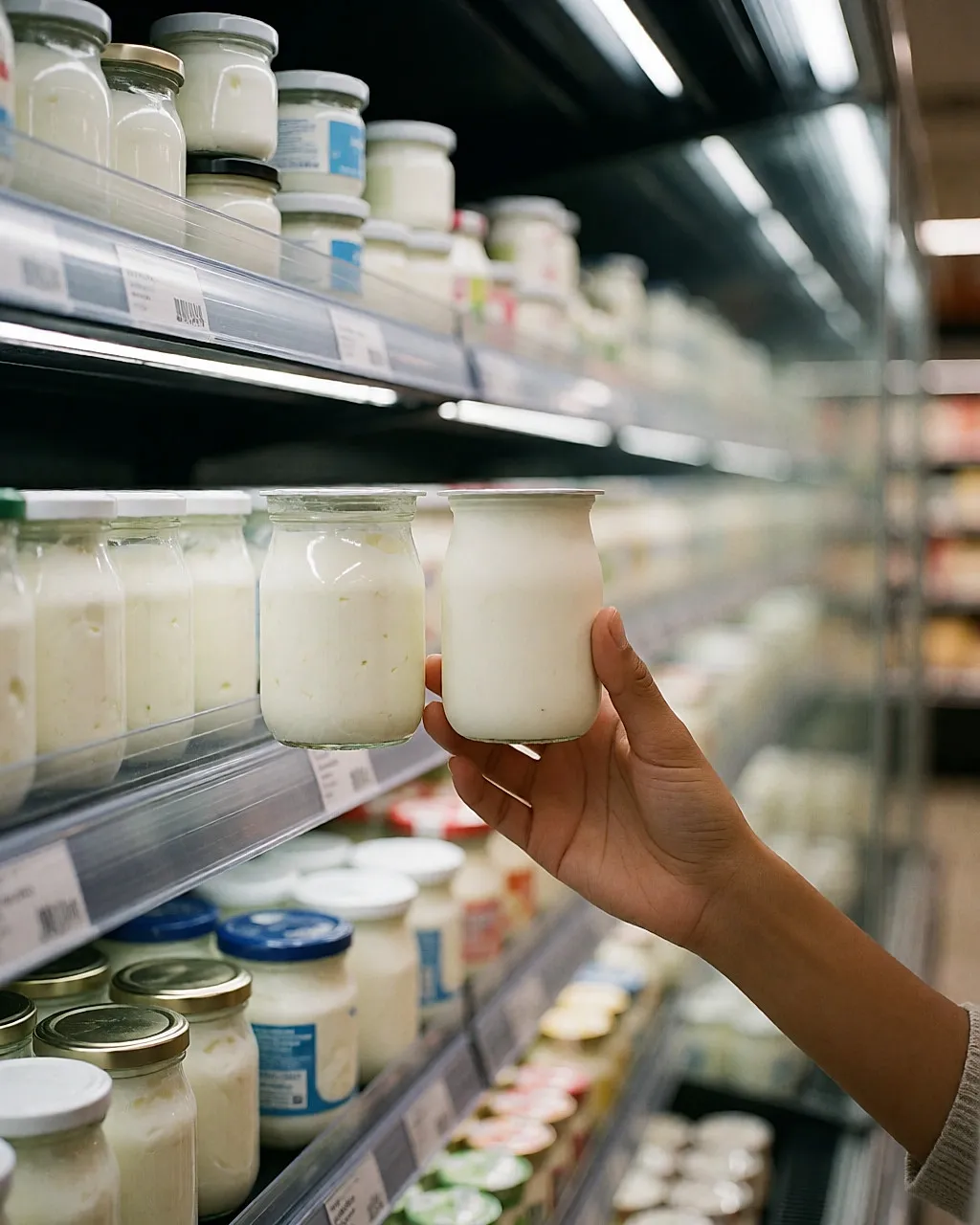
You know the scene: you're in the dairy aisle, your hand hovers between the usual yoghurt and its '0%' twin, a 'slimming' bar sits just to the side and a 'zero' can is lined up behind. The promise is always the same: all the pleasure, but lighter. Except a label is not a health argument. Here's what we know, what we don't, and how to decode it in the aisle.
What 'light' actually means
Among the vague words that cover packaging, 'light' and 'reduced' follow specific rules. In the UK, nutrition and health claims are covered by assimilated Regulation (EC) No 1924/2006, enforced by Trading Standards and the Advertising Standards Authority. A reduction claim must name the nutrient concerned and state how much it has been reduced. So a 'reduced fat' claim with no figure and no named nutrient should not exist.
The thresholds are set out in numbers. To claim reduced energy, a product must have at least 30% fewer calories than a comparable product. 'Sugar-free' means no more than 0.5 g of sugars per 100 g; 'fat-free' means no more than 0.5 g of fat. But these thresholds only show that a product meets a definition. They say nothing about its overall nutritional quality.

Why 'slimming' claims deserve scrutiny
'Slimming', 'line', 'shape', 'form': these words are not neutral. Used to suggest weight loss or weight control, they can count as health claims under Regulation (EC) No 1924/2006. A health claim that is not among the authorised claims is prohibited. A misleading claim can still be actioned by Trading Standards, and advertising claims are policed by the ASA. In practice, a 'slimming' product can have just as many calories as the standard product next to it.
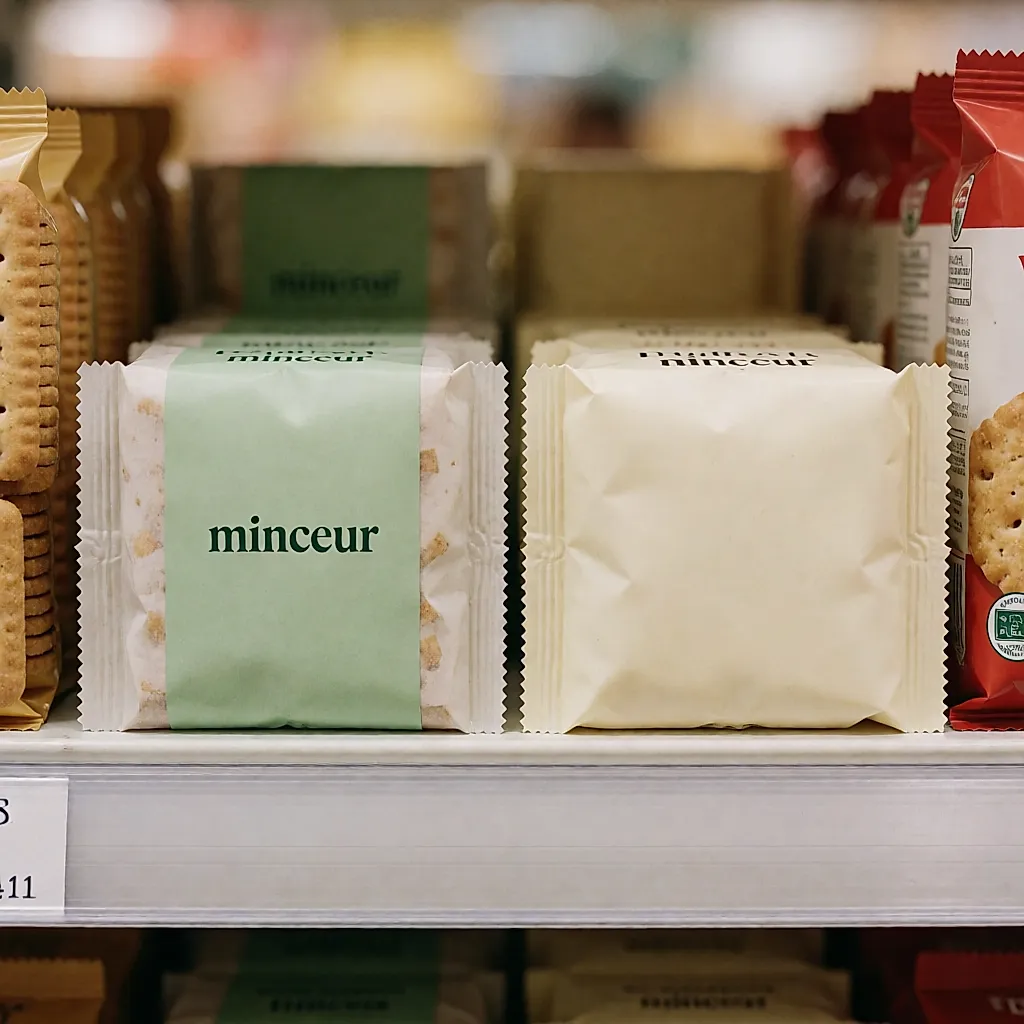
Three common tricks
The first is adding water or air. Density falls, so calories per 100 g fall too — and on paper the product looks lighter. But the pot still weighs the same and you eat the same amount. What matters is not the label: it is the portion.

The second is substitution. When fat is removed, taste and texture have to come from somewhere. Starches, flours, gelling agents and flavourings are added. The ingredients list gets longer, and satiety does not necessarily follow.
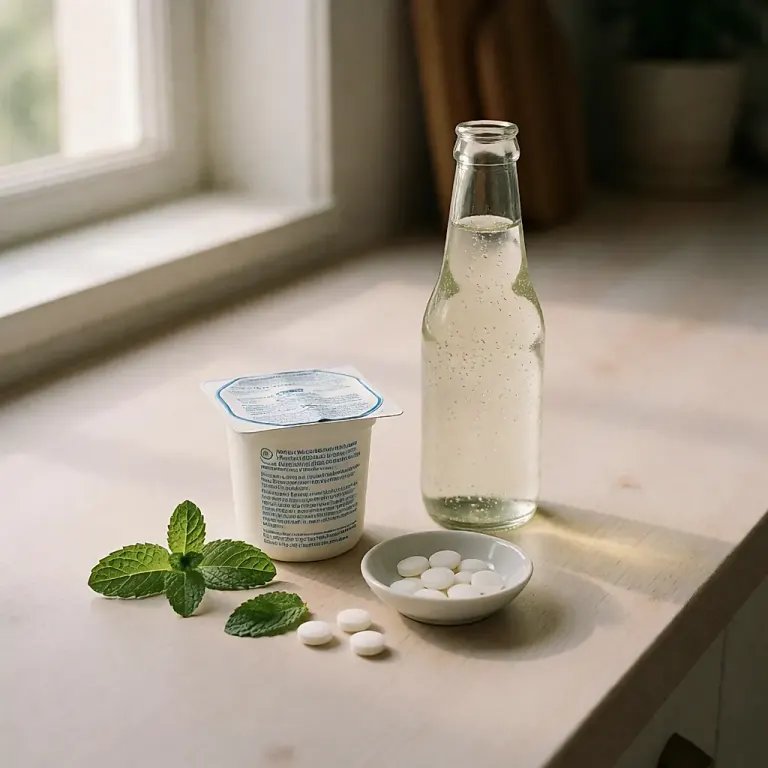
The third is swapping sugar. Sucrose is often replaced by polyols, which provide around 2.4 kcal per gram compared with 4 kcal per gram for sugar. Less, but not zero. Above a certain dose, these sugar alcohols can have a laxative effect: a warning is required once added polyols exceed 10% of the product.
What the evidence says about sweeteners
Caution is warranted here. In 2023, the World Health Organization advised against non-sugar sweeteners for controlling weight or reducing the risk of chronic diseases. In January 2025, France's food safety agency Anses concluded that their nutritional benefits remained insufficiently demonstrated and recommended limiting consumption, especially in children.

None of this means that a 'zero' can is dangerous with every sip: acceptable daily intakes exist and are controlled. It simply means that replacing sugar with a sweetener is not a health gesture in itself. If you are monitoring your intake, talk to a professional: your GP or a registered dietitian.
Practical takeaways
- Always compare values per 100 g and per portion: that is where the differences narrow.
- Look for the number, not the slogan: '30% less fat than…'.
- Read the ingredients list. The shorter it is, the closer the product is to the original food.
- A '0%' product can hide more salt, sugar or additives: look at the next line.
- Prefer a simple product to a processed version: plain yoghurt or fromage frais with fresh fruit added by you will cost less and contain two or three ingredients.
- Useful reminder: an organic label — such as France's AB mark under EU Regulation 2018/848 — guarantees a production method, not a nutritional value. It is a composition criterion, not a slimming promise.

A light product is still a processed product. What matters for your health is not an isolated label but the whole of your plate over the week. No single food makes you lose weight on its own, and no food is forbidden: frequency is what counts.
Cost
'Slimming' or 'light' products often cost more than their standard equivalent — the opposite of what we imagine as we put them in the trolley. In UK supermarkets, as a rough guide, expect around 60p to £1.20 for a single pot or bar, against 20p to 40p for a basic own-brand plain yogurt. In organic shops, an organic milk yogurt in a glass jar is more likely to sit between 80p and £1.50.
What changes the price: brand, format, aisle (dairy or 'health' section), label and packaging. Family formats and bulk buying remain the cheapest. They are available everywhere — supermarket, organic shop, online grocery — but compare by unit rather than by the kilo price displayed at the end of the aisle.
Sources
- Regulation (EC) No 1924/2006 of the European Parliament and of the Council on nutrition and health claims made on foods (retained in UK law as assimilated law).
- Regulation (EU) No 1169/2011 on the provision of food information to consumers (Annex III, warning on polyols; as assimilated in UK law).
- Trading Standards and Advertising Standards Authority guidance on nutrition and health claims and misleading advertising.
- DGCCRF (France) — practical guidance on nutrition claims and misleading commercial practices.
- Anses (France) — opinion and report on sweeteners, January 2025.
- World Health Organization — recommendation on non-sugar sweeteners, 2023.
- Regulation (EU) 2018/848 on organic production and labelling of organic products.


Comments
Your opinion matters: rate the article, react and reply to comments.
Comments are moderated; AI-assisted comments are flagged. Text emoticons (8-), :-), <3…) are automatically shown as images.