
Sun allergy or polymorphic light eruption: what exactly is it?
Two hours on a sunny terrace, a lunch that drags on, and by the time you head home your chest has broken out in a flurry of small, itchy red bumps. You haven't burned, your skin doesn't feel tender the way it does after sunburn, but the result is there, plainly visible. So what's behind this reaction? The diagnosis most often made in this picture is polymorphic light eruption (PLE) — the most common skin reaction to sunlight, and probably the one we know least about.
The good news: this rash is nothing serious. The less good: it has an annoying habit of coming back every summer, like an appointment you never actually made.

What we know about this rash
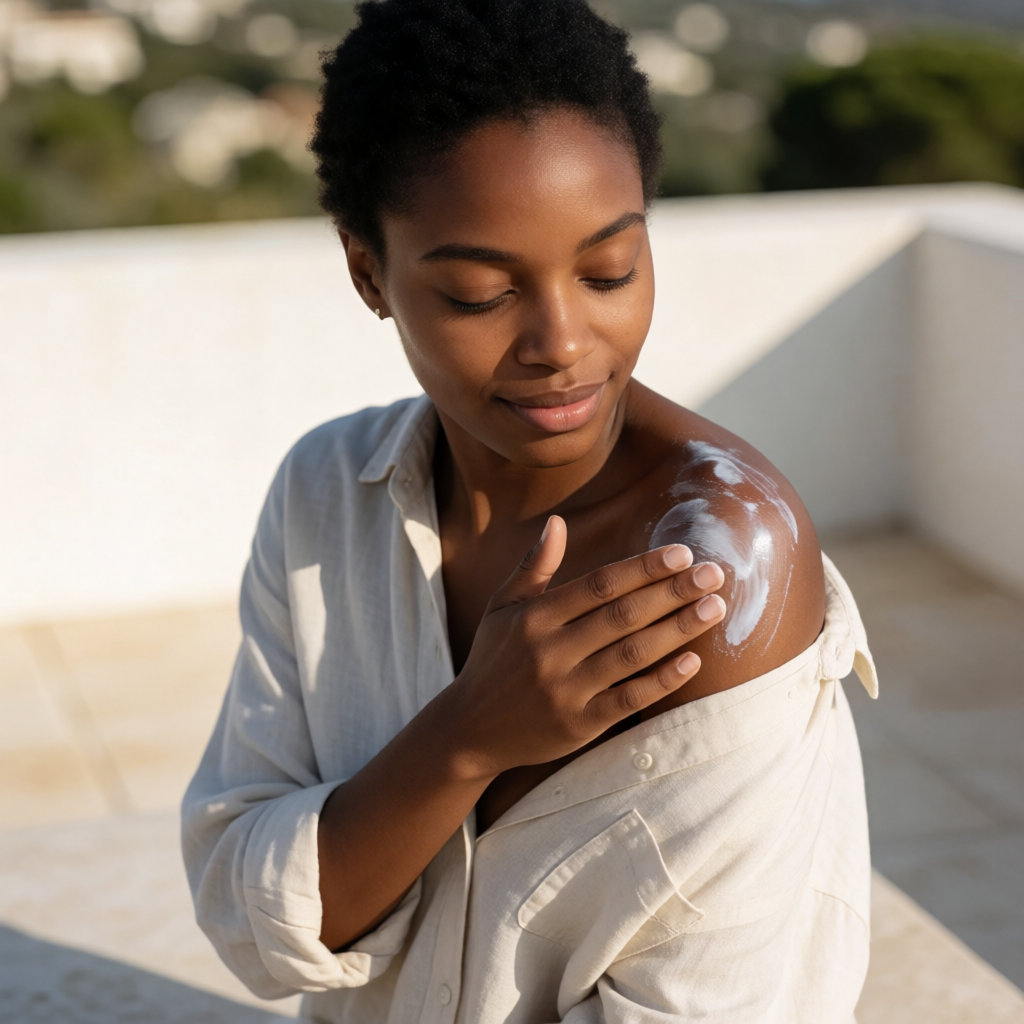
It appears a few hours after exposure, as small red bumps, sometimes slightly raised, that itch quite a lot. One cosmetic detail you soon spot: the affected areas are almost always the same — chest, shoulders, forearms, backs of the hands. The face, for its part, is usually spared, and it's precisely this contrast that helps tell PLE apart from other photodermatoses.

On the culprit front, UVA rays are the main suspects: they travel deep into the skin and reach the dermis. As for the precise mechanism, it isn't fully understood. Current data suggest a local immune reaction triggered by ultraviolet light — in plain terms, your skin treats the light as an attack. As a tan gradually develops, tolerance eventually builds, which explains why the rash often eases over the course of the summer.
In practice, remember this: the bumps clear up within seven to ten days, without leaving a scar. Episodes can recur every summer, but their intensity often tends to diminish over the years. And if you're wondering whether this is really a sun allergy, plenty of people muddle the two — PLE isn't an allergy in the strict sense.
Who's affected, and why?
Women aged 20 to 40 make up the vast majority of cases, but no one is completely immune. Fair skin and a family history are among the well-identified risk factors — something to keep in mind if you have both.

The most common confusion, though, comes from certain photosensitising medicines. It's the point most easily overlooked, and yet it changes the diagnosis. Anti-inflammatories, tetracyclines, diuretics, St John's wort, isotretinoin: these treatments can lower your threshold for reacting to sunlight and trigger drug-induced photosensitivity — a reaction close to PLE, but belonging to a completely different diagnosis.
So if you start a course of treatment and your skin reacts oddly, speak to your doctor or pharmacist before concluding it's a sun allergy. One appointment is often enough to untangle the two, and it's the only way to be truly sure.
Prevention: the steps that really matter
All prevention rests on one simple idea: acclimatise your skin in stages rather than overexposing it all at once. In other words, start with short exposures, fifteen to twenty minutes for the first few days, and build up gradually. Stay in the shade between 11am and 3pm, when the UV index peaks.
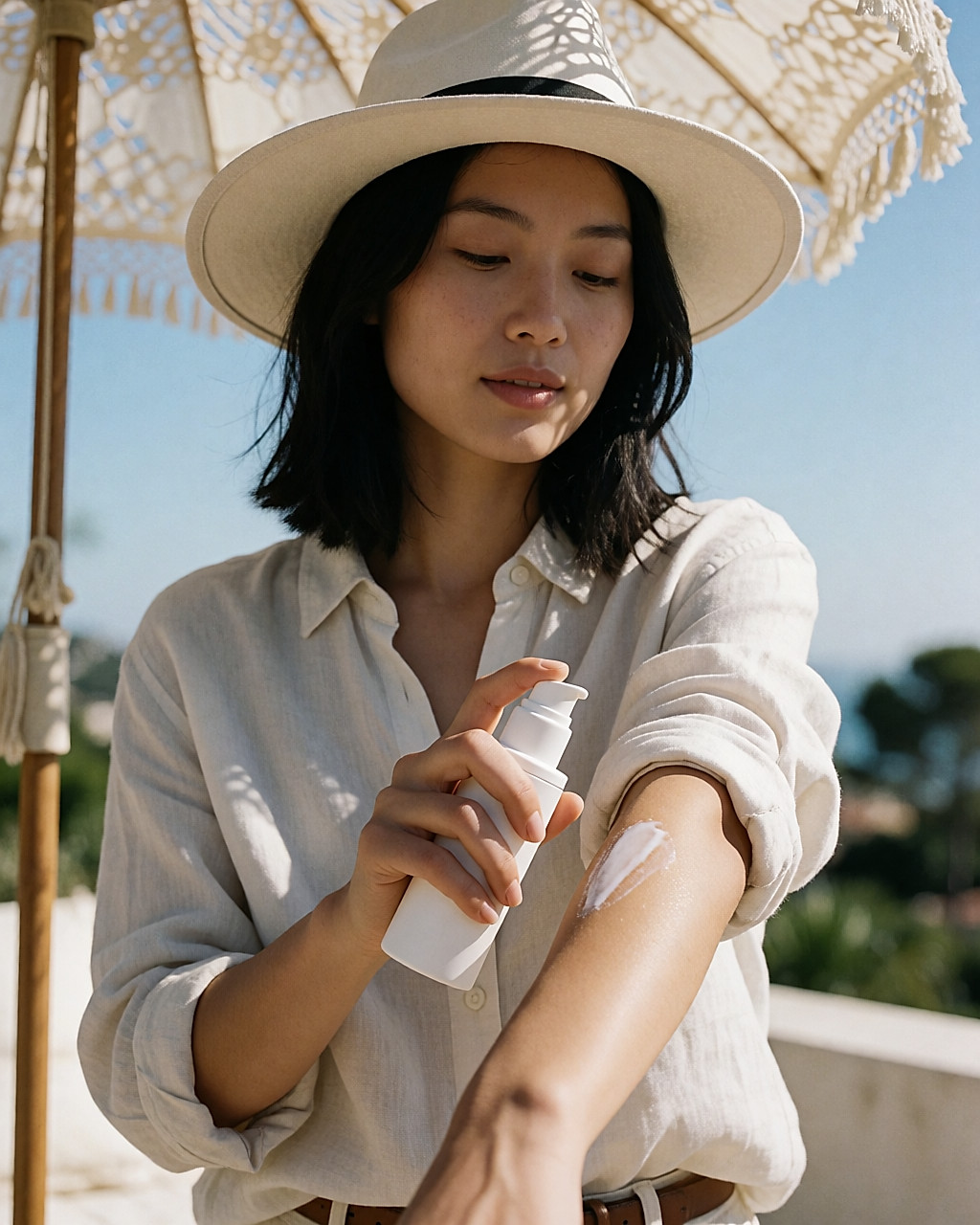
For protection, cover sensitive areas with long sleeves, a hat and a sarong over the shoulders in the early days of your holiday. Choose a broad-spectrum SPF 50 sunscreen, and check the UVA logo: in Europe, it guarantees a minimum level of filtration against those rays. Remember to reapply every two hours, and after every swim or heavy sweating — that's often where things fall down.
Supplements containing carotenoids, lycopene or polyphenols can complement the approach, but their effect remains modest, and they never replace a sunscreen. And if you smoke, don't reach for high doses of beta-carotene: they're not advised in that case.
No "sun protection" claim is authorised in Europe for food supplements. The only prevention with firmly established effectiveness remains the combination of covering clothing, shade and properly applied cream.
When the bumps have already appeared
First reflex: stop sun exposure until the rash has completely gone. Then it's about comfort. Skip ordinary soap and perfumed shower gels, which aggravate skin that's already reacting — opt instead for a soap-free cleanser formulated for sensitive skin, and a thermal water mist to soothe the feeling of heat.
On medical advice, a mild topical corticosteroid cream can calm the inflammation, and an antihistamine can help if the itching is keeping you awake. In short, these options exist, but they're discussed with a professional — not used on autopilot.
See a doctor promptly if the rash spreads a lot, reaches the face, forms blisters, comes with fever or swelling, or persists beyond ten days. These signs can sometimes point to another diagnosis, such as drug-induced photosensitivity. In every case, speak to a healthcare professional: a photodermatosis is diagnosed clinically, in consultation.
If your skin starts making itself heard more than usual this summer, don't wait to speak to a professional: never serious in itself, PLE deserves a doctor confirming the diagnosis and ruling out drug-induced photosensitivity. And for everything else — hat, shade and reapplied sunscreen — your summers will thank you!
Budget
For sunscreen, expect £6 to £12 for 200 ml in the supermarket, £12 to £22 in a pharmacy, and up to £30 for 50 ml of a certified Cosmos Organic mineral facial product. This label sets rules on formulation, the share of organic ingredients and a manufacturing charter: it guarantees a natural cosmetic, not stronger sun protection. Refillable formats and cardboard tubes cut down on packaging, but always check the SPF and the UVA logo — a "natural" product that filters poorly is still inadequate.
Mineral-filter creams (zinc oxide, titanium dioxide) suit reactive skin, with an accepted trade-off: a whitish film on darker skins, and a thicker texture to apply. Modern organic filters are more pleasant to wear — and therefore reapplied correctly more often, which matters as much as the number on the label.
For supplements, expect £12 to £30 for a three- to four-week course, from a pharmacy or online. A dermatologist appointment is available through the NHS via GP referral, though waiting times vary.
Sources
- NHS — Polymorphic light eruption.
- British Association of Dermatologists — Photodermatoses and sun protection.
- GOV.UK — Cosmetic product and sunscreen regulation.
- UK Health Security Agency — UV and sun safety.
- Food Standards Agency — Health claims on food and supplements.
Food supplements do not replace a varied, balanced diet and a healthy lifestyle.


Comments
Your opinion matters: rate the article, react and reply to comments.
Comments are moderated; AI-assisted comments are flagged. Text emoticons (8-), :-), <3…) are automatically shown as images.