
Have you opened that drawer yet — the one where the swimsuits of summers past pile up? The one that lasted a single season, the one that lost every bit of support, the one that made you swear you'd never buy on impulse again... We've all been there. And every spring we start over: hunting for a cut that holds, a fabric that doesn't cling, a colour that doesn't look wrong once it's wet. So for summer 2027 we've been through the shapes taking form for the season — and these are the ones we love.
And let's be clear from the start: we haven't tried any of them on in a changing room. They're our picks of the season, spotted for you — not tester reviews, just things we wanted to share.
What past seasons got right
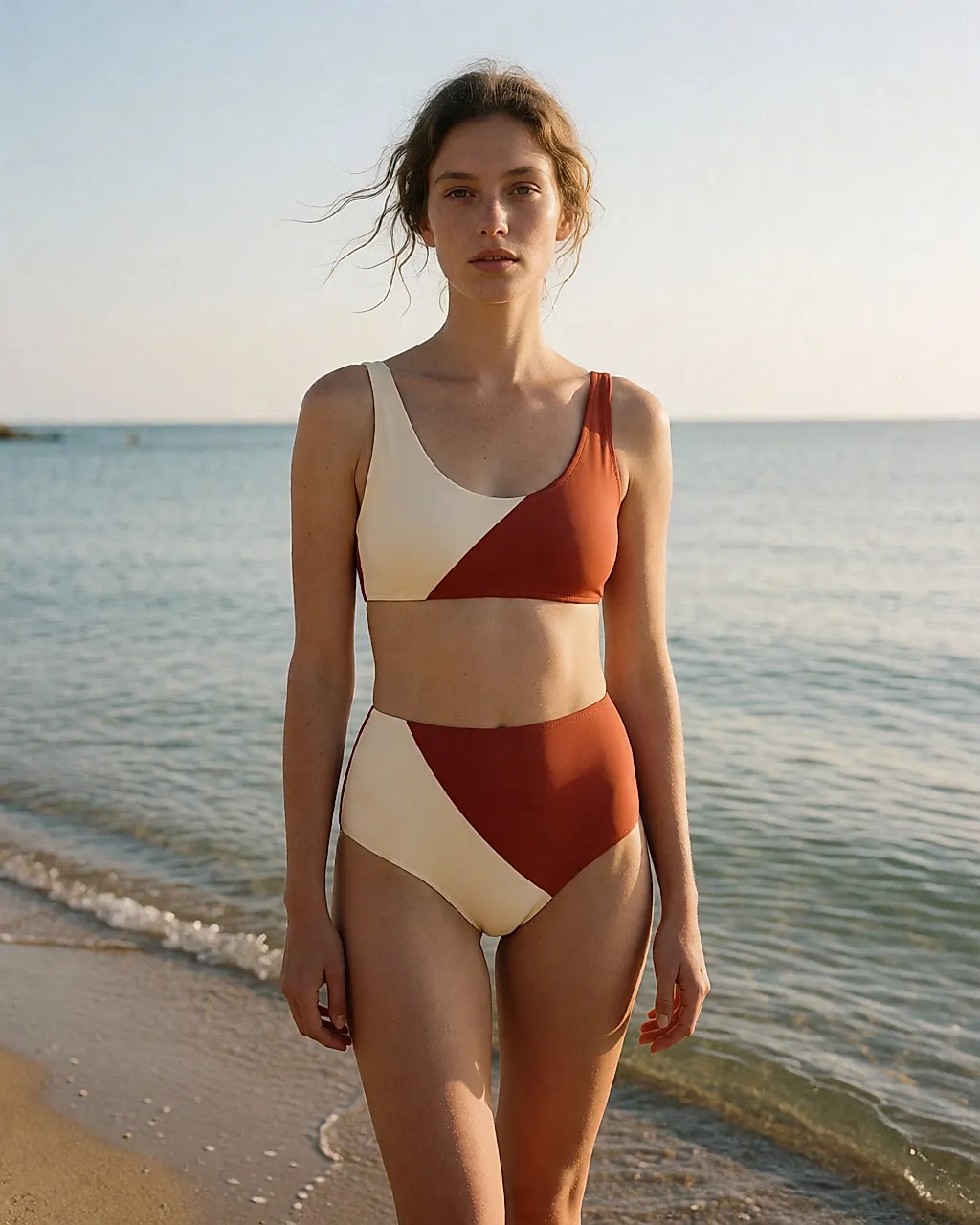
On cuts, the dependable shapes leaned on three ideas: colour-block, graphic print and cut-outs. None of them has really dated — and with good reason, because they work on the silhouette before they work on colour. This season we're happy to see them back, in softer recycled knits and with a far more considered drape.
The triangle bikini, a summer classic
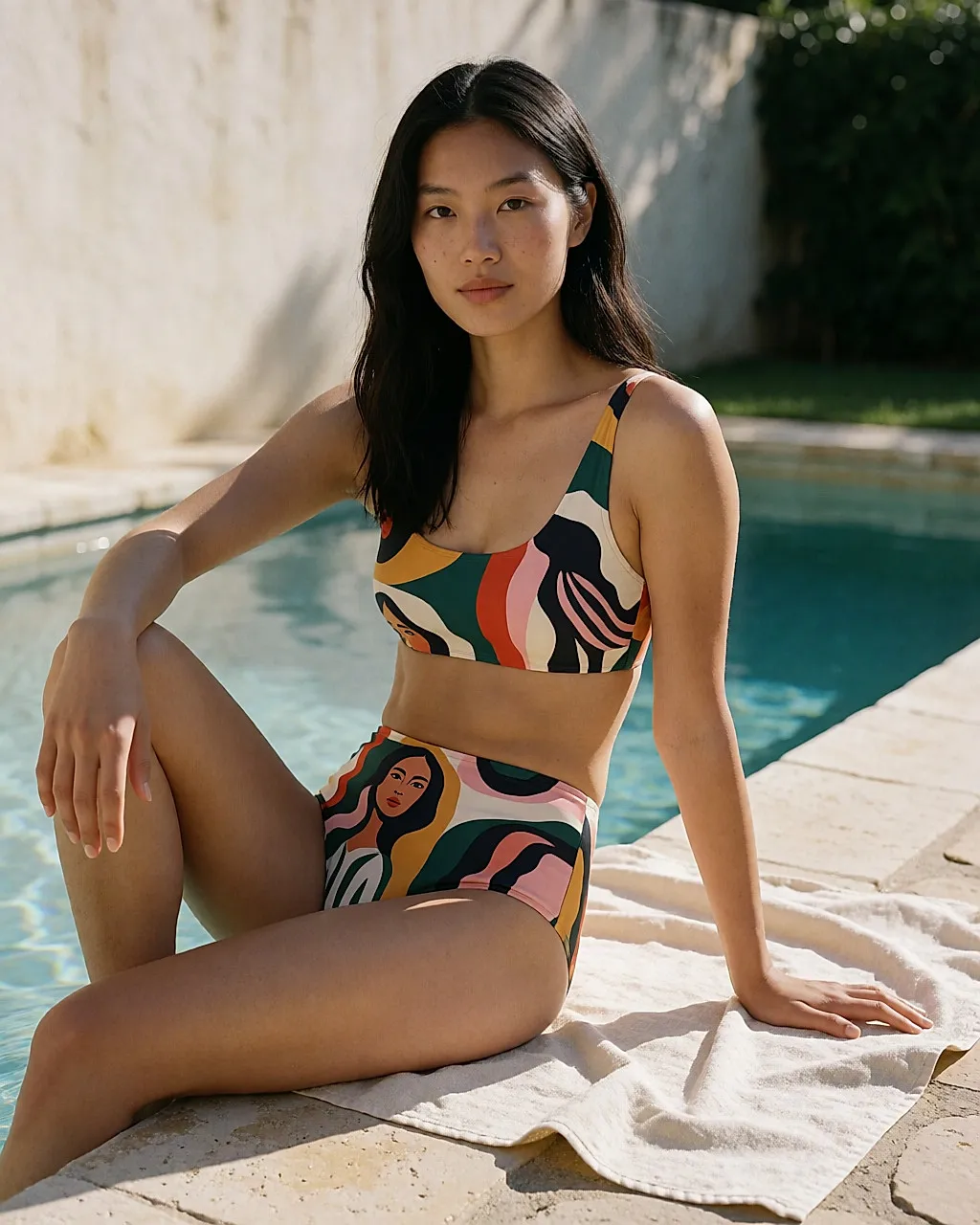
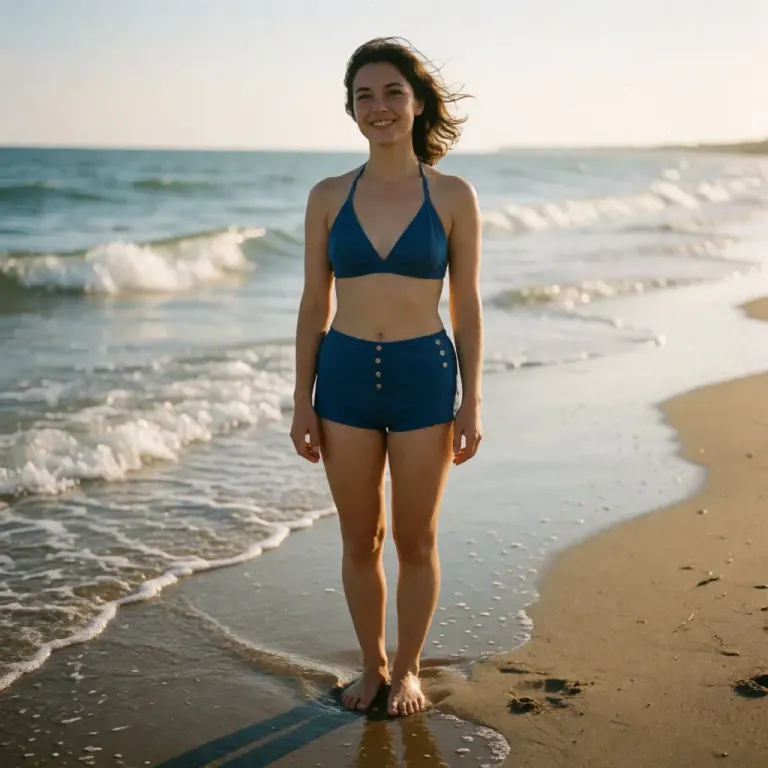
A bikini in graphic print or clean colour-block is still the statement piece for the coast. The idea hasn't moved an inch: two contrasting blocks, a crisp line, no frills. On the fit, we're all for the halter tie knotted at the back rather than behind the neck — it stays put better and gives a longer line.
Structured two-pieces, from bandeau tops to high-waist briefs
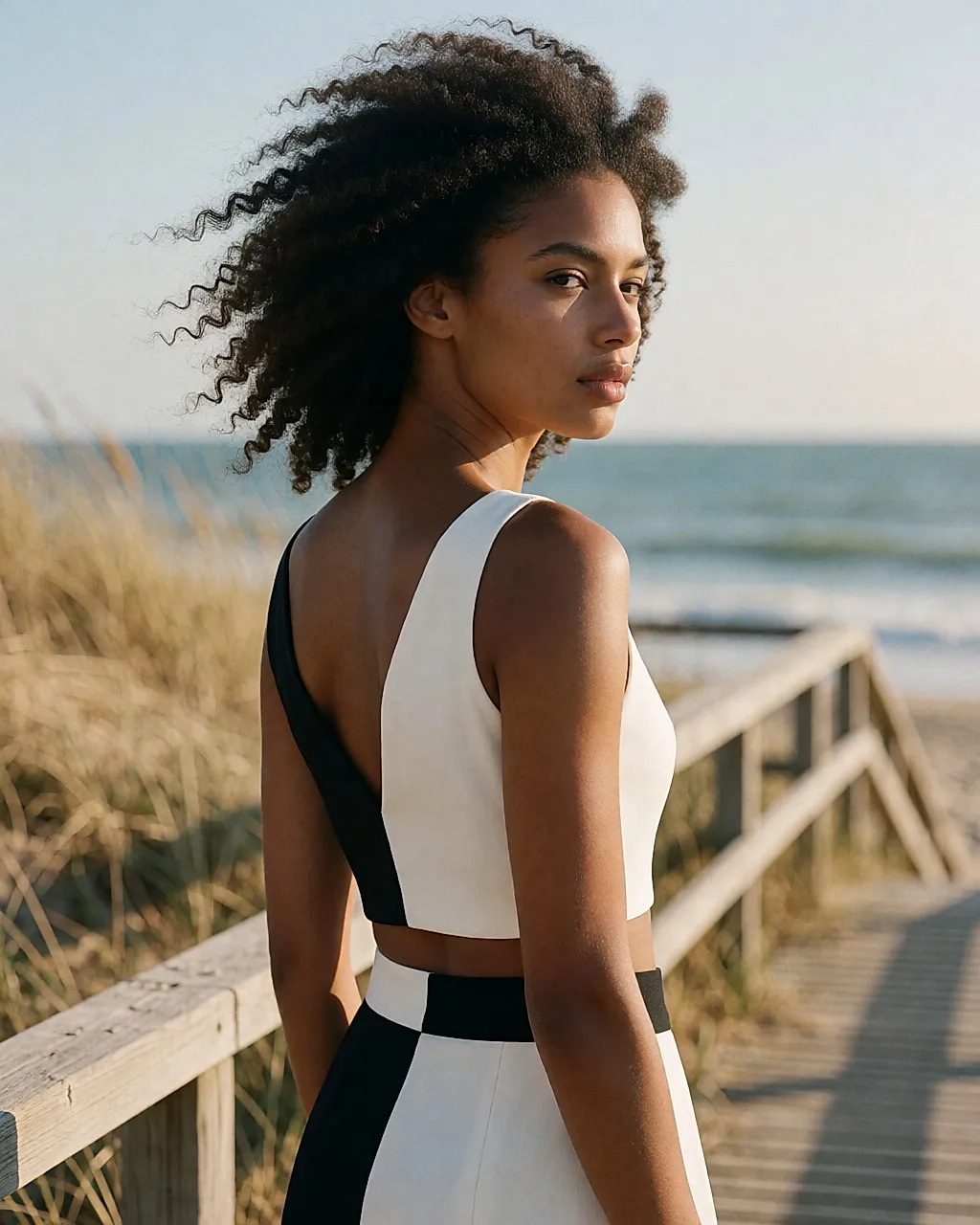
Bandeau tops and high-waist briefs are still the season's two strongest cuts. A high waist lifts the waistline, lengthens the leg and holds better when it's windy — we never tire of it. A bandeau, though, is far less forgiving. Check whether there's any underwiring, removable straps or a racer back: it makes a real difference to how it wears.
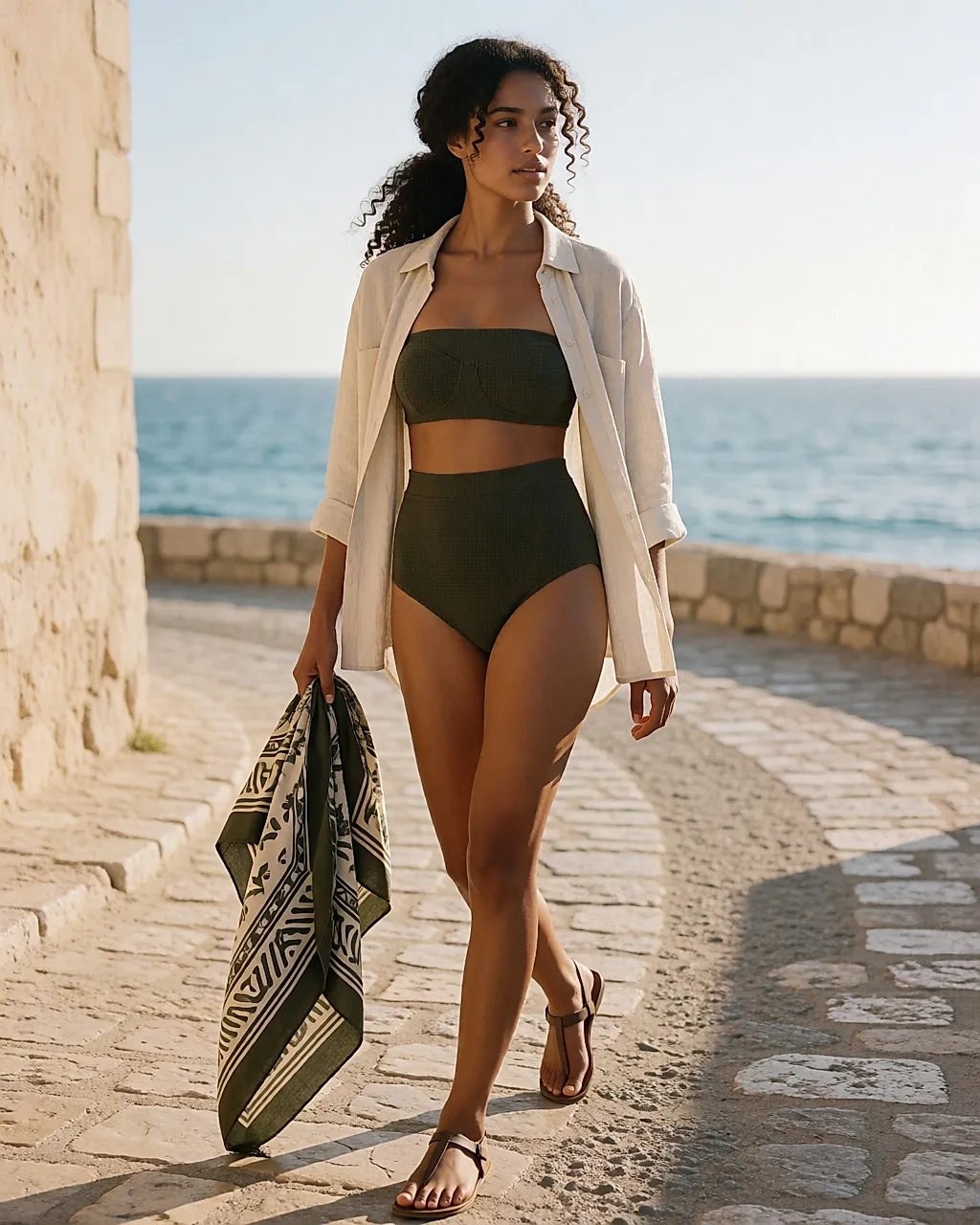
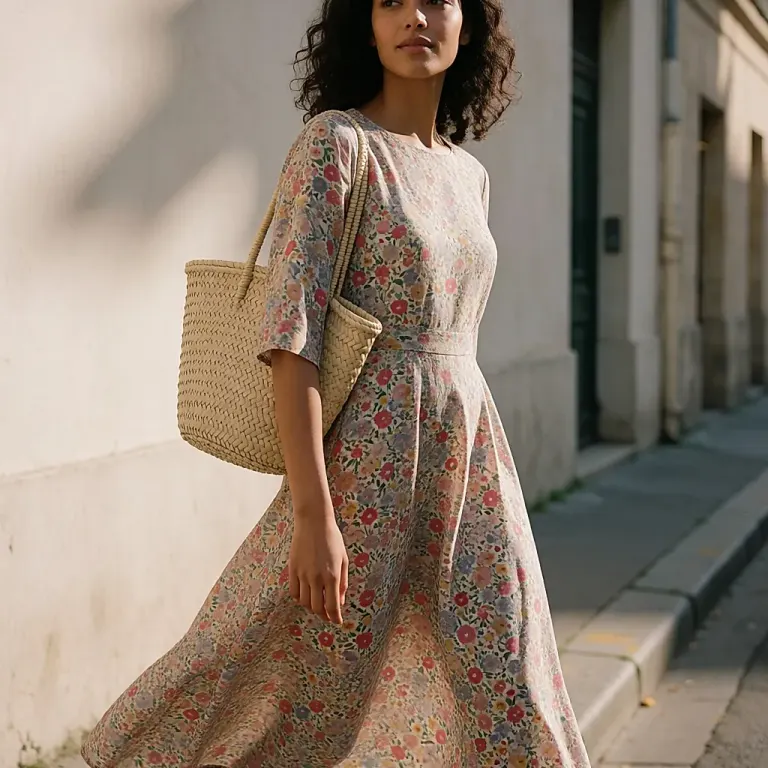
For styling, keep it simple: a cotton sarong, an open linen shirt over an all-cream look, flat sandals. The swimsuit is already carrying the print — there's no need to layer on more.
Draped and textured one-pieces with a lingerie feel
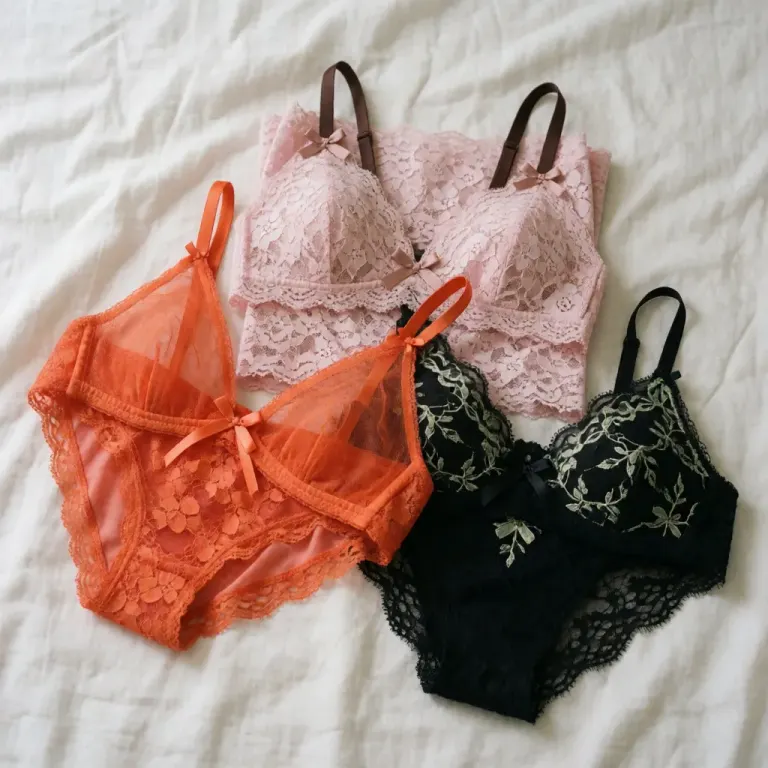
The draped one-piece and the lingerie look with fine embroidery remain the two most elegant routes. Draping only works on one condition: the density of the knit. A double layer holds its shape; a fine knit shows everything. And the move that matters is trying the drape in front of a mirror, not judging it from a photo on a screen.
A word on sustainability, because we're sold all sorts under that heading. A swimsuit made entirely from natural fibres barely exists: most modern swimwear contains elastane for stretch and support, and how well it dries depends mainly on the fibre and the knit. What does exist is recycled polyamide, sometimes made from recovered fishing nets, or knits certified by recognised schemes — such as the Global Recycled Standard, which verifies the share of recycled content, or OEKO-TEX Standard 100, which certifies that the product has been tested and meets limit values for certain substances, without ruling out every risk or covering every substance. None of it is neutral for the planet, but it's an improvement on virgin fibre. And "natural" on a swimwear label, let's be honest, means nothing you can actually verify.
On the skin front, remember an after-sun based on aloe vera or plant oils, in a solid or refillable format — one less plastic bottle.
Two details worth reading before you pay:
- the exact composition (polyamide, polyester, elastane) and the percentages;
- the care label: rinse in fresh water after the sea, dry flat, wash cold.
That's what makes a swimsuit last, far more than any slogan.
Budget
The price gaps here are huge. As a rough guide, expect to pay around £15–45 in supermarkets and sports shops, £45–130 in lingerie and mid-range labels, £70–170 from smaller brands and for more detailed pieces, and £200–600 at the top end.
What moves the price: the cut, the lining, the type of recycled knit, where it was made and when you buy. The January and summer sales are still the best moment to buy for less, and second-hand is a serious route for high-end and designer pieces.
Where to get it? The brand's own shop, a department store, the lingerie department, the official website, or specialist resale platforms. Be wary of marketplaces with no named seller: you can't verify where the piece came from or what it's made of.
Sources
- Textile Exchange, Global Recycled Standard framework: textileexchange.org
- OEKO-TEX, Standard 100: oeko-tex.com
Comments
Your opinion matters: rate the article, react and reply to comments.
Comments are moderated; AI-assisted comments are flagged. Text emoticons (8-), :-), <3…) are automatically shown as images.