
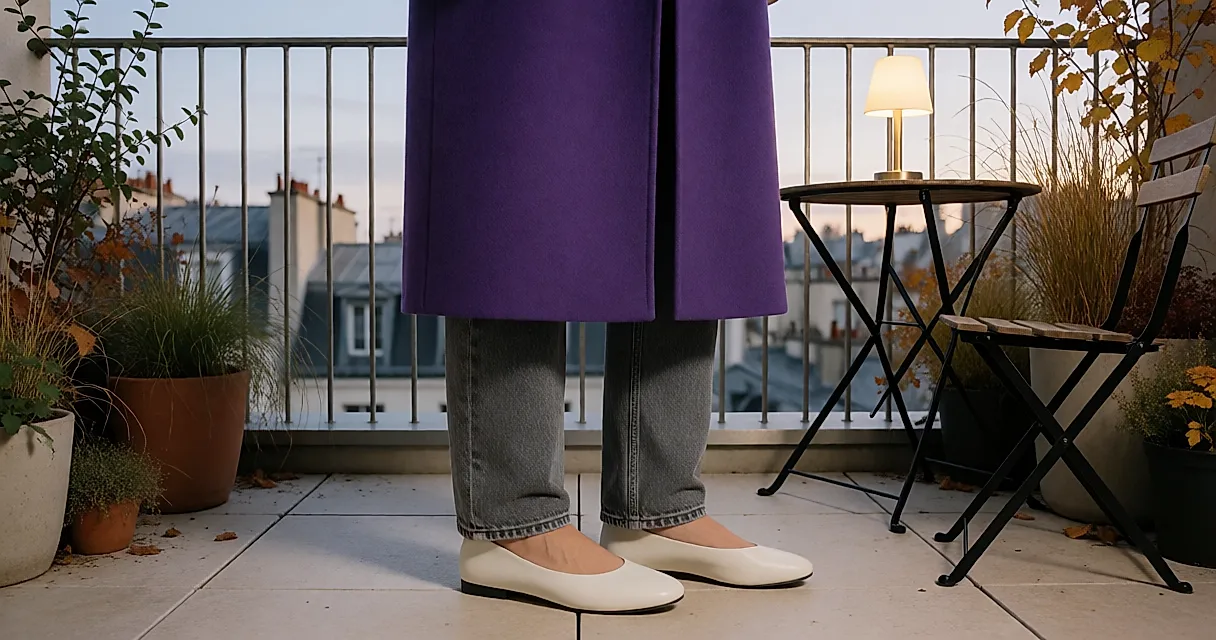
A short puffer jacket and knee-high boots keep you warm; a long, straight coat over jeans and ballet flats keeps the silhouette in one clean line. It is not the same budget, nor the same effect in the mirror in a lift. One protects you, the other defines you, and since you cannot buy everything, it helps to know what each piece actually does. The cut that changes a look without shouting about trends this season is the long, straight line, worn over jeans and finished with a flat shoe.
The line comes before the trends
A short, puffy coat has real merit: it is forgiving. It cuts the body in two, works over almost anything and keeps you warm without a second thought. The drawback is elsewhere: that rounded shape stops the eye halfway down your back and leaves the rest of the silhouette to your boots. The result is a two-block look, with the legs often sacrificed.
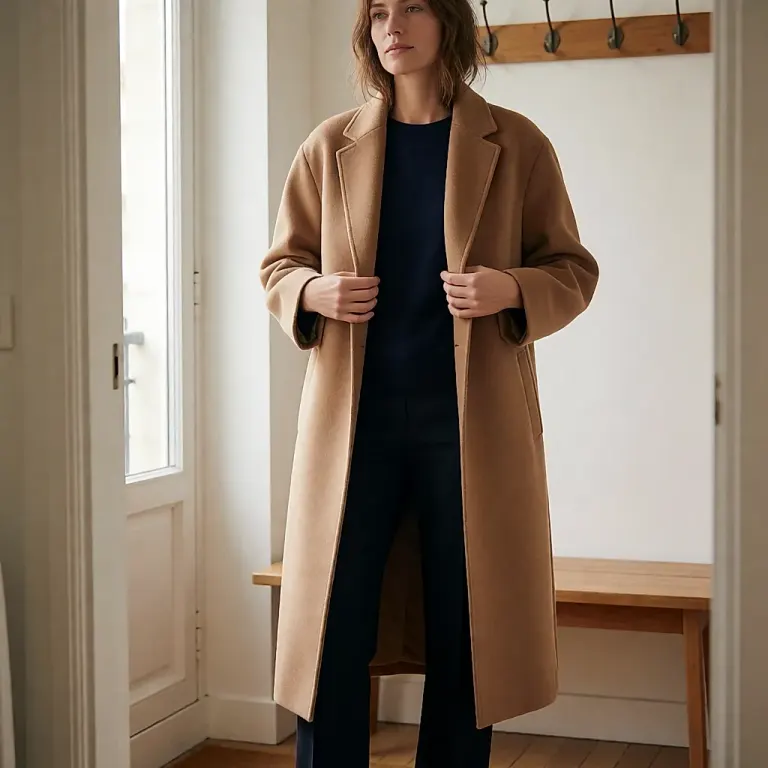
A long, straight coat, by contrast, falls in one line, with no flare and no marked waist. It does not try to cinch; it aligns. Under it, jeans prolong the vertical, and a flat shoe stops the whole thing tipping into costume. It is this continuity of line that makes the difference, not the length in centimetres. If you are tall, you gain presence; if you are petite, you can too, as long as the hem does not stop exactly at mid-calf, the point that cuts the leg.
The jeans are the backbone of the outfit
Everything depends on the jeans, and this is where many outfits go wrong. A very tapered skinny jean under a wide coat creates a pear shape; jeans that are too loose and too long gather over the ballet flat and turn the column into an accordion. Between those two there is a comfortable zone: a straight or slightly wide cut that falls cleanly at the ankle, with no fold where the foot meets the ground.
Length deserves attention. Jeans that stop at floor level work with heels and much less well with a flat sole. So choose: either you accept a cropped jean that shows the ankle and the line of the shoe, or you keep a length that breaks cleanly over the instep. The indecisive in-between length is the worst option. As for fabric, denim with a little body holds the line; denim that is too soft sags on the first commute spent standing.
For the coat, look at the wool before you look at the price. Wool, or recycled wool, that drapes well can keep its straight fall for several seasons, whereas a blend with too much synthetic fibre can pill and lose shape. One warning is enough: check the composition before you fall for it.
What ballet flats do to the leg
Ballet flats have had a bad press ever since they were labelled sensible. Under a short skirt, it is true, they can tip into little-girl territory. Under a long coat and jeans, they do something else: they lighten the look. The flat, discreet foot breaks up the mass of the coat and stops the outfit becoming a fortress.
You still need the right style. A very fine flat, with a supple sole and a low vamp, slims the ankle; a rounder version with a thicker sole will stand up better to November rain but will make the line heavier. Vegetable-tanned leather and soles that can be resoled are two criteria worth weighing when judging how long a pair will last, and, frankly, the price per wear. Besides the classic style, a loafer or soft derby works very well: the rule stays the same, a low, clean shoe, not a flat that spills over the sides.
What it is like in real life
In theory, everything is perfect. On public transport, less so: a long coat catches the edge of a step, the puddle on the platform, the calf of the person next to you. The solution is not to shorten it dramatically, but to aim for a hem that stops just above the ankle: long enough to cover a dress, short enough to walk.
Rain is the real test. A thick wool coat that gets soaked takes hours to dry and can leave a mark; a dense wool fabric, brushed regularly, should cope with a shower. And then there are alterations, that little trip to a tailor that almost every long coat deserves, especially if the coat seems too long on you. A few centimetres less, and the coat becomes a different piece altogether.
Before you buy, try the coat on with the jeans and shoes you will actually wear, not with the outfit you have on that day. A coat that works over tailored trousers can split the silhouette in two over wide jeans. Raise your arms, climb a step: if the hem touches the floor, it will touch the platform too.
Budget
Expect to pay around £70 to £160 for a long, straight wool-blend coat on the high street or online; around £130 to £300 for a mostly wool coat from an accessible label; and from about £350 for a pure wool, lined piece. What shifts the price is less the style than the wool content, the lining and where it was made.
For shoes, a pair of leather ballet flats sits at roughly £50 to £130 depending on the sole and the quality of the leather; pairs with soles that can be resoled tend to sit at the top of that range, with the advantage of being repairable. Add £15 to £30 for coat hem alterations and £10 to £20 for jeans if needed.
Two average pieces and a well-made hem will do more for your look than a very trendy short coat and boots worn for three weeks.
That is why this silhouette works: it asks only for well-cut jeans and an honest flat shoe, and it gives back the rarest thing in a wardrobe, a look that does not seem to have been assembled. It is easy to fall for.

Comments
Your opinion matters: rate the article, react and reply to comments.
Comments are moderated; AI-assisted comments are flagged. Text emoticons (8-), :-), <3…) are automatically shown as images.