
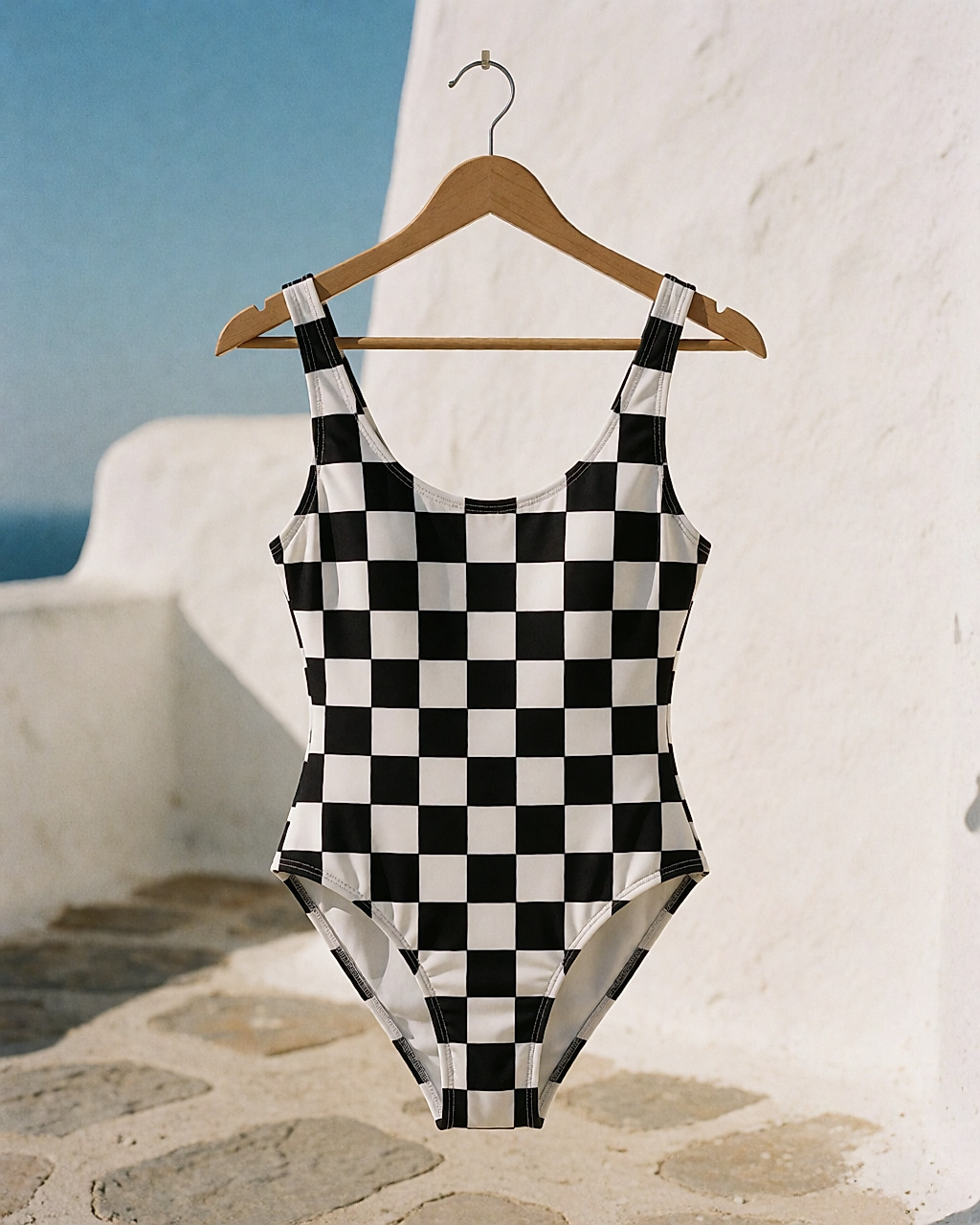
You know the scene by heart. The fitting room, the unforgiving white light, and that floral swimsuit you put back after ten minutes because it only ever looks like itself. Last summer, I did exactly the same, before automatically reaching for a black-and-white two-piece. That's the one I wore until September, when the others were already folded at the bottom of the drawer.
Why does it work? Because the contrast makes the print clear without ever shouting, and it works with everything else in your beach wardrobe: a linen sarong, an open shirt, leather sandals. A statement piece that needs no accessories to exist, and does its job beautifully in a holiday capsule wardrobe. In short, the safe bet you pull out season after season without a second thought.
A print that never dates
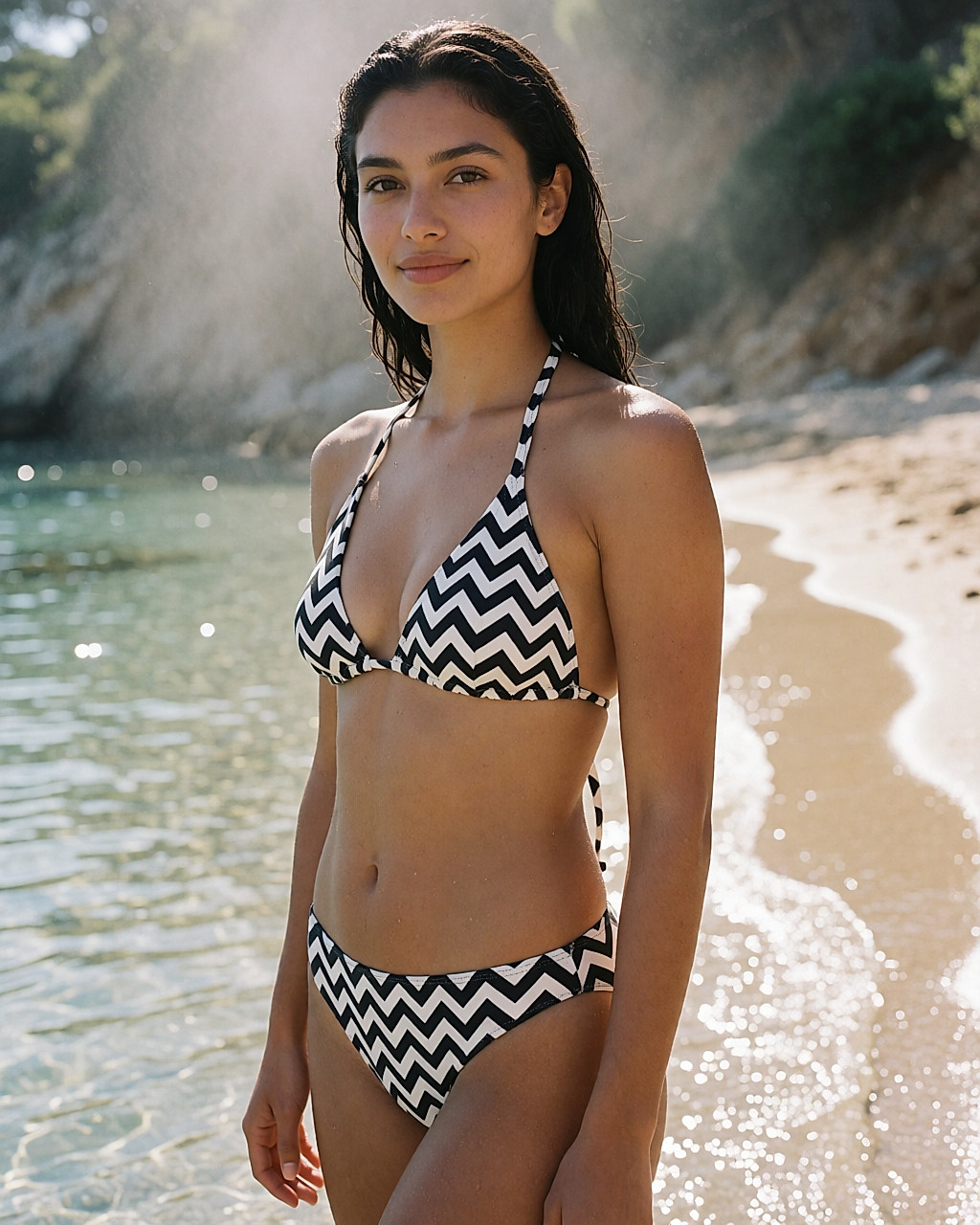
A swimsuit is judged from a distance and worn wet. Two bold colours make a design that stays crisp by the pool and on the sand, where pastel shades turn washed-out after a few swims. Add an unapologetic retro feel — stripes, checks, zigzags — and you get what a Breton top has done for decades: a classic look that never dates.
The trap is a print that's too dense. When the pattern tightens up, choose a predominantly white background; otherwise the small black checks turn into a grey blur from three metres away. And look at the swimsuit from a distance before you try it on: that's how it will be seen on the beach, not from fifty centimetres away from the mirror.

What really shapes the silhouette
The print does half the work; the cut does the rest. A triangle top that ties at the neck lifts the bust and leaves the shoulders bare; a bandeau holds better on a smaller bust but shifts as soon as you swim; a high waist defines the waist and lengthens the legs. As for the cut-out one-piece — the old monokini — it relies on targeted openings: two, maximum, otherwise the silhouette breaks up.
In other words, there's no universal cut, only cuts that suit a purpose. If you plan to swim properly, forget the tie triangle and the bandeau: they aren't designed to stay put. If you're simply sunbathing by the water, however, they do the job effortlessly.

For the drape, one rule: look for a full lining. A lined swimsuit doesn't go transparent when wet and keeps its shape better in the wash. It's the kind of detail that's invisible in photos and that you regret all summer.
Read the label before the print
Most swimsuits mix polyamide or polyester with elastane. Elastane provides the stretch, and it's the first to wear out. There are two more responsible options: recycled polyamide, such as Aquafil's ECONYL made from waste, and GOTS-certified organic cotton when it's used.
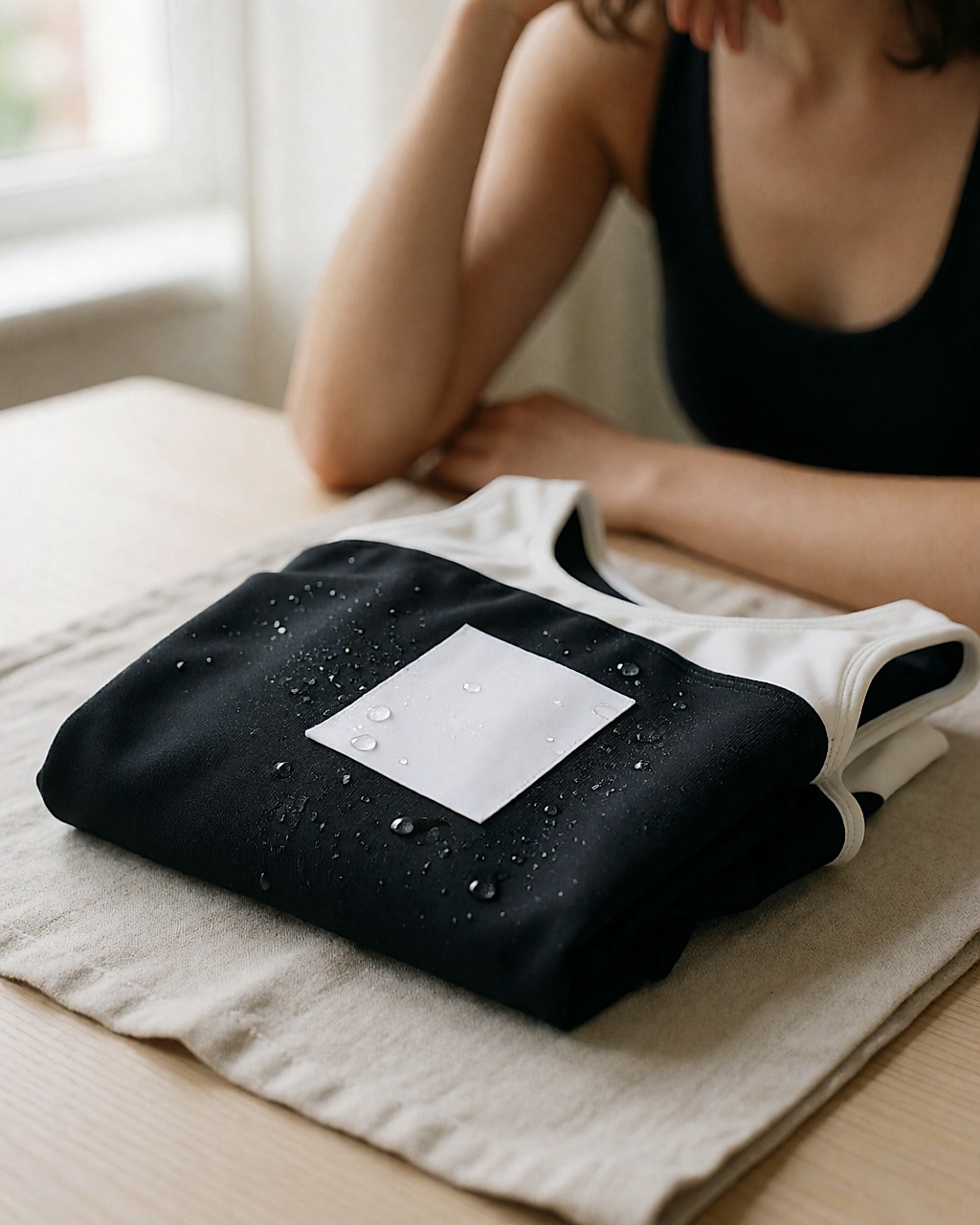
Stay clear-eyed about the trade-off. Even recycled, polyamide remains a non-biodegradable plastic. And organic cotton needs elastane to hold its shape — a blend that's hard to recycle. No swimsuit is perfect; the best move is still to keep it for several seasons. The OEKO-TEX Standard 100 label certifies the absence of undesirable substances in the finished textile: it's useful, but not an overall environmental label.
Make your swimsuit last. Rinse it in fresh water after every swim: chlorine, salt and sun cream attack elastic fibres. Dry flat, in the shade, never on a radiator. Two swimsuits in rotation are better than one worn every day.
Ideas, not tried-and-tested favourites
I haven't tested any of these styles: they're leads, not changing-room favourites.


- Marks & Spencer — mix-and-match bikinis and graphic one-pieces, an accessible high-street staple.
- Next — stripes and side panels, sportswear-inspired.
- Speedo — wide-band bikini, designed for proper swimming.
- Seafolly — triangle tops and zigzags, stocked by premium department stores.
- ASOS — cut-out one-pieces for a tighter budget.
Budget
Budget around £15 to £30 at supermarkets or fast-fashion retailers, £30 to £60 at lingerie and fashion chains (Marks & Spencer, Next), £60 to £130 for a swimsuit in recycled polyamide or certified cotton, and £130 and up from designers and specialist swimwear brands.
What changes the price: the raw material, the lining, the finishes (flat seams, metal fastenings), the sales channel, and when you buy — collections arrive at the start of the season, markdowns at the end. Second-hand, a piece worn for one season can be found for a few pounds.
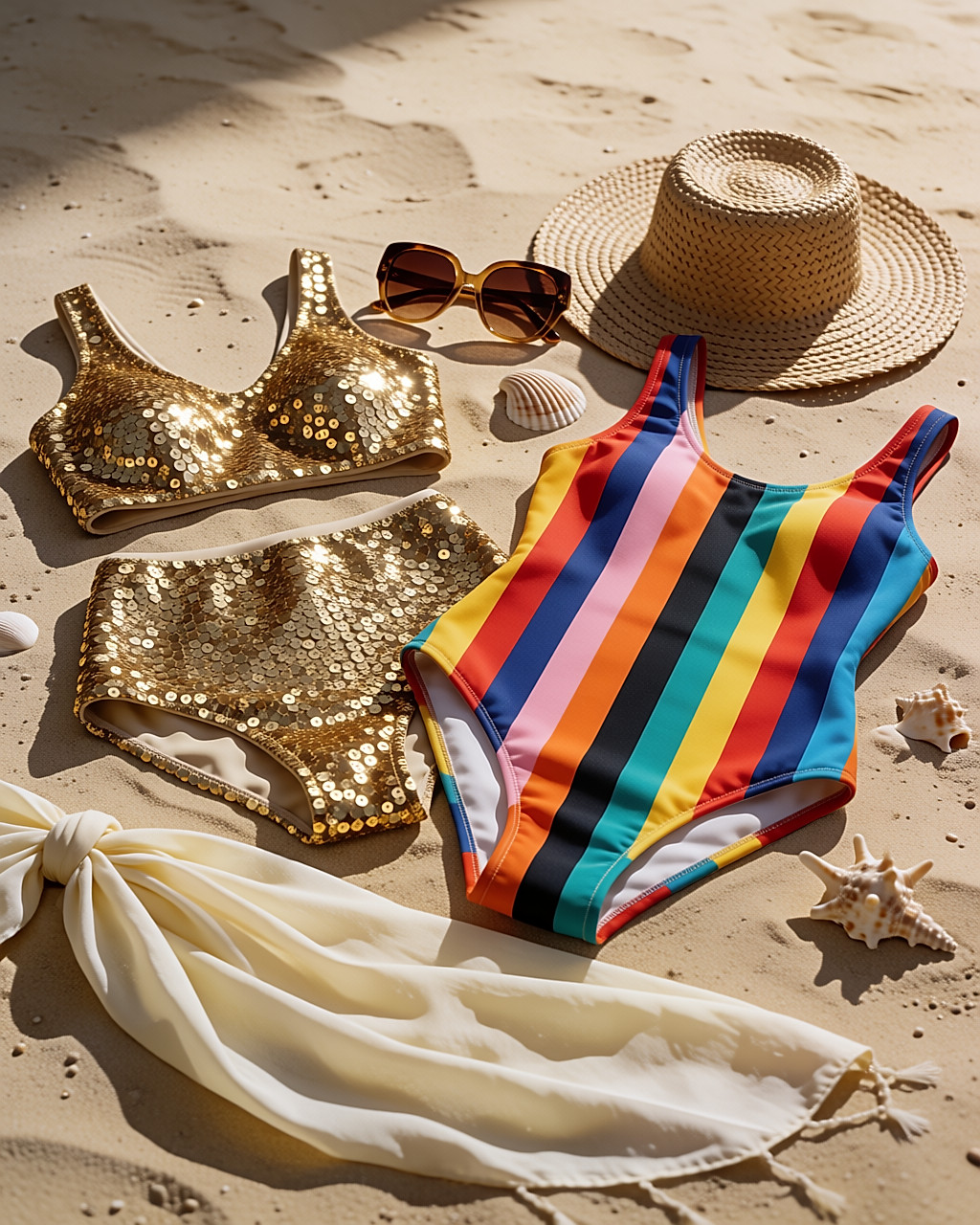
My advice to finish: invest in two swimsuits you alternate rather than three you wear out one after another. And if black and white feels too safe, know that a simple detail — a stripe, a trim, a bow — is enough to turn the piece without it ever shouting. We'll talk again next summer!
Sources
- ADEME — Data on the environmental impact of textiles, updated 2024.
- European Commission — EU Strategy for Sustainable and Circular Textiles, 2022.
- GOTS — Global Organic Textile Standard, organic cotton benchmark, current version.
- OEKO-TEX — Standard 100, certification of the finished textile, current version.
- Aquafil — ECONYL, regenerated polyamide, current documentation.



Comments
Your opinion matters: rate the article, react and reply to comments.
Comments are moderated; AI-assisted comments are flagged. Text emoticons (8-), :-), <3…) are automatically shown as images.