

October has a familiar ritual: the morning you open the wardrobe and wonder whether a coat is too much. Put it on and you overheat by lunchtime. Take it off and you're shivering by 6pm. A thick knit settles the argument by simply taking the coat's place.
Your jumper is no longer a layer — it's a piece in its own right
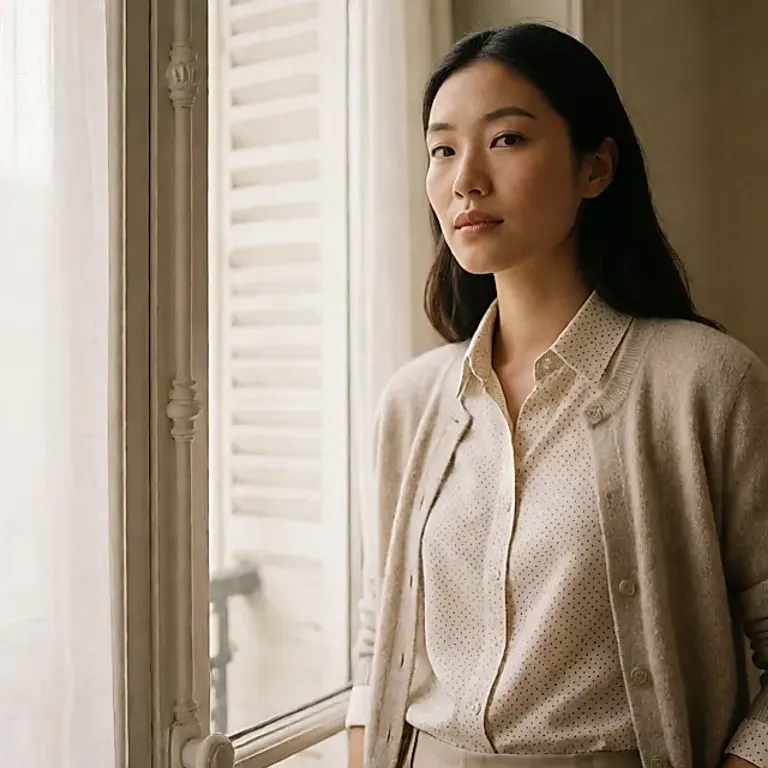
For a long time, the jumper was there to do a job: an in-between layer slipped under a jacket, a cardigan thrown over a shirt. Many knitwear collections for the cold season tell a different story: pieces made to be worn alone, with enough substance and structure to get through an October day without a jacket on top. Knitwear no longer finishes a silhouette; it creates the line.
So what does that change in practice? The test shifts. You're no longer looking for the colour that wakes up an all-black outfit; you look first at weight and drape. A knit that falls well can do the work of an outer piece on a mild day; a knit that's too fine, however lovely, stays a layer and replaces nothing. It sounds odd, but it works: it's a wardrobe rethink, almost like layering in reverse. Weight becomes the garment, and colour goes back to being a pleasure.
Three weights, three jobs
The fine knit comes first, the one you might think is too light for the job. It replaces a shirt or a light cardigan, the piece you slip under a blazer, and gives a clean everyday silhouette. Its density makes all the difference: too loose and it loses shape at the first wash; tightly knitted, it is more likely to keep its shape over time.
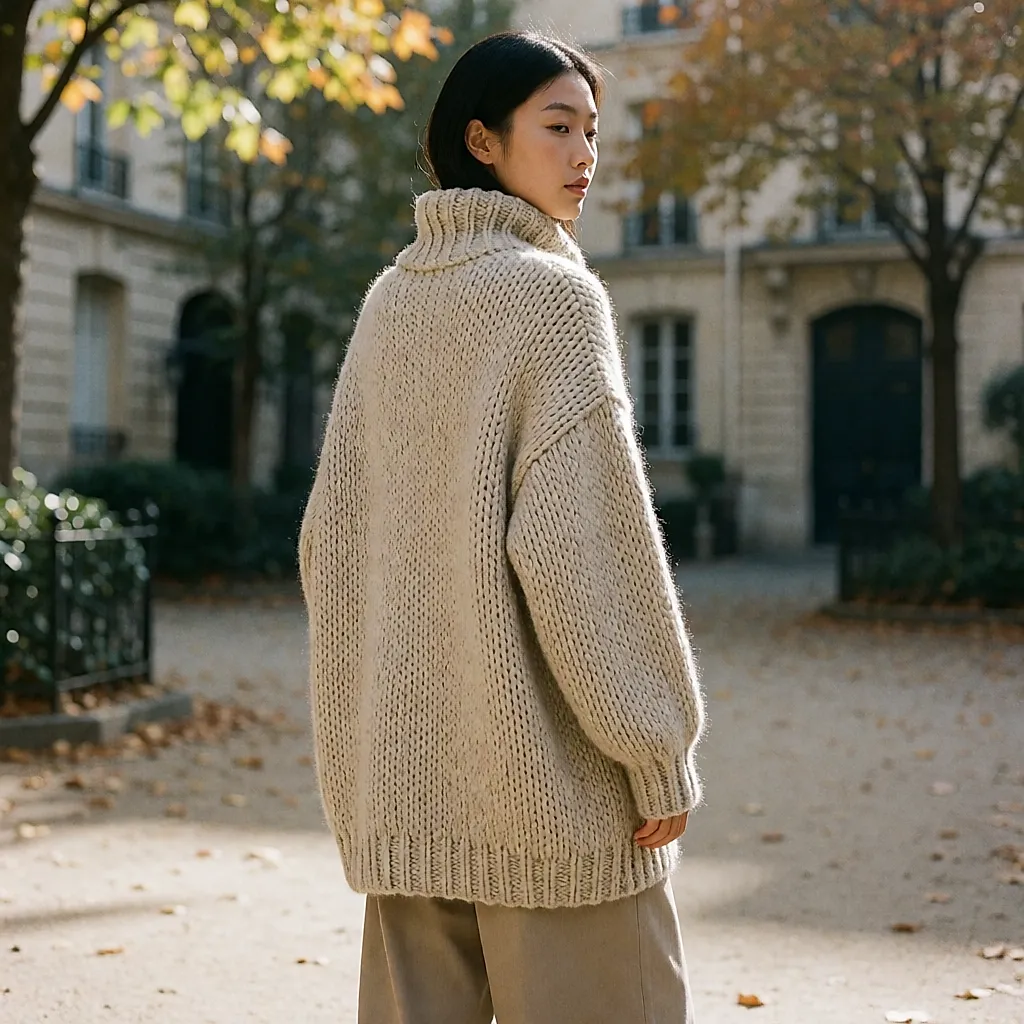
The medium weight is the real all-rounder for October. Which one should you choose? It depends on the role you want it to play. It acts as a light jacket when the weather is mild, works on its own with raw denim or a midi skirt, and keeps its drape. It is the most forgiving if your layering isn't perfect. If you're only buying one, make it this.
The thick knit, finally, does the job of a coat. A more substantial drape, a collar that holds its shape, sleeves that cover: you wear it as it is, with nothing over the top. Too soft and it sags; too stiff and it feels bulky. It's the statement piece of the three, happy to take up space, and the one you'll keep for several seasons if the fabric holds up.
How to read a knit, not just look at it
For years, we chose a jumper for its colour. A good sage green, a warm camel, a blue that lifts denim. That's still lovely, but it is no longer the first thing to look for. When knitwear is doing the job of a coat, look first at how it falls from the shoulder, whether it holds its shape without stretching out, and whether its density gives it enough structure for the morning air.
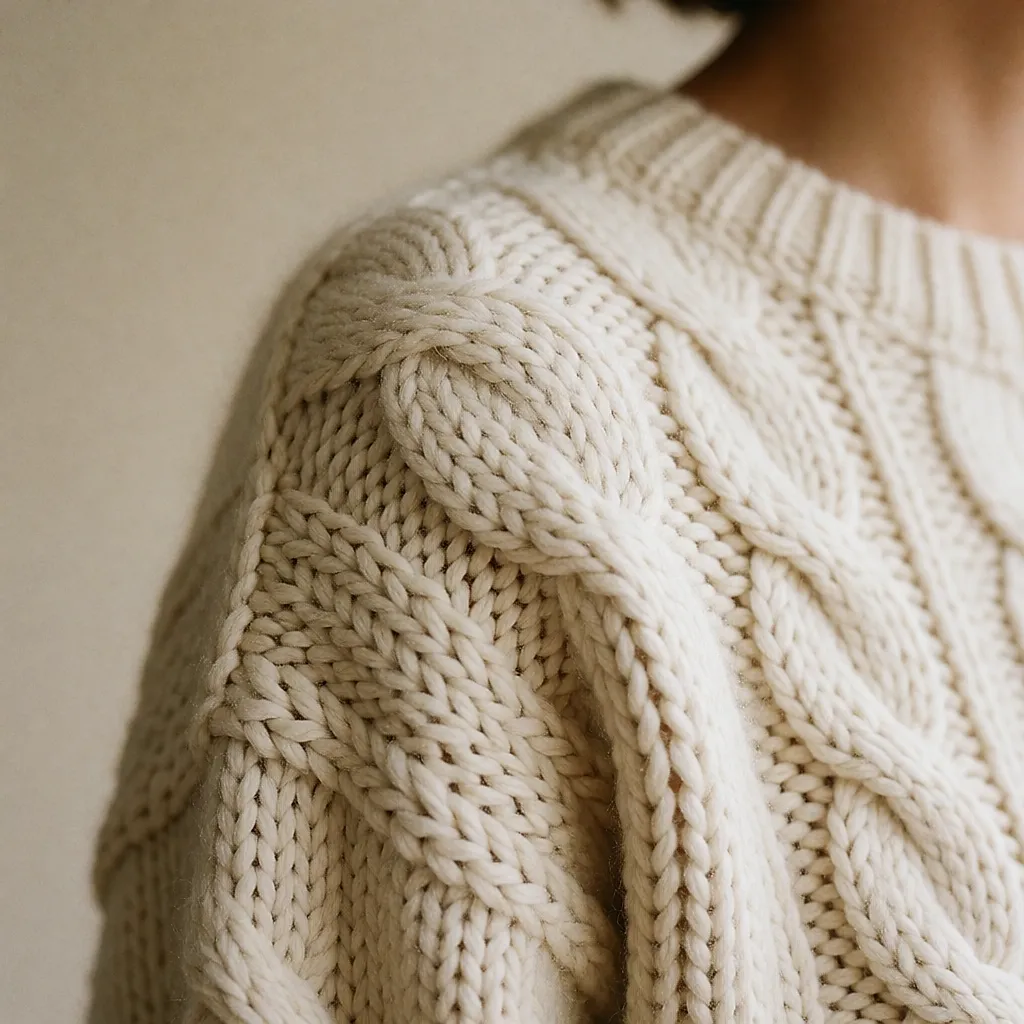
In practice, you feel the fabric. Tightly knit merino wool falls straight and stays light; a more rustic knit with body gives the silhouette more structure. Texture matters as much as colour: cables, ribs, jersey and garter stitch each produce a different drape. One detail we often forget is length. An oversized knit that falls to mid-thigh can replace a short jacket; a shorter knit can be tucked into high-waisted trousers, and that changes the whole silhouette.
What to spend
As a rough guide, budget around £35–80 for a fine knit, £70–160 for a medium weight and £105–300 for a thick one. The price varies according to fibre (cashmere climbs quickly), the density of the knit, the brand and where you buy. On the second-hand market — Vinted, Vestiaire Collective, car-boot sales and clothes swaps — you can find lovely wool pieces at much gentler prices, provided you check the composition on the label.
For buying, head to multi-brand shops or online knitwear brands — Eric Bompard for cashmere, Sézane for basics — and don't forget the second-hand market for cashmere pieces. The best find is a knit whose drape you love before you look at the label; otherwise it may end up at the back of a drawer.
The care rules worth knowing. Let knitwear rest between wears, store it folded rather than on a hanger — hangers stretch the shoulders — and wash it in cold water by hand or on a wool cycle. A well-cared-for knit can last several winters, which makes a real difference to cost per wear.
For an October that can't decide between mild and chilly, the medium weight is the most versatile. Fine for days when you're keeping a jacket on, thick for mornings when a coat feels like overkill. Then it's just a question of choosing yours — which will it be? If you're torn, go for the one that drapes best rather than the prettiest colour: it's the one you'll actually wear most.
Comments
Your opinion matters: rate the article, react and reply to comments.
Comments are moderated; AI-assisted comments are flagged. Text emoticons (8-), :-), <3…) are automatically shown as images.