
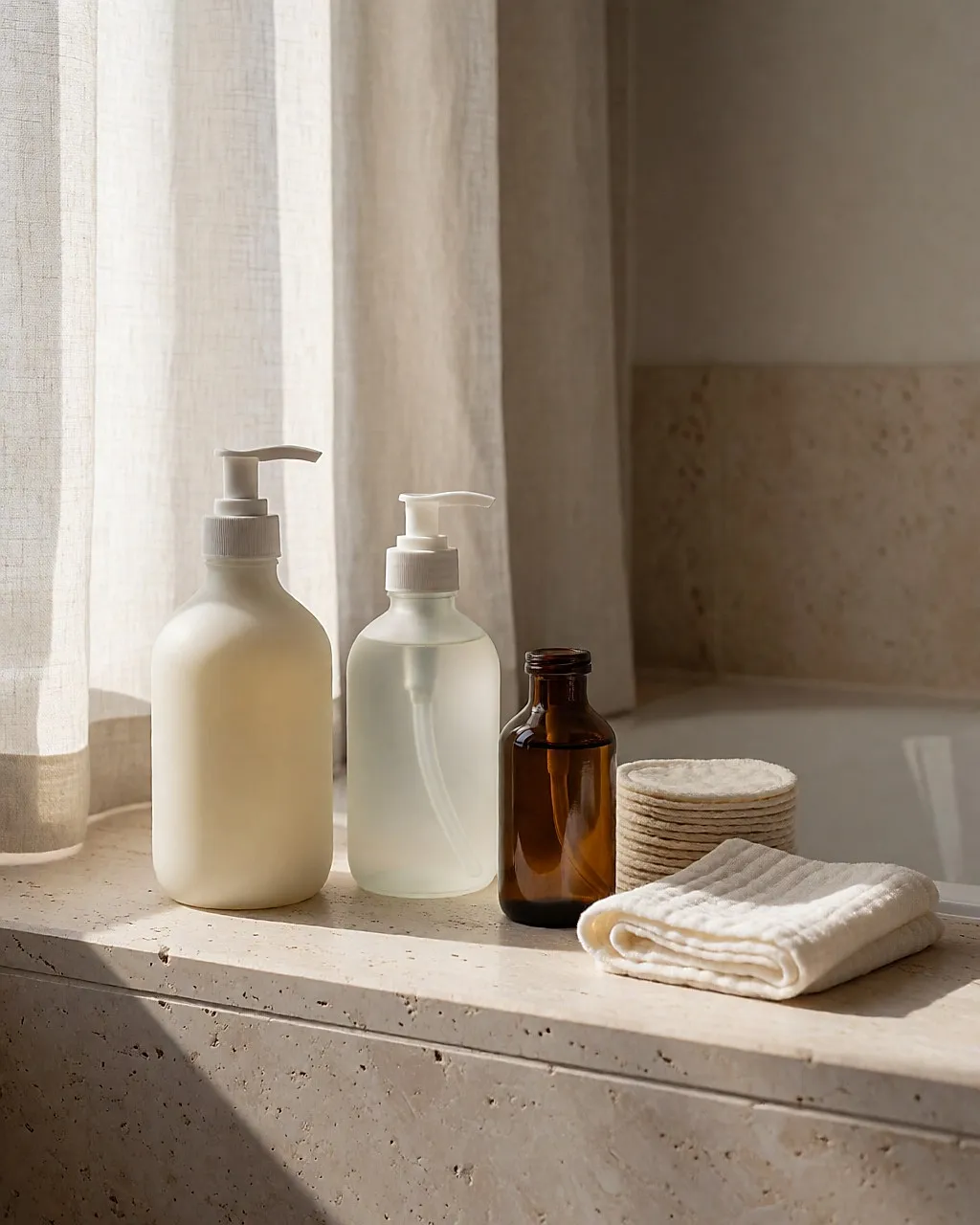
Three or four bottles are enough to wash a baby from head to toe. The rest of the baby toiletries aisle can feel like a well-arranged stage set: polished packaging, formula after formula, and barely a word about what you actually need. In reality, the edit is quick once you know what you're looking for.
A baby's skin is thinner than ours, their skin barrier is less mature, and their nappy area is in contact with a nappy all day. Hence two principles that haven't moved: clean without stripping, and keep formulas short. A quick note on method, because it matters: I haven't tested the 30 products in the aisle. What follows comes from what I use at home, plus reading ingredient lists and labels.
At changing time, liniment has replaced powder
The routine has changed. Talc-based powder, once a fixture on changing tables, has almost disappeared from them. The reason is simple: fine particles become airborne, and a baby is breathing right above them.
Avoid powders on a baby's nappy area, including talc. The risk isn't to the skin but to the airways: fine particles disperse and can irritate the respiratory tract. A pea-sized amount of cream or liniment on a cotton wool pad does the same job without the cloud of dust.
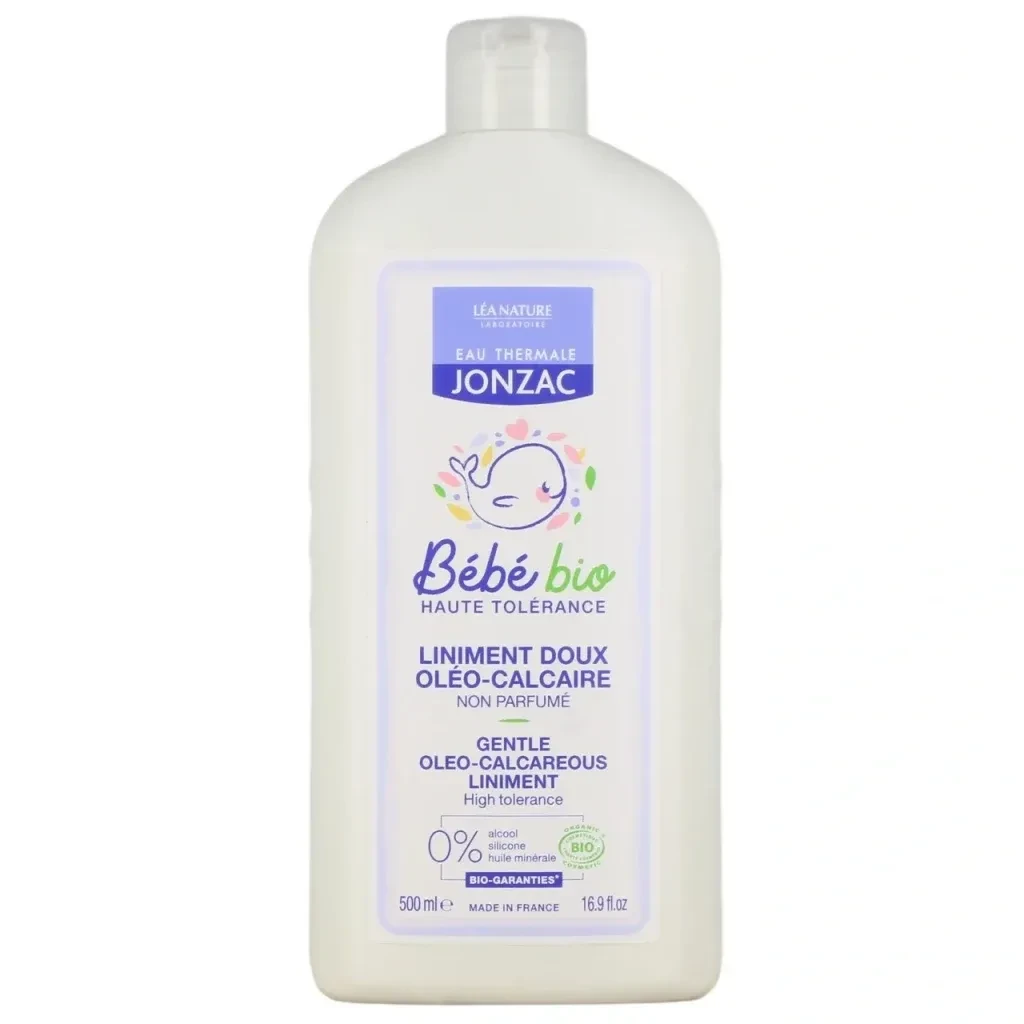
Instead, oleo-calcareous liniment remains the reliable standby. Its formula is minimalist — a vegetable oil and limewater — with no fragrance, which limits sources of irritation. As for the bottle, go for a large size, 500 ml or even 1 litre: less packaging per change, and a noticeably lower price per litre. Some brands offer an organic version, with organically farmed olive oil and Cosmos certification.
For days out, disposable wipes are useful. At home, a set of washable cotton pads and a bottle of liniment easily replace a good share of the everyday wipes.
Bath time, cleaning without stripping
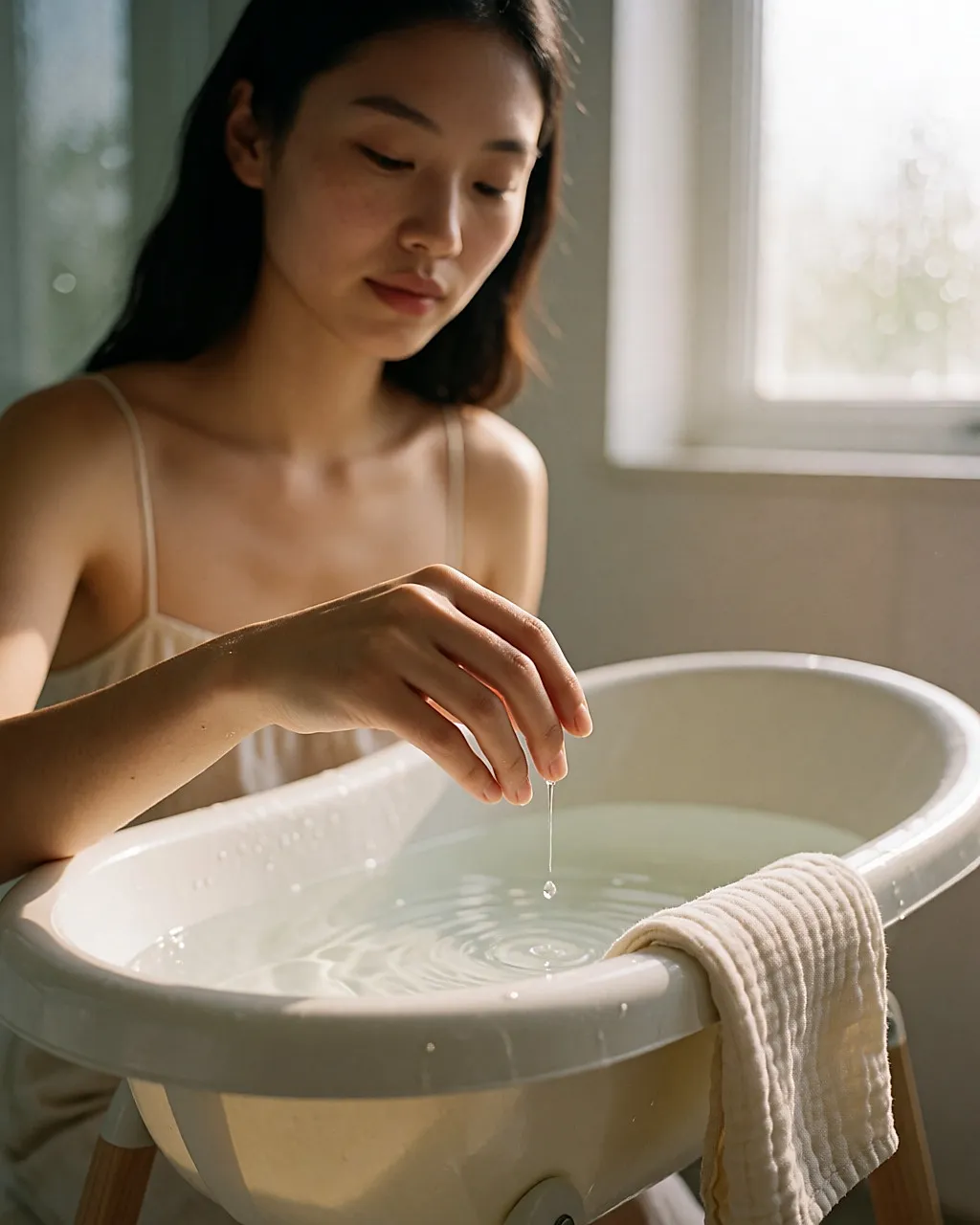
The classic mistake is thinking you need lather to get clean. A bath that's too hot or too long, or a standard soap, leaves skin dry, and the protective film is washed away with the water.
There are two options depending on your child. For skin without any particular problem, a no-rinse cleansing water or fluid, soap-free, pH neutral and tested under paediatric supervision — handy for freshening up between baths. For dry skin, a bath oil poured straight into the water: it doesn't lather and leaves a light lipid film. Pat dry, never rub.
And if patches keep coming back despite a gentle routine, it's no longer about the product: speak to your GP.
After the bath, the step that matters most
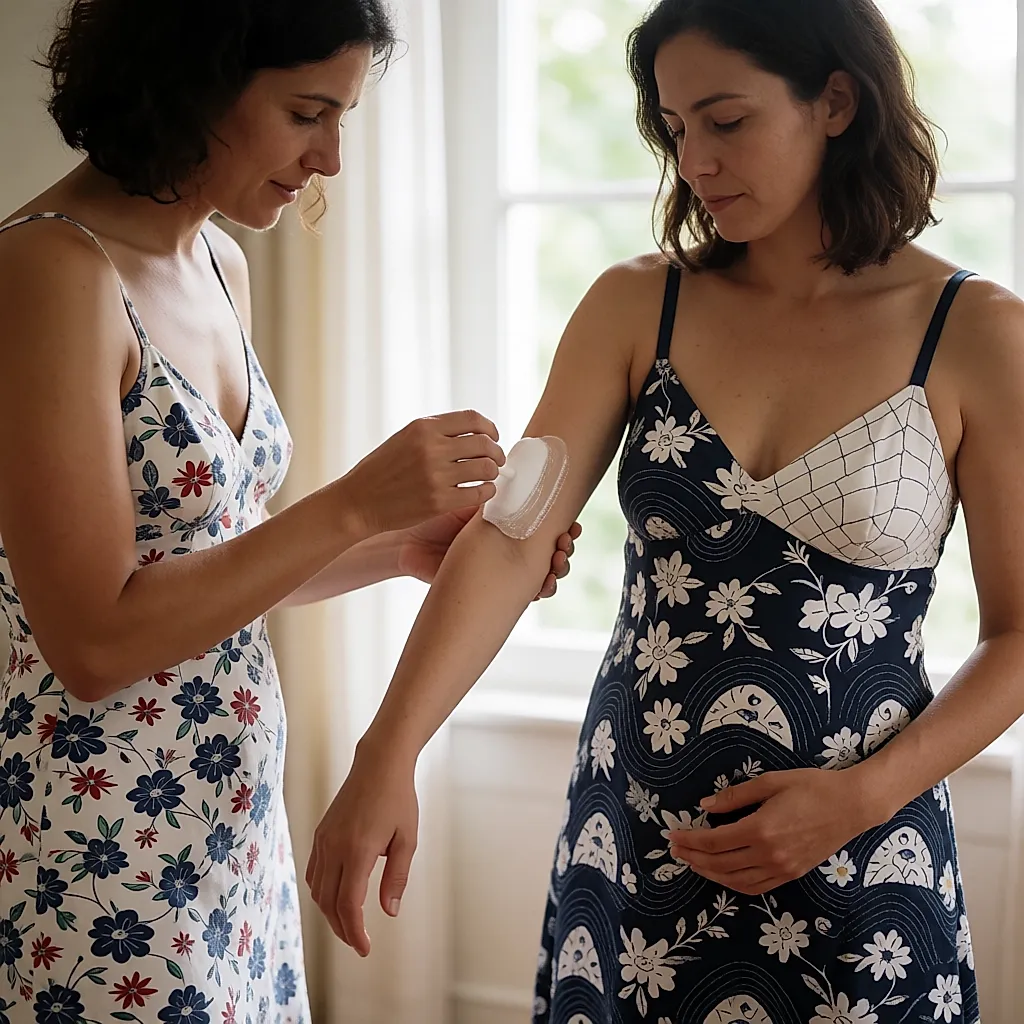
Apply emollient within minutes of getting out of the bath, while skin is still warm: that's when it best helps to hold in water. A rich texture for winter, a more fluid one for summer.
For hair, there's no need to hunt for a formula with twelve active ingredients. A mild shampoo with a short ingredient list and a low-foaming surfactant at the top does the job. The Cosmos Organic label is a useful guide: it sets rules on the share of organic ingredients and the permitted preservatives. Don't confuse organic with allergen-free: fragrance is often among the first suspects in cosmetics.
Fragrance can wait
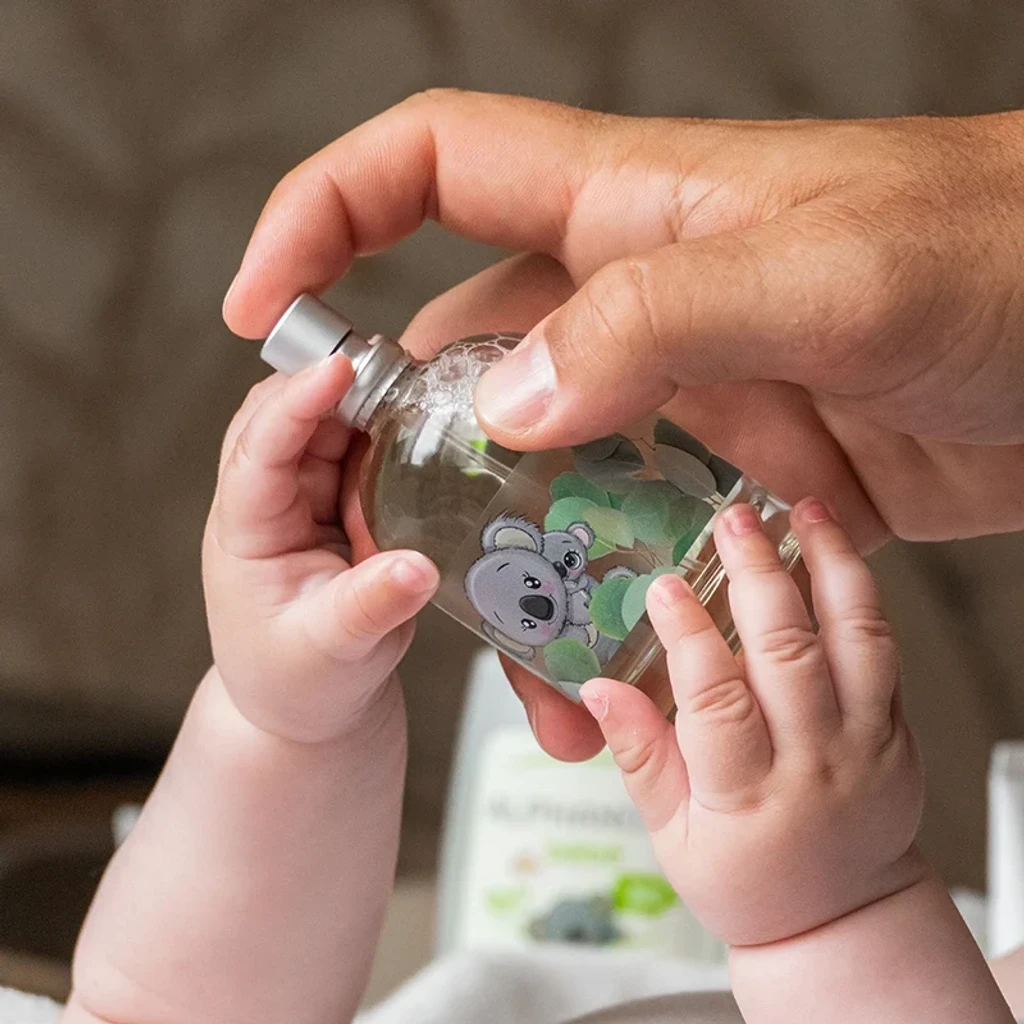
Alcohol-free baby fragrance looks lovely next to the cot. Except any fragrance, even a light one, can contain allergens. For the first few months, you can easily do without. After that, an alcohol-free version applied to the back or hair rather than the face is the most cautious option.
What it costs
As a rough UK guide, expect to pay around:
- Oleo-calcareous liniment, 500 ml: £8 to £15, a little more for an organic version.
- No-rinse cleansing water, 200 to 500 ml: £8 to £18.
- Bath oil or wash: £8 to £18.
- Mild shampoo, 200 ml: £7 to £15.
- Emollient, 200 to 400 ml: £10 to £25.
- Alcohol-free baby fragrance: £18 to £35.
What changes the total: certification, size, whether the product is fragranced, where you shop and which city you are in. Pharmacies and health-and-beauty retailers are usually the priciest, although you get advice. Brands sold in supermarkets often cost much less for a comparable formula, and brand websites regularly offer family sizes or refills.
Sources
- NHS, baby skin care — nhs.uk
- MHRA, cosmetics regulation — gov.uk
- Cosmos Standard, organic cosmetics certification — cosmos-standard.org
- Mustela, baby toiletries product pages — mustela.com
- Cattier, mild baby shampoo — cattier.com
- Health Canada, talc in cosmetics — canada.ca
- ANSM (France), cosmetics and health products — ansm.sante.fr



Comments
Your opinion matters: rate the article, react and reply to comments.
Comments are moderated; AI-assisted comments are flagged. Text emoticons (8-), :-), <3…) are automatically shown as images.