

Personal styling: make the most of your image
A reader emailed me on Tuesday: 'I have an interview on Thursday and nothing to wear.' We talked for twenty minutes — and honestly, she didn't need a new wardrobe, just an outside eye on what she already owned. That's exactly what personal styling is: not a transformation, a fine-tuning. We don't start from zero; we spot what works and dial it up.
What is personal styling, really?
Proper image advice doesn't ask you to become someone else. It looks at who you are. Which colours lift your complexion instead of dulling it — and you see it straight away when a light drape is held under your face: your skin either looks rosier, or grey. There's no grand theory to it, just observation. Which cuts follow the natural drape of your figure, which fabrics hold you without making you slump. It sounds obvious, but you can't see it on your own.
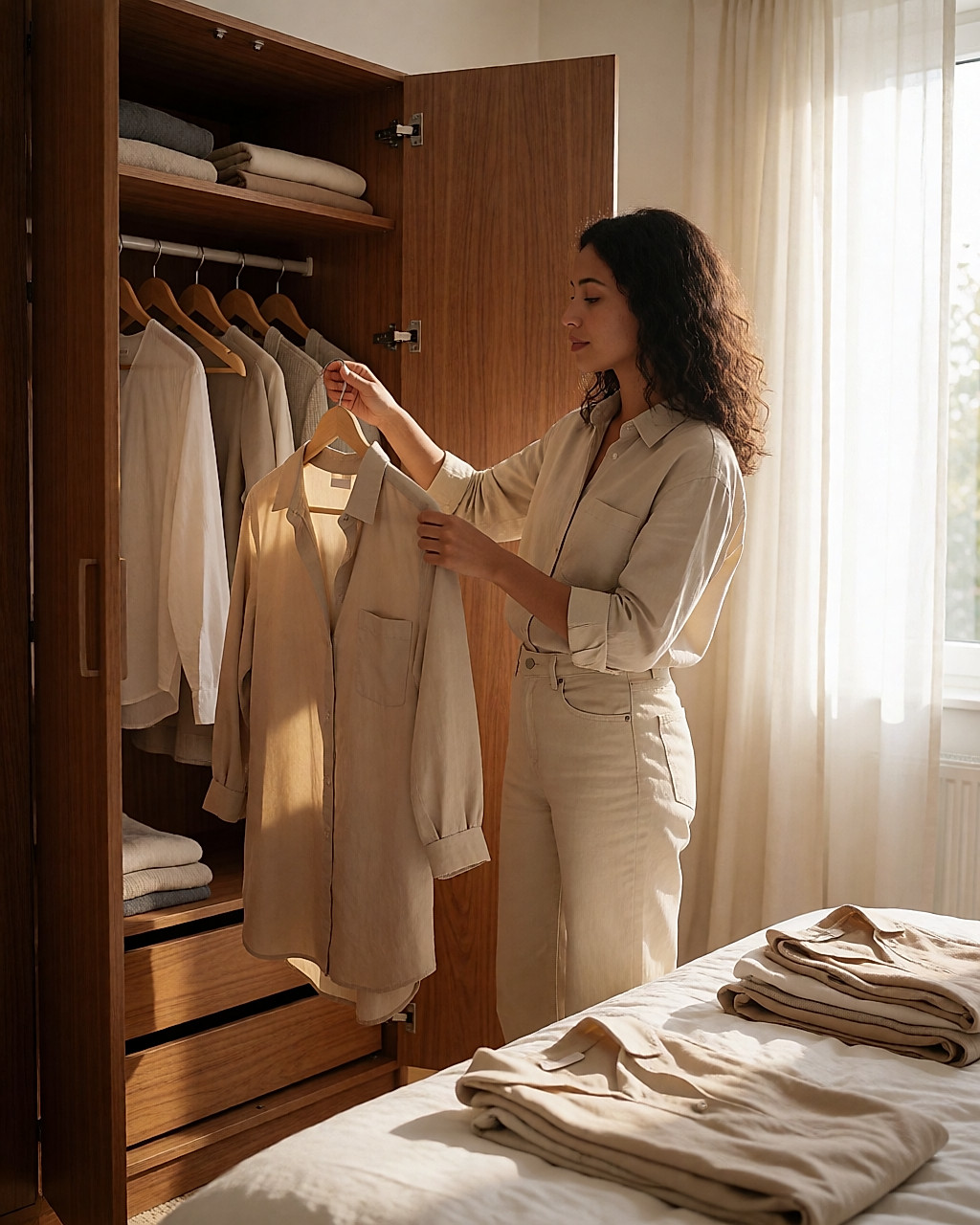
The profession began in the United States, where personal styling took root long before it reached the UK. But the practice itself has changed: we no longer try to fit everyone into the same mould. We start from your real life — your job, your hours, childcare, your budget. Which means the dream session that assumes you have five hours free on a Wednesday afternoon is not the norm.
How does a session work?
The first appointment is chatty, and that's normal. You're asked what you wear when you feel good in your own skin. What you stopped wearing, and why — the answer often says more than the question. What blocks you in front of the wardrobe at 7.40am, when you have to leave and nothing works. The consultant observes, notes, doesn't judge. It's amazing what people admit in front of someone who doesn't pull a face.
Next comes colour work: drapes close to the face, daylight if possible, and you look. Then cuts, fabrics, fittings — not to reinvent everything, but to understand why one piece suits you better than another.
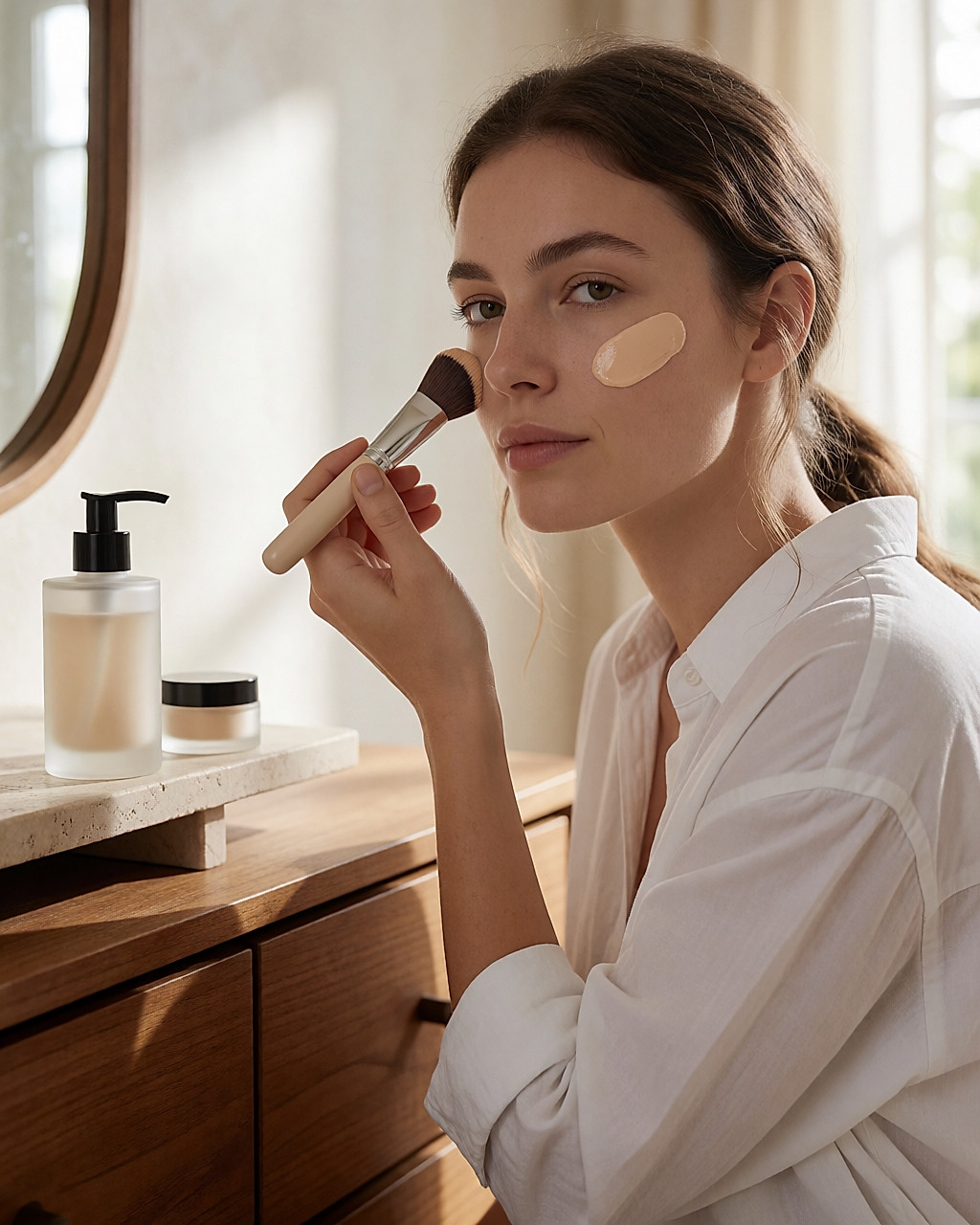
On the beauty side, we often start with the complexion, because it sets the tone for everything else: texture is what causes problems. The formula matters more than the brand: a light fluid for combination skin, a richer cream for dry skin, a powder texture if you can't bear the feel of a film on your skin. The technique that changes everything comes down to three principles: little product, tap, blend. Poorly applied texture shows; well applied, it goes unnoticed.
If you're buying a new foundation, look at the end of the product's life: refillable cases, glass bottles, cardboard without extra packaging. And check the formula — the COSMOS standard sets rules for the share of organic ingredients and processing, with two levels, Organic and Natural. It is not a public label; it is a private specification checked by certifiers, including Ecocert. Sometimes a compromise is necessary to find your exact shade — in that case, choose a refill over a new bottle.
For hair, the same logic applies: start with the nature of the hair — curly, fine, thick — before talking trends. Then there's posture: shoulders, gaze, pace of speech. That's often what leaves the strongest impression, and what we talk about least.
Wardrobe before statement piece
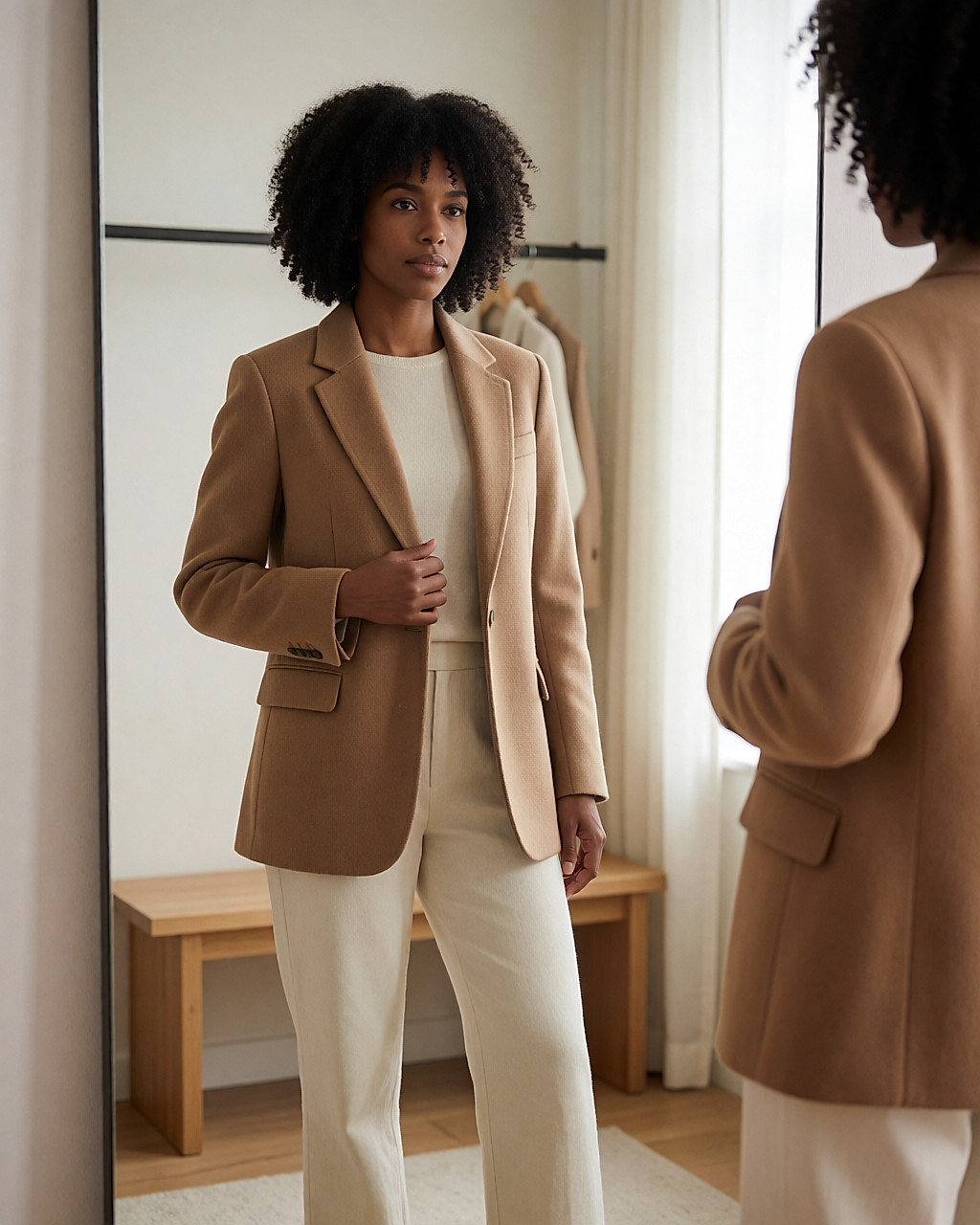
The classic trap is buying one strong piece that goes with nothing. The kind of impulse buy that ends up at the back of the drawer because you don't know what to wear it with, let's be honest. It works better in reverse: start with what you already wear, keep around thirty pieces that work together, then fill the gaps. Two fabrics that speak to each other, a clean drape — and you have ten outfits instead of three. Prints are the bonus, not the base.
What personal styling will not do, so you don't pay for nothing:
- It does not replace psychological support. If you're struggling, an image consultant is not a psychologist — and good ones say so themselves.
- It won't make you love a colour you hate. You negotiate; you don't force it.
- It won't make an uncomfortable piece comfortable. If you can't sit down in it, it's a no.
Budget
Prices vary widely depending on format, city and the consultant's experience. Typical UK figures: a one- to two-hour session, colour diagnosis or wardrobe edit, is around £80 to £200. A half-day covering colour and body shape is between £200 and £400. A full day with personal shopping starts from £500, and considerably more in London or with a highly established consultant.
What changes the price: virtual sessions are often cheaper, whether shopping is included, follow-ups in the package, and the consultant's reputation. Add treatments if you go to a salon or beauty counter — a cut, colour or make-up diagnosis is charged separately, and again the price depends on hair length, the range chosen and the upkeep involved.
Where to look? Hairdressers trained in consultations, department store beauty counters that offer make-up diagnosis, fashion schools, platforms for independent stylists.
And one hidden cost that often goes unmentioned: the wardrobe itself. A session is pointless if you leave with fifteen pieces bought straight after. Edit first, then add one or two pieces per season — and look at second-hand for basics, where value for money is often best.
So what's the point? You don't need to change everything; one addition per season is enough. And if you come away from a style session with just one certainty — your shade, your trouser cut, the colour that photographs well — you've already won.
Sources
- ADEME (France) — List of official environmental labels and their scope, label guide.
- Ecocert — COSMOS standard: certification for natural and organic cosmetics, framework and Organic / Natural levels.


Comments
Your opinion matters: rate the article, react and reply to comments.
Comments are moderated; AI-assisted comments are flagged. Text emoticons (8-), :-), <3…) are automatically shown as images.