
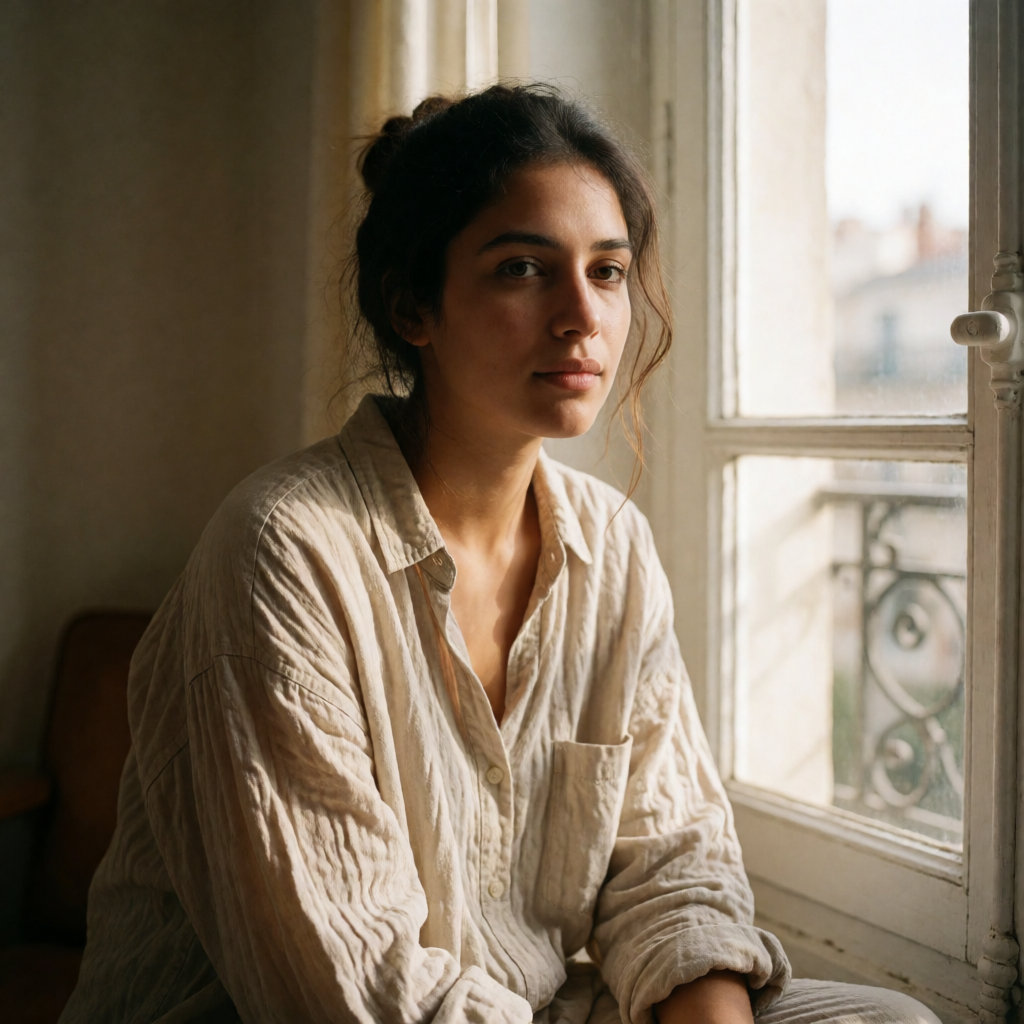
A year ago, beauty still swore by restraint. Almost bare skin, barely tinted lips, as little product as possible — and everyone seemed to agree. Then something shifted. On the catwalks and on the commute, eyes are being redrawn, lips are owning their colour, blusher is clearly visible.
But the skin itself hasn't given up on glow. Luminous, cared for, as if prepped for twenty minutes even when you've sometimes done the bare minimum. That's the sophisticated glow: on one hand, Korean rituals in fine layers; on the other, make-up that no longer apologises for existing. Not a step backwards — a synthesis.
Why this contrast is arriving right now
Tiredness, probably. No-makeup has a flaw we're finally daring to say out loud: it only works on skin that's already flawless. In other words, it excludes plenty of people from a trend that's supposed to be 'natural'.
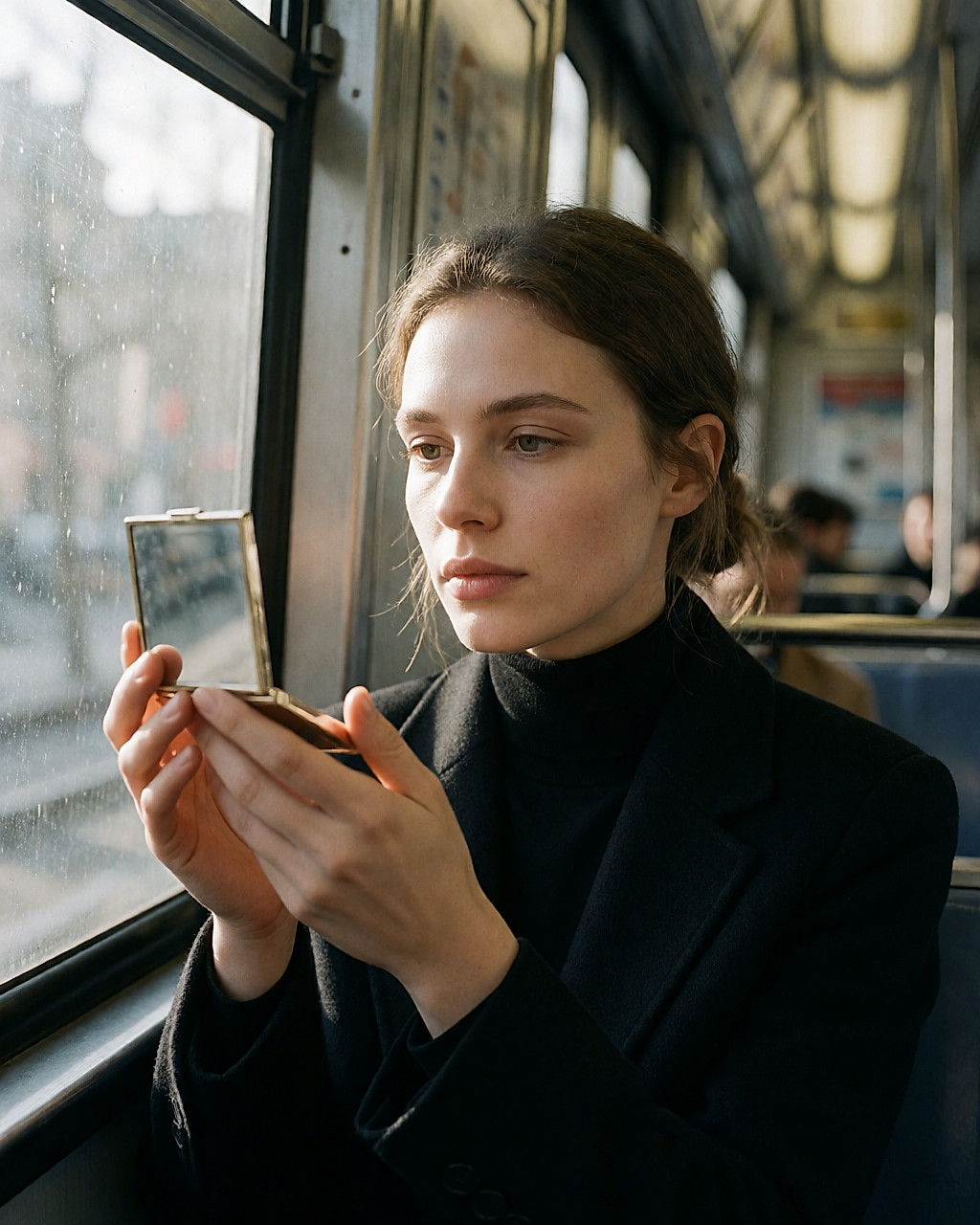
K-beauty has shifted the focus. Less camouflage, much more preparation. We no longer hide the skin; we make it comfortable — and only then do we play with colour. Hence the mix you see everywhere: a considered base, and on top, beauty that's unapologetically done.
Skin first: the ritual that creates the glow
The step that changes everything isn't one more product. It's the order you apply them in.
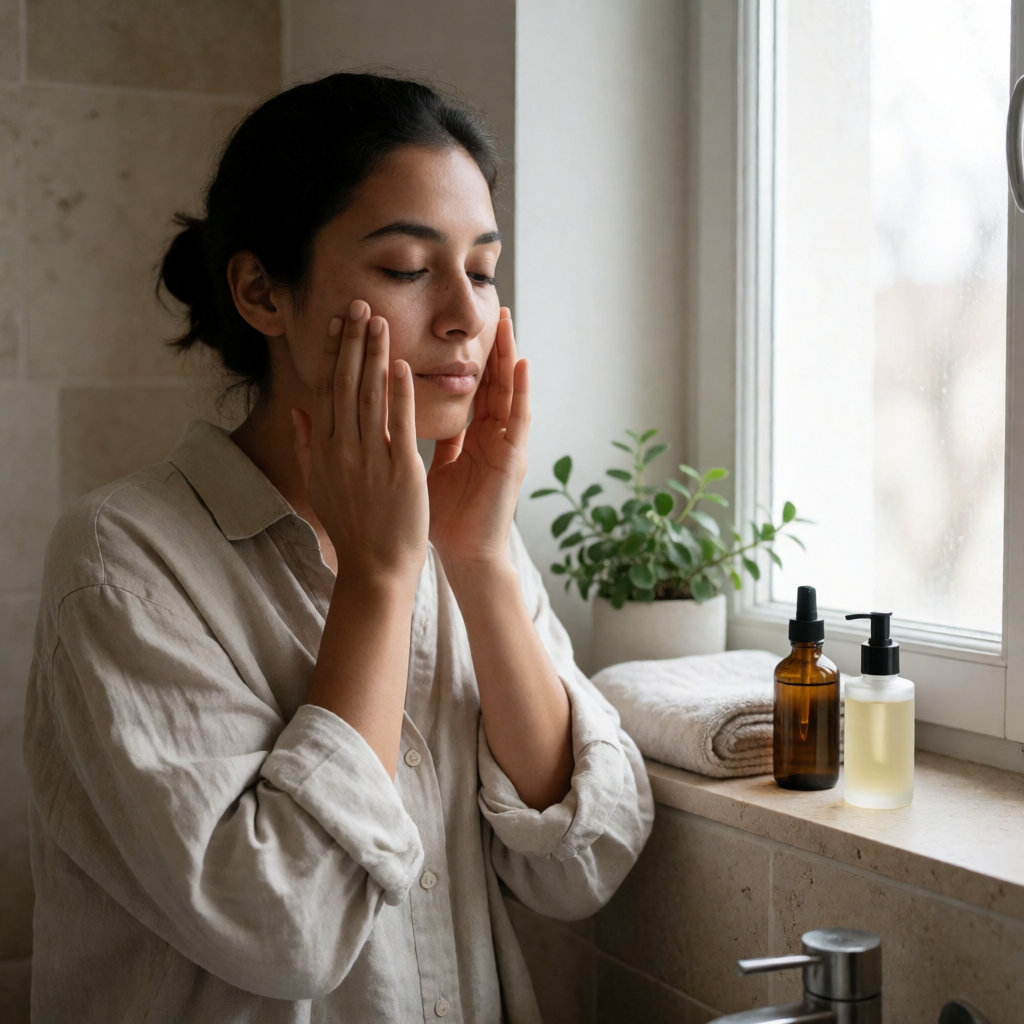
On cleansed skin, layer fine layers rather than one thick layer: a lotion or essence on skin that's still damp, a serum, then a cream to seal it all in. Let each step sink in for about thirty seconds before the next. The result: light comes from the skin, not from product piled on top.
In terms of texture, the logic stays simple: the more fluid the formula, the earlier it comes in the ritual. Essence prepares, serum concentrates, cream holds it in. And sunscreen remains the last step in the morning, always — it's what protects the work you've just done.
An honest caveat: not everyone needs ten steps. If your skin is oily, piling on five moisturisers will mostly make you shine in the wrong places. Three well-chosen layers are often enough.
Make-up that is unapologetically worn
This is where the contrast comes in. On prepped skin, you can afford richer, more pigmented, creamier textures — and that's exactly what changes everything when it comes to wear.
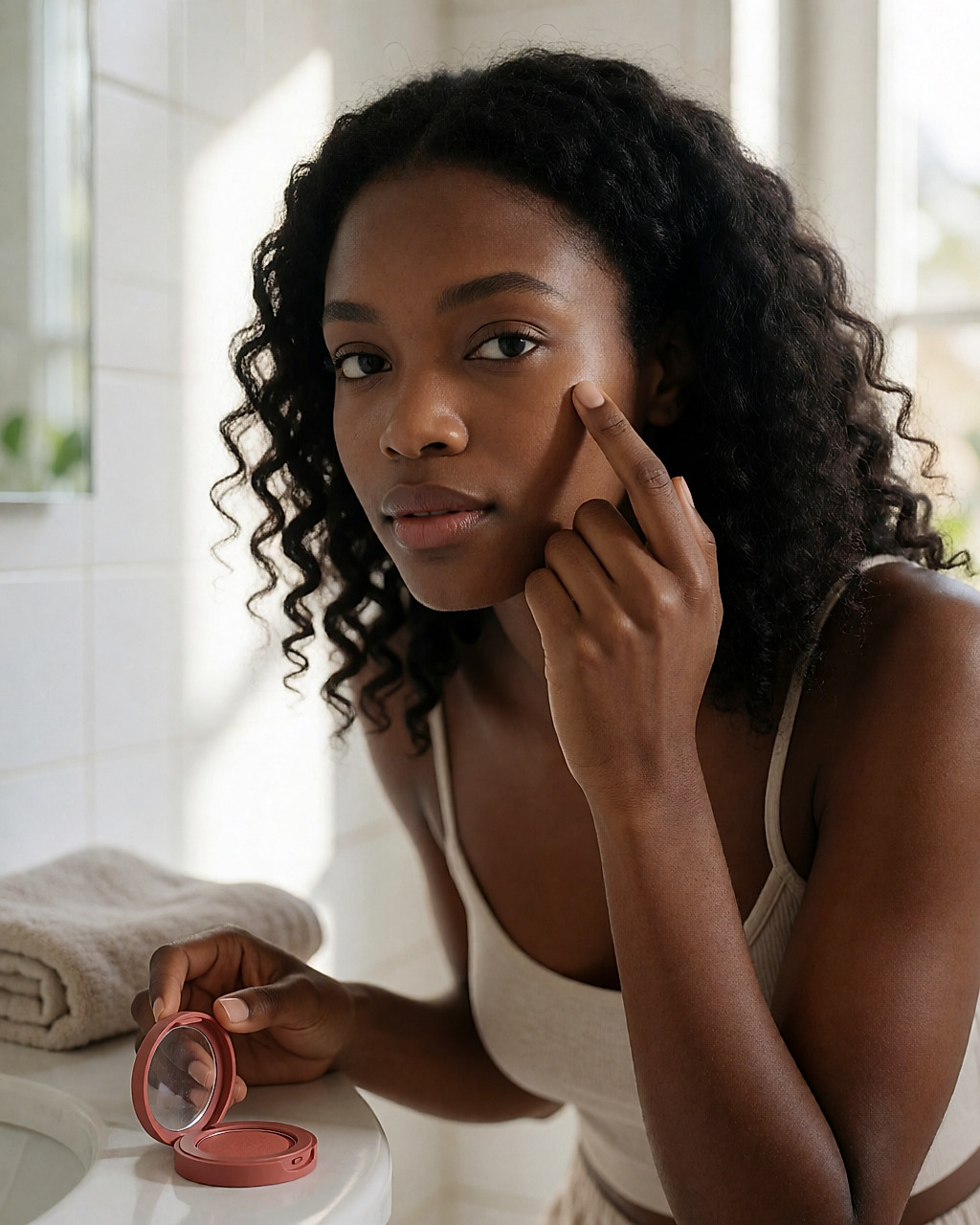
Cream blusher, for example, blends better on a luminous base than powder does on a matte base. The move: tap it on with your fingertips along the top of the cheekbones, sweeping up towards the temple. Lips follow the same logic. A tinted balm or a satin-finish lipstick wears better than a very dry matte on well-hydrated skin.
For eyes, no need to pile everything on. A clean eyeliner flick, or a cream eyeshadow smudged with a finger, is enough to define the gaze. The rest of the face breathes — and that's exactly what makes make-up visible without feeling heavy.
Making it work for your real day
You've got ten minutes, not an hour — so how do you do it?
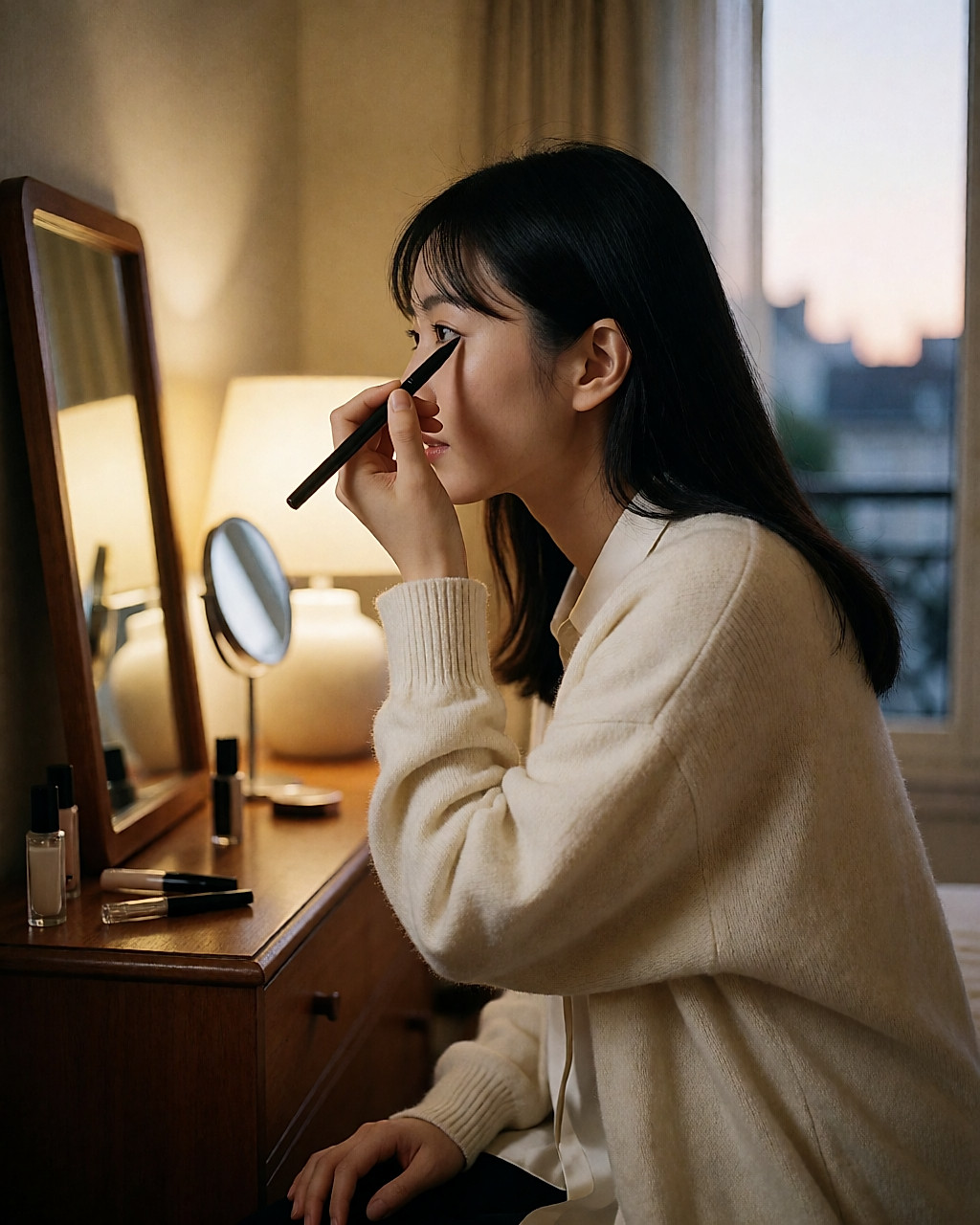
A rushed morning: quick cleanse, two layers of hydration, sunscreen, a little cream blusher and a tinted balm. You've already got glow and a base level of colour.
On an evening out: start from your daytime base, add an eyeliner flick and top up the blusher. No need to redo everything.
The trap to avoid: don't mix a very matte base with very pigmented make-up. The glow + colour contrast works when the two answer each other. If your skin is heavily powdered, cream blusher will patch and eyeshadow will look harsh. Always keep a little light on the cheekbones and forehead!
Choosing formulas that hold up
A label doesn't create performance, but it does help avoid a few false promises. Standards such as COSMOS Organic or Cosmébio set rules on the share of naturally derived and organic ingredients, and limit the list of permitted ingredients — checks are carried out by an independent body, not by the brand itself. What it doesn't guarantee, however, is efficacy on your skin, or a texture that's pleasant to wear.
On packaging, look for refills, solid formats, waterless formulas, bulk, glass or card. And local manufacturing when the information is available, even if it doesn't do everything.
A compromise worth owning: with sunscreen, a formula you'll actually apply is better, even a conventional one, than a 'natural' SPF you forget at the bottom of your bag.
Budget
Prices vary a lot depending on city, range, format and where you shop.
- Lotion or essence: around £8 to £18 in supermarkets or online, £22 to £40 in beauty halls.
- Serum: £18 to £55 depending on concentration.
- Moisturiser: £13 to £45.
- Facial SPF: £10 to £28, often from pharmacies.
- Cream blusher or tinted balm: £9 to £28.
- Facial at a salon: £45 to £100 per session, depending on city and salon.
Solid formats and refills often work out cheaper per use. You'll find all of this in beauty halls, pharmacies, supermarkets, health food shops or on brand websites.
Léna's verdict
Yes, but on one condition: don't treat K-beauty as a checklist to tick off. Keep what works for your skin, ditch the rest without guilt. The sophisticated glow isn't ten products — it's two or three gestures done well, and the right to own whatever you put on top.
Start small: this week, add just one cream product to your usual routine. You'll soon see whether the contrast suits you!
Sources
- COSMOS-standard — The COSMOS Organic standard, accessed 3 October 2026.
- Cosmébio — The labels of French organic cosmetics, accessed 3 October 2026.
- Ecocert Greenlife — Certification for natural and organic cosmetics, accessed 3 October 2026.

Comments
Your opinion matters: rate the article, react and reply to comments.
Comments are moderated; AI-assisted comments are flagged. Text emoticons (8-), :-), <3…) are automatically shown as images.