
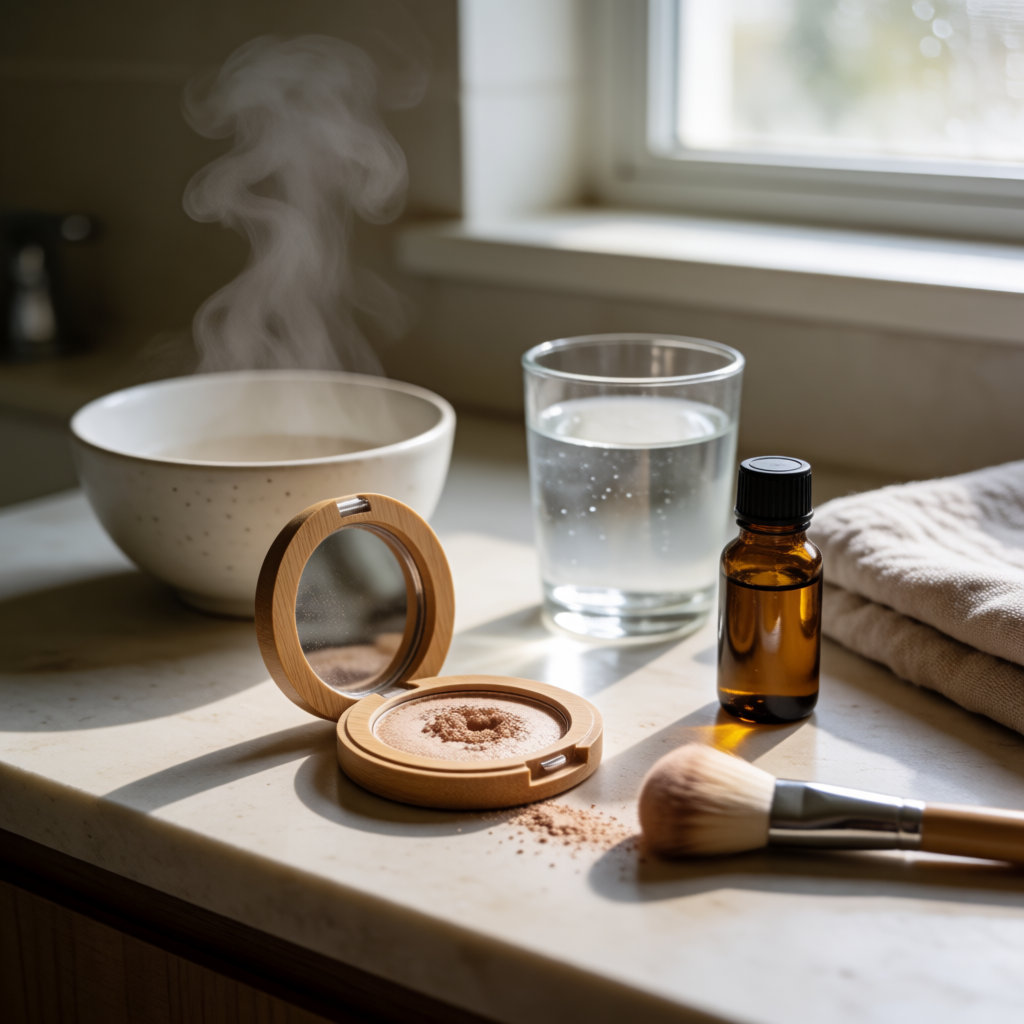
You've already spent that quarter of an hour leaning over the basin, trying to work out where that grey complexion came from. The heating has been on full blast since October, a night cut short by one alarm too many, and a routine that has gone nowhere for weeks. We all know the feeling, and no one has ever solved it with a serum that came out of nowhere.
The truth is that a glow is built with simple habits, not an unlimited budget. Here are six, to pick and choose according to your time, your skin and your mood. Some are well documented, others need a little caution: we'll tell you everything, honestly, because you deserve better than empty promises.
Coconut water: let's put it in its place
First, a clarification, because confusion still crops up on the shelf: coconut water is the liquid inside the nut, not the milk made by pressing the flesh. Two distinct products, two textures, two nutritional profiles — even if they end up side by side on the same shelf.
Nutritionally, it provides minerals and natural sugars, in proportions that vary hugely from brand to brand. But nothing proves it 'detoxifies' anything, and it's important to say so: the liver and kidneys do that perfectly well on their own. It hydrates, and that's already a lot. In practice, we choose it less for its supposed virtues than for its fresh taste after a day that's been too salty.
To choose one, make a habit of reading the label before looking at the packaging. Organic (Soil Association or EU organic logo), no added sugar, no flavourings. Natural coconut water already contains sugars; that's normal, not a flaw. As for packaging, a carton is lighter in your bag, even though glass is easy to recycle.
Facial steam: a ritual to keep in check
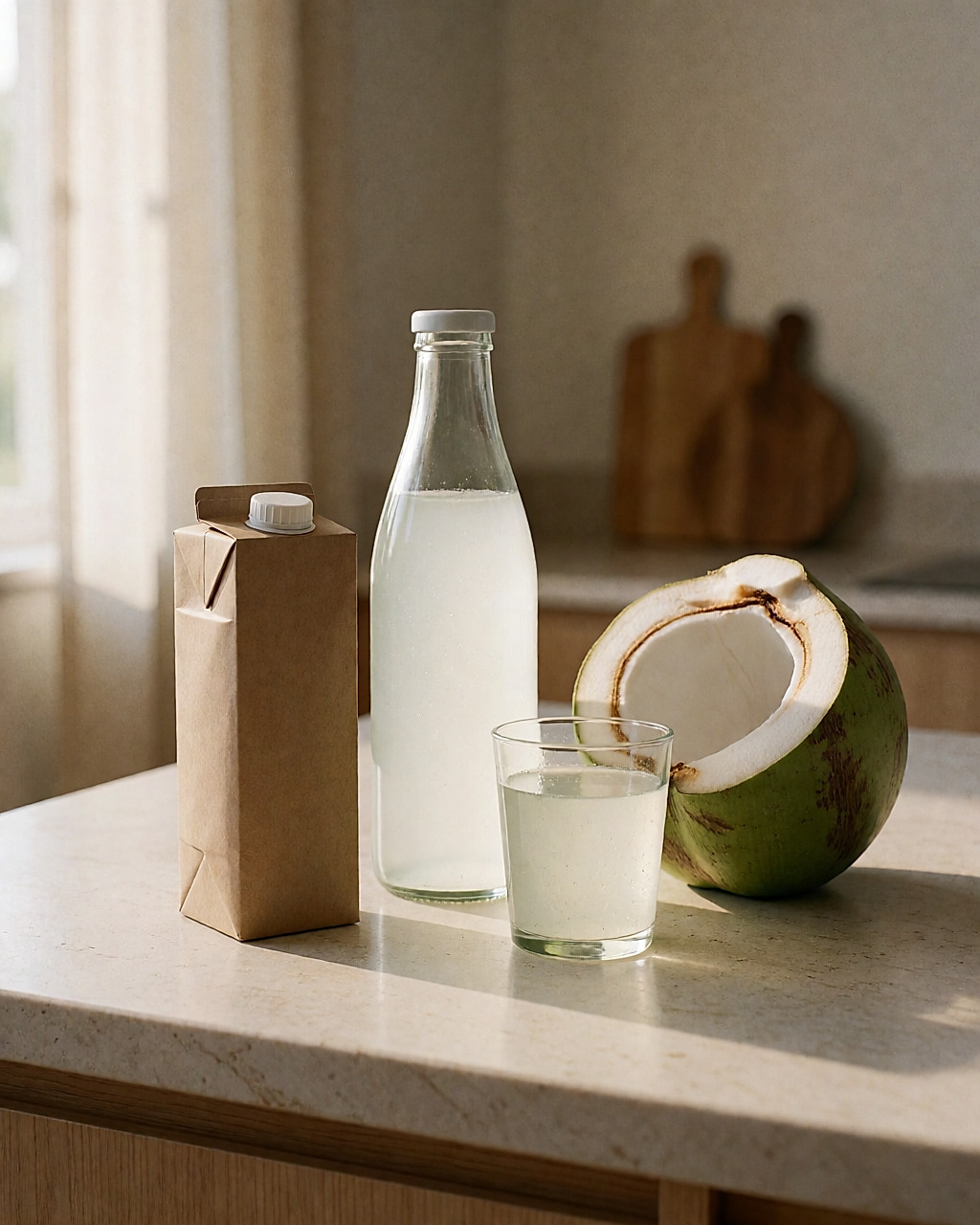
The ritual is old and has passed through generations: steaming water in a bowl, a towel over your head, your face held at a sensible distance. The steam softens sebum and temporarily stimulates skin circulation — your complexion flushes for a moment and your skin looks more supple. But no, it does not 'open the pores': pores neither open nor close, whatever some rather insistent rituals claim.
Boundaries matter more than enthusiasm. Ten minutes is enough, once a week, at 20-25 cm from the bowl to avoid burns. And for reactive skin, it's a no: if you have rosacea, broken capillaries or an eczema flare-up, skip it, as heat is a known trigger. After steaming, go for a hydrating mask — definitely not an exfoliator, as your skin has already been through enough.
A ready-made steam bath is still available in beauty halls and health food shops (such as Dr. Hauschka, with nasturtium and witch hazel). Documented, not tested here — we'd rather tell you upfront.


A mineral highlighter for radiance without a caked look
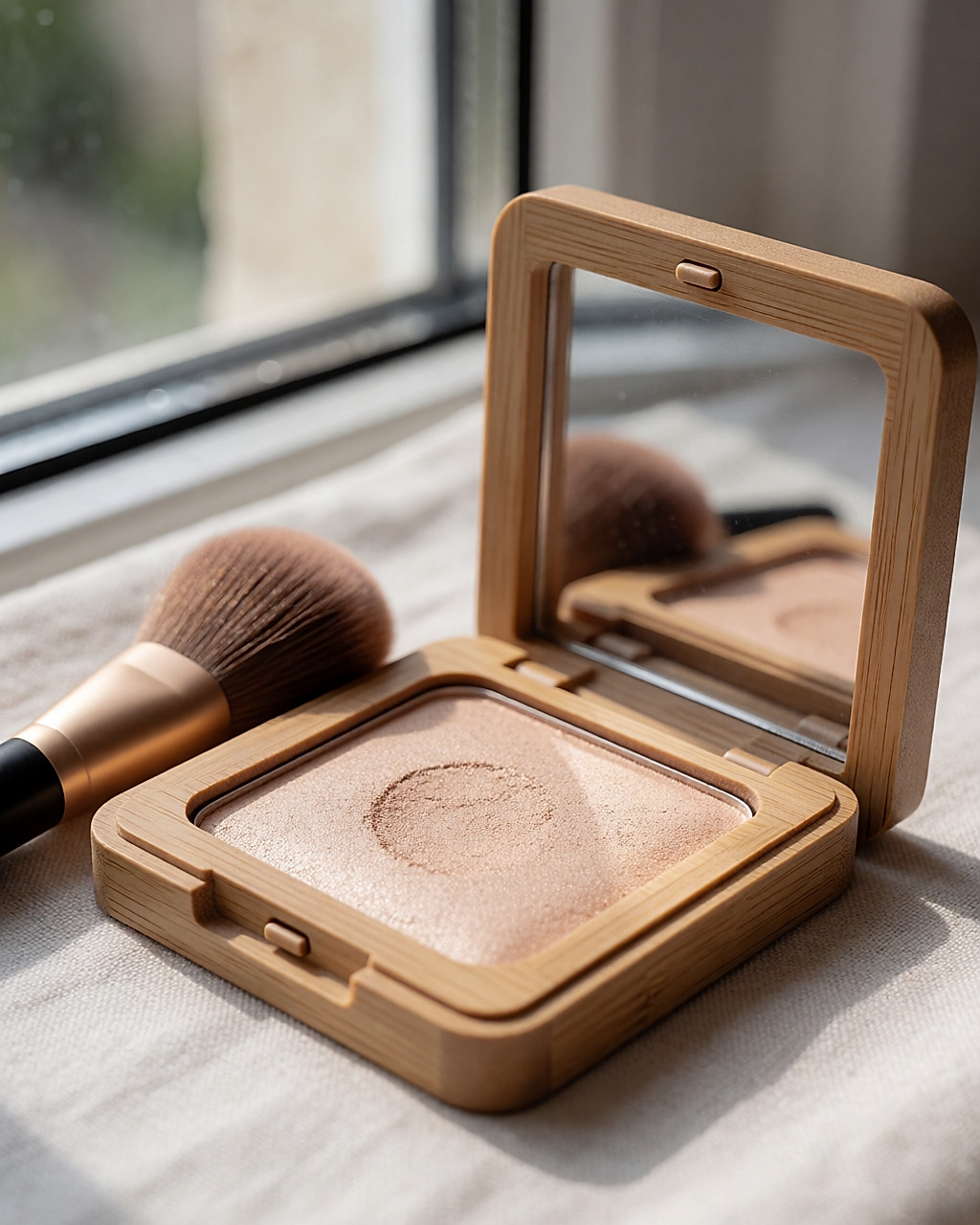
Mineral loose powder keeps a real advantage that creamier textures don't: a fine finish that blends in without smothering the skin. Applied with a brush on the cheekbones, brow bone and Cupid's bow, it catches the light where your complexion looks flat. Three well-placed touches are better than a generous layer: all over the face, the effect quickly turns glittery, and that's not the aim.
On the product side, Zao Makeup's refillable bamboo compact ticks several boxes we like: refillable powder, bamboo casing, Cosmos Organic certification — a private certification that genuinely governs the proportion of natural and organic ingredients in the formula. A credible compromise for a mineral highlighter, with the advantage of not having to buy the whole compact every time. Its strength is clearly targeted application; in terms of versatility, it's not a product to put everywhere.
Deep cleansing: approach the brush with caution
We should flag this, because many readers ask us about it: some long-standing cleansing-brush brands have ceased trading, and their replacement heads are mostly found second-hand — hardly ideal for hygiene. If a device appeals, look instead at silicone brushes, preferably new, or stick to manual cleansing: two gentle cleanses are better than one full-on strip.
The rule applies to all brushes, even the gentlest: once or twice a week maximum, gentle head, damp skin, never pressing. Beyond that, you damage the skin's hydrolipidic film and your skin becomes reactive. The game-changer here is moderation — not the power of the device.
Vegetable juice: don't overestimate it
A pressed juice is water, vitamins, minerals and very little fibre: the pulp goes in the bin, even though it does all the work in a whole vegetable. Yes to a large glass now and then, when you fancy a fresh boost — no to replacing the vegetables at lunch. The NHS 5 A Day campaign recommends at least five portions of fruit and vegetables a day, and a juice, however pretty, doesn't tick all five boxes on its own.
If you buy ready-made, keep the habit of comparing labels: some juices labelled 'vegetable' contain far more sugar than you'd expect. Organic juices in glass bottles, with no added sugar on the label, are a safer option — and glass is easy to recycle.

A multi-purpose oil, if your skin can take it
A few drops on damp skin after a shower, as a pre-shampoo mask, at the end of your routine on your face if your skin feels tight — plant oil plays several parts without needing four different bottles. Texture matters more than scent: jojoba is close to skin's sebum, argan is richer and more comforting in cold weather.
Be careful, though: a rich oil is not without risk on acne-prone skin. Patch-test in the crook of your elbow for two days before using it on your face; a simple habit that saves many unpleasant wake-ups. For the bottle, choose glass, a Cosmos Organic or Soil Association certification, and just one oil — four 30 ml pots will never serve you as well as one carefully chosen bottle.
Express version, for a busy week: an eight-minute facial steam on Sunday evening, a hydrating mask, and highlighter on your cheekbones in the morning. Three steps, ten minutes, no promise of new skin — just a routine you can stick to.

Budget
Typical UK price ranges:
- Organic coconut water: £2 to £5 for a one-litre carton in supermarkets or health food shops; more expensive in glass bottles.
- Facial steam: £15 to £30 for a ready-made steam bath (beauty halls, health food shops); a few pence for a homemade version with a simple bowl.
- Mineral highlighter: £15 to £40; the refill often costs half as much as the compact.
- Cleansing brush: £60 to £250, heads or refills £10 to £30, from beauty retailers, online, sometimes pharmacies.
- Organic vegetable juice: £2 to £5 for 500 to 750 ml, in supermarkets or health food shops.
- Organic plant oil: £10 to £30 for 100 ml, with argan still more expensive than jojoba.
These ranges vary with format, certification and, above all, where you shop: supermarkets cut prices on juices, while beauty retailers make up for it on devices. On budget, always compare the refill with the full-size before you get to the till — the difference can be surprising.
Sources
- NHS 5 A Day — 5 A Day portion sizes, NHS.
- Cosmos Organic: definition and scope of the label, Cosmos-standard.
- Zao Makeup, refillable mineral highlighter, official site.
- Dr. Hauschka, steam bath for combination to oily skin, official site.




Comments
Your opinion matters: rate the article, react and reply to comments.
Comments are moderated; AI-assisted comments are flagged. Text emoticons (8-), :-), <3…) are automatically shown as images.