
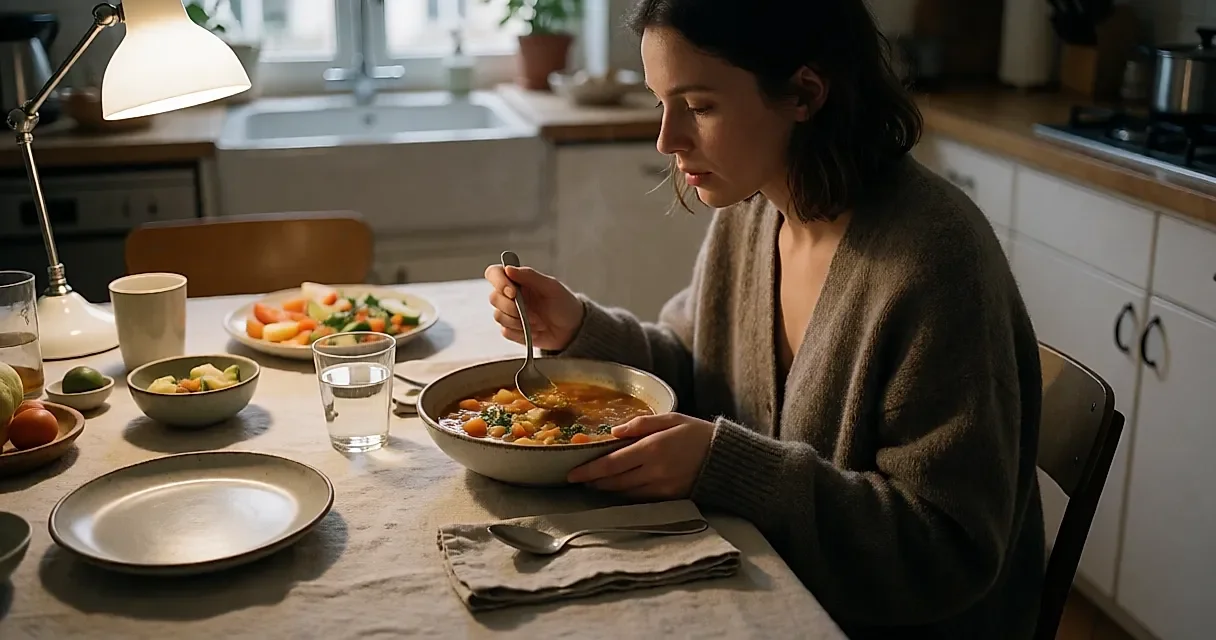
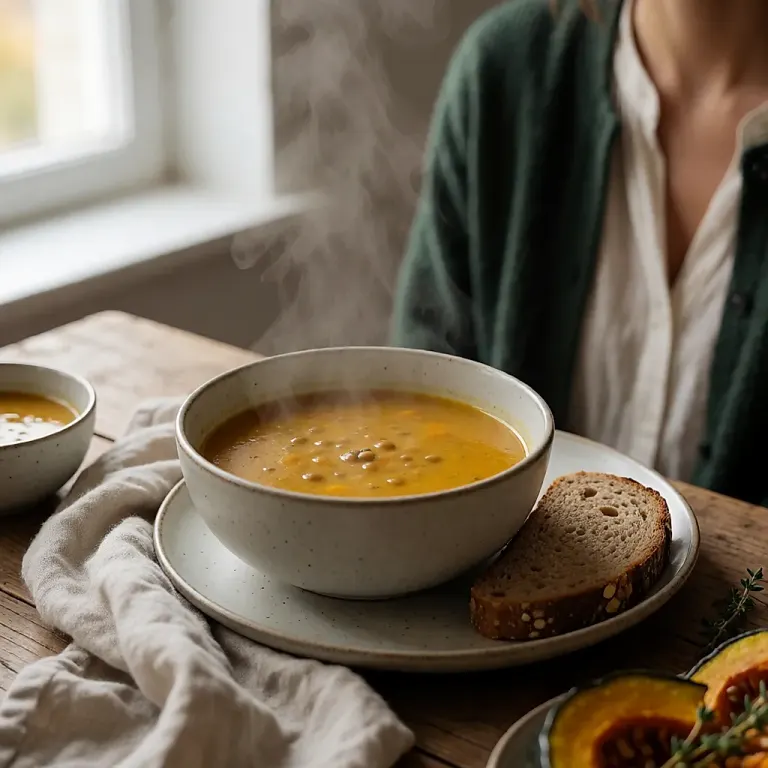
A bowl of vegetable soup is not a dinner. It's an excellent starting point, and that already counts for a lot. The real question isn't how many ladles you pour, but what you put beside the bowl. That's where the balance is decided, far more than in the size of the plate.
What soup does well
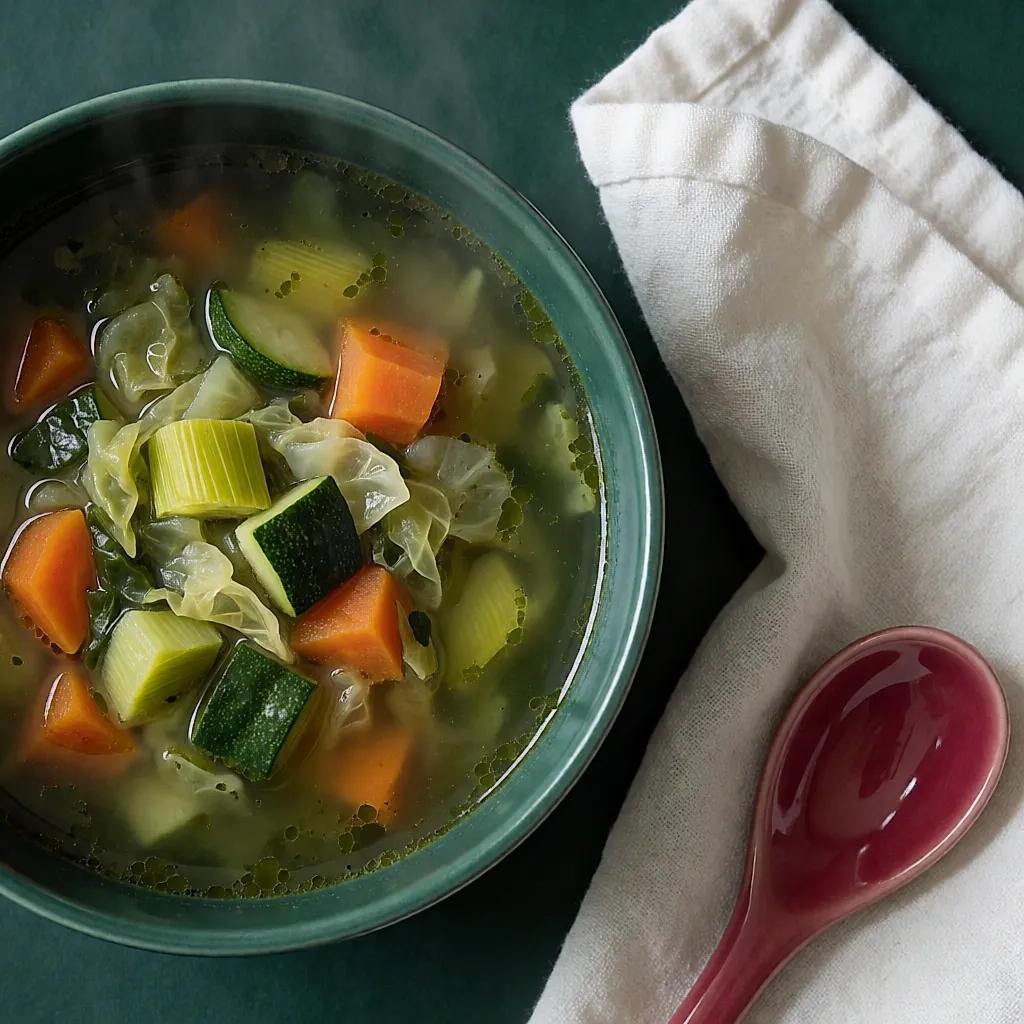
A bowl of homemade soup is, first of all, a simple way to add vegetables to a meal. Carrots, leeks, courgettes, cabbage: they bring fibre, water, vitamins and minerals. On a weeknight when you don't feel like cooking, it's an accessible, economical gesture, and it has the merit of existing.
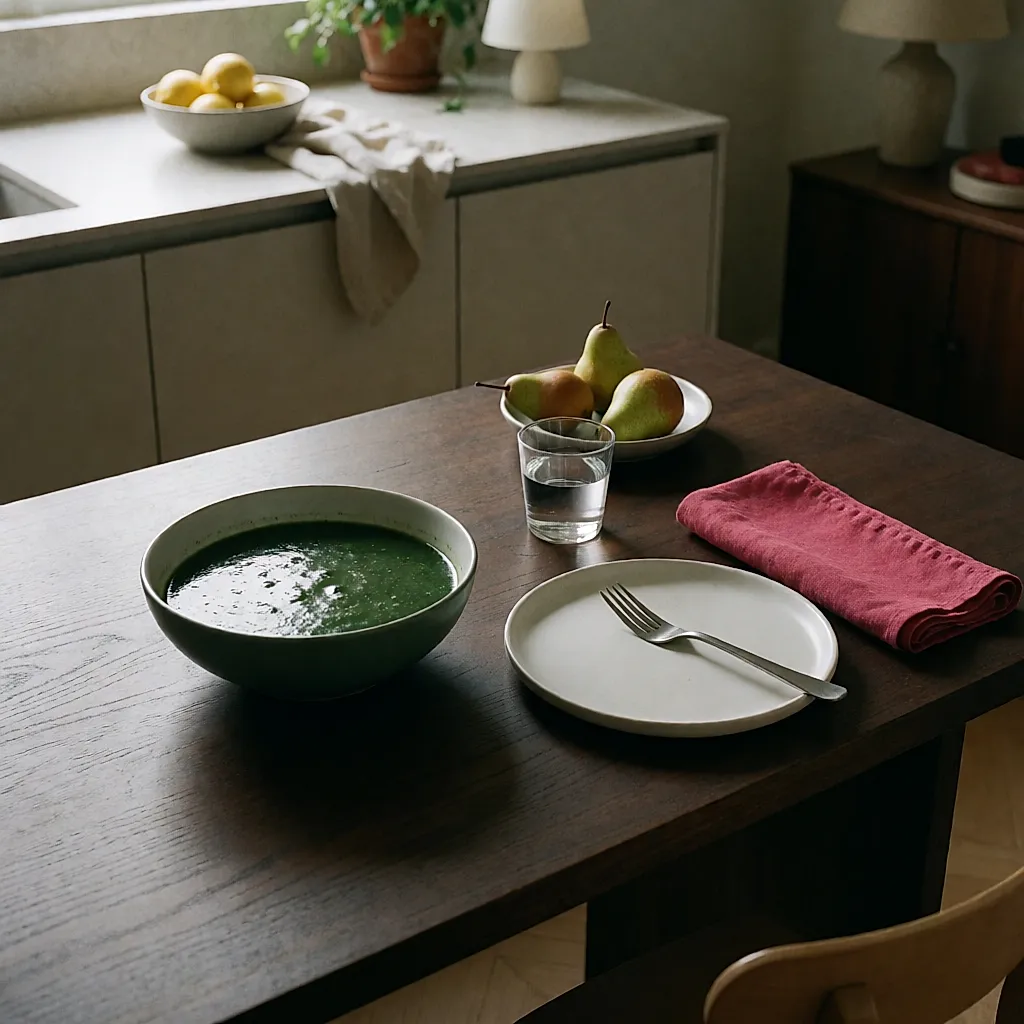
But a vegetable, however green, is not a protein. Soup mainly brings water and fibre: it fills the stomach, not the day's needs. A dinner that comes down to a bowl of blended broth can pass perfectly well at the time, then let a quiet hunger return two hours later, just as you close the laptop. It's not about willpower, just composition.
The bowl is not the meal
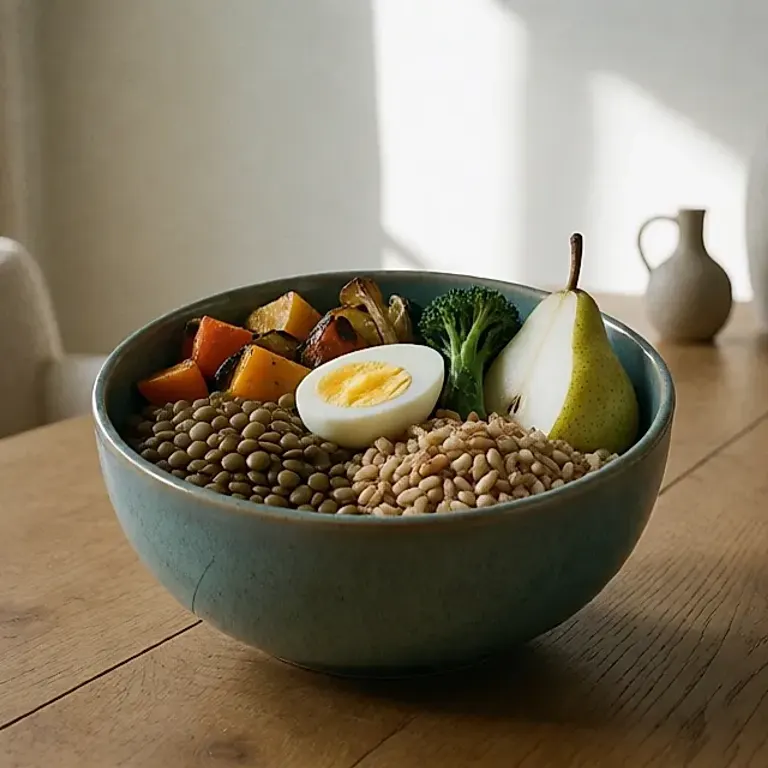
A meal, even a light one, benefits from bringing together several food groups. Vegetables, yes; but also a source of protein, a starchy carb and a little fat. In the evening you can lighten the quantities — not remove the categories.
What does that look like on the plate? An egg, some quark or cottage cheese, a slice of ham, fish, tofu or a handful of pulses. For carbs, a slice of wholemeal toast, a few potatoes or a small portion of rice is enough. And a drizzle of olive or rapeseed oil, for fat-soluble vitamins and flavour. Nothing spectacular, but it's what turns a bowl into a meal.
What to put next to it
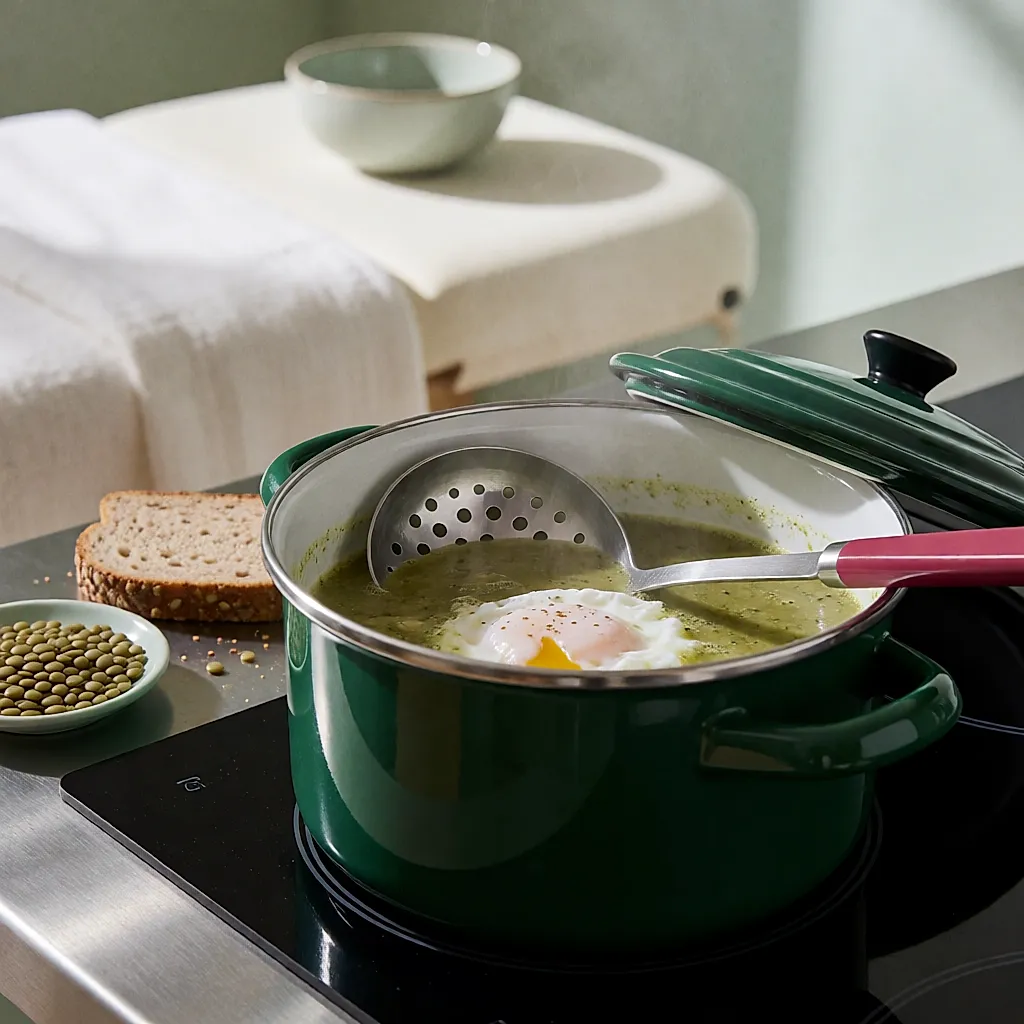
The simplest is the egg. Poached in the soup for the last three minutes, it adds protein and a yolk that binds everything together. You can also cook it separately, soft-boiled, and mash it onto toast. In practice, it's the quickest compromise between the improvised dinner and the dinner that holds.
Quark or cottage cheese plays in the same category, with a softer texture: a plain portion, lifted with herbs, lemon or seeds, next to the bowl rather than in it. And pulses — lentils, chickpeas, beans — deserve their place: a small tin, rinsed, added to the soup or served alongside, brings plant protein and fibre. You can put them on the menu regularly, too, not just on the Monday you feel virtuous.
Quantity isn't the right battle
You can pile up ladles without settling the question. A big bowl of soup is still a big bowl of vegetables: the volume fills you up for a while, but a liquid meal often doesn't last as long as a solid plate of the same content. It's not an absolute rule, more an everyday observation, to check for yourself.
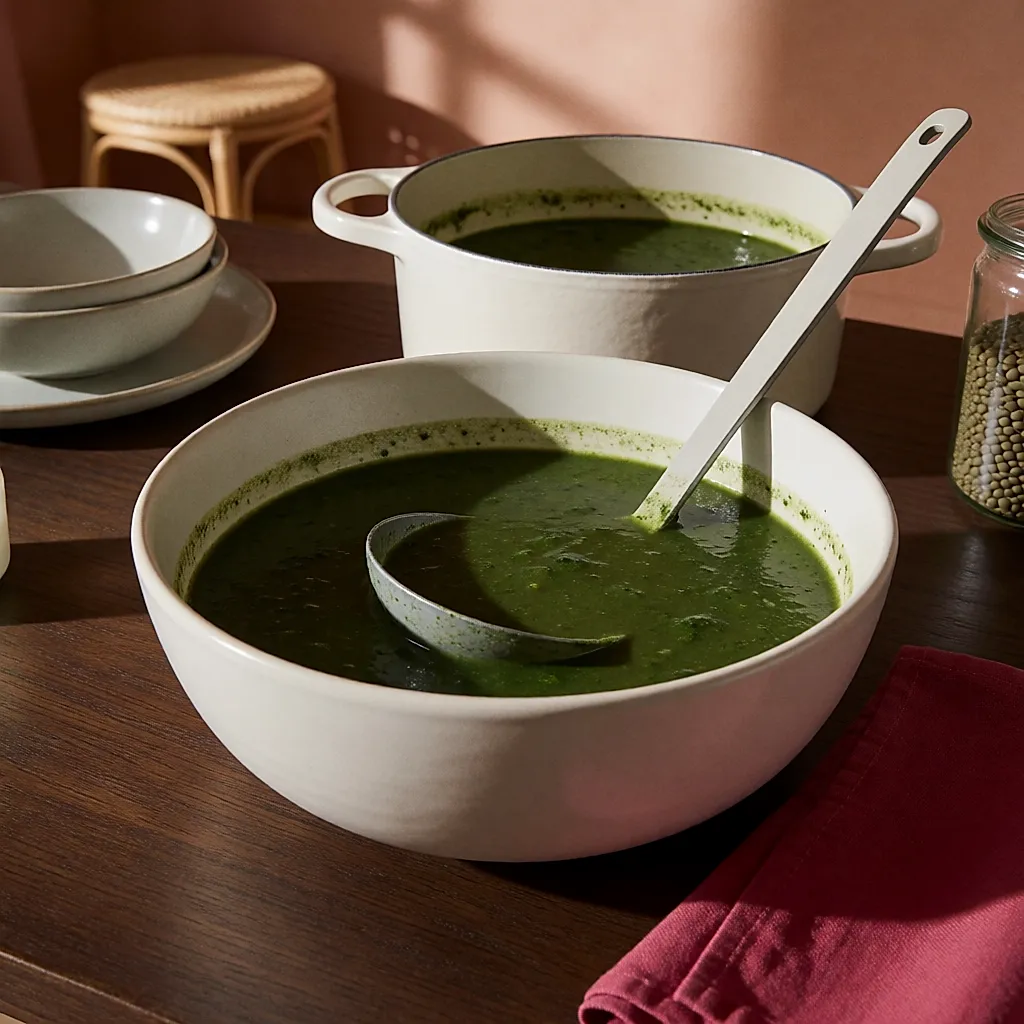
What we do know is that composition counts. What we don't yet know precisely is the ideal split for each person: the guidelines set directions, not a template menu. In practice, remember this: a bowl of soup + a source of protein + a carb or a pulse changes everything, without adding complication.
Compromises for the evening
Homemade soup takes time. On Sunday you can cook a big pot and keep it for a few days in the fridge, or freeze it in portions. Plain frozen vegetables, without sauce, are an honest stopgap: they're often rich in vitamins and ready in ten minutes. Tinned pulses, rinsed, do the rest.
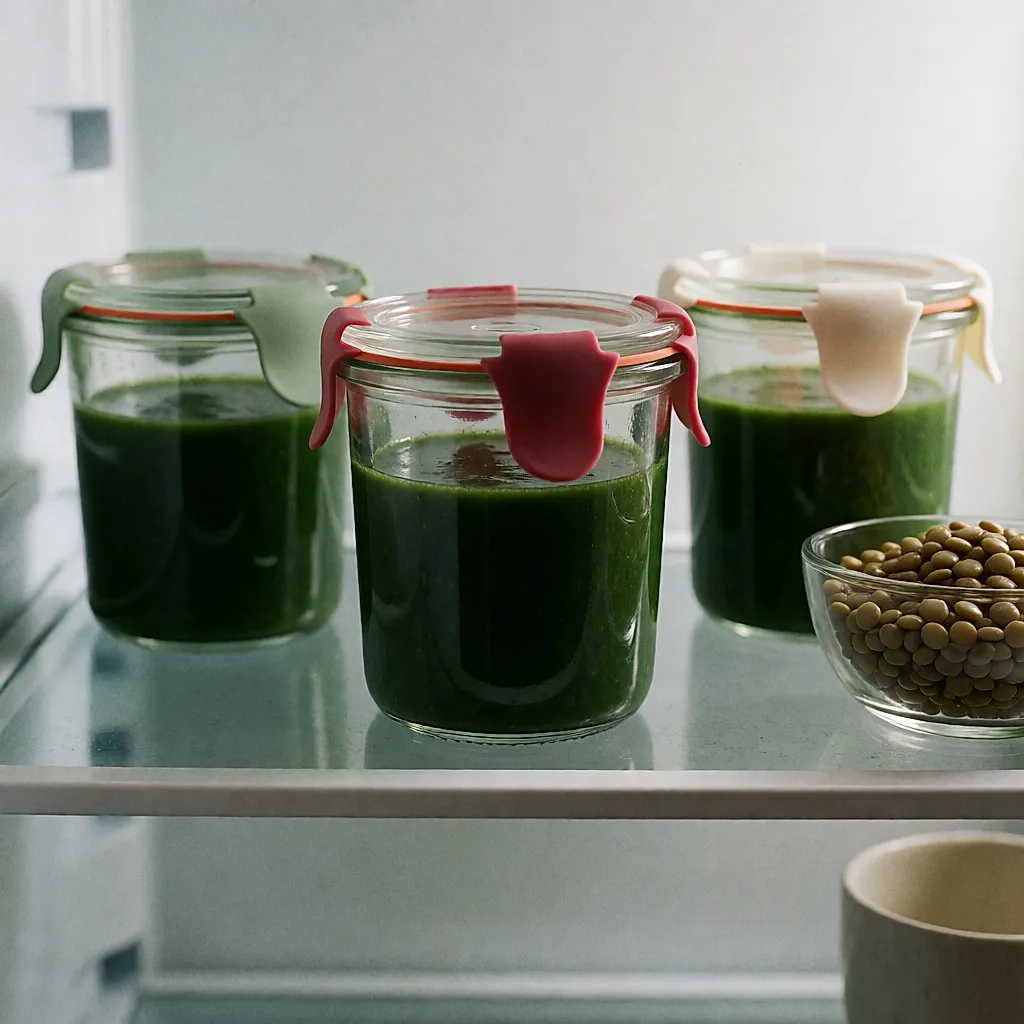
For shop-bought soups, one reflex: read the label. Some are very salty, others contain little veg and a lot of water. A plain frozen soup or a simple carton soup, without unnecessary additives, can work perfectly well on a rushed evening. The idea isn't to cook everything, but to balance what's already there.
A complete dinner, even a light one, brings together vegetables, a source of protein and a carb or a pulse. Soup can be the vegetable; it can't be the whole meal.
The marker to keep: it's not the number of ladles that makes the dinner, it's what accompanies them. An egg, a spoonful of lentils or a little quark is enough to change the picture. And if you have particular needs — pregnancy, diabetes, kidney disease, an ongoing course of treatment — talk to a health professional: this marker doesn't replace personalised advice.
Sources
- World Health Organization — Healthy diet, fact sheet.
Comments
Your opinion matters: rate the article, react and reply to comments.
Comments are moderated; AI-assisted comments are flagged. Text emoticons (8-), :-), <3…) are automatically shown as images.