
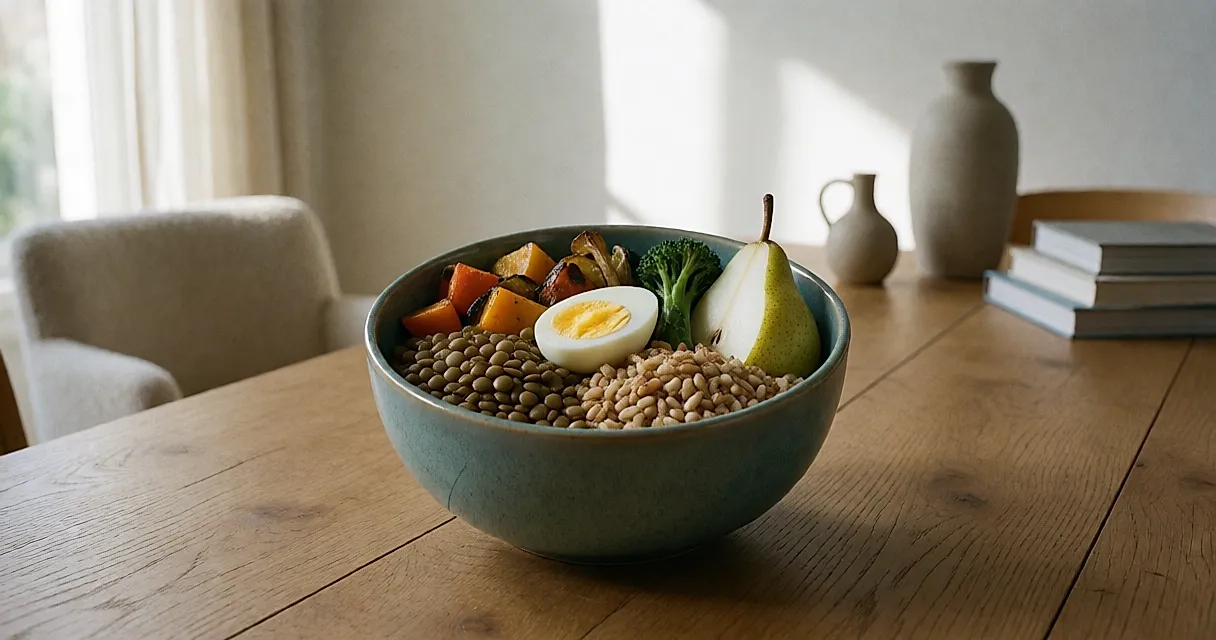
Skipping lunch to save room for a party dinner is a calculation that often turns against the person who made it. You think you're keeping space for the evening; in practice you arrive with a hunger that runs faster than the conversation. What a proper lunch really changes isn't a licence to eat everything later: it's a steadier starting plate, and pre-dinner drinks approached with less urgency.
What a proper lunch really changes
The maths looks appealing on paper: less food at midday, more room in the evening. In real life, hunger doesn't keep such tidy accounts. Protein and fibre contribute to satiety and help you get through the afternoon, without magically abolishing hunger. Current evidence suggests, above all, that a structured meal stops the whole day being built around dinner alone.
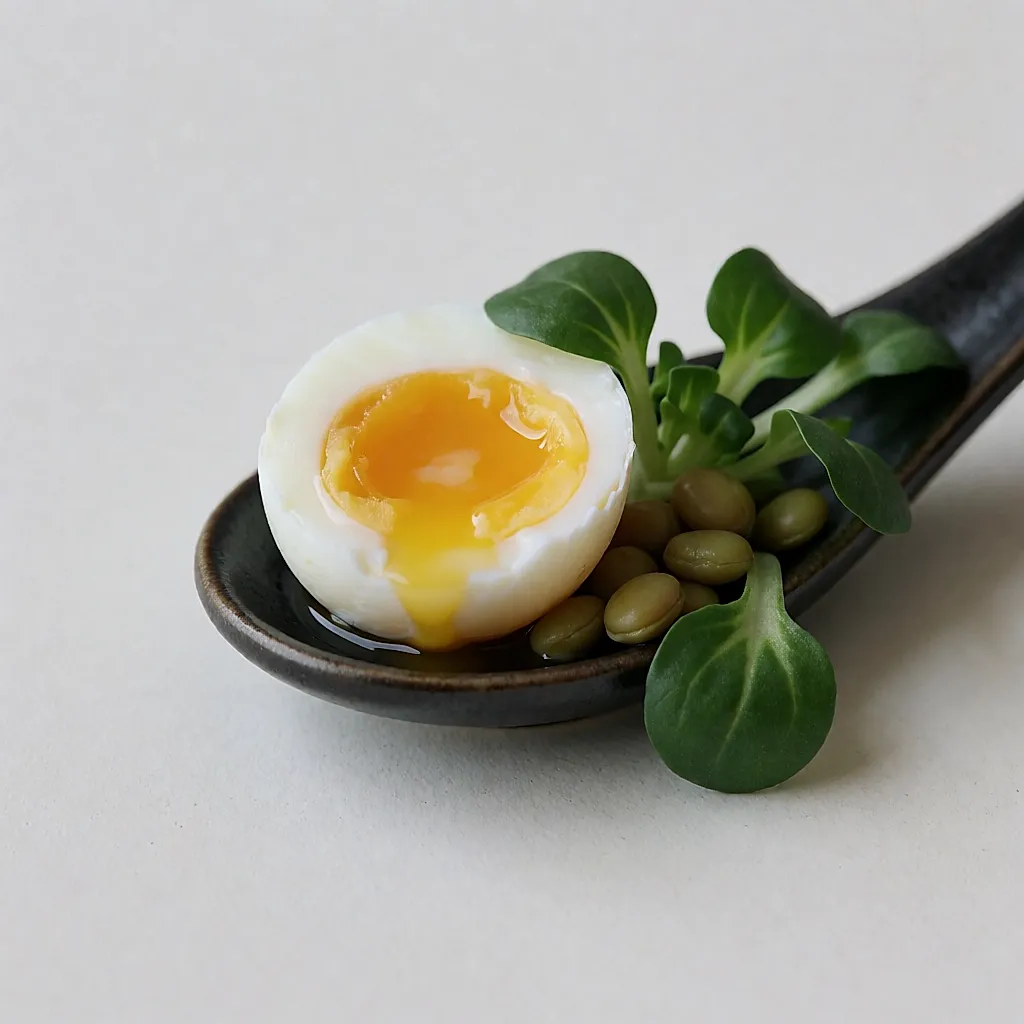
Does that mean stuffing yourself at midday? No. A full lunch isn't a tank you fill before a boozy evening. What we still don't know for certain is how each individual will respond: sleep, menstrual cycle, stress, medication and the context of the evening carry as much weight as what's on the plate. In practice, remember that a normal, satisfying meal is more predictable than a compensatory fast.
The midday plate that sees you through to the evening
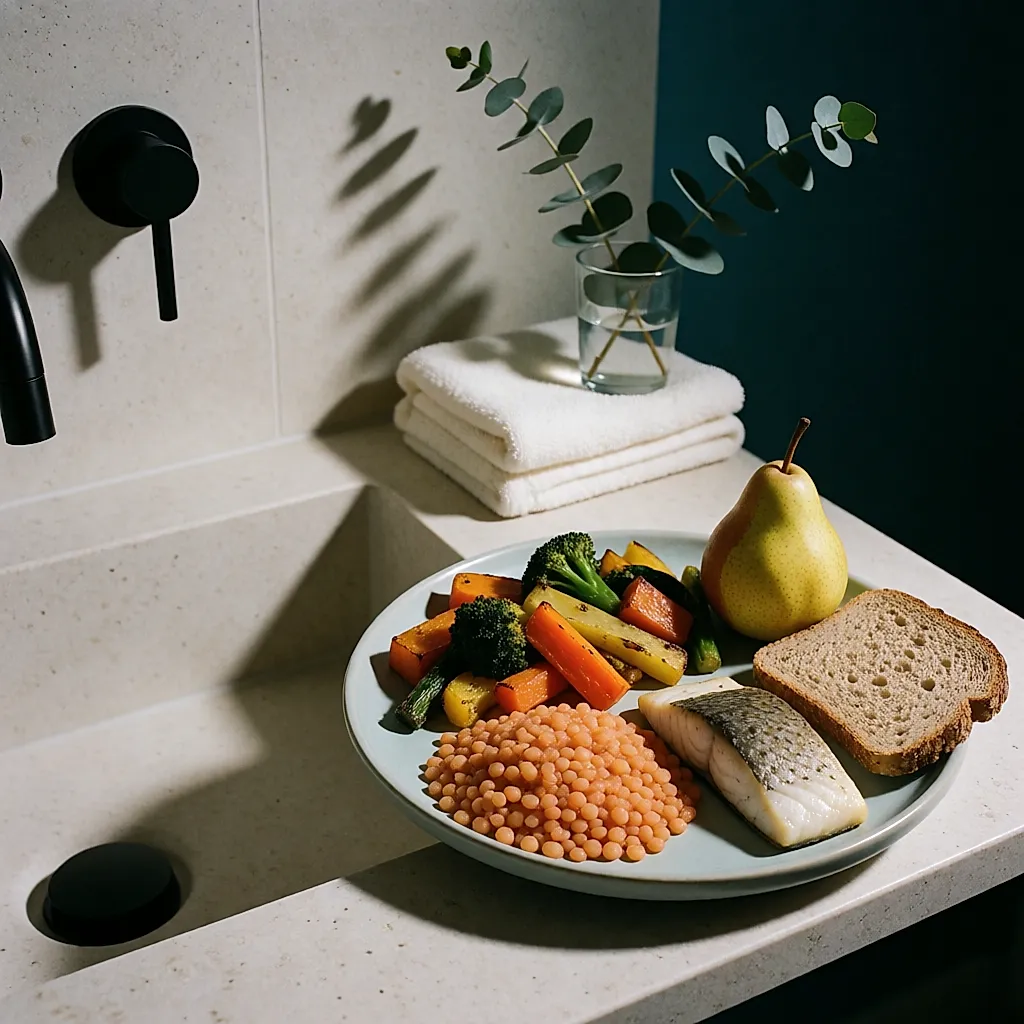
Keep it simple: a good portion of vegetables, a source of protein (eggs, fish, pulses, white meat), a wholegrain starchy carbohydrate and a piece of fruit. Vegetables, pulses and wholegrains bring fibre; protein gives the meal some substance. Serve the vegetables first, then the protein, then the starchy carbohydrate: there's nothing magic about the order, but it helps stop the plate being built around bread alone.
Does the perfect menu exist? Probably not, and that's just as well. A festive lunch can equally be yesterday's leftovers, a thick lentil soup, or an omelette with a lamb's lettuce salad. What matters isn't the perfect menu, but eating at a normal rhythm, sitting down where possible, and not arriving in the evening with end-of-the-world hunger. A full lunch doesn't replace care at the pre-dinner drinks; it simply gives you something to lean on.
Water, and what we forget to drink
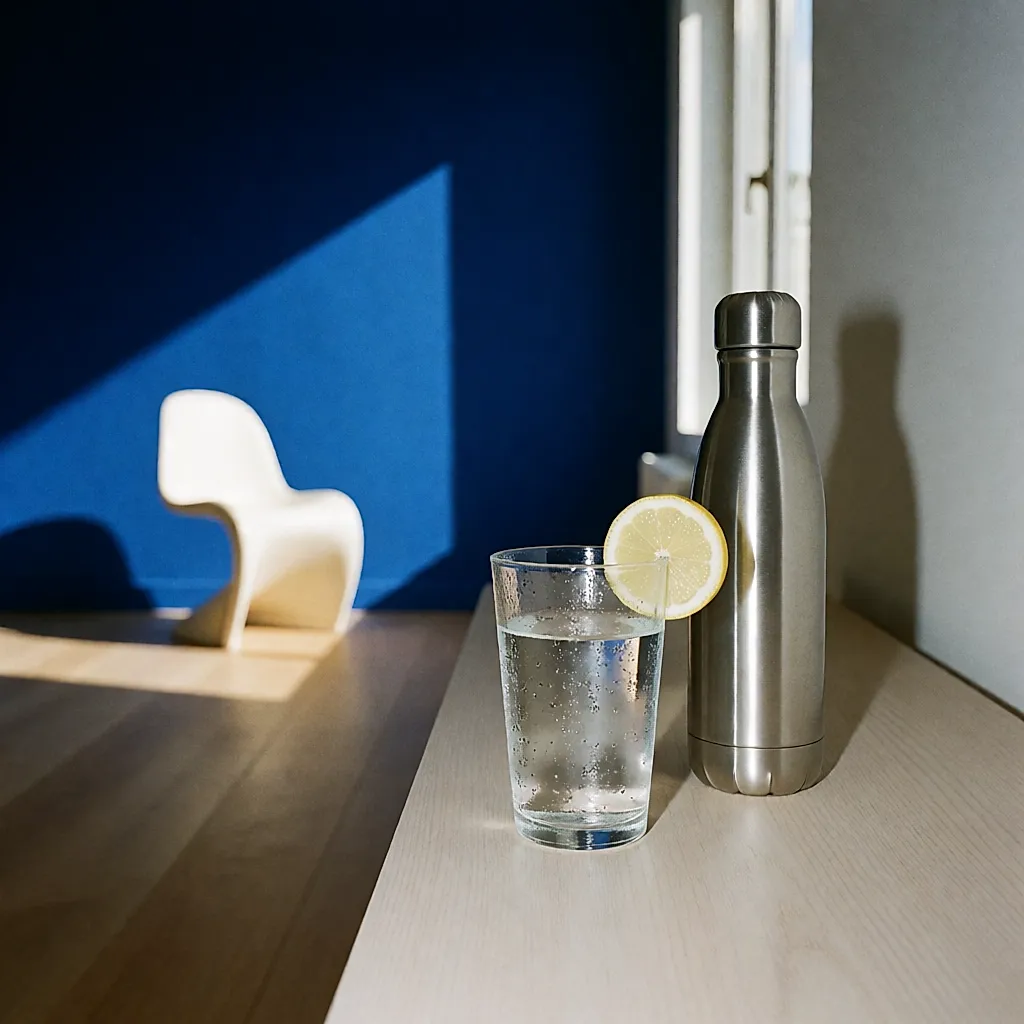
Thirst can be mistaken for hunger, especially when the day speeds up. A glass of water before you head out, a bottle in your bag, a glass between bites: none of these make you lose weight, but they stop you compensating at the pre-dinner drinks for everything you haven't drunk all day. Sparkling water, tap water or an unsweetened herbal tea all do the job perfectly well.
Alcohol, for its part, doesn't fill the stomach and can dull your awareness of portion sizes. In practice, alcohol is still best kept limited: a full lunch doesn't neutralise it. If you're taking medication, are pregnant or breastfeeding, ask a healthcare professional for advice; the recommendations aren't the same for everyone.
When the trade-off isn't enough
There is no universal anti-hunger meal. A full lunch may help you arrive less ravenous, but it doesn't guarantee you'll eat little in the evening, and that isn't its job. Festive hunger is also partly social: we nibble because dishes keep circulating, because we're raising a glass, because we stay at the table longer. Lunch doesn't control that scene.
If you live with diabetes, an eating disorder or digestive problems, or if you're pregnant, speaking to a healthcare professional is more useful than trying out a new calculation. And if a festive dinner triggers restriction the next day, or a lingering sense of guilt, that isn't a question of willpower: a professional can help you step out of that cycle.
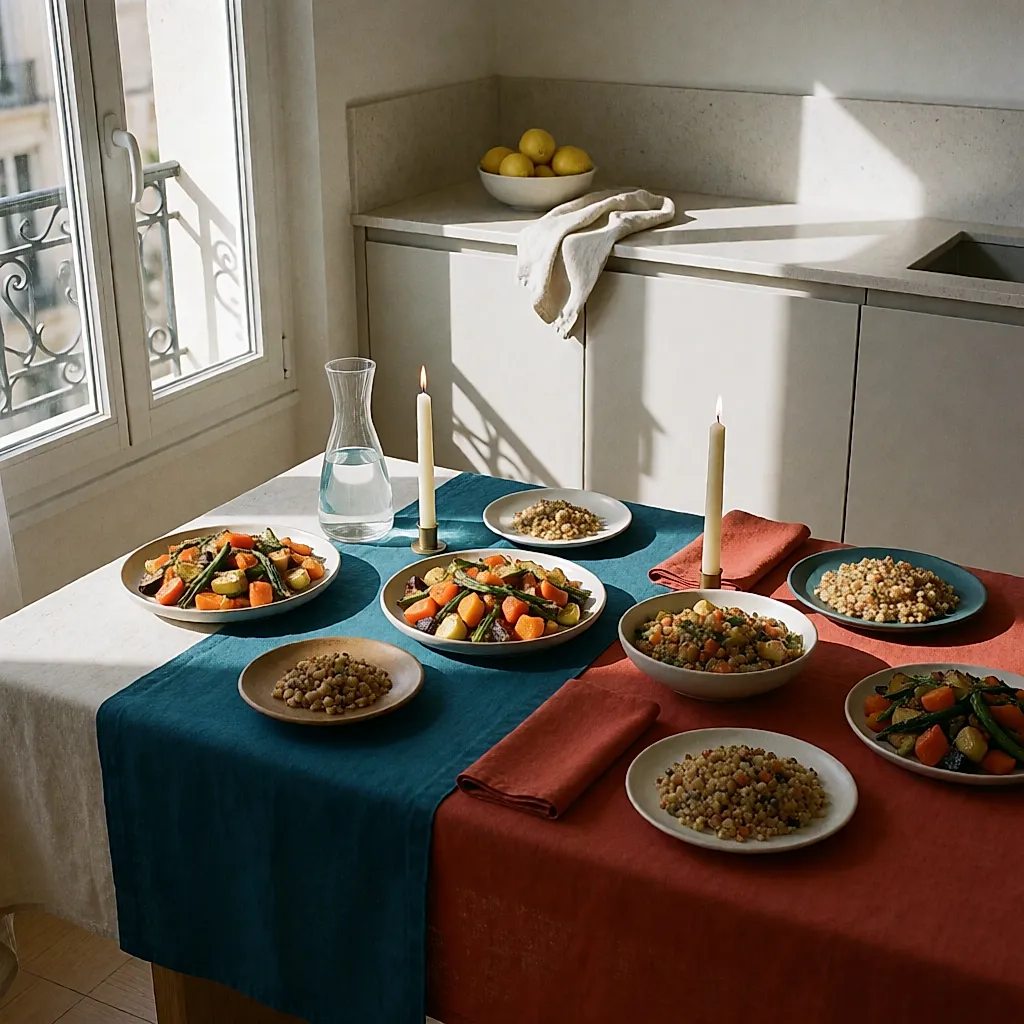
The midday benchmark: vegetables, a source of protein, a wholegrain starchy carbohydrate, a piece of fruit and a glass of water. Nothing to weigh, nothing to compensate for in the evening.
What you can reasonably expect from a full lunch is less urgency at the pre-dinner drinks and an evening plate chosen with a little more clarity. What you shouldn't ask of it is a consequence-free evening. Eat at midday, drink water, taste the dinner — and keep in mind that no meal deserves to turn into an exam.
Sources
- NHS — The Eatwell Guide
- Santé publique France — Programme national nutrition santé: Manger Bouger
- ANSES — Agence nationale de sécurité sanitaire de l'alimentation, de l'environnement et du travail



Comments
Your opinion matters: rate the article, react and reply to comments.
Comments are moderated; AI-assisted comments are flagged. Text emoticons (8-), :-), <3…) are automatically shown as images.