
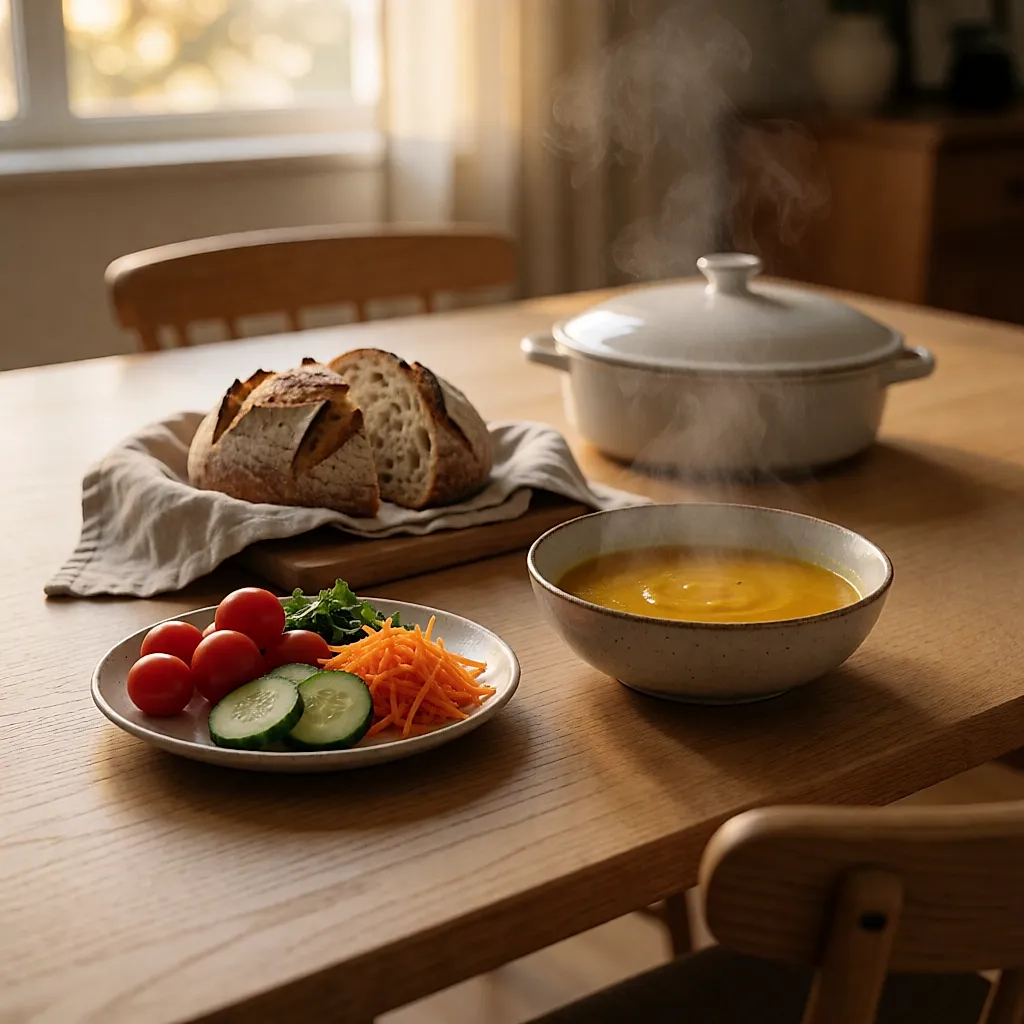
Sunday evening, the table is set, the bread is still warm, and you're eyeing it with the suspicion you normally reserve for guests who won't leave. We won't put it on trial: it hasn't done anything wrong. Except that the order in which you eat can change how the meal ends — that strange hunger that lands on the sofa two hours later, the sugar craving that follows pudding like a loyal dog. And if the second slice became optional, without drama?
The order, not the menu
The most restful idea to emerge around eating in recent years can be summed up in a few words: the order you eat in. Nothing to remove, then. No banning bread, no suspect pasta, no negotiating pudding. You don't change the menu, you change the choreography — vegetables go first, everything else follows as usual.
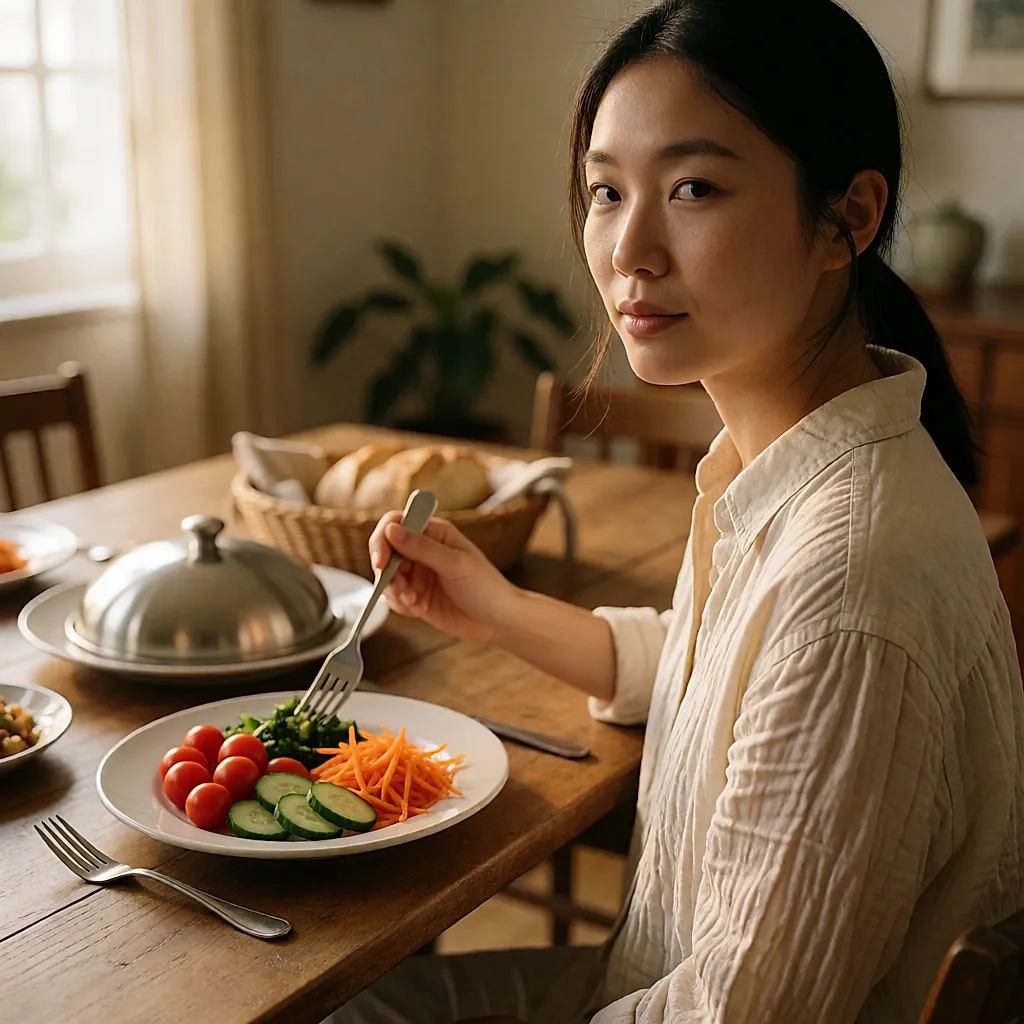
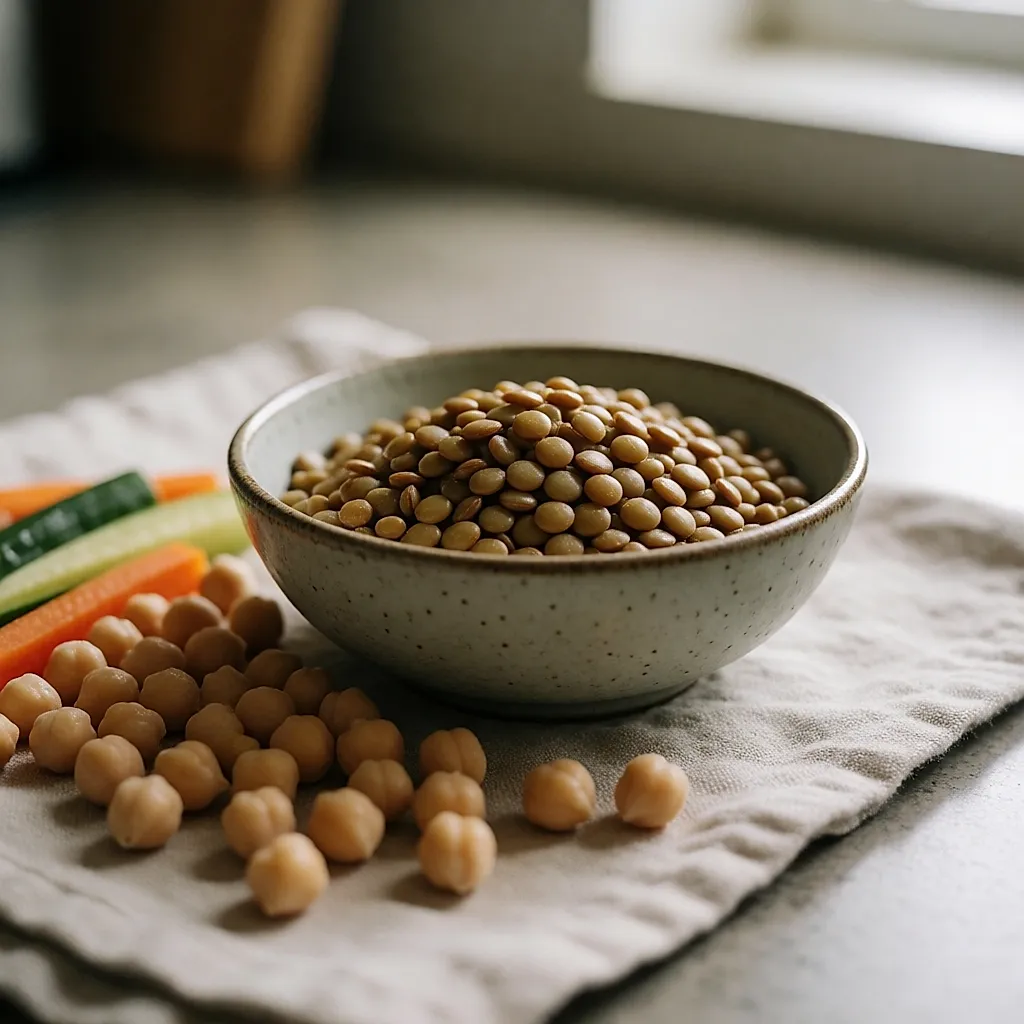
In practice, that means a starter of raw vegetables, a squash soup in November, a few spoonfuls of lentils before the main course. And here's a detail that may explain a lot of disappointment: the effect is often attributed to fibre. A plate of lettuce with a drizzle of vinaigrette is fresh and pretty, but fibre-wise it's mostly water.
What we know, and what we don't yet know
One often-mentioned hypothesis, with no settled conclusion on how well it works: fibre may slow stomach emptying, so the meal's carbohydrates reach the blood more gradually, and the blood glucose spike — the rise in blood sugar just after eating — is less pronounced. In Japan, starting with vegetables is a widespread dietary habit — no proof in itself, but worth pausing over.
What we don't yet know is what this actually changes for a given person: it varies from one person to another, is often modest, and doesn't turn a meal into a treatment. It is not a medical prescription: if you live with diabetes, this is an addition to your care, not a replacement for it.
One practical marker, purely editorial: in practice, many plates fall short of the fibre they could carry. Starting with vegetables is one way to get closer without reaching for a calculator.
What it looks like at the table
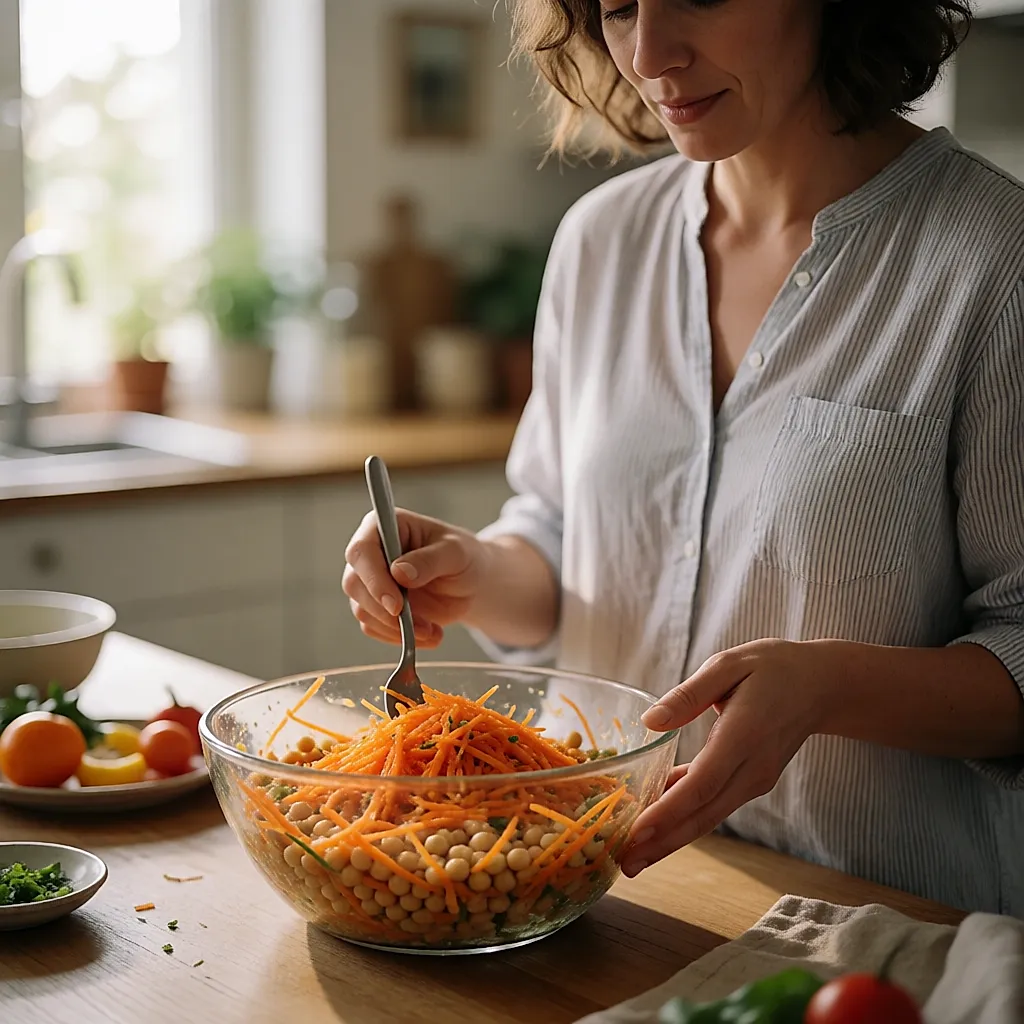
The simplest approach is to build on what you already eat. Most meals have a starter: it just needs to be made of vegetables. Tomatoes and cucumber in August, vegetable soup in January, grated carrots and chickpeas on busy evenings — it all counts. Bread isn't banned; it simply arrives afterwards.
That's where the habit gets interesting. Many people who start with vegetables describe less urgent hunger at the end of the meal and sugar cravings that fade earlier. That's a personal experience, not a guarantee — but it shifts the mindset: nothing is taken away, you're not depriving yourself, and the end of the meal settles by itself.
In practice, remember this: a vegetable starter — raw or cooked, it doesn't matter — before the main course; bread and starchy foods afterwards, without cutting them out; and a glass of water with the meal, because fibre likes water. If one change is going to make it into your week, make it this one.
When it doesn't sit well, adjust
Not everyone digests raw vegetables well at the start of a meal. Bloating, heaviness: if that's you, cooked vegetables, soup or mashed vegetables are better; increase fibre gradually rather than overhauling everything at once. If you have ongoing digestive issues or diabetes, or if you are pregnant, a healthcare professional is the right person to help you adapt — not an article.
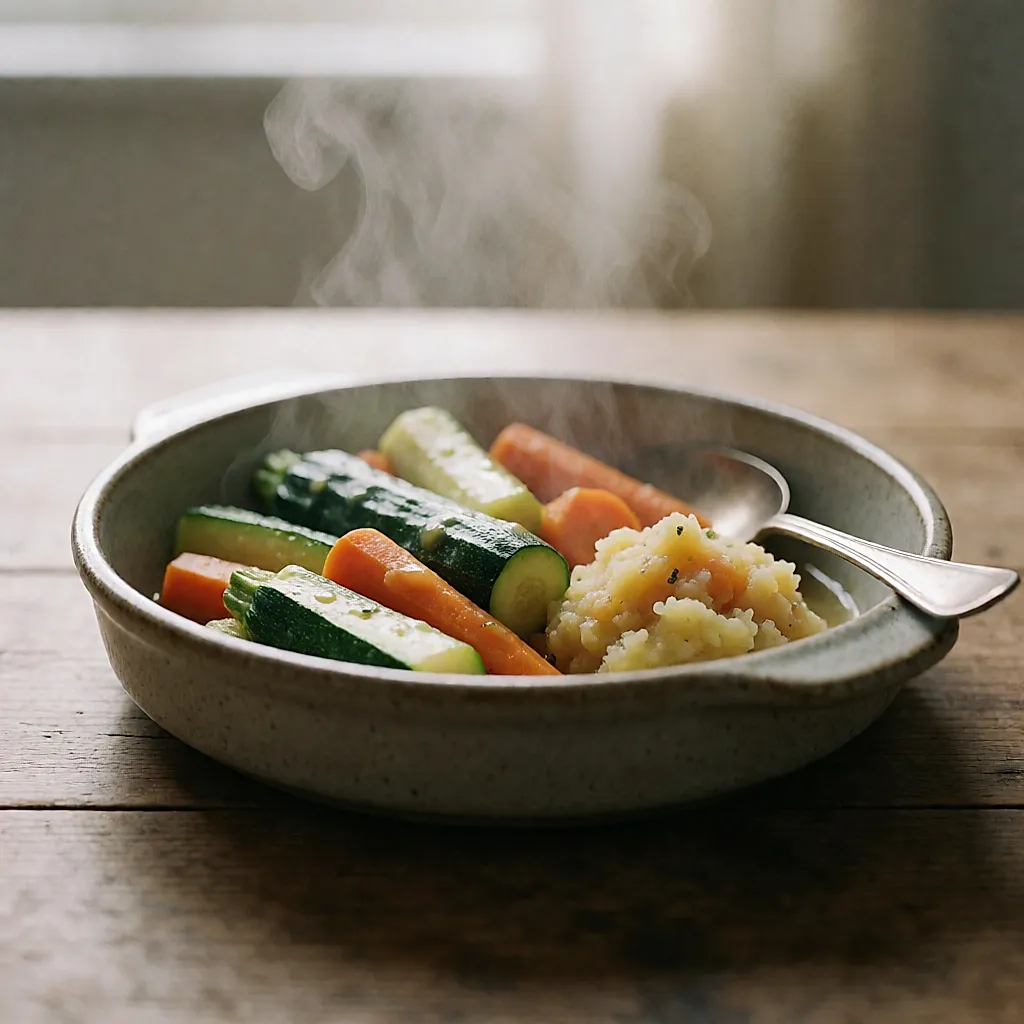
A second caveat, and an important one: this habit must not become one more rule. If eating order turns into monitoring every bite, you have simply swapped one restriction for another. The aim is the exact opposite: less mental negotiation, more ease at the table.
So the next time the bread beckons, let it wait until after the starter. Serve the vegetables, eat the rest as usual, and see what happens at the end of the meal. That's often where the habit makes most sense, in that small grey area between the last bite and the sugar craving. Nothing dramatic. Just a slightly better-ordered plate.


Comments
Your opinion matters: rate the article, react and reply to comments.
Comments are moderated; AI-assisted comments are flagged. Text emoticons (8-), :-), <3…) are automatically shown as images.