

You have probably noticed those small dimples on your thighs or bottom, and you are wondering what really works? Let's start with what is established: cellulite is very common in women after puberty, and it is not a disease. Then comes the less cheering part: no method makes it disappear for good. The whole issue lies in that gap, between what can genuinely be improved and what marketing promises. Here is the picture, without any promises.
What we really know
What exactly are we talking about? Cellulite, which the medical world calls gynoid lipodystrophy, combines several phenomena. Fat cells pile up in fibrous compartments, microcirculation slows, and the skin loses elasticity. The result can be seen and felt, but it is not pathological.
What we still do not know is why some women are more prone to it than others. Heredity, hormones, smoking and a sedentary lifestyle often appear among the factors that encourage it. Diet also matters, although no diet specifically targets dimpling.
In practice, remember this: no technique lasts without a healthy lifestyle, or without ongoing maintenance. A single treatment, even an expensive one, solves nothing.
Endermologie, or mechanised skin-rolling
The principle is old: the manual pinch-and-roll massage is reproduced by a machine. Rollers suction and mobilise the skin, which can boost circulation and soften tissues.
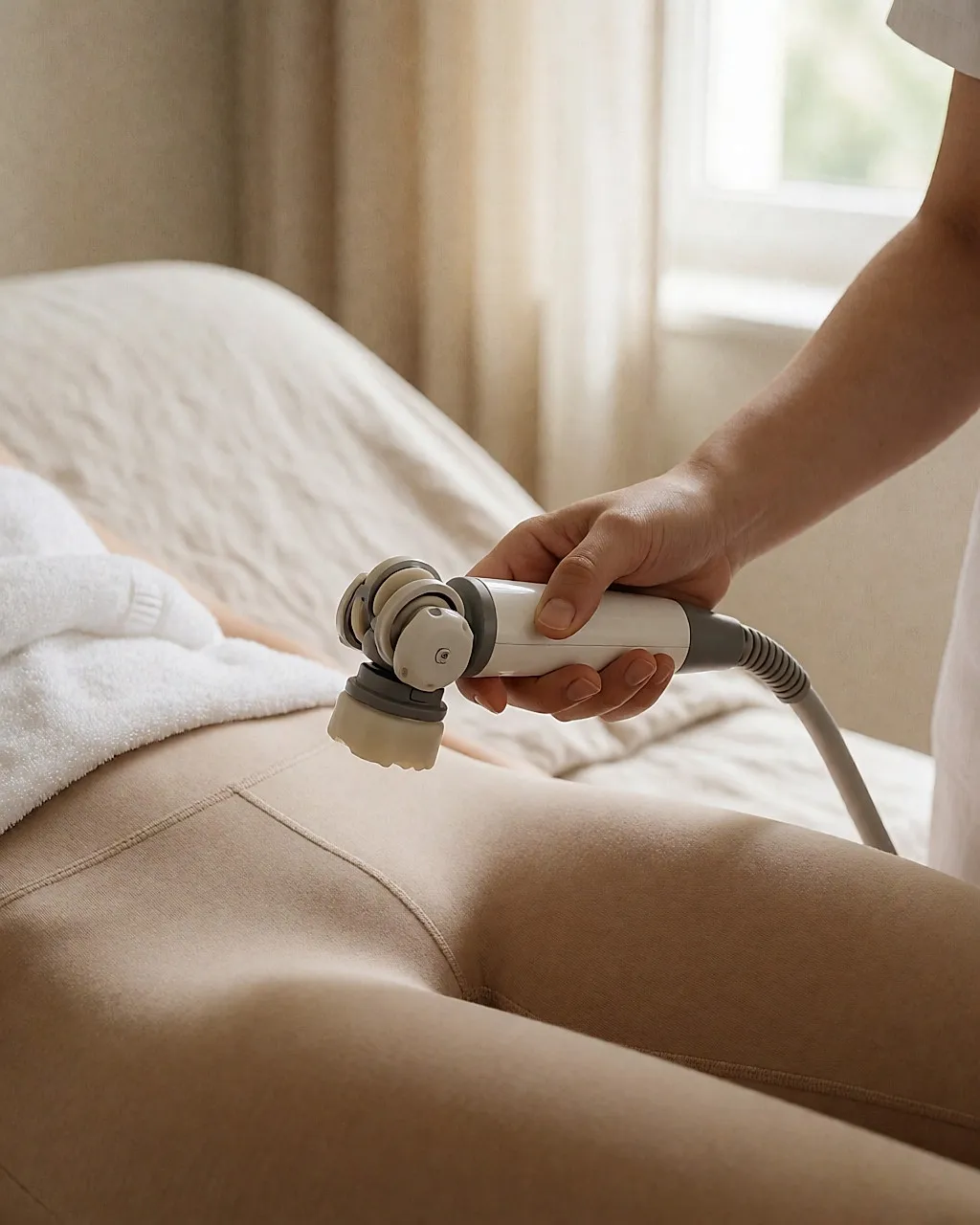
It is usually painless, often pleasant, and genuinely relaxing. Manufacturers talk about loosened fibres and firmer skin; current data suggest a real but modest effect, and above all a temporary one. Hence the need for maintenance.
Some practitioners offer courses of several sessions, the number and duration of which vary according to the case and the person, with no promise of results. If you are significantly overweight, the device quickly reaches its limits, and no machine can replace a doctor's advice.
Focused ultrasound and cryolipolysis: targeting fat
Lipolysis aims to destroy fat cells, which are then eliminated by the body. Two families of devices exist.
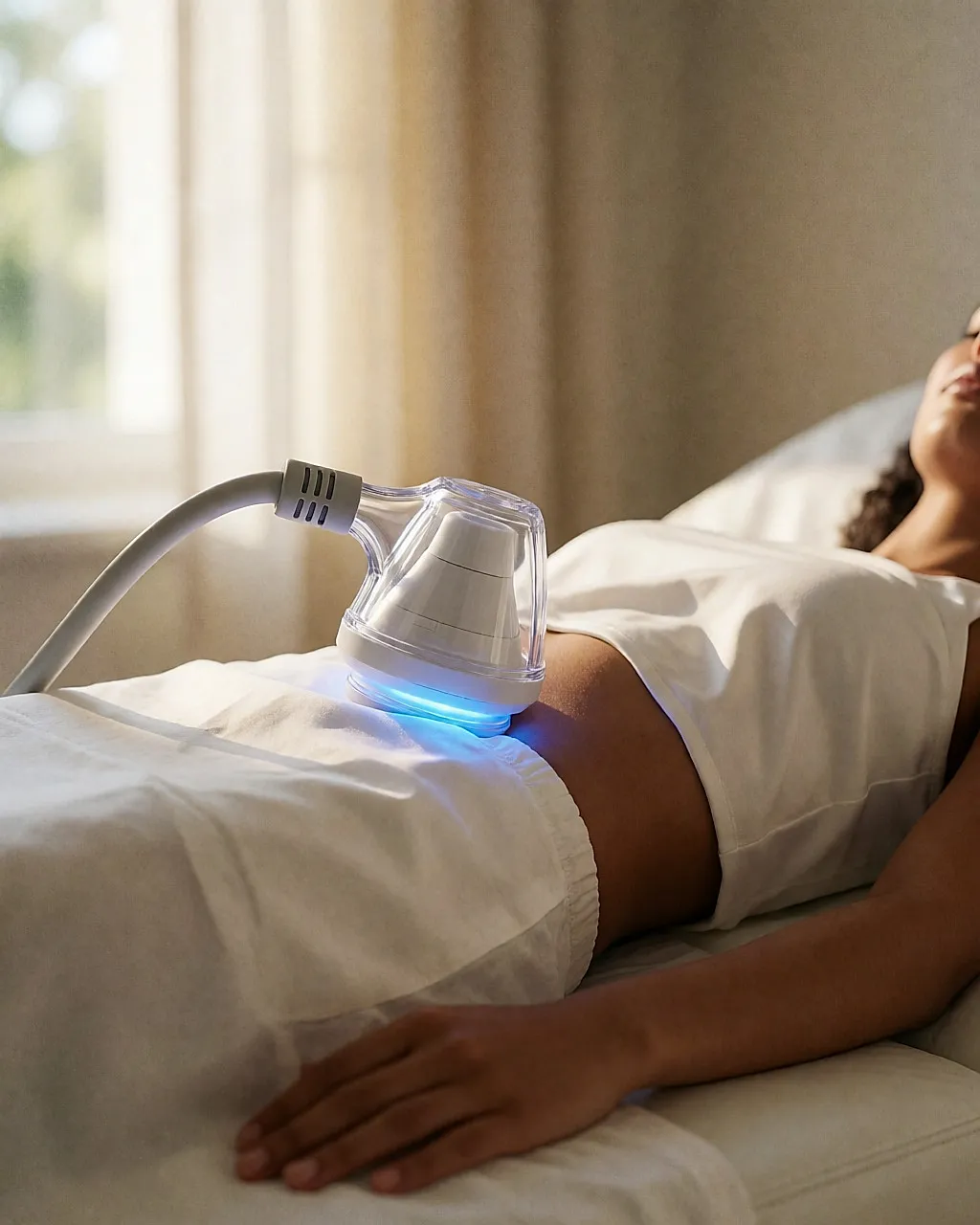
Focused ultrasound concentrates energy a few millimetres beneath the skin. It mainly targets deep fat, with a limited effect on superficial dimpling. Several sessions are often needed for a partial result.
Cryolipolysis cools fat cells, which die and are then gradually eliminated. It is non-invasive, but its effect on orange-peel skin remains debated depending on the study.
In both cases, be patient: results develop over several months, not immediately. These techniques belong in a medical setting, not a relaxing beauty salon session.
Radiofrequency and laser: different uses to distinguish
Radiofrequency heats the dermis to stimulate collagen production; when used in a beauty salon for cosmetic purposes, it is distinct from medical uses, which are the remit of a healthcare professional. Laser, by contrast, can act deeper, sometimes via a fibre inserted under the skin, under local anaesthetic.
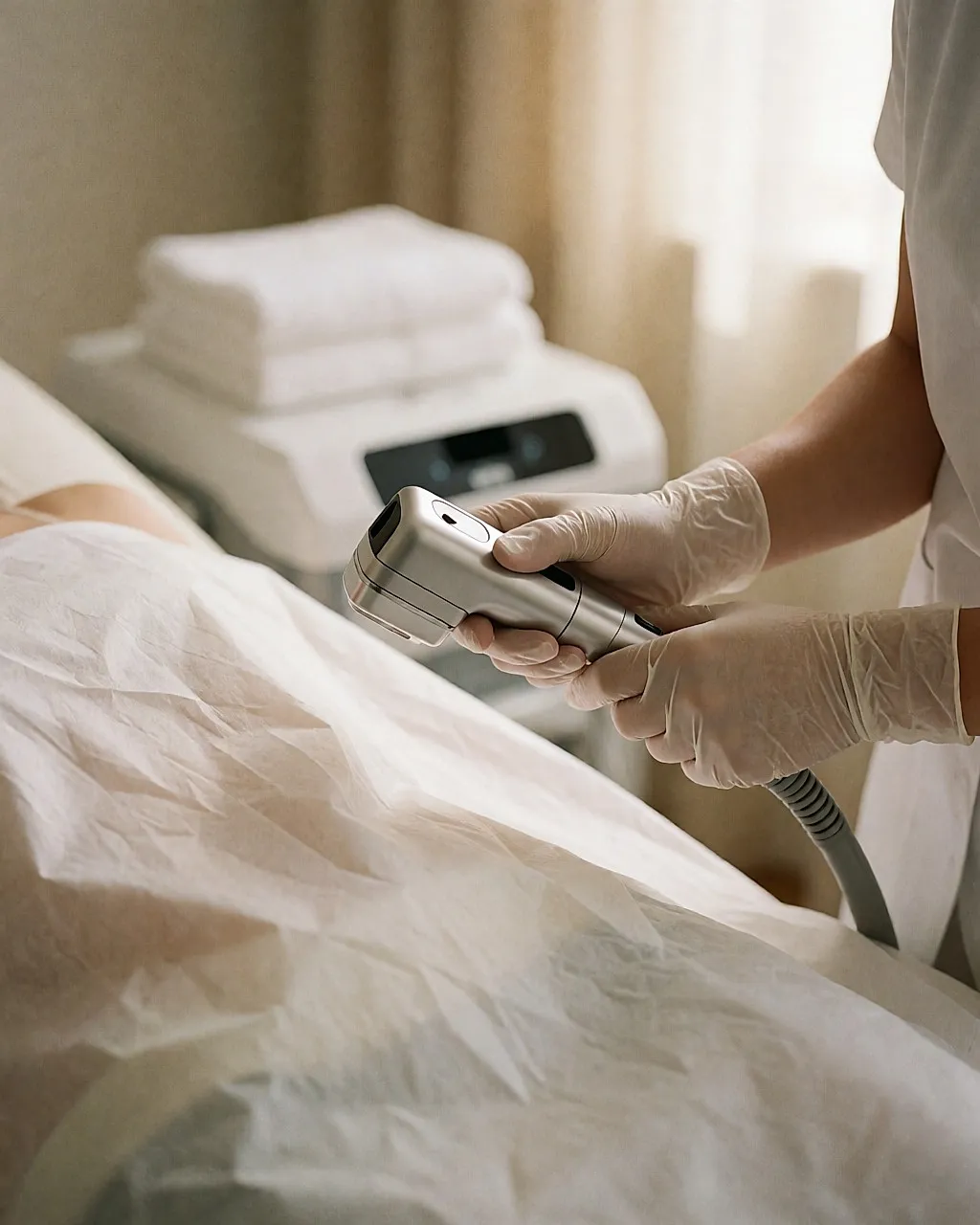
Be careful of oversimplifications, though: depending on the technique, laser does not target the same thing. In laser lipolysis, this fibre delivers controlled heat that can destroy fat cells; in other uses, the laser acts on the dermis. Results vary according to the device, the area treated and the operator.
One session is rarely enough. As with any aesthetic medicine procedure, ask the practitioner for their credentials, training and a written quote. Unusually low prices should ring alarm bells.
Slimming creams: a cosmetic step, nothing more
Formulas with caffeine or retinol can smooth the skin's surface a little. Their effect remains cosmetic and temporary. No cream melts away established cellulite.
If you want a simple step, choose a short ingredient list, with a verifiable organic label (Cosmos Organic, Ecocert) and a glass or refillable bottle. This limits packaging and unnecessary ingredients. It is not a sign of efficacy, just a more considered consumer choice.
Daily habits that matter
Move regularly: walk, swim, cycle. Cut down on smoking. Get enough sleep. Drink water throughout the day. These habits do not make cellulite disappear, but they can improve circulation and skin quality.
If you notice pain, swelling or a sudden change in appearance, speak to a healthcare professional. Cellulite that changes quickly is not necessarily harmless.
Budget
In the UK, prices depend on the city, the area treated, the device, the range and the maintenance needed. Here are rough guides, never fixed prices:
- Endermologie or LPG: expect around £45 to £80 per session, often sold as a package.
- Cosmetic radiofrequency in a beauty salon: around £70 to £180 per session.
- Cryolipolysis: around £260 to £600 per area treated.
- Focused ultrasound: around £430 to £1,050 per area.
- Medical laser: from several hundred pounds to more than £1,300 per session.
For creams, in pharmacies, supermarkets or online, expect around £15 to £40 for a short formula. Always ask for a detailed quote before any procedure, and compare several practitioners.
The takeaway: cellulite is normal and linked to several factors. No technique removes it permanently. Devices can improve the appearance of the skin, but the effects are often temporary and require maintenance; how long they last varies according to the technique and the person. Before any medical procedure, speak to a healthcare professional.
Sources
- NHS — information on cellulite and cosmetic procedures.
- MHRA — regulation of medical devices and aesthetic treatments.
- British Association of Dermatologists — patient information.
- General Medical Council — guidance on cosmetic interventions.


Comments
Your opinion matters: rate the article, react and reply to comments.
Comments are moderated; AI-assisted comments are flagged. Text emoticons (8-), :-), <3…) are automatically shown as images.