

You know the scene: the sun comes back, the shop rails fill up with swimwear, and with them comes that familiar background hum about a body that supposedly needs "getting ready". The trouble is that no last-minute sprint actually lasts. What does work is a handful of simple habits, repeated without thinking about them, that make a real difference on the day you pull on your bikini. Here are five to keep in mind — no pressure, and no empty promises.
1. Drink water, and mostly water
Current data suggest plenty of us drink too little. France's food safety agency ANSES puts the reference at around 1 to 1.5 litres of water a day, on top of the water contained in food, while the NHS Eatwell Guide suggests around six to eight glasses of fluid daily. Beware the shortcut, though: drinking more does not melt away kilos. What good hydration does do is support the kidneys, help you avoid mistaking thirst for hunger late in the afternoon, and take the place of fizzy drinks and sweet juices. As for green tea and herbal infusions, the studies do not show a solid effect on weight — they are simply sugar-free drinks, which is reason enough to enjoy them.

2. Eat properly — don't starve yourself
A very restrictive diet is the surest way to put it all back on a few months later, usually with a little extra. The other route is duller and far better supported: three meals a day, vegetables with each of them, five portions of fruit and veg daily, oven or steam cooking, and as much home-cooked food as you can manage. No single food "cleans" your system; what we do know is that a varied diet covers your needs. And if you overdid it one evening, just pick the thread back up the next day — consistency counts for more than perfection.
3. Move a little, every day
The World Health Organization recommends that adults get 150 to 300 minutes of moderate-intensity activity a week, plus two muscle-strengthening sessions; the UK chief medical officers' guidelines set the same target. In everyday terms, that can look like a 30-minute walk, taking the stairs instead of the lift, or two and a half to five hours of exercise spread across the week. It is also a well-established factor in protecting the heart and bones and in improving sleep and mood. In practice, pick an activity you actually enjoy: that is the one you will keep up over time.

4. The routine matters more than the jar of cream
So-called "slimming" creams have not been shown to have a lasting effect on body fat. Their action stays cosmetic: moisturised skin, a temporarily smoother look, legs that feel lighter — claims that are tightly controlled by cosmetics rules in the UK and the EU. If you fancy that moment for yourself, a certified organic gel or body lotion does the job perfectly well: the Cosmos Organic standard covers the share of natural and organic ingredients, the formulation and traceability. Look at the packaging too: glass bottles, refill formats, made-in-France claims where that information is given. And keep in mind that "natural" does not mean harmless — some plant extracts and essential oils cause irritation, especially on reactive skin.
5. Choose the swimsuit that suits you, not the one that sells the dream
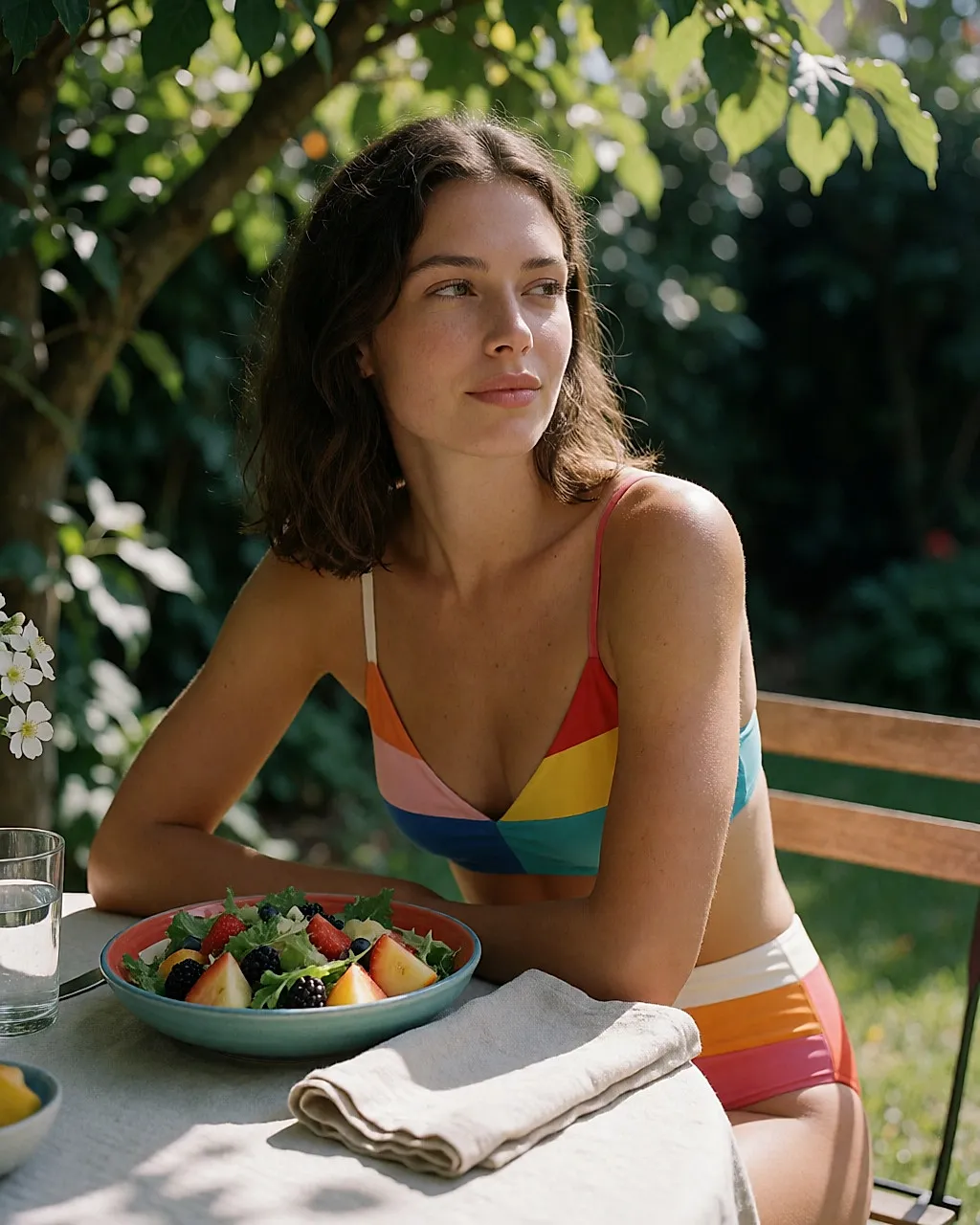
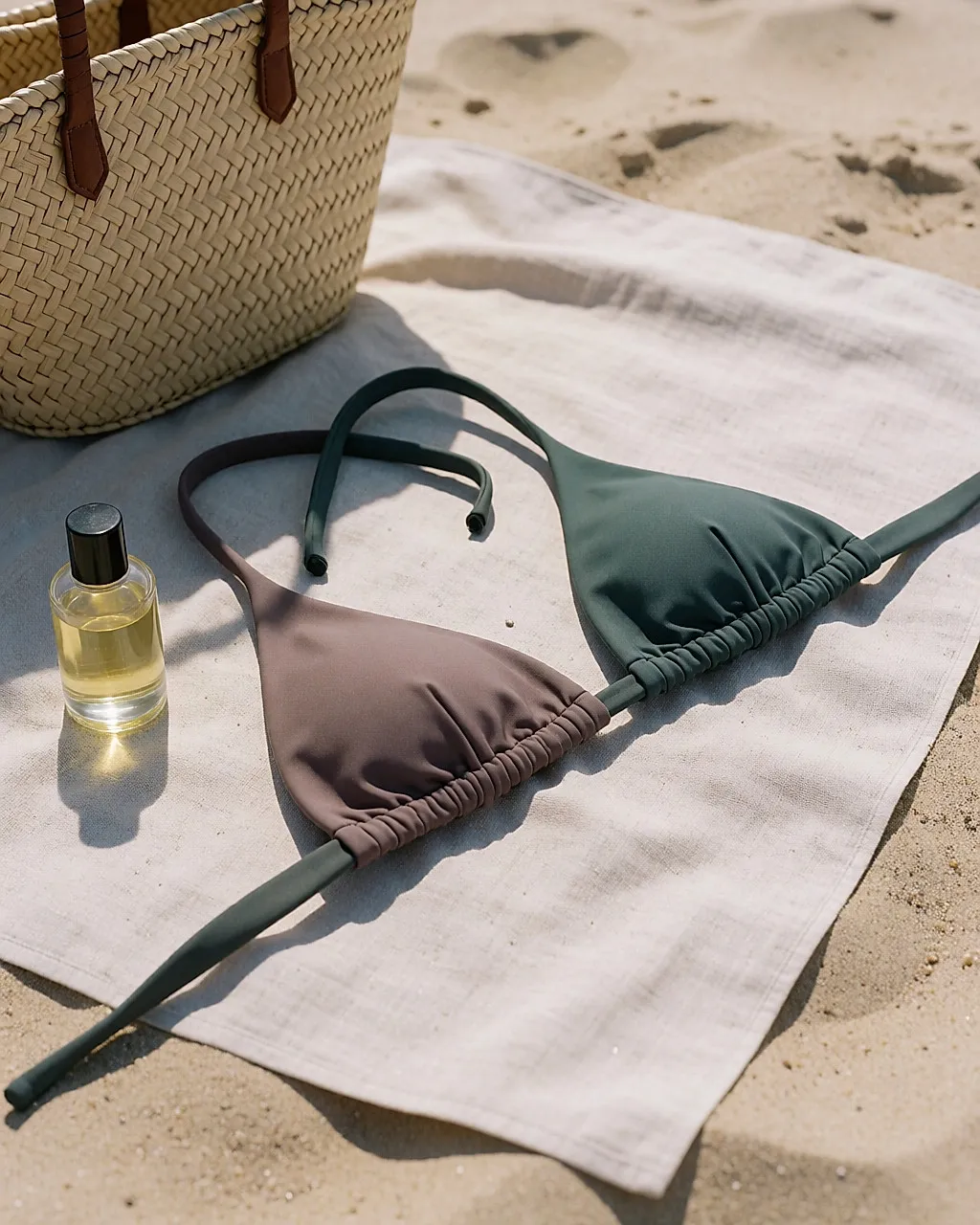
A badly cut swimsuit ruins a silhouette; a well-chosen one makes the most of what you like about yourself. Before the print, look at the fabric: GOTS-certified organic cotton, recycled polyamide, manufacturing that is local or European. Second-hand is plentiful and lets you test a shape without spending much. The best bikini is still the one you stop thinking about once you are on the beach.

None of this replaces medical advice. If you want to lose weight, if you are pregnant, if you are taking medication or if you have had an eating disorder, speak to your GP or a registered dietitian first. Fatigue that lingers, hair loss, disrupted periods: these are signals not to ignore.
Budget
- Swimsuit: expect roughly £12 to £30 from a supermarket or high-street range, and £40 to £100 for a specialist brand or a piece made from recycled fabric; second-hand is often far less. The price varies with the fabric, the cut, where you buy it and how much care it needs.
- Certified organic body care: expect around £7 to £13 in a pharmacy for a 200 ml format, and £15 to £30 for an organic brand sold in a pharmacy, a health-and-beauty retailer or online.
- Green tea, herbal teas: £3 to £12 a box depending on origin and whether you buy loose leaf.
- Physical activity: walking is free; a gym membership generally sits between £20 and £45 a month, and group classes are often around £8 to £15 a session, though that varies a lot by studio and city.
- Dietetic support: a dietitian referral through your GP is free at the point of use but not always available; private consultations typically cost between £50 and £90. Check whether your private health insurance covers it.
Sources
- NHS, Eatwell Guide (food and fluid guidance).
- ANSES (France), reference intakes for drinking water and work on food supplements marketed for weight loss.
- World Health Organization, 2020 guidelines on physical activity and sedentary behaviour.
- UK chief medical officers' physical activity guidelines (2019).
- EFSA, dietary reference values for water (2010).
- Regulation (EC) No 1223/2009 on cosmetic products and Regulation (EU) No 655/2013 on cosmetic claims, with equivalent requirements retained in UK law.
- Cosmos Organic (Ecocert) and GOTS (Global Organic Textile Standard) standards.
- NHS, information on dietitian referrals and what they cover.
Food supplements do not replace a varied, balanced diet and a healthy lifestyle.

Comments
Your opinion matters: rate the article, react and reply to comments.
Comments are moderated; AI-assisted comments are flagged. Text emoticons (8-), :-), <3…) are automatically shown as images.