
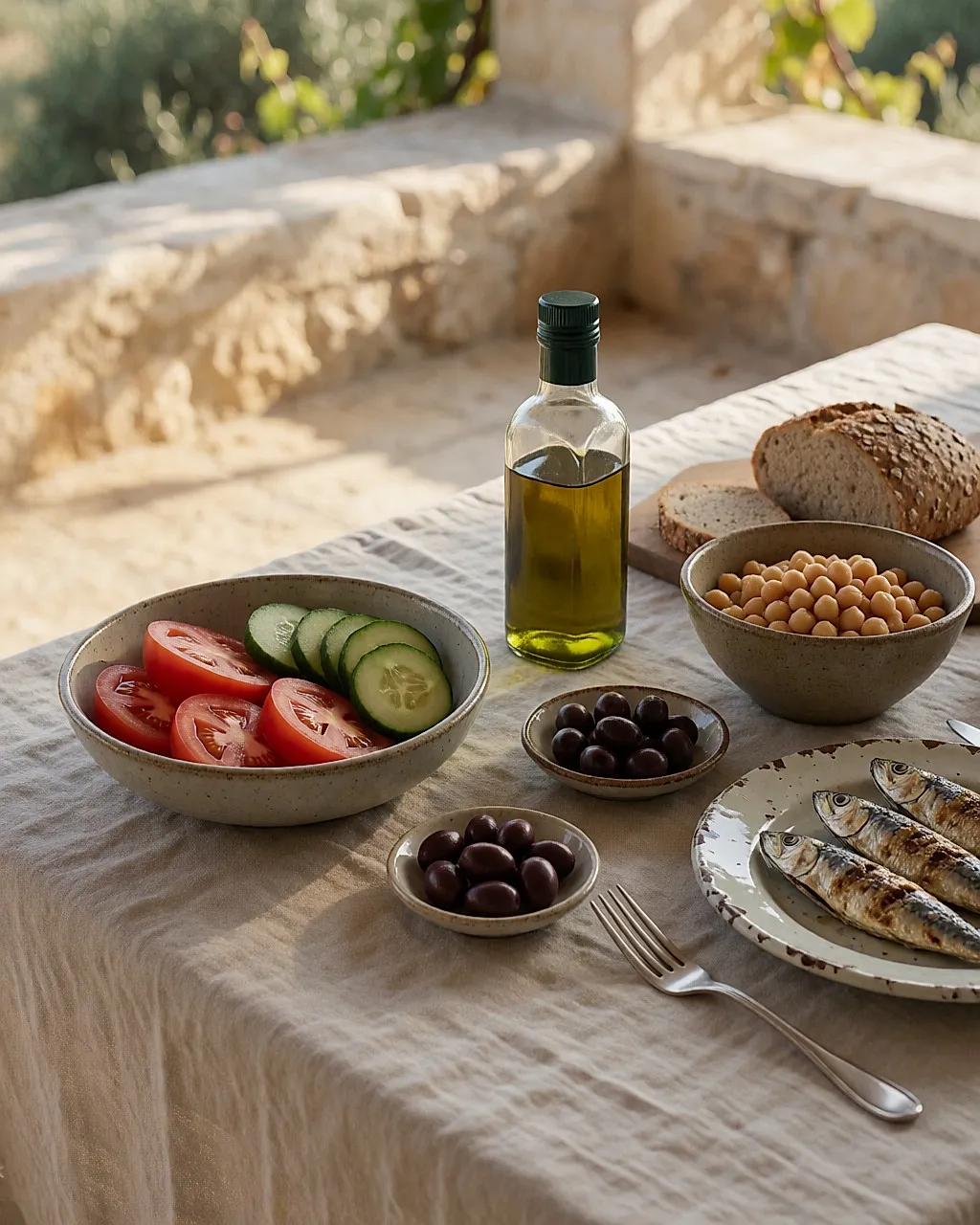
People talk about the “Cretan diet” the way they might talk about a course of treatment, with its rules to keep and its list of things you can't have. Except that in Crete, there was never a course of anything. There is a way of eating, handed down from generation to generation: vegetables at almost every meal, pulses, fruit, wholegrains, olive oil in abundance, fish, and red meat only sparingly. Nothing to weigh, nothing to cross off a list. It is a food culture before it is a method — and that is probably what makes it last.
Where the reputation comes from
In the late 1960s, the Seven Countries Study led by Ancel Keys found few heart attacks on the island. The story of “fifty times fewer” cardiovascular deaths still circulates today, but it rests on old records, partly collected during Lent, and on limited samples. Current data points to a genuinely protective effect — simply a more modest one.
The Spanish PREDIMED trial remains the benchmark on the subject. Published in 2013, corrected and republished in 2018, it followed people with cardiovascular risk factors: those eating a Mediterranean diet enriched with extra virgin olive oil or nuts had roughly 30% fewer major cardiovascular events than those on a low-fat diet. One trial, in one population: we are talking about a protective factor, not a promise.
What the science takes from it
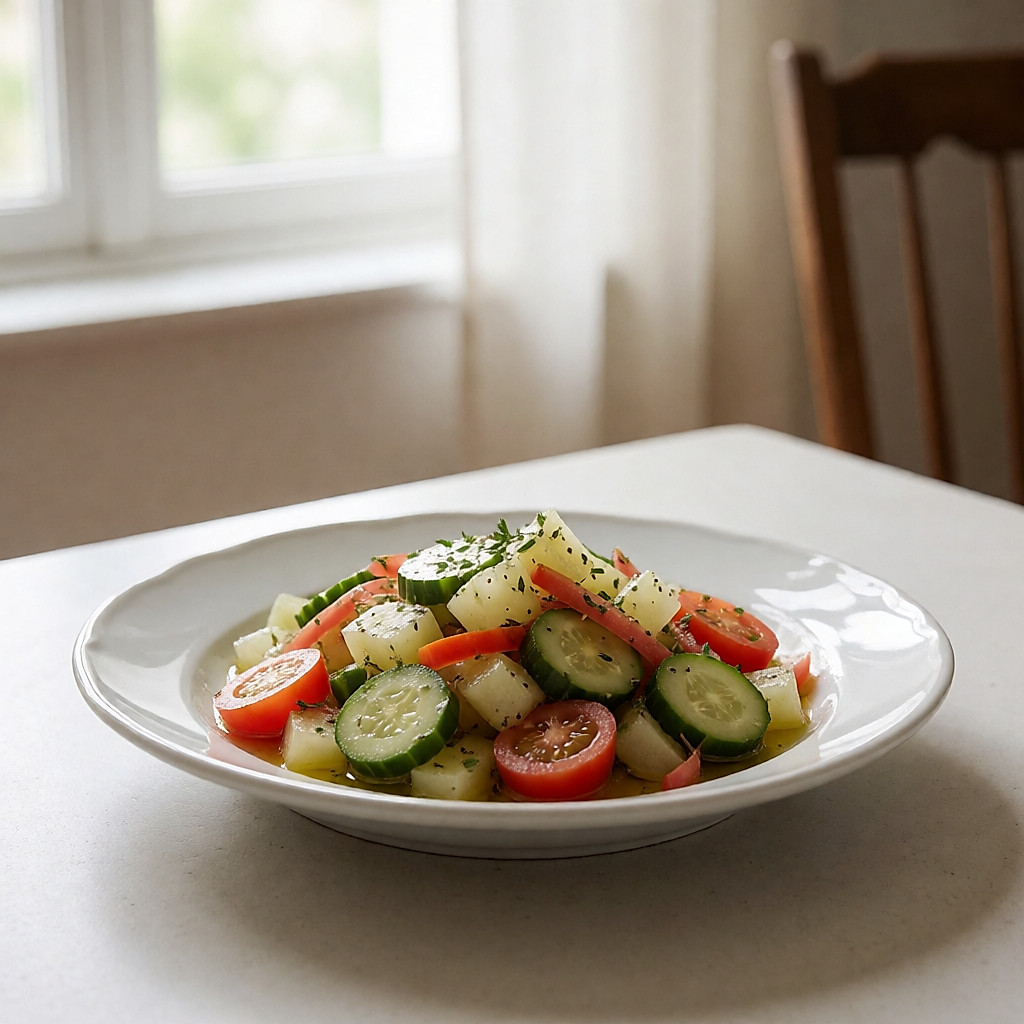
Three pillars stand out. First, fat: extra virgin olive oil, nuts, seeds and oily fish such as sardines or mackerel, rich in unsaturated fatty acids, taking the place of saturated fat. Then fibre: pulses, wholegrains, fruit and vegetables, for around 25 to 30 g a day. The World Cancer Research Fund links a high fibre intake to a lower risk of bowel cancer. Finally, the context of a meal matters as much as its contents: fresh produce, fish rather than processed meats, little added sugar, and often a shared table.
Wine, on the other hand, is no longer presented as protective. UK Chief Medical Officers' guidance is clear: there is no level of drinking that is completely safe. If you have a glass, it is for pleasure, not for health.
In practice, here is what to hold on to: you do not have to follow a Cretan menu to the letter. Aim for a plate where vegetables take up half, where olive oil replaces butter, where fish comes before red meat. Move, too: the WHO recommends 150 to 300 minutes of moderate activity a week. And if you have a risk factor — diabetes, high blood pressure, family history — talk to a healthcare professional, who can follow you up.
Budget
On the shopping side, the price gap comes mostly from the label, the origin and the packaging. A few UK reference points:
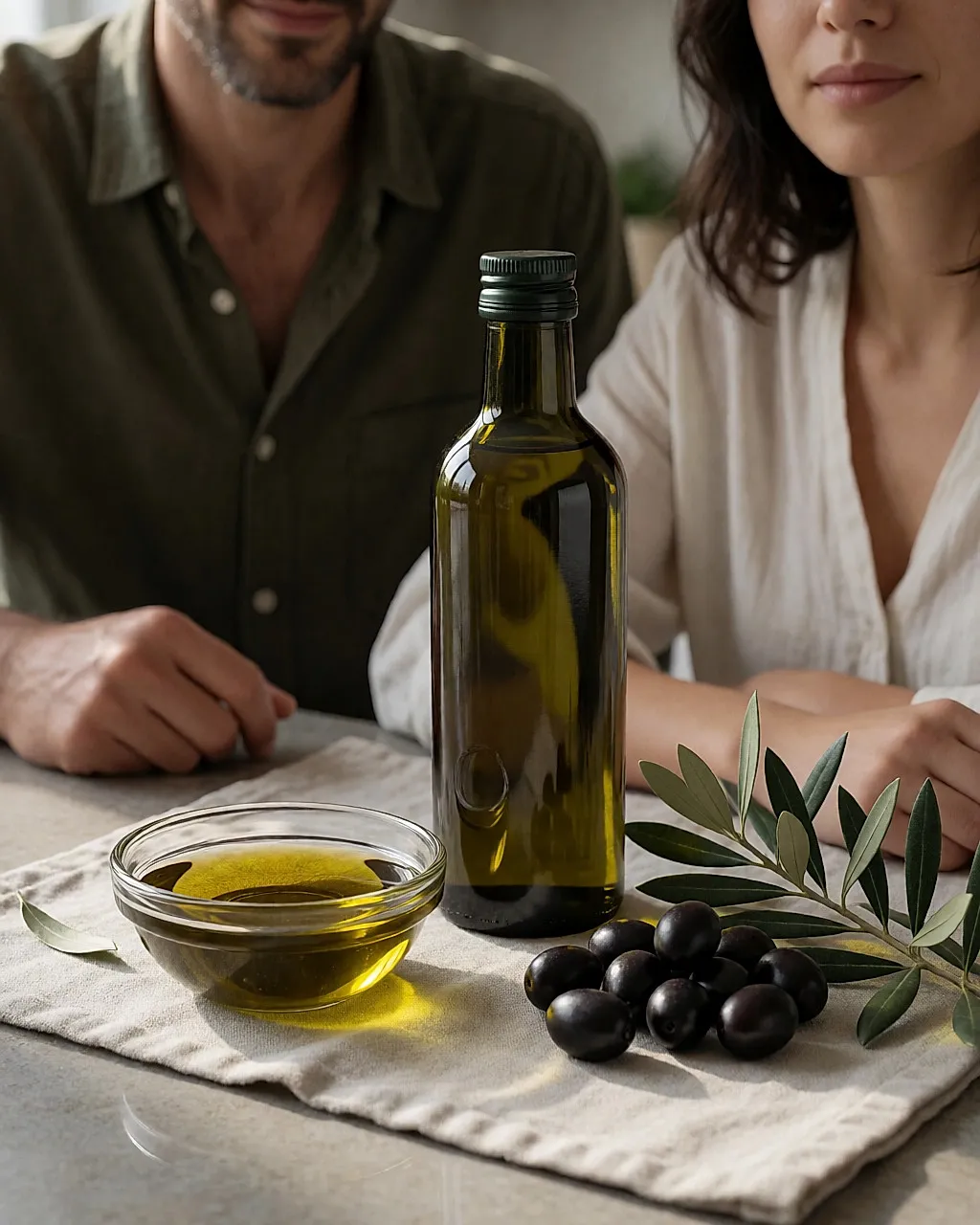
- Extra virgin olive oil: expect roughly £7 to £16 for 75 cl depending on PDO status and how it is produced; tinted glass is recyclable, and some brands offer 3 L tins or refills.
- Pulses (lentils, chickpeas): around £1.50 to £3.50 for 500 g in a wholefood shop, often cheaper from a bulk bin if you bring your own container.
- Sardines or mackerel in olive oil: around £1 to £2.50 a tin.
- Unsalted nuts: roughly £15 to £25 a kilo, best bought loose so you can adjust the quantity.
You will find them at markets, supermarkets, wholefood shops or direct from producers. Buying loose and dried cuts down on packaging; a tin, on the other hand, is sometimes the only realistic option for fish.
Sources
- Estruch R. et al., Primary Prevention of Cardiovascular Disease with a Mediterranean Diet Supplemented with Extra-Virgin Olive Oil or Nuts, New England Journal of Medicine, 2018 (PREDIMED trial).
- ANSES, nutritional reference values for dietary fibre.
- UK Chief Medical Officers, low-risk drinking guidelines.
- International Agency for Research on Cancer (IARC), monographs on alcohol and bowel cancer.
- World Health Organization, recommendations on physical activity.
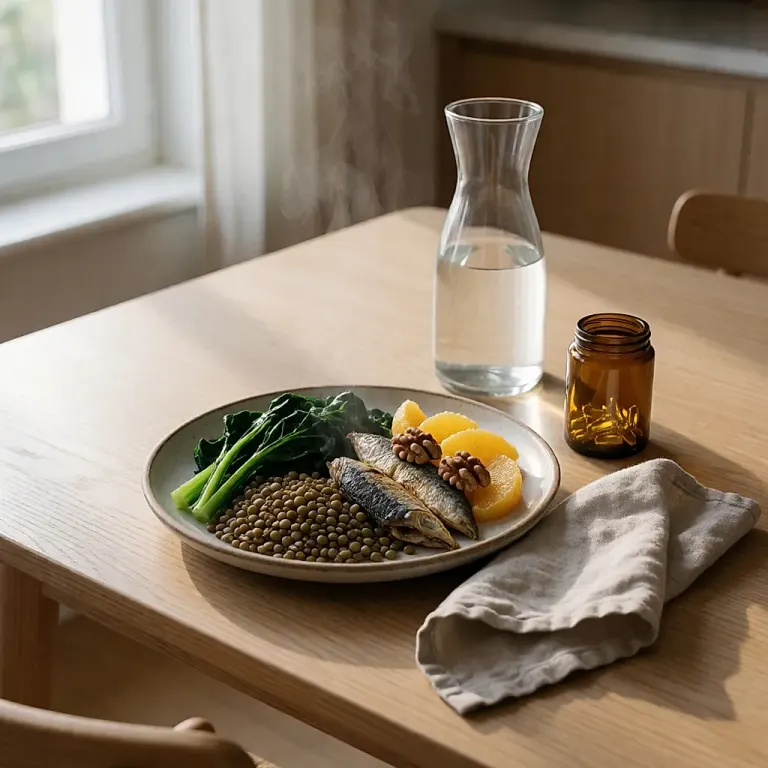
Food supplements do not replace a varied, balanced diet and a healthy lifestyle.
Comments
Your opinion matters: rate the article, react and reply to comments.
Comments are moderated; AI-assisted comments are flagged. Text emoticons (8-), :-), <3…) are automatically shown as images.