

The Okinawan diet: more than a diet, a way of life
On a beach in the Okinawa archipelago, a carved rock catches walkers' attention with some strange arithmetic: at 70, you would still be a child; at 90, almost a teenager. A charming legend, good for a smile... and yet one that hides a well-documented reality. In these islands in southern Japan, people are among the longest-lived populations ever studied, with numbers of centenarians long above the Japanese national average. There is no magic potion in that, and no promises to make you: what emerges from the research carried out there is a pile-up of habits repeated over decades. And that may be the most interesting part.
Hara hachi bu: the 80% rule
The principle comes down to three words: hara hachi bu, or “eat until you are eight parts out of ten full”. In practice, you stop when you could still manage two or three more mouthfuls — not stuffed to the brim, in other words. The idea behind it? To give your body time to register fullness, which takes around twenty minutes to reach the brain. Nothing dramatic, but that small delay changes your whole relationship with the plate.

Current evidence suggests that eating a little less, but with plenty of vegetables, pulses and minimally processed foods, is among the interesting preventive factors. Be careful with the figures that circulate, though: the famous “800 kilocalories a day” attributed to older Okinawans is a disputed historical estimate. It is obviously not a target to set yourself; an adult has much higher needs, which vary with age, sex and physical activity. Keep the spirit of the rule, not the number.
What goes on the plate
Contrary to the image sometimes given, the base is not white rice but the purple sweet potato, a tuber with a moderate glycaemic index. Around it are plenty of vegetables, seaweed, soy in all its forms (tofu, miso, sprouts), fresh herbs and spices, fish and shellfish a few times a week — and plenty of tea.

By contrast, meat, dairy, sweets, alcohol and salt remain marginal. Salt deserves a pause, too: the WHO recommends staying below 5 g a day, a benchmark many of us exceed without realising, through ready meals and processed foods. That is often where the problem lies, without us noticing.
What we know, what we don't yet know
For a long time, people believed in an exceptional genetic inheritance. Research on Okinawan centenarians, notably the Okinawa Centenarian Study, points more towards environment and lifestyle: diet, daily physical activity, limiting tobacco and alcohol, and above all social ties. The moai, a small mutual-support group that stays with each person from early life to the end of life, probably plays a role in how well people feel, even if the exact share of each factor remains hard to disentangle.

Another important nuance: the Okinawa effect mainly concerns generations born before the Second World War. Among younger people, the arrival of military bases and then fast food has driven up obesity and metabolic diseases. In other words, it isn't the island that protects people, it's the habits. That puts things back in perspective — and makes you want to look more closely at what goes into your own basket.
In practice, remember this
There's no need to invent an island life for yourself. A few simple habits are enough to bring your plate closer to this balance:

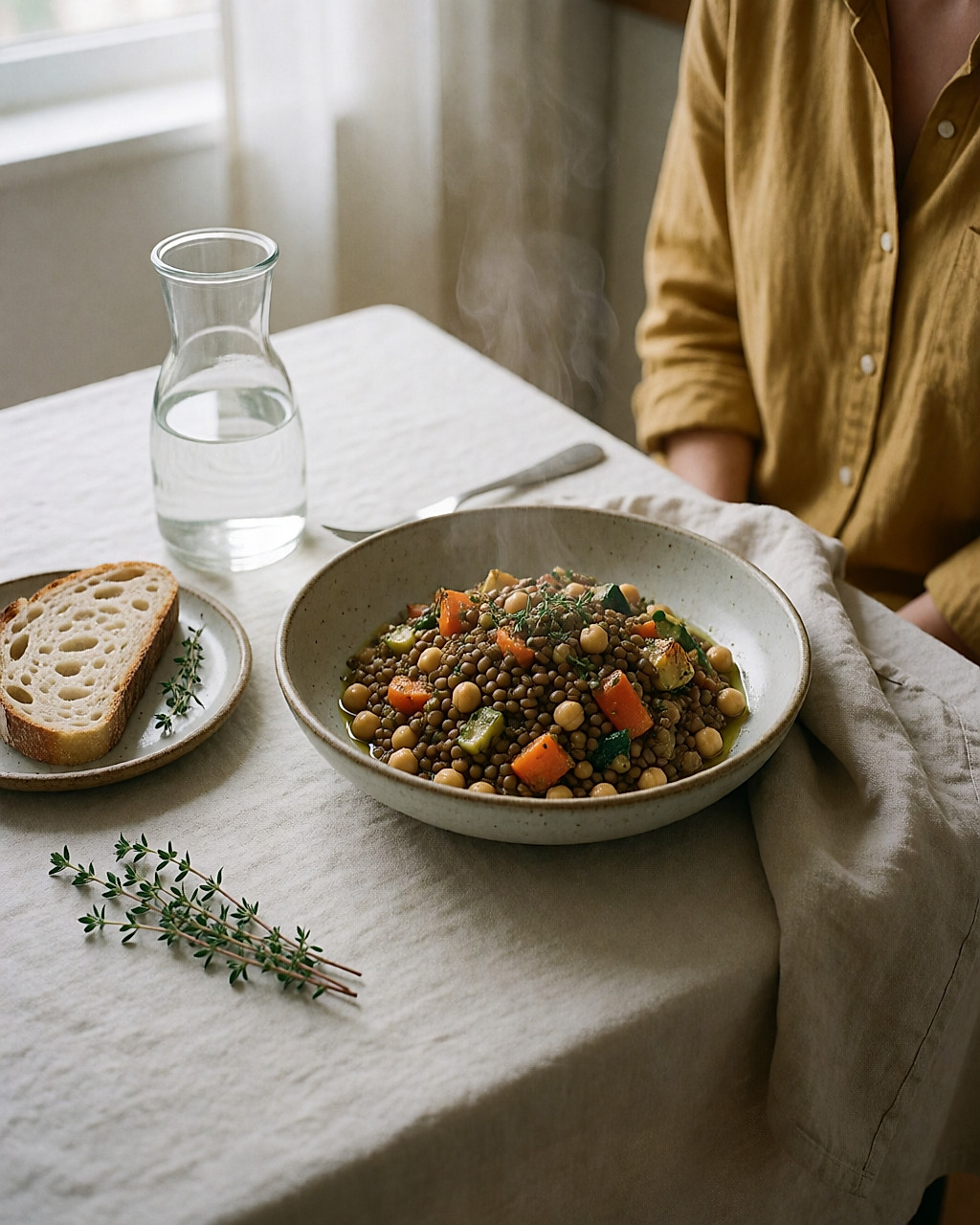
- fill half your plate with vegetables, raw or cooked, and add a portion of pulses or wholegrain cereals;
- keep fish twice a week, including one oily fish (sardine, mackerel);
- cook from scratch as often as possible: it's an effective way to cut down on salt and added sugars;
- put a serving dish on the table rather than helping yourself from the worktop, and put your fork down between mouthfuls;
- drink water or tea, and save fizzy drinks and alcohol for special occasions.
And move: walk, garden, take the stairs. For Okinawans, activity wasn't sport, it was daily life. No gym, no programme: just repeated movements, every day.
This isn't a restrictive plan to copy wholesale. Very low-calorie diets, long fasts or cutting out an entire food group shouldn't be decided on a whim. If you have diabetes, an eating disorder, are pregnant or are undergoing treatment, speak to a healthcare professional before changing your habits. And if your goal is to lose weight, medical or dietetic support can help you avoid many pitfalls.
Budget
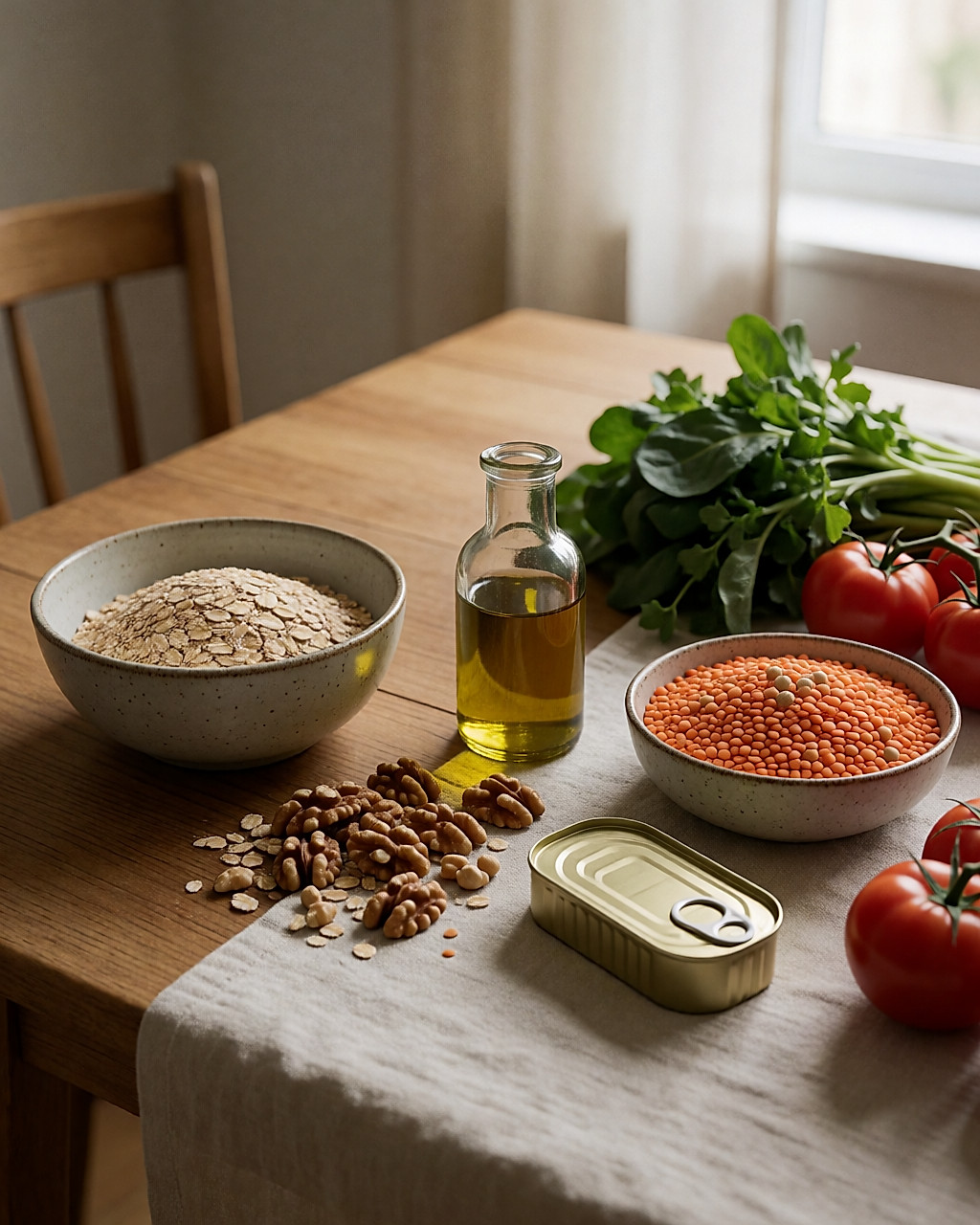
Nothing here is out of reach, as long as you avoid overpriced “exotic” shelves. In the UK, expect to pay around £2 to £4 for a 200–400 g pack of plain organic tofu, and £2 to £6 for a packet of dried seaweed (nori, wakame) that will cover dozens of portions. Dried pulses — lentils, chickpeas, beans — often cost between £1.50 and £4 per kilo, and seasonal vegetables bought at a market remain the most economical option. Plain frozen fish fillets, or tinned fish in olive oil, are a reliable and often cheaper alternative to fresh.
What changes the bill: organic certification, provenance, short supply chains, seasonality and packaging — glass or cardboard rather than plastic. For vegetables, loose pulses and miso, independent health food shops and farmers' markets are often the best value; supermarkets remain convenient for tofu and seaweed, and buying tea online can be a useful fallback, provided you compare the price per kilo. Finally, ready-made “Japanese-style” meals sold online cost far more than a plate you assemble yourself with the same ingredients: better to invest in a good miso than in a ready meal.
One last thing: this isn't a diet to follow for three weeks. It's a direction, with back-and-forth. And that's absolutely fine.
Sources
- Okinawa Centenarian Study — work by Makoto Suzuki, Craig Willcox and Bradley Willcox, published notably in the Journal of the American Geriatrics Society and Biogerontology.
- Dan Buettner, Blue Zones, National Geographic.
- Santé publique France — National Nutrition and Health Programme, mangerbouger.fr
- ANSES — reports and advice on diet, physical activity and consumption benchmarks
- World Health Organization — recommendations on salt and free sugars
- Anne Dufour and Laurence Wittner, Le régime Okinawa, éditions Leduc.


Comments
Your opinion matters: rate the article, react and reply to comments.
Comments are moderated; AI-assisted comments are flagged. Text emoticons (8-), :-), <3…) are automatically shown as images.