

The principle: the running motion, with less impact
Have you tried jogging, only to be put off by the pavement after three sessions? Does the pool bore you by the second length? Between the two sits a practice that is still relatively under the radar in the UK: running in water, upright, without ever touching the bottom.
Aqua jogging — also known as deep water running — takes running into a deep pool. With your feet off the ground, you hold yourself upright, a flotation belt keeps your head above the surface, and your legs copy the mechanics of a jog: bend, drive, return. You are not reinventing the running stride, just moving it to water!
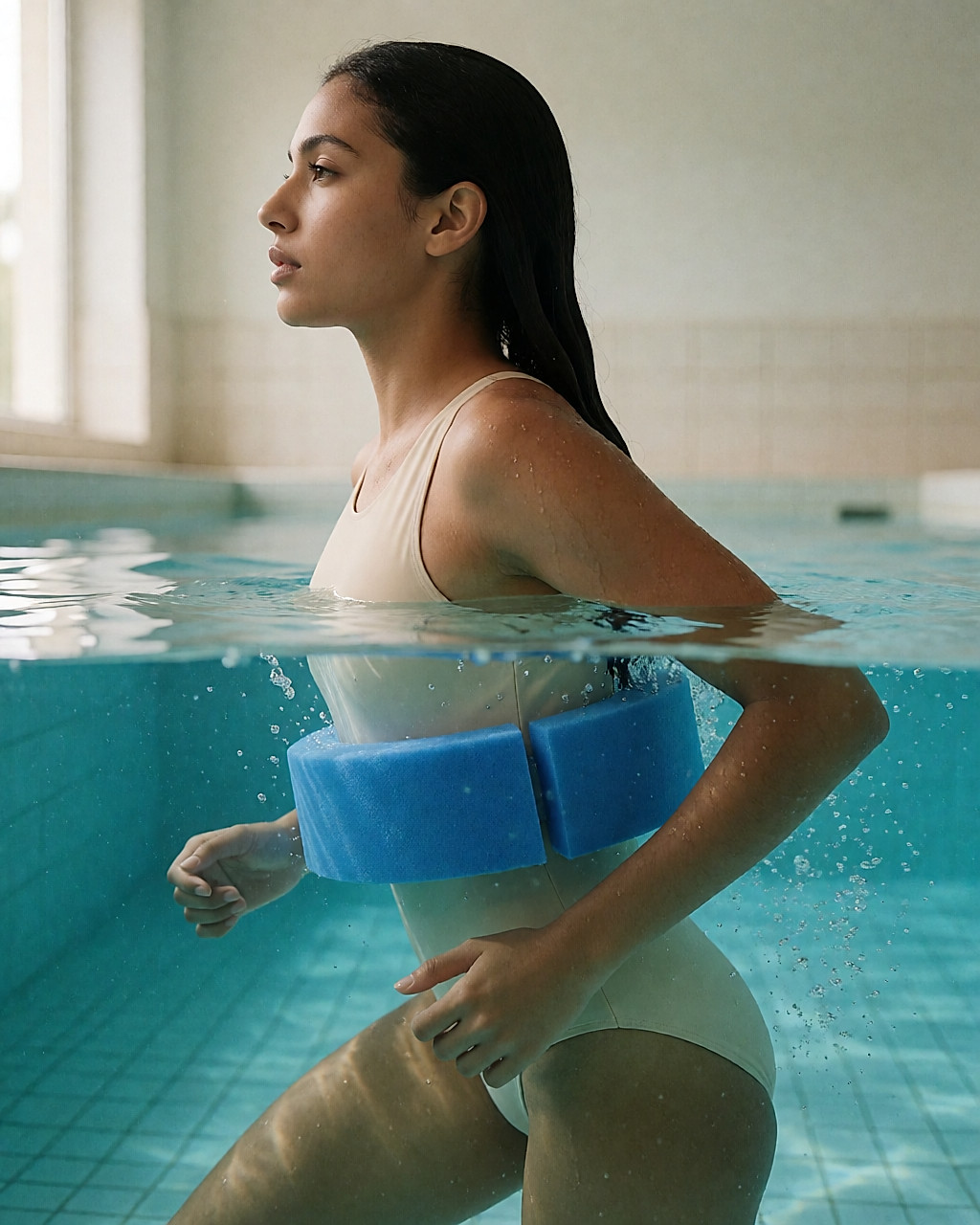
Born in sports rehabilitation to help injured people move without hammering their joints, it later appealed to runners returning from injury before arriving in public pools. What we know, and what we do not yet know: the water's buoyancy reduces some of the load on ankles, knees and hips. That does not make it a gentle option by default — the intensity is adjustable, and it rises quickly.
What it works on
The lower body first: calves, thighs, glutes, abdominals. Then the upper body — often the surprise — arms, back and shoulders work to hold your posture and balance the movement. The water's resistance opposes every movement: the faster you go, the harder it gets. You are in control, with no pace imposed by a machine or a group.
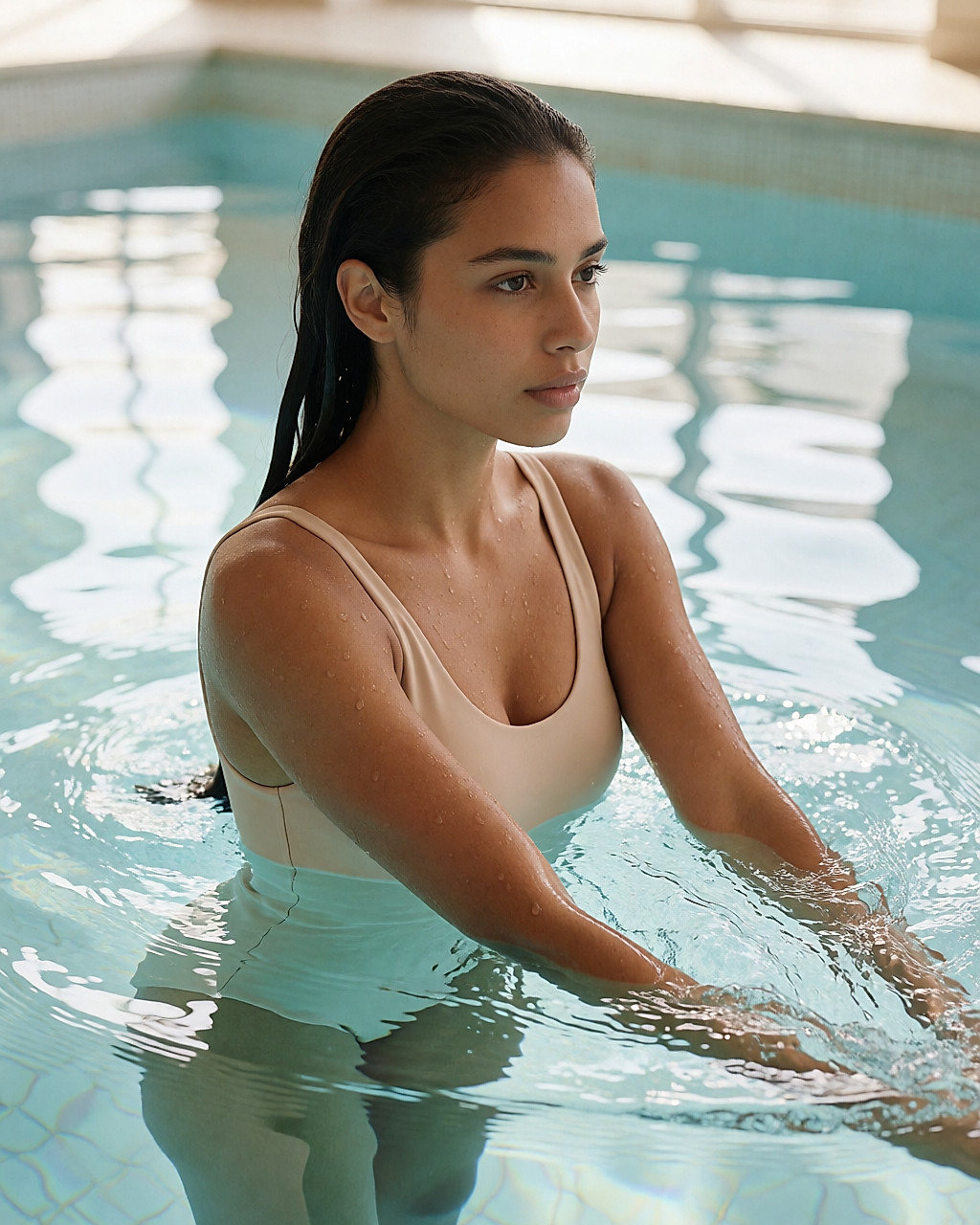
Current data suggest that aqua jogging can challenge your breathing and muscles, at an intensity you choose yourself. In practice, the energy cost depends on your pace, your technique and the depth of the pool; you can also keep it very gentle. It can contribute to regular activity, provided you stick with it — but no single activity burns fat on its own.
Who it can help, who should ask for advice
It is worth considering if you struggle with the repeated impact of the pavement, if you are returning after an injury, or if you want to move without pain. More broadly, regular physical activity remains one of the best-documented ways to help prevent many chronic diseases, and sedentary behaviour is a recognised risk factor.
Before you start, speak to a healthcare professional if you have a history of heart problems, are pregnant, have had recent surgery, have persistent pain or are taking medication. Aqua jogging is not a treatment: it is physical activity, and its value is judged as part of your overall care. No diagnosis is made at the poolside.
A session should not trigger pain. If you feel pain when you move, unusual breathlessness or feel unwell, get out of the water and speak to a doctor. The instructor or lifeguard can adjust the intensity, but they do not replace medical advice.
In practice: your first session
Start with five to ten minutes of simple warm-up in the water. Then alternate running blocks of thirty to sixty seconds with active recovery. Twenty to thirty minutes is often enough for a first session. The pool usually lends flotation belts; if not, a coached group session is a good way in. One last detail that matters: warmer water makes the session much more comfortable, especially in winter.
Budget
Prices vary widely depending on the town and the type of pool. Expect around £4 to £7 for a single entry at a council pool, and roughly £25 to £45 for a monthly pass or multi-swim card — more at a private leisure centre. A coached aqua jogging class often costs between £8 and £15, with discounts for block bookings. If you want to buy your own flotation belt, budget around £20 to £40.
What pushes the cost up is coaching, an annual membership and limited session times. For kit, you will find belts in sports shops, online and sometimes second-hand. Borrowing from the pool or buying second-hand remains the most low-waste option; if you buy new, look at the stated materials (EVA foam, no PVC) rather than a vague environmental claim.
Sources
- World Health Organization, WHO Guidelines on Physical Activity and Sedentary Behaviour, 2020 (who.int)
- Santé publique France, recommendations on physical activity and sedentary behaviour (santepubliquefrance.fr)
- Haute Autorité de Santé, promoting physical activity (has-sante.fr)
- French Swimming Federation, aquatic activities and supervision (ffnatation.fr)
- French Ministry of Sports, sport for all (sports.gouv.fr)




Comments
Your opinion matters: rate the article, react and reply to comments.
Comments are moderated; AI-assisted comments are flagged. Text emoticons (8-), :-), <3…) are automatically shown as images.