
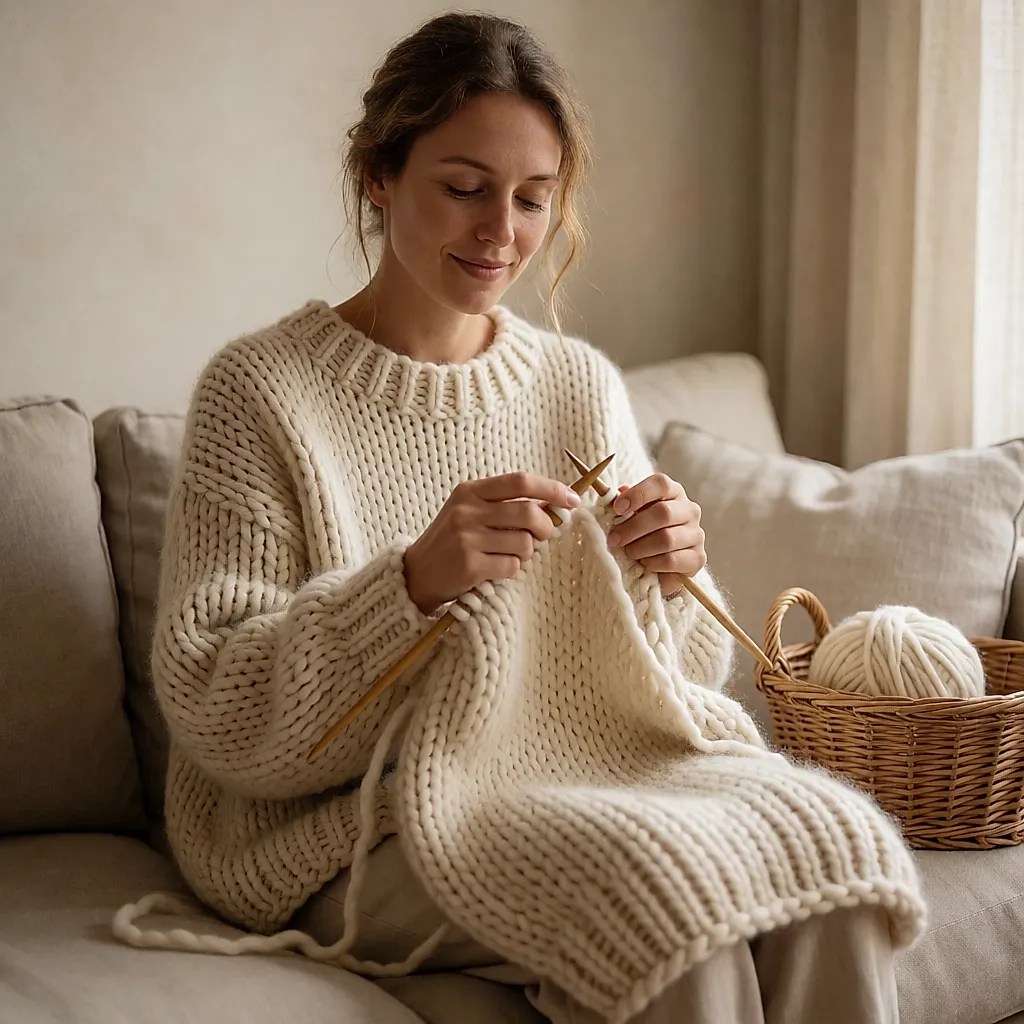
You'll have noticed it: balls of wool have left the back of the wardrobe and landed on the coffee table, needles poking out of a tote bag on the train. Knitting is no longer a faded image of grandmothers in armchairs — it's a young-adult pastime now, all patience, style and time to yourself. What has changed is the intention: fewer of us knit to save money on a jumper, more of us do it for the pleasure of making something, and for wearing a piece nobody else owns.
Needles on the catwalk
The revival owes something to the runway, too. For several seasons, chunky knits, visible ribs and irregular textures have been back in ready-to-wear. A hand-knitted jumper no longer reads as 'stored in the loft': it sits well over raw denim, works with wide-leg trousers, slips into simple layering. A homemade scarf is enough to lift an ordinary outfit.
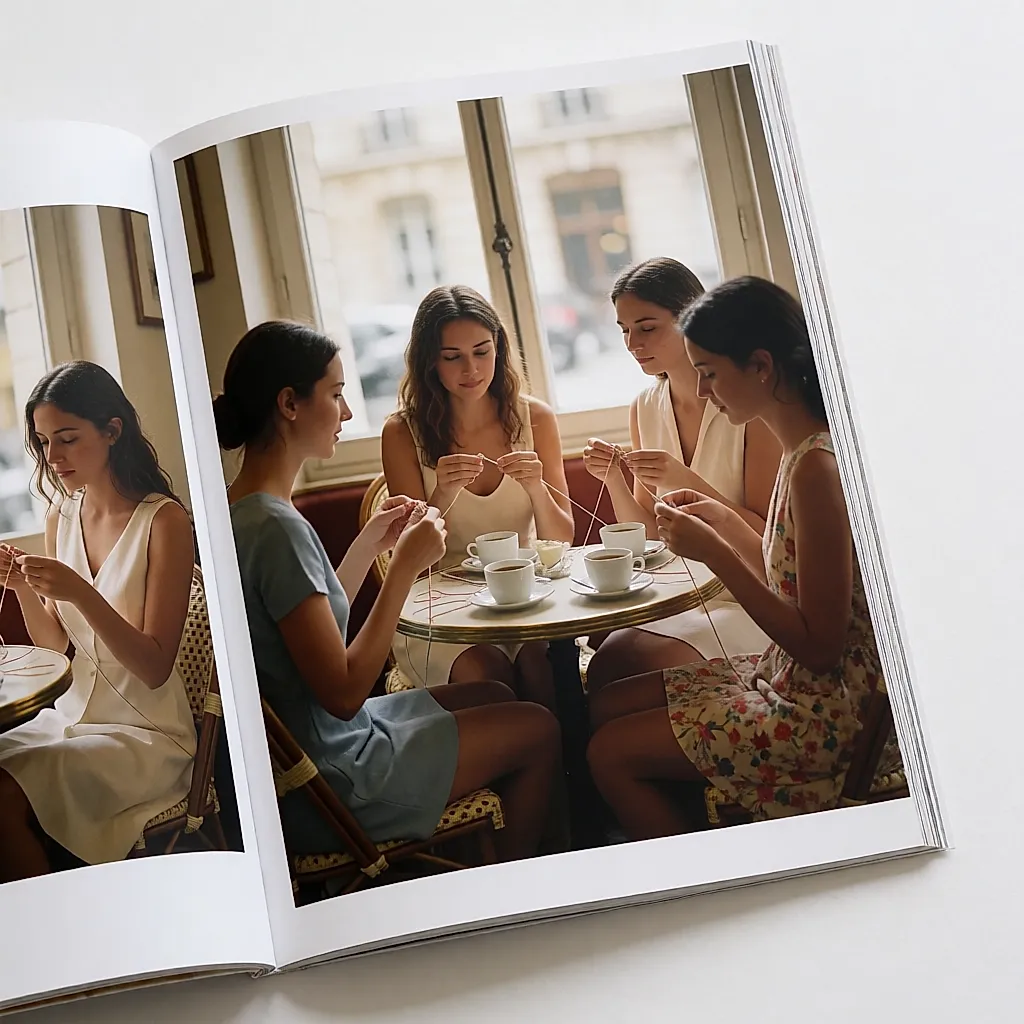
It's a social movement as well. Knitting cafés, which began in the US, have taken hold across the UK: a weekly evening meet-up where patterns are swapped and wool is unravelled between conversations.
What it offers — no promises
What we know: knitting keeps the hands busy and asks for a gentle kind of attention that gives you a little distance from screens. The current evidence suggests an effect on how well people feel — a study published in 2013 links regular knitting to better self-reported wellbeing and stronger social connection. What we don't yet know: it can't be turned into a treatment. Knitting doesn't cure anything. It helps pass a wait, an evening, a journey.
Your body, though, deserves a word of caution. Sitting for long stretches, shoulders creeping up, wrists bent for hours: that's a recognised risk factor for tension and tendinopathy. NHS advice on sedentary time is blunt — sitting for long periods isn't harmless. In practice: stand up every 45 minutes and stretch your forearms. If pain settles into your wrist or thumb, stop and speak to a GP or physiotherapist. The diagnosis belongs to the professional.
Worth remembering: knitting is a gentle activity, not a treatment. It's no substitute for medical care or medication. If you have joint pain or a known carpal tunnel problem, ask a professional about technique and posture first.
Getting started without breaking the bank
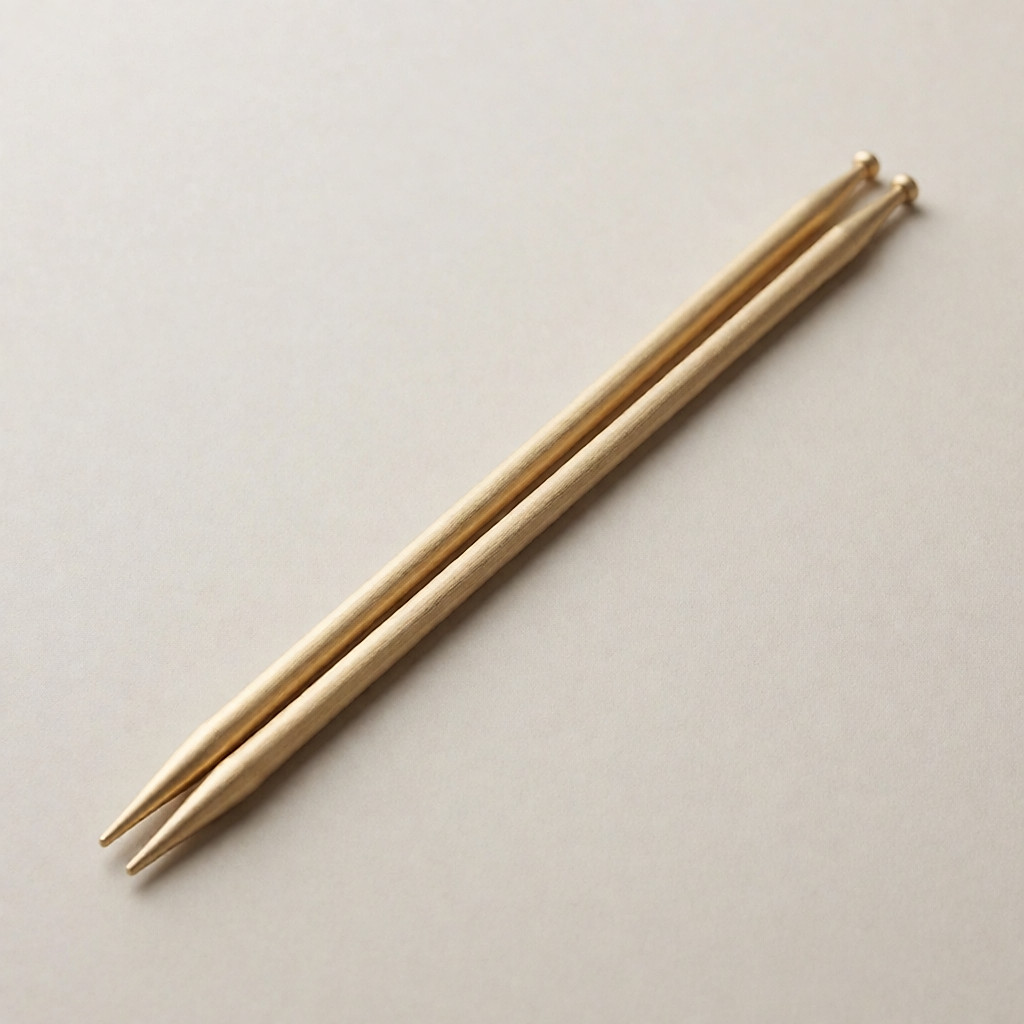
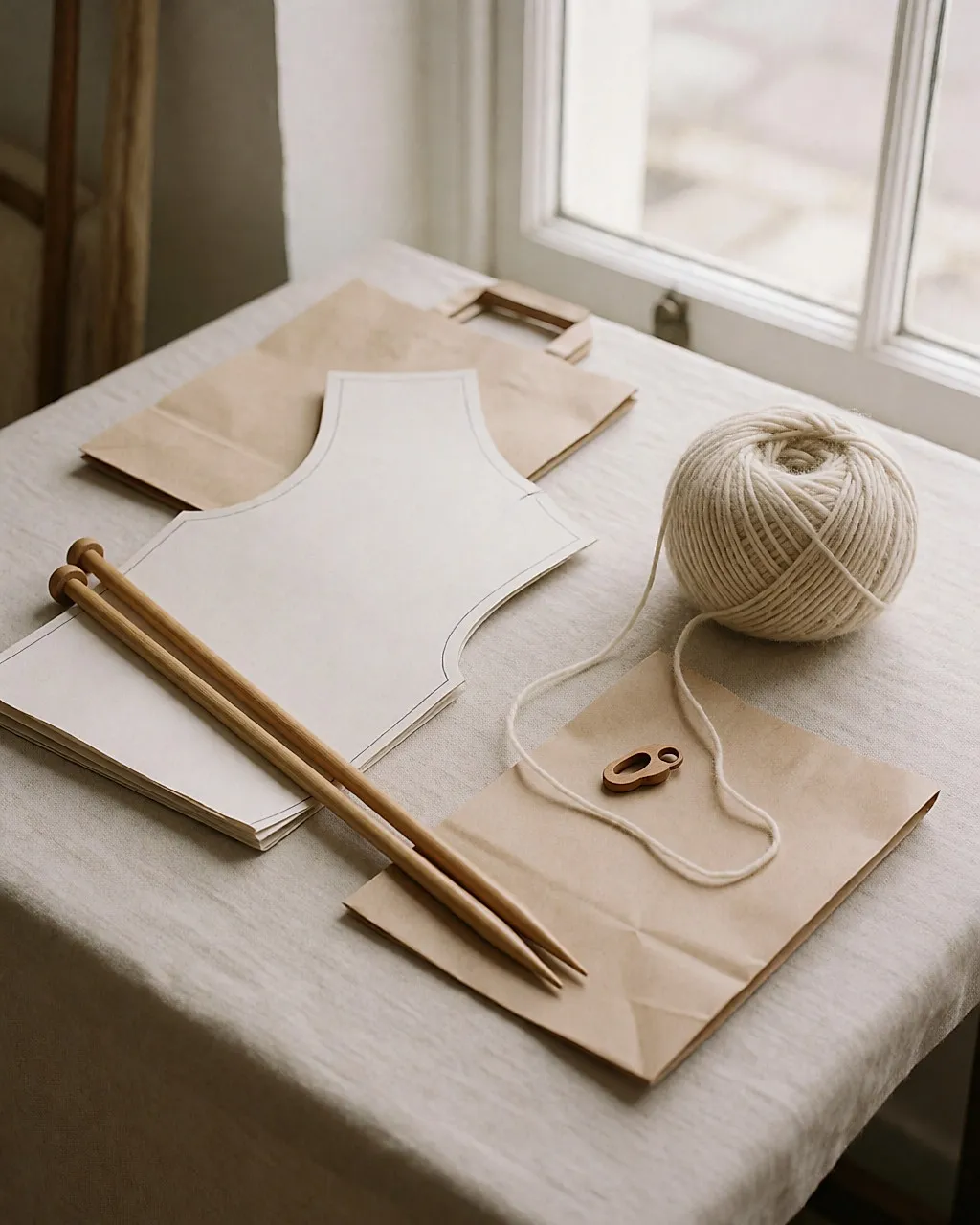
For a first project — a hat, a scarf, a small pouch — you need very little: a pair of 4mm or 5mm straight needles, one ball of wool, a stitch marker. Yarn shops and haberdashery counters run beginner workshops; some brands sell kits with the yarn and instructions included.
On fibre, look for traceable wool — Blacker Yarns, West Yorkshire Spinners, New Lanark — or wool certified to the RWS, a standard that covers farming conditions and traceability. For cotton, GOTS covers the organic origin of the fibre along with social and environmental criteria. Oeko-Tex Standard 100 tests for harmful substances but says nothing about how the fibre was produced: useful, then, though not a complete environmental label. As for end of life: wool and cotton are biodegradable, while acrylic is a plastic that sheds microfibres in the wash.
What it costs
Budget around £4–12 for simple needles, £35–100 for an interchangeable set, £4–12 for a 50g ball of natural wool and £2.50–5 for acrylic. A beginner workshop at a yarn shop comes in at £15–40. These ranges shift with the fibre, the brand, the city and where you buy: more in a specialist shop, less at a supermarket or online, where fibre quality varies widely.
Sources
- NHS — physical activity guidelines and advice on reducing sedentary time (nhs.uk)
- Riley J., Corkhill B., Morris C., "The Benefits of Knitting for Personal and Social Wellbeing in Adulthood", 2013
- The Knitting & Stitching Show — the UK's main needlecraft fair (London and Harrogate)
- Textile Exchange — Responsible Wool Standard; GOTS (Global Organic Textile Standard); Oeko-Tex — Standard 100
Comments
Your opinion matters: rate the article, react and reply to comments.
Comments are moderated; AI-assisted comments are flagged. Text emoticons (8-), :-), <3…) are automatically shown as images.