

The days are getting longer, pub gardens are filling up, and the urge to stretch out on a towel returns fast. We get it. Except your skin keeps a tally: every exposure draws down a reserve that never refills, and that lovely tan you're after is simply a defence response. So rather than just endure it, it pays to arrive prepared. Good news: preparation comes down to a few simple steps — as long as you do them in the right order.
What we know, and what we don't yet know
What is established, first: ultraviolet radiation is classified as a known carcinogen by the International Agency for Research on Cancer. UVB rays attack the surface and cause burning; UVA rays penetrate deeper and damage the fibres that support the dermis, while also contributing to skin cancer risk. A sunburn caught in childhood or adolescence weighs particularly heavily in that risk.
What we don't yet know: why some skin reddens in twenty minutes while other skin lasts for hours. We recognise several phototypes, from lightest to darkest, based on melanin and its ability to filter UV. Olive or darker skin does resist better, it's true — but that never means protected.

Sunscreen, supplements, diet: what does what
So-called "sun preparation" supplements, based on beta-carotene, were popular for a long time. Current data suggest they do not really protect against burning, and the French food safety agency ANSES advises caution — particularly in smokers and former smokers, in whom high intakes have been linked to an increased risk of lung cancer. Thinking of taking a course? Talk to a healthcare professional before you start.
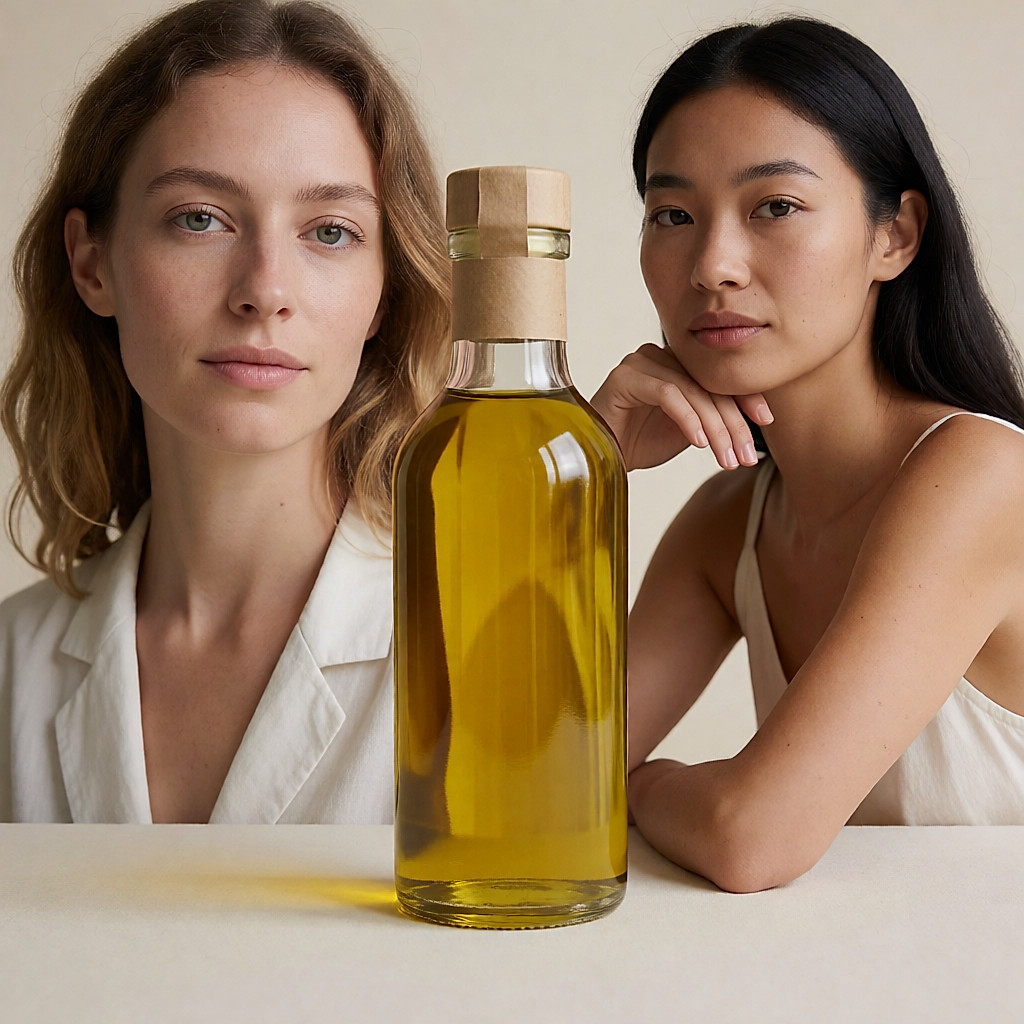
On your plate, there is no anti-UV recipe. However, a few habits hold up: colourful fruit and vegetables every day, and a drizzle of rapeseed or walnut oil in vinaigrette for omega-3s. Flaxseed oil is very rich in them, but it oxidises quickly — keep it in the fridge and use it soon. Staying well hydrated is still useful, though it won't prevent sunburn.
The habits that make a difference in practice
Apply a high-protection sunscreen: SPF 50 for your first exposures, never less than 30, with a UVA protection at least one-third of the UVB rating — that's the UVA-in-a-circle symbol on the bottle.


The amount matters more than the rating. People often apply three to four times less than the dose tested in the lab. Allow around 30 ml for the body, reapplying every two hours, after swimming and after sweating.
Between 11am and 4pm, seek shade. Clothing protects very well: T-shirt, wide-brimmed hat, category 3 sunglasses marked CE. And before age 3, no direct sun exposure.
Some medicines make skin photosensitive: certain antibiotics, anti-inflammatories, acne treatments, St John's wort. One habit — ask your pharmacist before summer. And forget sunbeds: artificial tanning doesn't prepare your skin, it damages it.
Choosing a more mindful sunscreen
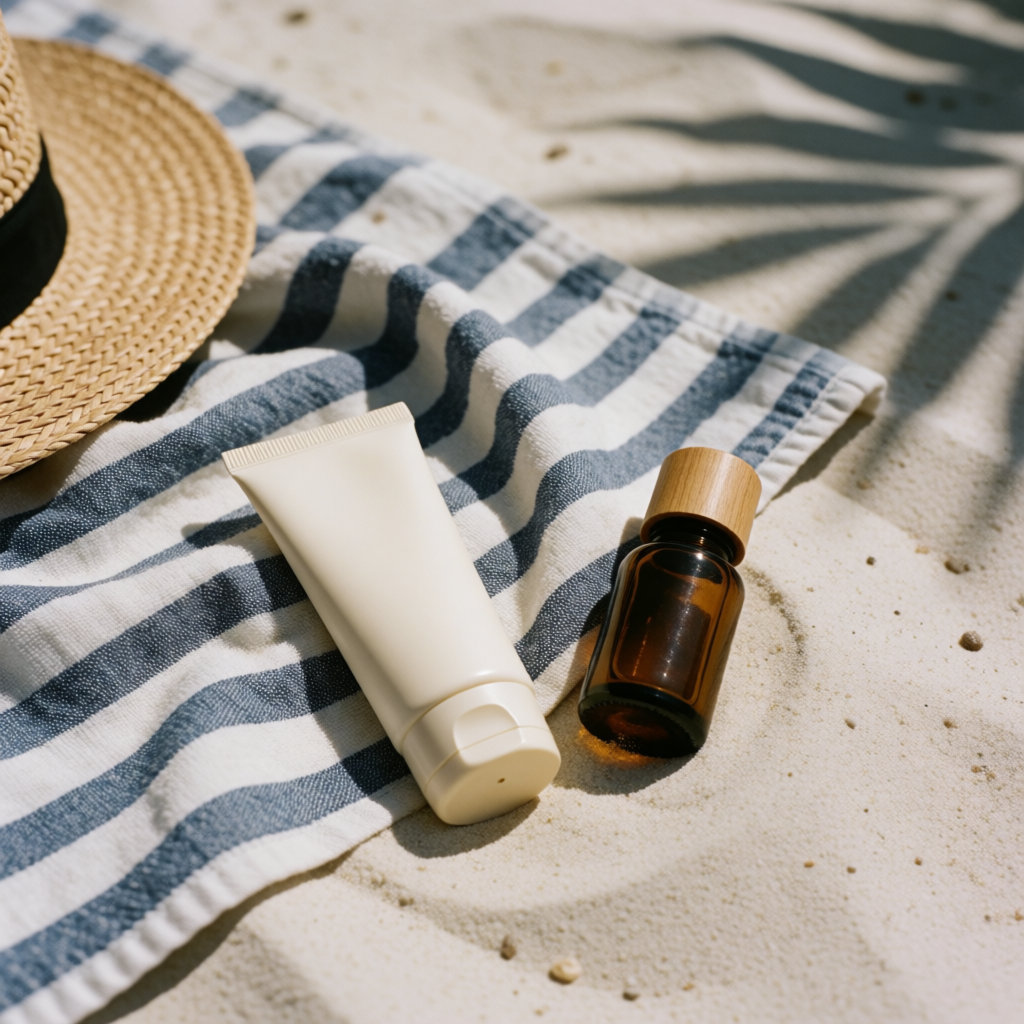
A product certified COSMOS ORGANIC or Ecocert guarantees a minimum proportion of organic ingredients and regulates certain synthetic filters — but not efficacy. Always check the SPF and that the UVA protection is at least one-third of the SPF. Mineral filter formulas (zinc oxide, titanium dioxide) are often sold in cardboard tubes or refillable bottles; in return, the texture is richer and sometimes leaves a white cast. Note: titanium dioxide in powder form is classified as carcinogenic by inhalation, hence caution with sprays — creams and lotions are better. And an opened tube keeps for six to twelve months: note the date, replace it as soon as the smell or texture changes.

Budget
Prices vary according to format, SPF, type of filters and where you buy.
For an SPF 50 lotion or cream, expect around £7 to £18 for a 50 ml bottle in supermarkets, pharmacies or online; £13 to £26 for the 200 ml large size. A mineral-filter formula from a certified organic brand is more likely to cost £13 to £30 per bottle — the richer texture and white cast are the trade-off.
For a "sun" supplement, budget around £9 to £26 for a one-month course, from a pharmacy, and discuss it with your GP or pharmacist before starting. For category 3 CE sunglasses, expect from £13 in a supermarket to over £85 at an optician: protection depends on the filter, not the price.
What pushes the bill up: the SPF and UVA claim, the size, certified ingredients, and where you buy (pharmacy, health food shop, e-commerce).
Sources
- Santé publique France — "Sun and UV" dossier and prevention campaigns.
- International Agency for Research on Cancer (IARC/WHO) — monograph on ultraviolet radiation, classified as Group 1 carcinogen.
- ANSES — opinions and recommendations on food supplements containing beta-carotene.
- EFSA — evaluations of health claims relating to beta-carotene and skin protection (not authorised in the European Union).
- Regulation (EC) No 1223/2009 on cosmetic products — UVA protection labelling.
- French National Cancer Institute (INCa) — skin cancer prevention.
Food supplements do not replace a varied, balanced diet and a healthy lifestyle.



Comments
Your opinion matters: rate the article, react and reply to comments.
Comments are moderated; AI-assisted comments are flagged. Text emoticons (8-), :-), <3…) are automatically shown as images.